

Branding Design Process Powerpoint Presentation Slides




Try Before you Buy Download Free Sample Product
 Impress Your
 Audience
 100%
100% Editable
 Save Hours
 of Time


Advertise your brand using content ready Branding Design Process PowerPoint Presentation Slides. Enlighten your stakeholders about your brand with the help of branding design process PPT presentation. Showcase brand’s strength, values, fundamentals, its offerings such as products or services by incorporating brand communication tools PowerPoint slideshow. SlideTeam presents you a complete presentation on professionally designed brand designing process which covers every aspect of the topic. It includes various topics like brand product/ service, brand vision, brand architecture, brand elements, brand execution roadmap and so much more to help you influence new customers. In case, you are looking to reposition your brand, then also this deck on brand communication strategy is useful for you. It will help you establish your brand position in the market. It has professionally designed templates on brand repositioning and brand budgeting to help you exhibit your product in the market with ease. Download this ready-to-use branding design process presentation to create an influential brand image in the market. Generate high expectations with our Branding Design Process Powerpoint Presentation Slides. Build a credible image of a better future.
People who downloaded this PowerPoint presentation also viewed the following :
Content of this Powerpoint Presentation
Slide 1: This slide introduces Branding Design Process.State Your Company Name and begin.
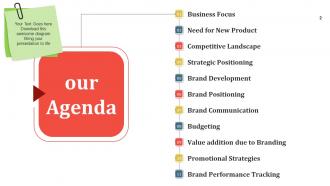
Slide 2: This slide shows our Agenda with these important points we discuss- Business Focus, Need for New Product, Competitive Landscape, Strategic Positioning, Brand Development, Brand Positioning, Brand Communication, Budgeting, Value addition due to Branding, Promotional Strategies, Brand Performance Tracking.
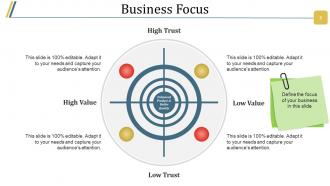
Slide 3: This slide presents Business Focus- High Value, Low Value, Low Trust, High Trust, Define the focus of your business in this slide.
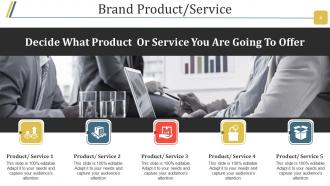
Slide 4: This slide showcases Brand Product/Service. You can add your services and products.
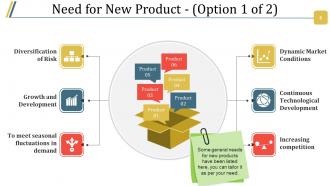
Slide 5: This slide shows Need for New Product - (Option 1 of 2) with these important stages- Growth and Development, Diversification of Risk, To meet seasonal fluctuations in demand, Increasing competition, Dynamic Market Conditions, Continuous Technological Development, Some general needs for new products have been listed here, you can tailor it as per your need.
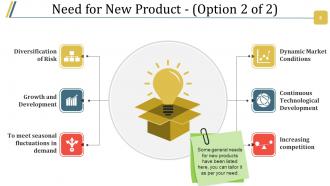
Slide 6: This slide presents Need for New Product - (Option 2 of 2) Growth and Development, Diversification of Risk, To meet seasonal fluctuations in demand Increasing competition, Dynamic Market Conditions, Continuous Technological Development, Some general needs for new products have been listed here, you can tailor it as per your need.
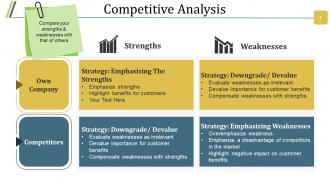
Slide 7: This slide shows Competitive Analysis with these points- Strategy: Emphasizing The Strengths, Emphasize strengths, Highlight benefits for customers, Strategy: Downgrade/ Devalue, Evaluate weaknesses as irrelevant, Devalue importance for customer benefits, Compensate weaknesses with strengths, Competitors, Strategy: Downgrade/ Devalue, Evaluate weaknesses as irrelevant, Devalue importance for customer benefits, Compensate weaknesses with strengths, Strategy: Emphasizing Weaknesses, Overemphasize weakness, Emphasize a disadvantage of competitors in the market, Highlight negative impact on customer benefits, Strengths, Weaknesses, Compare your strengths & weaknesses with that of others.
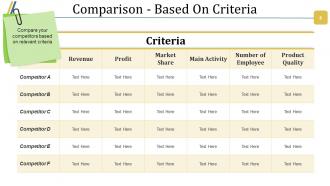
Slide 8: This slide shows Comparison - Based On Criteria. Compare your competitors based on relevant criteria
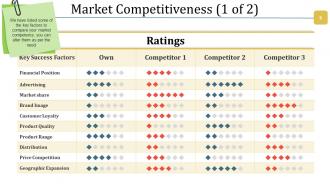
Slide 9: This slide presents Market Competitiveness (1 of 2). We have listed some of the key factors to compare your market competency, you can alter them as per the need
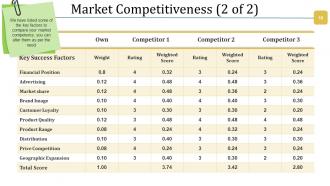
Slide 10: This slide showcases Market Competitiveness (2 of 2). We have listed some of the key factors to compare your market competency, you can alter them as per the need
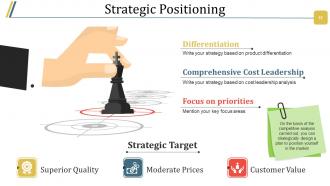
Slide 11: This slide presents Strategic Positioning with these categories you can consider- Differentiation, Write your strategy based on product differentiation, Comprehensive Cost Leadership, Write your strategy based on cost leadership analysis, Focus on priorities, Mention your key focus areas, Superior Quality, Moderate Prices, Customer Value, Strategic Target, On the basis of the competitive analysis carried out, you can strategically design a plan to position yourself in the market
Slide 12: This slide presents Brand Mission Statement. Mention the Brand mission in this slide indicating the Brand’s purpose
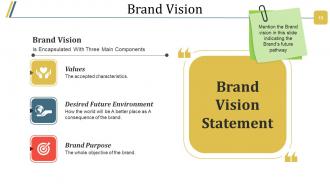
Slide 13: This slide showcases Brand Vision with these several factors for Brand Vision. Is Encapsulated With Three Main Components- Values, Desired Future Environment, Brand Purpose, Mention the Brand vision in this slide indicating the Brand’s future pathway
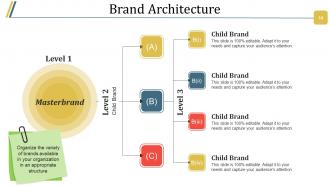
Slide 14: This slide is about Brand Architecture which Masterbrand. Organize the variety of brands available in your organization in an appropriate structure
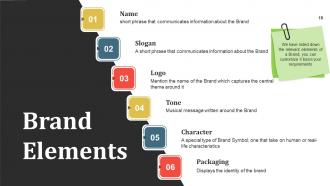
Slide 15: This slide presents Brand Elements with these following six points- Name, Slogan, Logo, Tone, Character, Packaging, We have listed down the relevant elements of a Brand, you can customize it basis your requirements
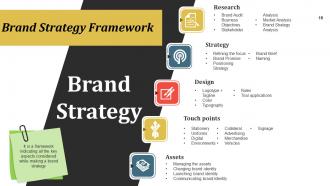
Slide 16: This slide presents Brand Strategy with these four framework Research, Strategy, Design, Touch points, Assets, It is a framework indicating all the key aspects considered while making a brand strategy
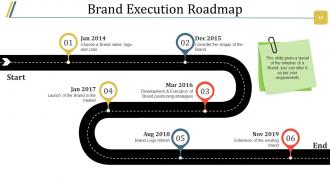
Slide 17: This slide showcases Brand Execution Roadmap.This slide gives a layout of the timeline of a Brand, you can alter it as per your requirements
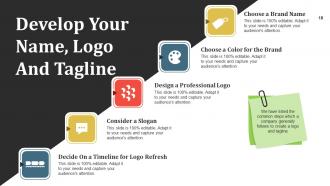
Slide 18: This slide presents Develop Your Name, Logo And Tagline with these six stages- Choose a Brand Name, Choose a Color for the Brand, Design a Professional Logo, Consider a Slogan, Decide On a Timeline for Logo Refresh. We have listed the common steps which a company generally follows to create a logo and tagline
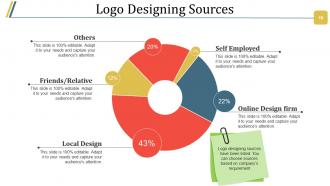
Slide 19: This slide shows Logo Designing Sources which further includes- Self Employed, Friends/Relative, Others, Online Design firm, Local Design, Logo designing sources have been listed. You can choose sources based on company’s requirement
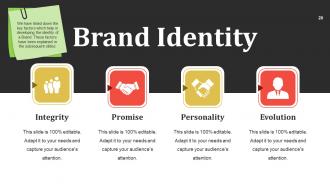
Slide 20: This slide showcases Brand Identity which can be shown with these criteria- Integrity, Promise, Personality, Evolution, We have listed down the key factors which help in developing the identity of a Brand. These factors have been explained in the subsequent slides.
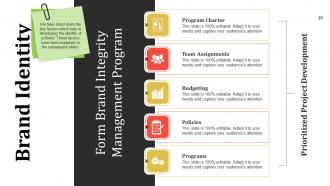
Slide 21: This slide presents Brand Identity with these are as follows- Form Brand Integrity Management Program, Program Charter, Team Assignments, Budgeting, Policies, Programs, Prioritized Project Development, We have listed down the key factors which help in developing the identity of a Brand. These factors have been explained in the subsequent slides.
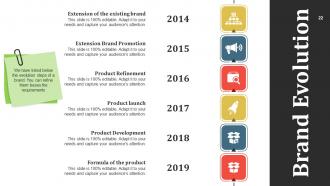
Slide 22: This slide presents Brand Evolution Extension of the existing brand and years allocates t Extension Brand Promotion, Product Refinement, Product launch, Product Development, Formula of the product, We have listed below the evolution steps of a brand. You can refine them bases the requirements
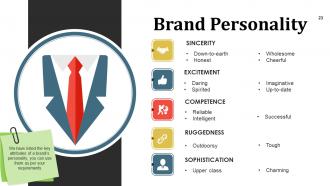
Slide 23: This slide showcases Brand Personality SINCERITY, EXCITEMENT, COMPETENCE, RUGGEDNESS, SOPHISTICATION, We have listed the key attributes of a brand’s personality, you can use them as per your requirements
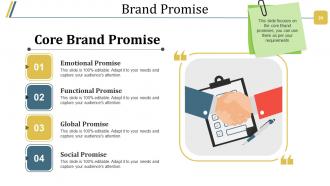
Slide 24: This slide presents Brand Promise with these four categories of promise- Core Brand Promise, Emotional Promise, Functional Promise, Global Promise, Social Promise.
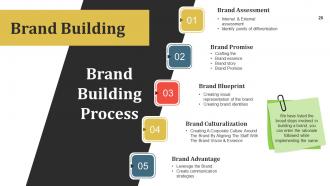
Slide 25: This slide presents Brand Building with five stages- Brand Assessment, Brand Promise, Brand Blueprint, Brand Culturalization, Brand Advantage, Leverage the Brand, We have listed the broad steps involved in building a brand, you can enter the rationale followed while implementing the same
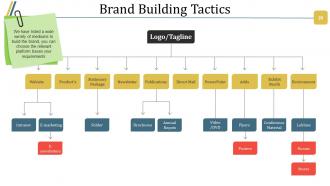
Slide 26: This slide shows Brand Building Tactics. We have listed a wide variety of mediums to build the brand, you can choose the relevant platform bases your requirements
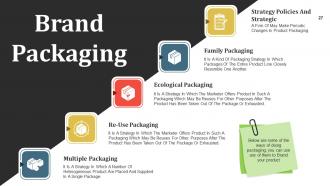
Slide 27: This slide presents Brand Packaging with these five types- Strategy Policies And Strategic, Family Packaging, Ecological Packaging, Re-Use Packaging, Multiple Packaging, Below are some of the ways of doing packaging, you can use any of them to Brand your product
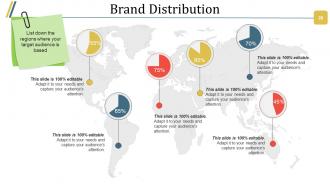
Slide 28: This slide presents Brand Distribution. List down the regions where your target audience is based
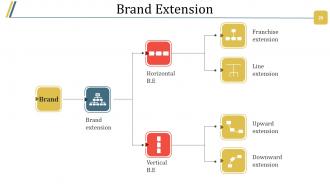
Slide 29: This slide showcases Brand Extension with further includes- Horizontal B.E, Vertical B.E, Franchise extension, Line extension, Upward extension, Downward extension.
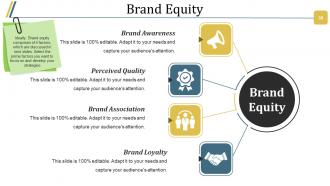
Slide 30: This slide showcases Brand Equity with these five steps- Brand Awareness, Perceived Quality, Brand Association, Brand Loyalty, Ideally, Brand equity comprises of 4 factors; which are discussed in next slides. Select the prime factors you want to focus on and develop your strategies
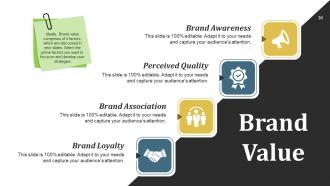
Slide 31: This slide presents Brand Value with four steps- Brand Association Perceived Quality Brand Awareness Brand Loyalty Ideally, Brand value comprises of 4 factors; which are discussed in next slides. Select the prime factors you want to focus on and develop your strategies
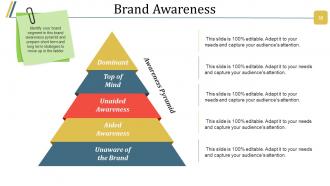
Slide 32: This slide showcases Brand Awareness with these five points- Awareness Pyramid, Dominant, Top of Mind, Unaided Awareness, Aided Awareness, Unaware of the Brand, Identify your brand segment in this brand awareness pyramid and prepare short term and long term strategies to move up in the ladder
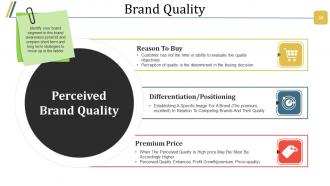
Slide 33: This slide presents Brand Quality with these three parameters- Reason To Buy, Premium Price, Differentiation/Positioning Identify your brand segment in this brand awareness pyramid and prepare short term and long term strategies to move up in the ladder
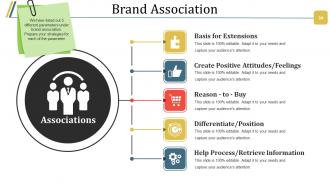
Slide 34: This slide shows Brand Association which further showing Associations Basis for Extensions, Create Positive Attitudes/Feelings, Reason - to - Buy, Differentiate/Position, Help Process/Retrieve Information, We have listed out 5 different parameters under brand association. Prepare your strategies for each of the parameter
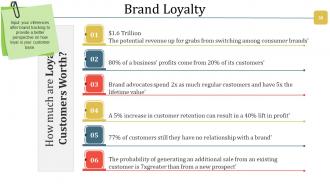
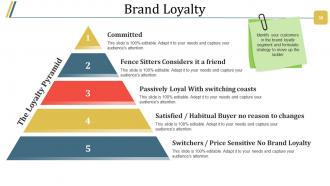
Slide 35: This slide presents Brand Loyalty. Input your inferences after brand tracking to provide a better perspective on how loyal is your customer base.
Slide 36: This slide showcases Brand Loyalty with theses five steps- Committed, Fence Sitters Considers it a friend, Passively Loyal With switching coasts, Satisfied / Habitual Buyer no reason to changes, Switchers / Price Sensitive No Brand Loyalty, Identify your customers in the brand loyalty segment and formulate strategy to move up the ladder
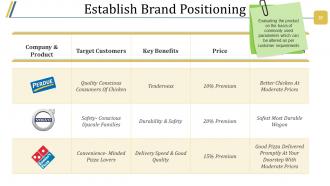
Slide 37: This slide presents Establish Brand Positioning. Evaluating the product on the basis of commonly used parameters which can be altered as per customer requirements
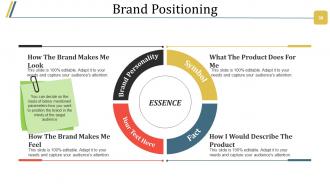
Slide 38: This slide presents Brand Positioning with these four factors from which you can analyse- What The Product Does For Me, How I Would Describe The Product, How The Brand Makes Me Look, How The Brand Makes Me Feel, You can decide on the basis of below mentioned parameters how you want to position the brand in the minds of the target audience
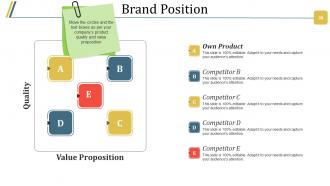
Slide 39: This slide showcases Brand Position. Add your deails and use it as per your business.
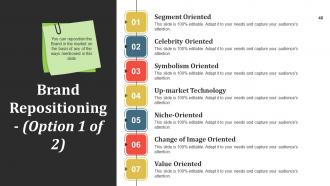
Slide 40: This slide shows Segment Oriented with these seven points- Celebrity Oriented, Symbolism Oriented, Up-market Technology, Niche-Oriented, Change of Image Oriented, Value Oriented, Brand Repositioning - (Option 1 of 2), You can reposition the Brand in the market on the basis of any of the ways mentioned in this slide
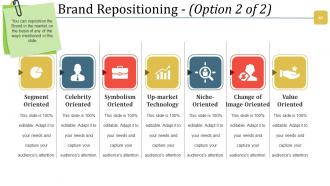
Slide 41: This slide displays Brand Repositioning - (Option 2 of 2) with these listed categories- Up-market Technology, Symbolism Oriented, Celebrity Oriented, Segment Oriented, Niche-Oriented, Value Oriented, Change of Image Oriented, You can reposition the Brand in the market on the basis of any of the ways mentioned in this slide.
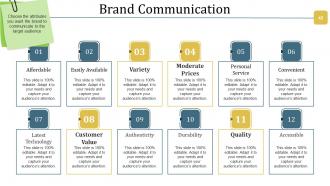
Slide 42: This slide presents Brand Communication with these twelve attributes- Affordable, Easily Available, Variety, Moderate Prices, Personal Service, Convenient, Latest Technology, Customer Value, Authenticity, Durability, Quality, Accessible, Choose the attributes you want the brand to communicate to the target audience
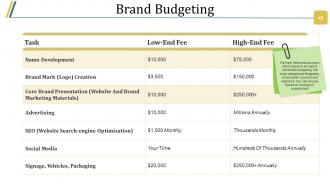
Slide 43: This slide presents Brand Budgeting. We have listed various ways which needs to be kept in mind while budgeting. We have categorized Budgeting in two parts: Low end and High End. You can choose based on company’s requirement
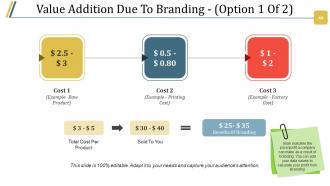
Slide 44: This slide shows Value Addition Due To Branding. Slide indicates the price/profit a company can make as a result of branding. You can add your data values to calculate your profit from Branding
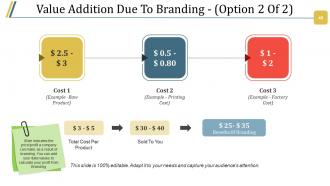
Slide 45: This slide presents Value Addition Due To Branding. Slide indicates the price/profit a company can make as a result of branding. You can add your data values to calculate your profit from Branding.
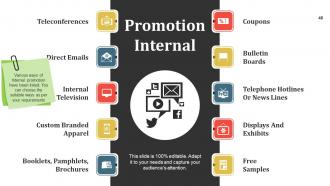
Slide 46: This slide showcases Promotion Internal with these ten listed points- Coupons, Bulletin Boards, Telephone Hotlines Or News Lines, Free Samples, Displays And Exhibits, Teleconferences, Direct Emails, Internal Television, Booklets, Pamphlets, Brochures, Custom Branded Apparel, Various ways of Internal promotion have been listed. You can choose the suitable ways as per your requirements
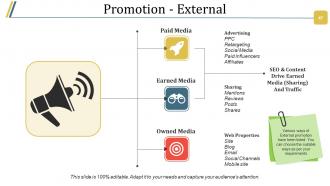
Slide 47: This slide presents Promotion - External. Various ways of External promotion have been listed. You can choose the suitable ways as per your requirements
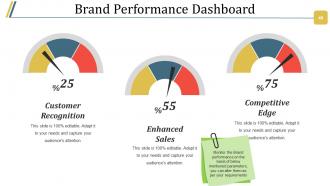
Slide 48: This slide shows Brand Performance Dashboard which further shows- Competitive Edge, Enhanced Sales, Customer Recognition, Monitor the Brand performance on the basis of below mentioned parameters, you can alter them as per your requirements
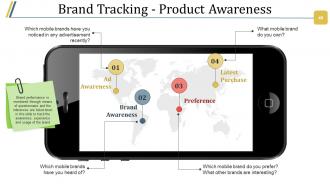
Slide 49: This slide shows Brand Tracking - Product Awareness with these four points- Ad Awareness, Brand Awareness, Preference, Latest Purchase, Brand performance is monitored through means of questionnaire and the inferences are listed down in this slide to track the awareness, experience and usage of the brand
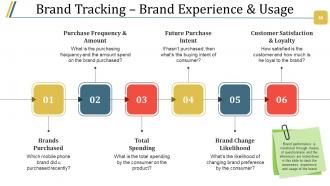
Slide 50: This slide presents Brand Tracking – Brand Experience & Usage with these six stages- Brands Purchased, Total Spending, Brand Change Likelihood, Purchase Frequency & Amount, Future Purchase Intent, Customer Satisfaction & Loyalty, Brand performance is monitored through means of questionnaire and the inferences are listed down in this slide to track the awareness, experience and usage of the brand
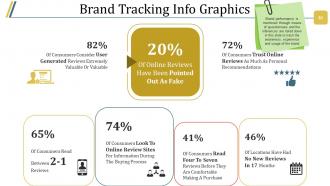
Slide 51: This slide presents Brand Tracking Info Graphics. Brand performance is monitored through means of questionnaire and the inferences are listed down in this slide to track the awareness, experience and usage of the brand
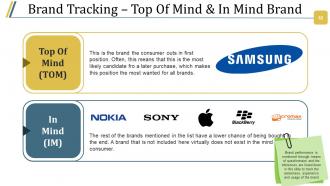
Slide 52: This slide shows Brand Tracking – Top Of Mind & In Mind Brand.Brand performance is monitored through means of questionnaire and the inferences are listed down in this slide to track the awareness, experience and usage of the brand
Slide 53: This slide presents Branding Design Process Icon Slide.
Slide 54: This slide shows Branding Design Process Icon Slide.
Slide 55: This slide shows Coffee Break image.
Slide 56: This slide displays the title Charts & Graphs.
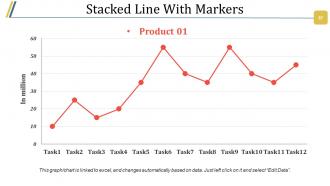
Slide 57: This slide shows a Stacked Line With Markers in terms of percentage and years for comparison of Product 01, Product 02, Product 03 etc.
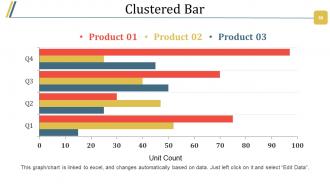
Slide 58: This slide presents Clustered Bar with the comparison of the three product.
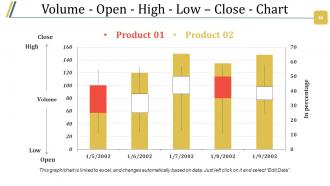
Slide 59: This slide displays a Stock Chart with volume as parameter in terms of high and low, open and close
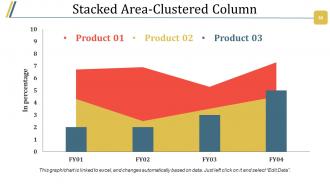
Slide 60: This slide shows a Stacked Line graph in terms of percentage and years for comparison of Product 01, Product 02, Product 03 etc.
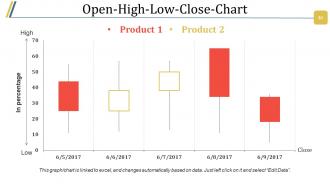
Slide 61: This slide presents Open-High-Low-Close-Chart. You can add the information.
Slide 62: This slide is titled Additional slides.
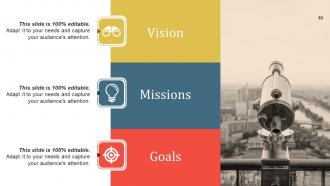
Slide 63: This slide contains vision, goal, Mission with text boxes.
Slide 64: This slide helps depict Our Team with text boxes.
Slide 65: This slide helps show- About Our Company. The sub headings include- Creative Design, Customer Care, Expand Company
Slide 66: This slide shows Our Goals for your company.
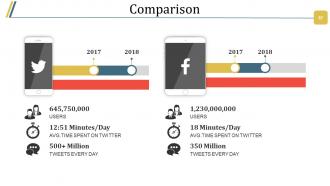
Slide 67: This slide shows Comparison of Positive Factors v/s Negative Factors with thumbsup and thumb down imagery.
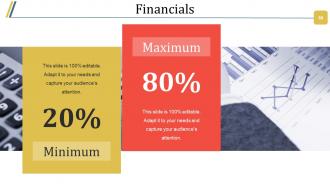
Slide 68: This slide is titled as Financials. Show finance related stuff here.
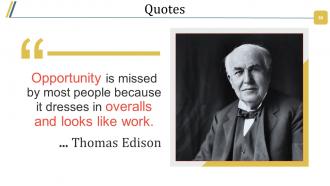
Slide 69: This is a Quotes slide to convey message, beliefs etc.
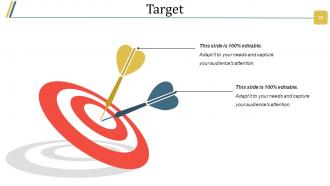
Slide 70: This slide shows Target image with text boxes.
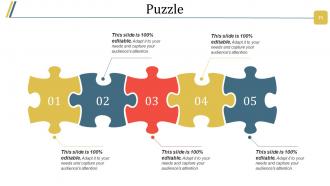
Slide 71: This is a Puzzle slide with the following subheadings- PPC Advertising, Media Marketing, Print Marketing, E-mail Campaigns.
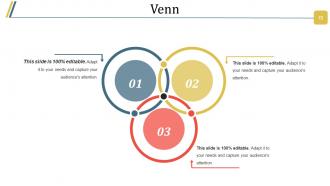
Slide 72: This is a Venn diagram image slide to show information, specifications etc.
Slide 73: This slide shows a Mind map for representing entities.
Slide 74: This slide displays a Bulb or idea image.
Slide 75: This is a Thank You image slide with Address, Email and Contact number.
Branding Design Process Powerpoint Presentation Slides with all 75 slides:
Ensure their confidence doesn't crumble with our Branding Design Process Powerpoint Presentation Slides. Fortify their genuine belief in themselves.



FAQs for Branding Design Process
So there's four main parts: research/discovery, strategy, visuals, then rolling it all out. First you dig deep into their business, competitors, who they're trying to reach - honestly this drags on forever but you can't skip it. Strategy comes next where you nail down positioning and messaging. That's when you finally get to the fun stuff like logos and colors. Brand guidelines wrap it up. Oh, and clients always want to jump straight to seeing pretty designs, but seriously don't let them rush you through research. I learned that one the hard way.
Honestly, market research is everything when it comes to branding decisions. It shows you what colors and fonts actually work for your audience - not just what you think looks good. I made that mistake early on lol. The data tells you if your people want minimal vs. bold, serious vs. playful vibes. Plus it reveals how they talk and what bugs them most. Without doing this homework first, you're basically throwing darts blindfolded. Some designers skip this step but they usually end up redesigning later. Always figure out who you're designing for before you touch anything visual.
Oh man, colors are SO important for branding! Your brain literally reacts to different colors without you even realizing it. Blue makes people trust you (that's why every bank uses it), red gets people hyped up and creates urgency. Green screams nature or growth - you know the drill. Honestly, I never paid attention to this stuff until I started my own thing. Don't just pick colors because they're cute though. Figure out what emotion you want people to feel first, then find colors that match that vibe. It's crazy how much this actually works.
Honestly, your font choice hits people before they even start reading. Sans-serif feels super modern and techy. Serif fonts? More traditional, trustworthy vibes. Script can look elegant or totally cheap - depends how you pull it off. The spacing between letters matters way more than you'd think too. Netflix's custom font vs some lawyer's Times New Roman - completely different energy, right? Your typography basically tells people what kind of business you are and who you're trying to reach. Definitely test a few options with real people first.
Honestly, the worst thing you can do is try pleasing everyone - you'll just end up with boring garbage. Also skip copying whatever's trending right now because it'll look super dated in like two years. Do your research first! Figure out who you're actually designing for instead of guessing. Don't overcomplicate it either. I see people cramming five different concepts into one logo and it's just... why? Simple beats clever every time. Oh, and make a strategy doc upfront that nails down the brand personality. Trust me on this one - when clients start asking for random changes later (and they will), you'll need something to point back to.
Think about what your brand actually stands for, then make your visuals match that vibe. Like if you're super eco-friendly, go with earthy tones and organic shapes. Clean lines work great for trustworthy, professional brands. Every choice matters - your fonts, colors, logo style. They all send signals about who you are. I'd start by writing down your main values, then brainstorm what each one looks like visually. It's honestly like picking an outfit that fits your personality. Does this typeface make us look too corporate? Too casual? The goal is making sure everything feels intentional and actually represents what you're about.
Adobe Creative Suite is still the gold standard - grab Illustrator for logos, Photoshop for photos, and InDesign for brand guides. Figma's really taken off recently since it's all cloud-based, which makes collaborating way easier. Some people love Sketch but it only works on Mac, which is kinda limiting. Oh, and don't sleep on Canva or Adobe Express for quick mockups - they're surprisingly good now. Honestly though, I'd just start with whatever your team's already using and add tools as you go. No point learning everything at once, you know?
Honestly, you've gotta track both the hard numbers and the softer stuff. Brand recognition surveys are your baseline - do people actually remember you? Then watch your website engagement and conversions after launch. Social sentiment is huge too, like are folks posting about your rebrand without you asking them to? I always check for organic mentions and user content featuring the new look. Oh, and A/B test different applications - that's where you'll see what actually works. Set benchmarks before you launch, then revisit at 3, 6, 12 months. If you haven't started tracking yet, get on that ASAP.
Trust me, consistency is everything for branding. People need to recognize you instantly - same logo, colors, fonts across your website, Instagram, business cards, all of it. I've watched brands completely confuse their audience by switching styles constantly. It's honestly painful to see. Makes them look super unprofessional and forgettable. You don't want that scattered "multiple personality" vibe, right? Create a simple brand guide first (nothing fancy). Then just stick to it for everything you make. Your colors here, your fonts there - keep it all matching and people will actually remember you.
Okay so here's the thing - storytelling is what makes brand design actually matter. Without a solid story about who the brand is and why anyone should care, you're just making pretty pictures that don't really connect. Once you nail down that narrative though? Every single choice has purpose. The colors, fonts, all of it starts working together instead of looking random. I've found it makes client presentations so much smoother too since you can actually explain why you picked everything. Honestly, people remember brands with good stories way more than generic ones. Try starting with the story next time - the visuals will practically design themselves.
Brands are going way more authentic now - like, actual storytelling instead of that fake polished stuff. Minimalism's still popular but warmer somehow? Bold typography is literally everywhere (some designers are getting carried away tbh). Custom illustrations are replacing stock photos, which thank god. Oh and you basically have to mention sustainability now or people will judge you. Interactive experiences are becoming standard too. The biggest thing though - your brand needs to work everywhere. Mobile, social, all of it. I'd honestly just start by checking how yours looks on your phone first.
Dude, going global with brand design is a total minefield. Red screams "lucky!" in China but "danger!" everywhere else - who knew, right? You've got to dig into religious stuff, how people read (left to right isn't universal), and what locals actually like design-wise. Then there's color psychology, which honestly gets weird fast. Typography matters too. My advice? Get local design teams involved from day one instead of scrambling to fix things later when you realize you've accidentally insulted your entire target market. Trust me, it's worth the upfront investment.
Start simple - your logo needs to look good tiny on a business card or huge on a billboard. Make sure it actually fits your brand's vibe, not just something that looks cool. I've seen too many people pick trendy fonts that look ridiculous after a couple years. Here's a weird trick: test it in black and white first. If it sucks without color, back to the drawing board. You want something that stands out from your competitors too - being memorable matters more than being perfect. Oh, and definitely get opinions from people who aren't involved in your business. You're way too close to it.
Okay so UX and branding are totally connected - like, your brand can't promise one thing and then deliver something completely different through your interface. I've seen so many companies mess this up. Colors, fonts, messaging - all of it should feel consistent when someone's actually using your stuff. Your brand might look amazing on paper, but if the user experience is clunky? People will notice that disconnect immediately. Do a quick check of your website, app, emails - wherever people interact with you. See where things feel off or inconsistent. That's usually where you're losing people without even realizing it.
Honestly, you can totally refresh your brand without starting from scratch. First figure out what's non-negotiable - usually your logo, main colors, and that overall vibe that screams "you." Everything else? Fair game. Your logo might need some polish, colors can get new friends (but don't ditch the originals), and photography can definitely evolve with whatever's trending. Typography too - that serif from 2015 might be looking a bit tired. It's like getting a haircut or updating your style. Same person, just... better. Your audience will still recognize you, but you'll feel current again.
-
Thanks for all your great templates they have saved me lots of time and accelerate my presentations. Great product, keep them up!
-
Excellent work done on template design and graphics.