


Buy Side M And A Investment Banking Powerpoint Presentation Slides




Try Before you Buy Download Free Sample Product
 Impress Your
 Audience
 100%
100% Editable
 Save Hours
 of Time


The merger and acquisition M and A process may either be lengthy or short. It is common for it to take several years for transactions involving two major organizations with global operating footprints. The buying side applies broadly to fund managers, often called institutional investors, who collect capital from investors and spend the money using various trading strategies across different asset classes. Check out our professionally designed Buy Side Merger and Acquisition investment banking presentation that provides various slides related to the acquisition of one company by another. It incorporates the companys introduction, competitive advantages, significant clients, progress measurement, top management team, etc. Our Buy Side M and A PitchBook covers the market overview highlighting the comparison with the competitors, product differentiation, and its supremacy over the competitors. The summary of the deal includes critical points related to the acquisition deal, growth of international footprint, market valuation, the brand included in the portfolio, operation and financial forecast, financial projection, etc. Lastly, the PPT highlights the business overview of the target company, post-acquisition plans, and Pro-forma condensed combined statements of operations. Get access now
People who downloaded this PowerPoint presentation also viewed the following :
Content of this Powerpoint Presentation
Slide 1: This slide introduces the Buy-Side M&A Investment Banking. Begin by stating Your Company Name.
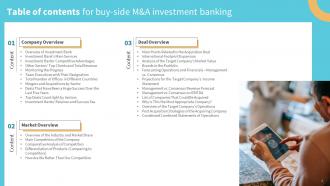
Slide 2: This slide includes the Table of contents.
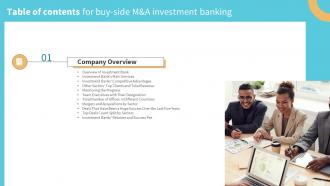
Slide 3: This slide elucidates the Title for the Topics to be covered in the next template.
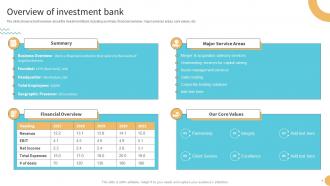
Slide 4: This slide presents an Overview of investment bank.
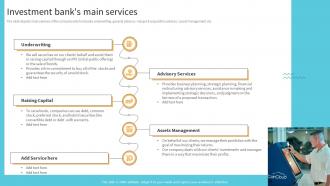
Slide 5: This slide states the Investment bank's main services.
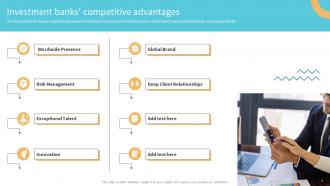
Slide 6: This slide indicates the Investment banks' competitive advantages.
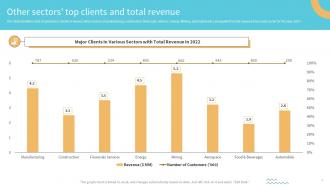
Slide 7: This slide reveals the Other sectors' top clients and total revenue.
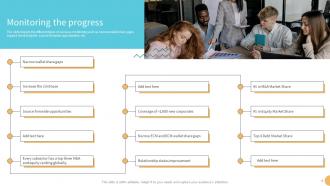
Slide 8: This slide deals with Monitoring the progress.
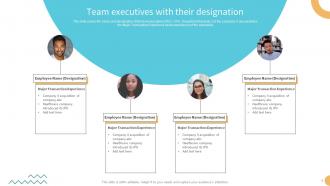
Slide 9: This slide mentions about the Team executives with their designation.
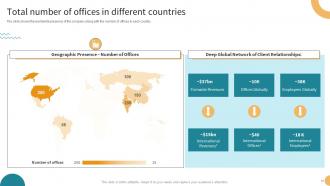
Slide 10: This slide depicts the Total number of offices in different countries.
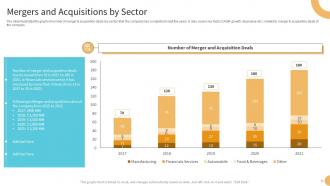
Slide 11: This slide elucidates the Mergers and Acquisitions by Sector.
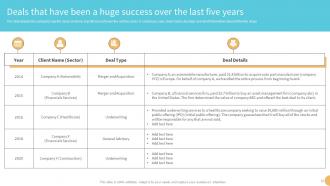
Slide 12: This slide illustrates the Deals that have been a huge success over the last five years.
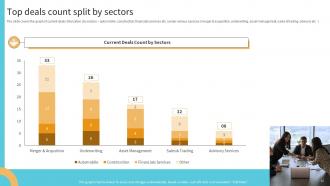
Slide 13: This slide showcases the Top deals count split by sectors.
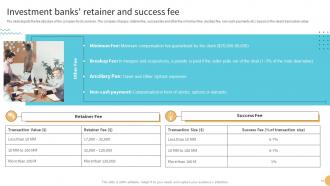
Slide 14: This slide displays the Investment banks' retainer and success fee.
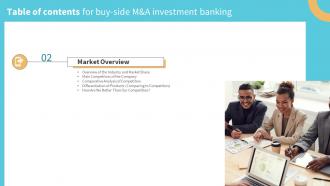
Slide 15: This slide incorporates the Title for the Contents to be covered next.
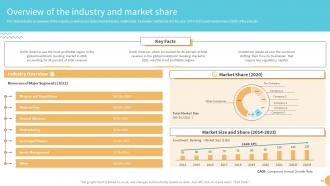
Slide 16: This slide exhibits an Overview of the industry and market share.
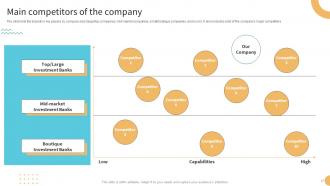
Slide 17: This slide states the Main competitors of the company.
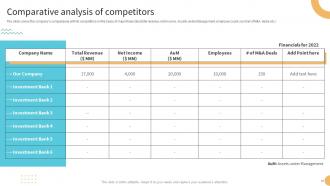
Slide 18: This slide represents the Comparative analysis of competitors.
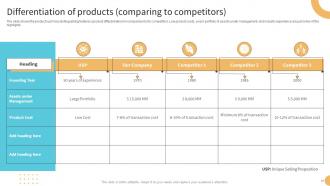
Slide 19: This slide reveals Differentiation of products (comparing to competitors).
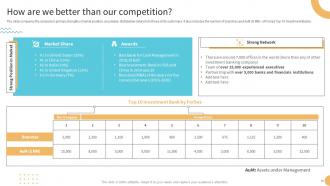
Slide 20: The slide compares the company's primary strengths to those of its customers.
Slide 21: This slide contains the Heading for the Ideas to be discussed further.
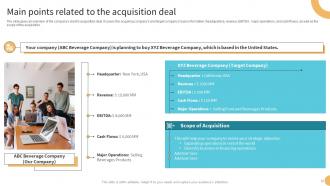
Slide 22: This slide highlights the Main points related to the acquisition deal.
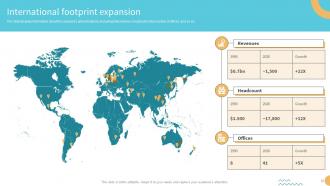
Slide 23: This slide illustrates the International footprint expansion.
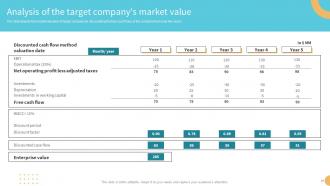
Slide 24: This slide represents the Analysis of the target company's market value.
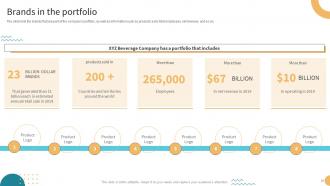
Slide 25: This slide depicts the Brands in the portfolio.
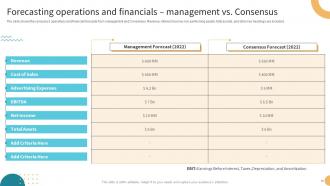
Slide 26: This slide illustrates the Forecasting operations and financials – management vs. Consensus.
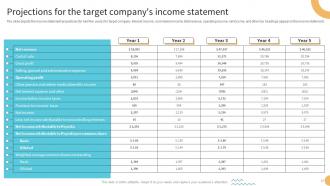
Slide 27: This slide highlights the Projections for the target company's income statement.
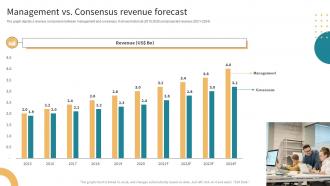
Slide 28: This slide presents the Management vs. Consensus revenue forecast.
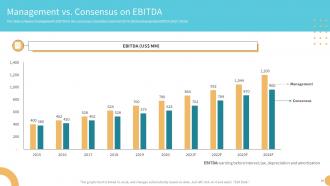
Slide 29: This slide provides information about Management vs. Consensus on EBITDA.
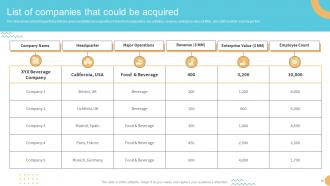
Slide 30: This slide highlights the List of companies that could be acquired.
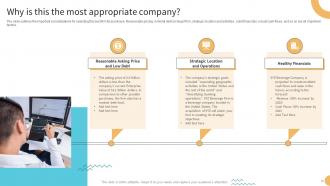
Slide 31: The slide outlines the important considerations for selecting the best firm for purchase.
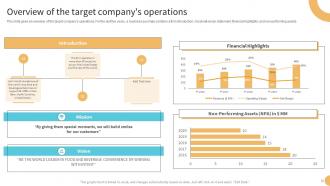
Slide 32: This slide reveals the Overview of the target company's operations.
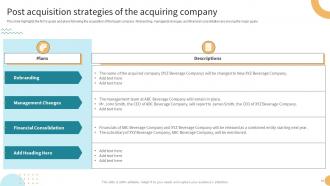
Slide 33: This slide explains the Post acquisition strategies of the acquiring company.
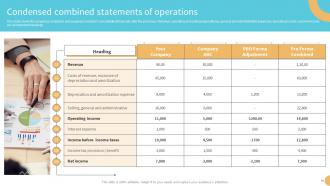
Slide 34: This slide presents the Condensed combined statements of operations.
Slide 35: This is the Icons slide for buy-side M&A investment banking.
Slide 36: This slide depicts the Additional Company information.
Slide 37: This slide is Our vision, mission & goal slide.
Slide 38: This slide reveals the 30 60 90 days plan for efficient planning.
Slide 39: This is Our target slide for stating Company targets.
Slide 40: This slide presents the Organization's Mind map.
Slide 41: This slide includes the Post it notes for reminders and deadlines.
Slide 42: This is the Puzzle slide with related imagery.
Slide 43: This slide elucidates the Magnifying glass for minute details.
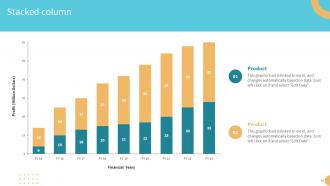
Slide 44: This slide presents the Stacked column for revealing information.
Slide 45: This is the Thank You slide for acknowledgement.
Buy Side M And A Investment Banking Powerpoint Presentation Slides with all 50 slides:
Use our Buy Side M And A Investment Banking Powerpoint Presentation Slides to effectively help you save your valuable time. They are readymade to fit into any presentation structure.







FAQs for Buy Side M And A Investment Banking
Look at strategic fit first - does their business actually make sense with yours? Then dive into the financials: revenue growth, profit margins, how much debt they're carrying. Their market position is huge too - are they dominating their space or just getting by? The cultural stuff is honestly the hardest to figure out, but it'll make or break everything later. Check if their management team is solid and whether people will bail after the acquisition. Don't forget about regulatory nonsense that could torpedo the whole thing. I'd make some kind of scoring system to compare your options - keeps you from getting too emotional about one target.
So in buy-side M&A, you're flipping the script completely. Instead of preparing pitch materials, you're the one doing detective work on the target company. You'll dig into their financials, ops, legal stuff - basically asking all the tough questions instead of fielding them. Way more investigative, which honestly I find more interesting. You control the timeline too (mostly). The whole dynamic changes because you're hunting for red flags and confirming value, not trying to look perfect. Oh, and start your diligence checklist early - tackle the potential deal-breakers first.
So basically you're stress-testing whether the deal actually makes financial sense. Build detailed cash flow models for different scenarios - this shows you what you can realistically pay without screwing your return targets. Your balance sheet and debt capacity get analyzed too, which leadership will definitely hammer you on later. Honestly, the trickiest part is backing into a solid valuation range for negotiations. Just make sure your assumptions aren't total garbage because people will tear them apart in deal reviews. It's your main weapon for proving the acquisition won't be a disaster.
Honestly, don't overthink this - focus on people first, then systems. Keep their best employees at all costs because losing talent will wreck everything. Map out what processes you're keeping vs ditching, then build a solid 100-day plan with real deadlines. The cultural stuff matters way more than people think. Get teams collaborating from day one, even on small projects. Oh, and definitely put integration managers from both companies in charge - give them actual decision-making power so things don't get stuck in committee hell. Trust me on that last part.
Do your homework first - solid due diligence gives you real bargaining power for price cuts and better warranties. Try to run a competitive process, even if you're just making it seem like you have other options (trust me, sellers hate that). Timing matters a ton too. End of quarter crunch? That's your moment. Get creative with deal structure - earnouts, seller financing, longer escrows to move risk around. Oh, and negotiate management retention deals separately so you don't jack up the main price. Honestly, just prep a few different scenarios before you walk in there.
Market conditions totally control what you can even do out there. Hot markets? You're fighting everyone else for deals, prices go nuts, and sellers act like kings - remember that 2021 chaos? Things cool off and suddenly you've got room to negotiate, better deals, sellers who actually want to work with you. Interest rates mess with everything too since they hit your financing and what you'll make. Honestly, I'd just focus on building your pipeline right now instead of overpaying for stuff. Wait it out.
Honestly, most people mess up by getting way too optimistic about synergies - like thinking 2+2 will somehow equal 6. Due diligence gets rushed when there's competition, which is such a mistake. Integration always costs more than you think, both time and money wise. Oh, and buyers fall in love with deals. I swear it's like dating - you ignore obvious red flags because you want it to work so badly. Before you even start, decide your max price and don't budge. Take your time with DD even if other bidders are circling. If the culture seems toxic or numbers feel sketchy, just walk. Better to miss one deal than get stuck with a disaster.
Oh man, cultural fit is HUGE - I've watched so many deals that looked amazing on paper just implode because the teams couldn't mesh. Leadership styles clash, decision-making gets weird, people start bailing left and right. Your productivity tanks and those synergies you were counting on? Gone. It's honestly like watching a slow-motion train wreck sometimes. During due diligence, you really need to dig into how both companies actually work day-to-day. Skip the glossy corporate presentations and figure out if these people can realistically function together.
Oh man, cross-border deals are a whole different beast. You're dealing with regulatory approval in like 3 different countries, plus all these foreign investment restrictions that'll make your head spin. Currency hedging is huge - FX risk can kill you during these long processes. Also, you definitely need local lawyers in their jurisdiction (expensive but worth it). The cultural stuff matters way more than most people think, honestly. Different accounting standards make comparing financials annoying too. Budget way more time and money than you think, and get your tax people involved early. Trust me on that last part - cross-border tax structuring gets messy quick.
Start with solid due diligence - financial, legal, operational stuff. Revenue quality matters more than top-line numbers, honestly. Check customer concentration and any sketchy legal issues. Cultural fit is huge too since that's where most deals crash and burn after closing. Structure it smart with earnouts and escrows. Good reps and warranties are your friend. Insurance for unknown liabilities is worth it - you never know what'll pop up six months later. Oh, and make checklists. Sounds boring but you'll thank yourself when you don't miss something obvious.
Start with cash flow stuff - EBITDA margins and free cash flow tell you if they're actually profitable. Revenue growth looks impressive but means nothing if they're bleeding money to hit those numbers. Check their debt situation and working capital trends too. Customer concentration is huge - I've seen companies tank because one major client left. Ask for 3 years of monthly financials, not just annual reports. You'll spot weird patterns or seasonal issues that way. Oh, and don't ignore return on invested capital. Shows you how well they're using their money.
Regulatory stuff will literally dictate your whole M&A approach. Start by baking antitrust and industry regs into your target screening - don't discover deal-breakers halfway through due diligence. Hart-Scott-Rodino filings? Yeah, they'll tack on months to your timeline. Such a headache but unavoidable. CFIUS reviews hit you if there's foreign buyers or sensitive sectors involved. I learned this the hard way on a tech deal last year. Build contingency plans early and always factor approval timelines into your offer structure. Trust me, regulatory risk assessment needs to happen upfront, not as an afterthought.
Dude, the tech game has completely changed M&A. AI deal sourcing finds targets way faster now, and those virtual data rooms are such a relief compared to flying around to look at physical files (what a pain that was). Real-time analytics let you run scenarios on the fly, which is honestly pretty cool. CRM keeps everything organized so you don't lose track of deals. Best part? Timeline's cut in half - we're talking 6-8 months instead of over a year. My advice? Start with a decent deal management platform, then add tools as you go. Don't try to build everything at once.
So there are three ways to value intangibles - cost, market, and income approaches. Income method is what most people go with because it looks at future cash flows from stuff like patents, customer lists, brand value. The hard part? Figuring out which cash flows actually come from specific intangibles vs just normal business stuff. Most buyers end up hiring valuation specialists because honestly this gets complicated fast. Oh and definitely get good documentation on how each asset contributes to revenue before you start - makes the whole process way smoother.
Honestly, PE buyers are a different beast entirely. They move fast and have serious cash, but man do they dig deep into your numbers. Every financial metric gets scrutinized because they need to hit specific returns for their investors. Price negotiations get intense since they're laser-focused on synergies and optimization. The timeline? Way quicker than dealing with strategic buyers usually. Just make sure your growth story actually makes sense for their 3-5 year flip timeline. If your financials can't handle their microscope treatment, you'll know pretty quickly.
-
This visual representation is stunning and easy to understand. I like how organized it is and informative it is.
-
Innovative and Colorful designs.