


Call Center Company Profile Powerpoint Presentation Slides




Try Before you Buy Download Free Sample Product
 Impress Your
 Audience
 100%
100% Editable
 Save Hours
 of Time


A company profile describes all the relevant elements of a business, which helps the investors and stakeholders evaluate the business value and performance. Check out our professionally designed Call Center Company Profile PowerPoint presentation. It covers the executive summary of BPO, company overview, vision mission, offices, business process outsourcing solutions, specialized services, and inbound and outbound calls volume rate. Additionally, It presents the business model, company journey roadmap, team org structure, management team, business clients, customer testimonials, awards, and accolades. Moreover, It describes financials, including revenue and profit, revenue breakdown of services by industries and regions, and integrated performance. At last, this profile includes a gender equality index, competitive analysis, financial performance comparison, SWOT analysis, complaint handling strategy, CSR initiatives, and a case study of a shopping website. Download our 100 percent editable and customizable company profile decks to know more in detail.
People who downloaded this PowerPoint presentation also viewed the following :
Content of this Powerpoint Presentation
Slide 1: This slide introduces Call Center Company Profile. State Your Company Name and begin.
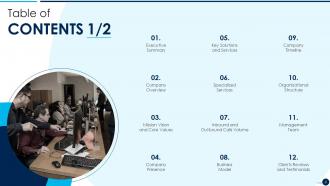
Slide 2: This slide presents Table of Content for the presentation.
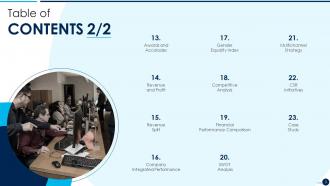
Slide 3: This is another slide continuing Table of Content for the presentation.
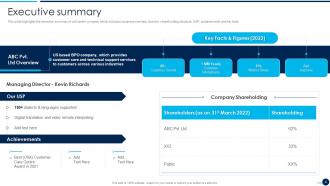
Slide 4: This slide highlights the executive summary of call center company.
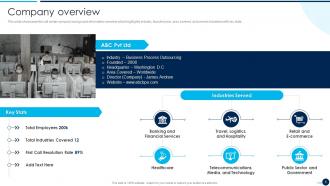
Slide 5: This slide showcases the call center company background information overview.
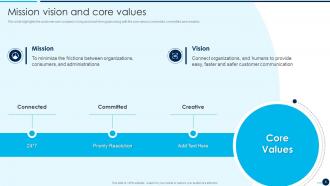
Slide 6: This slide highlights the customer care company’s long and short-term goals.
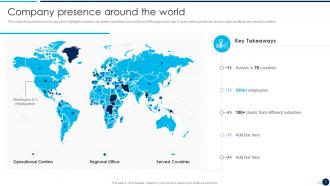
Slide 7: This slide represents Company presence around the world.
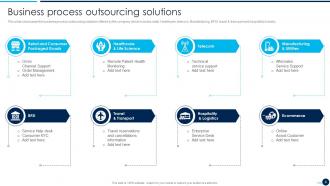
Slide 8: This slide shows Business process outsourcing solutions.
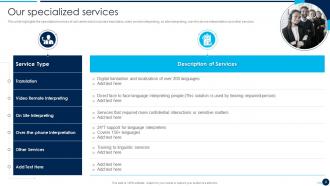
Slide 9: This slide presents specialized services of call center which includes translation, video remote interpreting, etc.
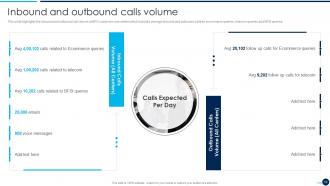
Slide 10: This slide highlights the inbound and outbound call volume at BPO customer care center.
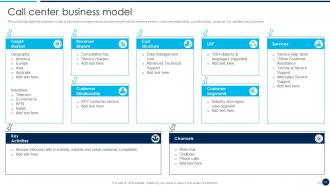
Slide 11: This slide displays the business model of call center company.
Slide 12: This slide represents Started with user experience improvement platform.
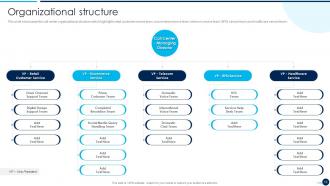
Slide 13: This slide showcases the call center organizational structure.
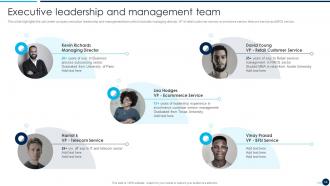
Slide 14: This slide shows Executive leadership and management team.
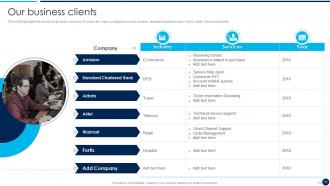
Slide 15: This slide highlights the clients of call center company.
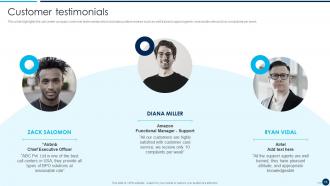
Slide 16: This slide presents the call center company customer testimonials .
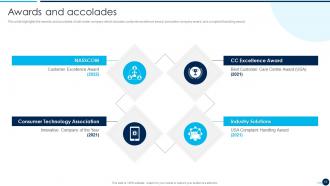
Slide 17: This slide displays the awards and accolades of call center company.
Slide 18: This slide showcases the revenue and profit of call center company.
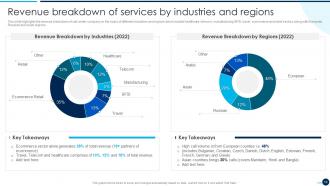
Slide 19: This slide shows Revenue breakdown of services by industries and regions.
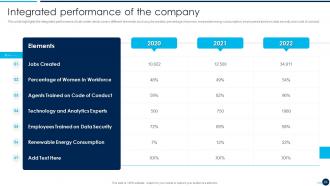
Slide 20: This slide presents Integrated performance of the company.
Slide 21: This slide highlights the gender equality index of call center company.
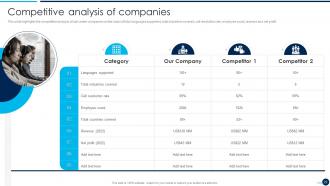
Slide 22: This slide displays the competitive analysis of call center companies.
Slide 23: This slide represents the financial performance analysis of multiple call centers.
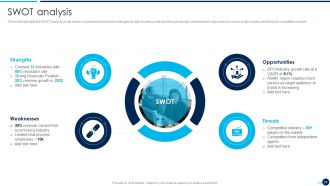
Slide 24: This slide highlights the SWOT analysis of call center company.
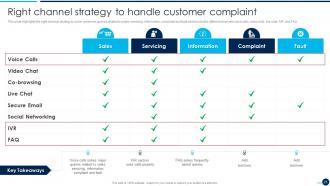
Slide 25: This slide showcases Right channel strategy to handle customer complaint.
Slide 26: This slide shows corporate social responsibilities activities of call center company.
Slide 27: This slide presents case study of call center company.
Slide 28: This slide displays Icons for call center company profile.
Slide 29: This slide is titled as Additional Slides for moving forward.
Slide 30: This slide provides 30 60 90 Days Plan with text boxes.
Slide 31: This slide displays Mind Map with related imagery.
Slide 32: This is a Timeline slide. Show data related to time intervals here.
Slide 33: This slide depicts Venn diagram with text boxes.
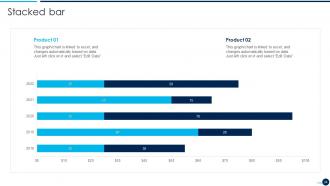
Slide 34: This slide represents Stacked Bar chart with two products comparison.
Slide 35: This slide presents Roadmap with additional textboxes.
Slide 36: This is a Thank You slide with address, contact numbers and email address.
Call Center Company Profile Powerpoint Presentation Slides with all 41 slides:
Use our Call Center Company Profile Powerpoint Presentation Slides to effectively help you save your valuable time. They are readymade to fit into any presentation structure.













FAQs for Call Center Company Profile
Most call centers do the obvious stuff - inbound customer service, outbound sales, tech support. They'll also handle appointment scheduling, order processing, live chat support, basically any customer-facing work. Some still do data entry but that's pretty rare now. The bigger ones usually pick a niche like healthcare or finance since those industries have crazy compliance rules. Oh, and if you're thinking about working with one, definitely ask about their CRM integrations and reporting first - you don't want to be stuck with some ancient system that can't talk to your existing tools.
So most call centers do a few things to keep quality decent. They'll monitor calls randomly and have QA teams review stuff with agents. Training happens pretty regularly too. The good ones are kinda obsessive about tracking customer feedback - like CSAT scores and post-call surveys. Real-time dashboards showing satisfaction and response times are pretty standard now. If you're checking out a call center partner, definitely ask to see their QA process and recent scores. That's honestly the quickest way to tell if they actually care about quality or just talk about it.
Okay so first thing - get a decent cloud phone system and CRM to track everything. IVR routing is pretty much mandatory now (even though we all secretly hate it lol). Call recording and analytics are huge for keeping quality up. Workforce management tools will save your life during crazy busy times - trust me on that one. Oh and definitely go omnichannel so agents aren't juggling different platforms for calls, chats, emails. That's honestly the bare minimum these days. Start there and add more stuff as you grow.
So most call centers just hire native speakers for their big markets - makes total sense. They route calls based on language so customers get matched with the right agents. The really good ones have teams spread across time zones for 24/7 coverage, which honestly is pretty clever. Some use translation software too but it's kinda hit or miss with cultural stuff. When you're shopping around, definitely ask what languages they cover during your busy hours and how they train their agents. That's gonna tell you real quick if they can actually handle your international crowd or if they're just talking a good game.
Honestly? Focus on first call resolution, average handle time, and customer satisfaction scores first - they'll tell you everything. Quality scores from call monitoring are clutch too. Agent utilization and abandonment rates matter, but here's the thing that drives me crazy: so many call centers get obsessed with just getting people off the phone quickly instead of actually fixing their problems. That's backwards thinking. Oh, and don't try tracking like 15 metrics right away or you'll go insane. Start with those main ones and you'll know exactly how your team's doing.
So most call centers do this combo approach - they'll start new people with product training and the whole "don't hang up on screaming customers" soft skills stuff. Then there's ongoing coaching sessions based on how their calls went, plus role-playing (which honestly sounds awkward but whatever works). Smart places cross-train people on different departments so they don't get burned out doing the same thing forever. Regular refreshers happen too. If you want to fix your training program, I'd record some calls first and see where people are actually struggling - that'll show you the real gaps.
Dude, data analytics is seriously a game-changer for call centers. Track stuff like how long calls take, if issues get solved on the first try, and customer satisfaction. The crazy amount of data these places generate is actually useful once you dig into it. You'll figure out which agents need help, when to schedule more staff, plus you can sometimes predict what customers want before they even call. Just make sure your dashboards don't suck - nobody wants to stare at confusing charts all day. Focus on the metrics that actually matter for making better decisions.
Honestly, the money part alone makes it worth considering - no hiring, training, or managing people on your payroll. These companies are literally pros at customer service, so they've got all the systems and know-how already figured out. You can ramp up during busy seasons or scale back when it's slow without the drama of layoffs. 24/7 coverage becomes their problem, not yours dealing with weird schedules and overtime costs. I'd probably start by adding up what you're spending now, then get quotes from like 3-4 different companies to compare.
So most call centers are using AI for chatbots and voice recognition stuff. The system automatically routes calls to the right people based on what customers need. Pretty cool how it can create tickets automatically and even detect when someone's getting pissed off through sentiment analysis. Basic questions like checking balances or resetting passwords get handled without bothering real agents. They're also predicting call volumes to figure out staffing - honestly wish my old retail job had that. If you're thinking about adding this, just start with simple FAQ bots first.
Look, flexible staffing is everything here. Get part-timers who can jump in during crazy times, plus cross-train people from other departments. Historical data helps predict when you'll get slammed - sounds boring but it works. Callback options are a lifesaver (seriously, why doesn't everyone do this?). Real-time monitoring lets supervisors move calls around or open backup lines fast. Oh, and queue management tools help too. But honestly? Start by figuring out your peak patterns first. You can't fix anything if you don't know when the chaos actually happens.
So they do a ton of training - like, probably more than you'd expect. Call centers also use encrypted systems and monitor calls constantly. Most places have certifications like PCI DSS for payments, HIPAA if they handle medical stuff, GDPR for European customers. Regular audits are pretty standard too. They document literally everything, which honestly seems excessive but I get why. Before you work with any call center though, definitely ask to see their compliance docs upfront. Don't just take their word for it - some places talk a big game but their actual protocols are sketchy.
Oof, where do I start? Turnover is brutal - some places lose like 75% of their people every year. Customers want everything instantly now, but your agents are handling way more complicated stuff than before. Managing remote teams is honestly such a pain compared to having everyone in one spot. Plus there's always some new tech you're supposed to learn. Oh, and people expect human agents to be as fast and perfect as AI, which is kinda unrealistic if you ask me. Your best bet? Work on training and keeping people happy first. Those changes actually move the needle.
Most call centers are switching to cloud-based phone systems so agents can work from home. You need solid internet and VPN security, obviously. The hardest part? Keeping everyone connected as a team when they're all working from their couches. Those virtual coffee meetings actually help more than you'd think. Hybrid setups work best - some people at home, others in office. Oh, and definitely start with your veteran agents first since they won't need their hand held through the whole transition. They've got the monitoring software down to track everything anyway.
Honestly, you NEED a CRM for your call center - it's a game changer. Your agents get instant access to customer history, past issues, all that stuff so they're not asking people to repeat themselves constantly (which is super annoying btw). Plus it tracks purchase patterns and complaints so you can actually personalize conversations. I've seen call centers try to wing it without one and it's a mess. Get something that plays nice with your phone system though - the integration makes everything smoother and customers won't hate calling you.
Most places try to keep people around with decent career programs and flexible schedules that don't totally wreck your life. The training budgets are actually pretty solid - sometimes better than what my friend gets at his startup, which is wild. They'll do recognition stuff and team activities, plus remote work options for better work-life balance. Mental health support too, which is huge. You'll want to ask about their promotion rates when you interview though. That's the real test of whether they actually care about moving people up or just want warm bodies answering phones. Internal mobility stats don't lie.
-
Wow, never been this impressed with any online service provider. Really appreciate the customer support all along from the navigation to purchasing the right products.
-
The customer care of SlideTeam is very responsive. I was having a payment issue and they fixed it for me in no time.