

Diapositivas de presentación de Powerpoint del perfil de la empresa del centro de atención telefónica





Try Before you Buy Download Free Sample Product
 Impress Your
Audience
 100%
Editable
 Save Hours
of Time


El perfil de una empresa describe todos los elementos relevantes de una empresa, lo que ayuda a los inversores y partes interesadas a evaluar el valor y el rendimiento de la empresa. Echa un vistazo a nuestra presentación en PowerPoint del perfil de la empresa del centro de atención telefónica diseñada profesionalmente. Cubre el resumen ejecutivo de BPO, la descripción general de la empresa, la misión de la visión, las oficinas, las soluciones de externalización de procesos comerciales, los servicios especializados y la tasa de volumen de llamadas entrantes y salientes. Además, presenta el modelo comercial, la hoja de ruta del viaje de la empresa, la estructura organizativa del equipo, el equipo de gestión, los clientes comerciales, los testimonios de los clientes, los premios y los reconocimientos. Además, describe las finanzas, incluidos los ingresos y las ganancias, el desglose de los ingresos de los servicios por industrias y regiones, y el desempeño integrado. Por último, este perfil incluye un índice de igualdad de género, análisis competitivo, comparación de desempeño financiero, análisis FODA, estrategia de manejo de quejas, iniciativas de RSE y un caso de estudio de un sitio web de compras. Descarga nuestra baraja 100% editable y personalizable para conocer más en detalle.
People who downloaded this PowerPoint presentation also viewed the following :
Contenido de esta presentación de Powerpoint
Diapositiva 1 : esta diapositiva presenta el perfil de la empresa del centro de llamadas. Indique el nombre de su empresa y comience.
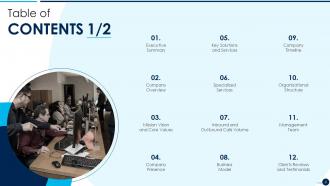
Diapositiva 2 : Esta diapositiva presenta la tabla de contenido de la presentación.
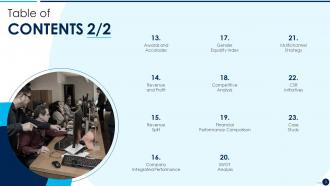
Diapositiva 3 : esta es otra diapositiva que continúa con la tabla de contenido de la presentación.
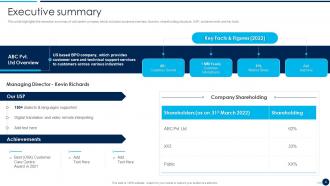
Diapositiva 4 : Esta diapositiva destaca el resumen ejecutivo de la empresa del centro de llamadas.
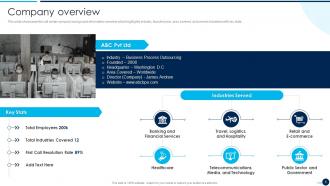
Diapositiva 5 : Esta diapositiva muestra la descripción general de los antecedentes de la empresa del centro de llamadas.
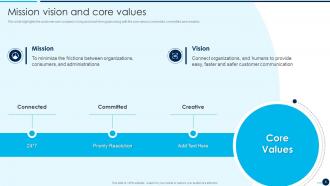
Diapositiva 6 : Esta diapositiva destaca los objetivos a corto y largo plazo de la empresa de atención al cliente.
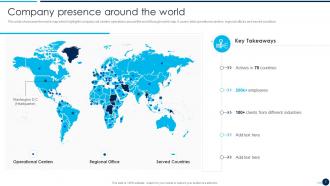
Diapositiva 7 : Esta diapositiva representa la presencia de la empresa en todo el mundo.
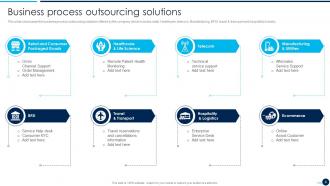
Diapositiva 8 : Esta diapositiva muestra soluciones de subcontratación de procesos comerciales.
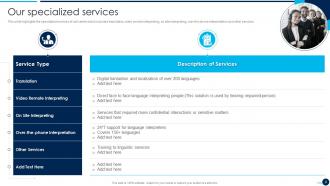
Diapositiva 9 : Esta diapositiva presenta los servicios especializados del centro de llamadas que incluyen traducción, interpretación remota por video, etc.
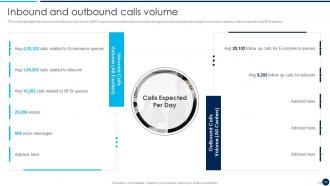
Diapositiva 10 : esta diapositiva destaca el volumen de llamadas entrantes y salientes en el centro de atención al cliente de BPO.
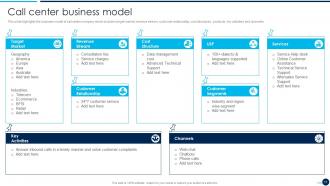
Diapositiva 11 : esta diapositiva muestra el modelo comercial de la empresa de centro de llamadas.
Diapositiva 12 : esta diapositiva representa Comenzó con la plataforma de mejora de la experiencia del usuario.
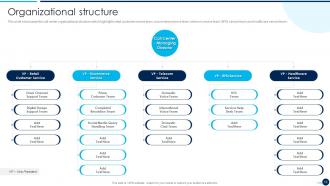
Diapositiva 13 : Esta diapositiva muestra la estructura organizativa del centro de llamadas.
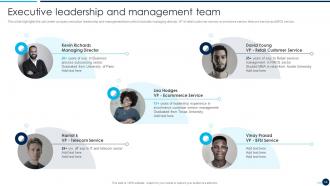
Diapositiva 14 : Esta diapositiva muestra el liderazgo ejecutivo y el equipo de gestión.
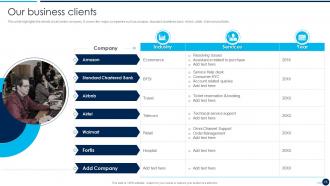
Diapositiva 15 : esta diapositiva destaca a los clientes de la empresa del centro de llamadas.
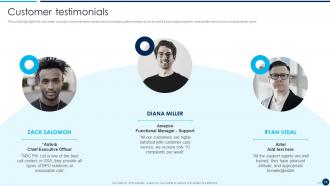
Diapositiva 16 : Esta diapositiva presenta los testimonios de los clientes de la empresa del centro de llamadas.
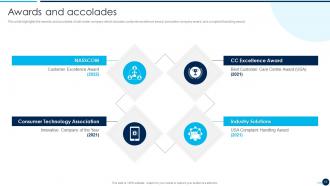
Diapositiva 17 : esta diapositiva muestra los premios y reconocimientos de la empresa del centro de llamadas.
Diapositiva 18 : esta diapositiva muestra los ingresos y las ganancias de la empresa del centro de llamadas.
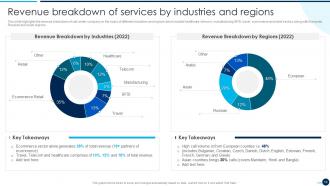
Diapositiva 19 : Esta diapositiva muestra el desglose de los ingresos de los servicios por industrias y regiones.
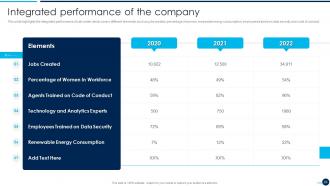
Diapositiva 20 : Esta diapositiva presenta el desempeño integrado de la empresa.
Diapositiva 21 : Esta diapositiva destaca el índice de igualdad de género de la empresa del centro de llamadas.
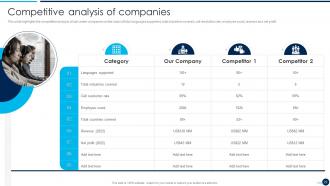
Diapositiva 22 : Esta diapositiva muestra el análisis competitivo de las empresas de centros de llamadas.
Diapositiva 23 : Esta diapositiva representa el análisis de rendimiento financiero de varios centros de llamadas.
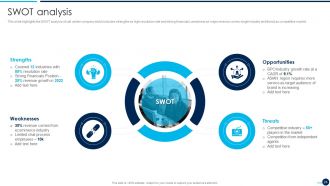
Diapositiva 24 : Esta diapositiva destaca el análisis FODA de la empresa de centro de llamadas.
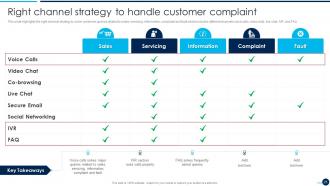
Diapositiva 25 : esta diapositiva muestra la estrategia del canal correcto para manejar las quejas de los clientes.
Diapositiva 26 : Esta diapositiva muestra las actividades de responsabilidad social corporativa de la empresa del centro de llamadas.
Diapositiva 27 : Esta diapositiva presenta un estudio de caso de una empresa de centro de llamadas.
Diapositiva 28 : esta diapositiva muestra los íconos para el perfil de la empresa del centro de llamadas.
Diapositiva 29 : esta diapositiva se titula Diapositivas adicionales para avanzar.
Diapositiva 30 : esta diapositiva proporciona un plan de 30 60 90 días con cuadros de texto.
Diapositiva 31 : esta diapositiva muestra el mapa mental con imágenes relacionadas.
Diapositiva 32 : esta es una diapositiva de la línea de tiempo. Mostrar datos relacionados con intervalos de tiempo aquí.
Diapositiva 33 : Esta diapositiva muestra el diagrama de Venn con cuadros de texto.
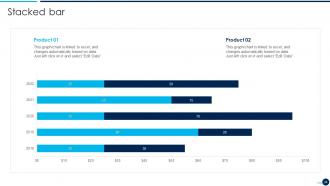
Diapositiva 34 : esta diapositiva representa un gráfico de barras apiladas con una comparación de dos productos.
Diapositiva 35 : esta diapositiva presenta la hoja de ruta con cuadros de texto adicionales.
Diapositiva 36 : Esta es una diapositiva de agradecimiento con dirección, números de contacto y dirección de correo electrónico.
Diapositivas de la presentación de Powerpoint del perfil de la empresa del centro de atención telefónica con las 41 diapositivas:
Utilice nuestras diapositivas de presentación de Powerpoint del perfil de la empresa del centro de llamadas para ayudarlo a ahorrar su valioso tiempo de manera efectiva. Están listos para encajar en cualquier estructura de presentación.













FAQs for Call Center Company Profile
Most call centers do the obvious stuff - inbound customer service, outbound sales, tech support. They'll also handle appointment scheduling, order processing, live chat support, basically any customer-facing work. Some still do data entry but that's pretty rare now. The bigger ones usually pick a niche like healthcare or finance since those industries have crazy compliance rules. Oh, and if you're thinking about working with one, definitely ask about their CRM integrations and reporting first - you don't want to be stuck with some ancient system that can't talk to your existing tools.
So most call centers do a few things to keep quality decent. They'll monitor calls randomly and have QA teams review stuff with agents. Training happens pretty regularly too. The good ones are kinda obsessive about tracking customer feedback - like CSAT scores and post-call surveys. Real-time dashboards showing satisfaction and response times are pretty standard now. If you're checking out a call center partner, definitely ask to see their QA process and recent scores. That's honestly the quickest way to tell if they actually care about quality or just talk about it.
Okay so first thing - get a decent cloud phone system and CRM to track everything. IVR routing is pretty much mandatory now (even though we all secretly hate it lol). Call recording and analytics are huge for keeping quality up. Workforce management tools will save your life during crazy busy times - trust me on that one. Oh and definitely go omnichannel so agents aren't juggling different platforms for calls, chats, emails. That's honestly the bare minimum these days. Start there and add more stuff as you grow.
So most call centers just hire native speakers for their big markets - makes total sense. They route calls based on language so customers get matched with the right agents. The really good ones have teams spread across time zones for 24/7 coverage, which honestly is pretty clever. Some use translation software too but it's kinda hit or miss with cultural stuff. When you're shopping around, definitely ask what languages they cover during your busy hours and how they train their agents. That's gonna tell you real quick if they can actually handle your international crowd or if they're just talking a good game.
Honestly? Focus on first call resolution, average handle time, and customer satisfaction scores first - they'll tell you everything. Quality scores from call monitoring are clutch too. Agent utilization and abandonment rates matter, but here's the thing that drives me crazy: so many call centers get obsessed with just getting people off the phone quickly instead of actually fixing their problems. That's backwards thinking. Oh, and don't try tracking like 15 metrics right away or you'll go insane. Start with those main ones and you'll know exactly how your team's doing.
So most call centers do this combo approach - they'll start new people with product training and the whole "don't hang up on screaming customers" soft skills stuff. Then there's ongoing coaching sessions based on how their calls went, plus role-playing (which honestly sounds awkward but whatever works). Smart places cross-train people on different departments so they don't get burned out doing the same thing forever. Regular refreshers happen too. If you want to fix your training program, I'd record some calls first and see where people are actually struggling - that'll show you the real gaps.
Dude, data analytics is seriously a game-changer for call centers. Track stuff like how long calls take, if issues get solved on the first try, and customer satisfaction. The crazy amount of data these places generate is actually useful once you dig into it. You'll figure out which agents need help, when to schedule more staff, plus you can sometimes predict what customers want before they even call. Just make sure your dashboards don't suck - nobody wants to stare at confusing charts all day. Focus on the metrics that actually matter for making better decisions.
Honestly, the money part alone makes it worth considering - no hiring, training, or managing people on your payroll. These companies are literally pros at customer service, so they've got all the systems and know-how already figured out. You can ramp up during busy seasons or scale back when it's slow without the drama of layoffs. 24/7 coverage becomes their problem, not yours dealing with weird schedules and overtime costs. I'd probably start by adding up what you're spending now, then get quotes from like 3-4 different companies to compare.
So most call centers are using AI for chatbots and voice recognition stuff. The system automatically routes calls to the right people based on what customers need. Pretty cool how it can create tickets automatically and even detect when someone's getting pissed off through sentiment analysis. Basic questions like checking balances or resetting passwords get handled without bothering real agents. They're also predicting call volumes to figure out staffing - honestly wish my old retail job had that. If you're thinking about adding this, just start with simple FAQ bots first.
Look, flexible staffing is everything here. Get part-timers who can jump in during crazy times, plus cross-train people from other departments. Historical data helps predict when you'll get slammed - sounds boring but it works. Callback options are a lifesaver (seriously, why doesn't everyone do this?). Real-time monitoring lets supervisors move calls around or open backup lines fast. Oh, and queue management tools help too. But honestly? Start by figuring out your peak patterns first. You can't fix anything if you don't know when the chaos actually happens.
So they do a ton of training - like, probably more than you'd expect. Call centers also use encrypted systems and monitor calls constantly. Most places have certifications like PCI DSS for payments, HIPAA if they handle medical stuff, GDPR for European customers. Regular audits are pretty standard too. They document literally everything, which honestly seems excessive but I get why. Before you work with any call center though, definitely ask to see their compliance docs upfront. Don't just take their word for it - some places talk a big game but their actual protocols are sketchy.
Oof, where do I start? Turnover is brutal - some places lose like 75% of their people every year. Customers want everything instantly now, but your agents are handling way more complicated stuff than before. Managing remote teams is honestly such a pain compared to having everyone in one spot. Plus there's always some new tech you're supposed to learn. Oh, and people expect human agents to be as fast and perfect as AI, which is kinda unrealistic if you ask me. Your best bet? Work on training and keeping people happy first. Those changes actually move the needle.
Most call centers are switching to cloud-based phone systems so agents can work from home. You need solid internet and VPN security, obviously. The hardest part? Keeping everyone connected as a team when they're all working from their couches. Those virtual coffee meetings actually help more than you'd think. Hybrid setups work best - some people at home, others in office. Oh, and definitely start with your veteran agents first since they won't need their hand held through the whole transition. They've got the monitoring software down to track everything anyway.
Honestly, you NEED a CRM for your call center - it's a game changer. Your agents get instant access to customer history, past issues, all that stuff so they're not asking people to repeat themselves constantly (which is super annoying btw). Plus it tracks purchase patterns and complaints so you can actually personalize conversations. I've seen call centers try to wing it without one and it's a mess. Get something that plays nice with your phone system though - the integration makes everything smoother and customers won't hate calling you.
Most places try to keep people around with decent career programs and flexible schedules that don't totally wreck your life. The training budgets are actually pretty solid - sometimes better than what my friend gets at his startup, which is wild. They'll do recognition stuff and team activities, plus remote work options for better work-life balance. Mental health support too, which is huge. You'll want to ask about their promotion rates when you interview though. That's the real test of whether they actually care about moving people up or just want warm bodies answering phones. Internal mobility stats don't lie.
-
Wow, never been this impressed with any online service provider. Really appreciate the customer support all along from the navigation to purchasing the right products.
-
The customer care of SlideTeam is very responsive. I was having a payment issue and they fixed it for me in no time.