


Channel Sales Marketing Plan And Strategy To Increase Sales Powerpoint Presentation Slides





Try Before you Buy Download Free Sample Product
 Impress Your
 Audience
 100%
100% Editable
 Save Hours
 of Time


Our Channel Sales Marketing Plan And Strategy To Increase Sales Powerpoint Presentation Slides are topically designed to provide an attractive backdrop to any subject. Use them to look like a presentation pro.
People who downloaded this PowerPoint presentation also viewed the following :
Content of this Powerpoint Presentation
Slide 1: This slide introduces Channel Sales Marketing Plan And Strategy To Increase Sales. State your Company name and begin.
Slide 2: This slide displays Agenda.
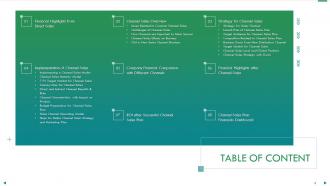
Slide 3: This slide shows Table of Content of the presentation.
Slide 4: This slide displays Table of content.
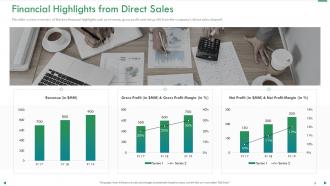
Slide 5: This slide covers overview of the key financial highlights such as revenue, gross profit and net profit from the company’s direct sales channel.
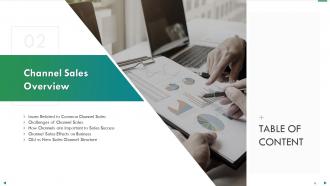
Slide 6: This slide shows Table of Content.
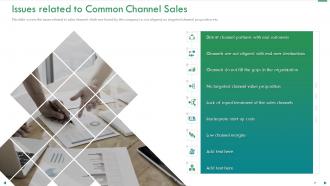
Slide 7: This slide covers the issues related to sales channel which are faced by the company i.e. not aligned, no targeted channel proposition etc.
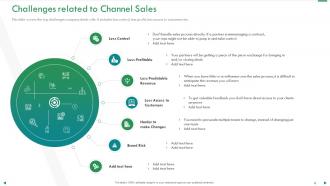
Slide 8: This slide covers the top challenges company deals with. It includes less control, less profit, less access to customers etc.
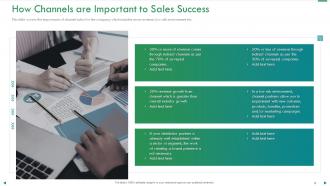
Slide 9: This slide covers the importance of channel sales for the company which includes more revenue, low risk environment etc.
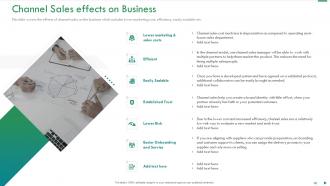
Slide 10: This slide covers the effects of channel sales on the business which includes lower marketing cost, efficiency, easily scalable etc.
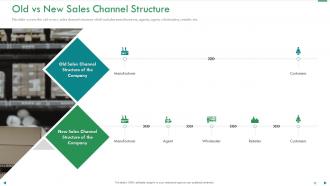
Slide 11: This slide covers the old vs new sales channel structure which includes manufacturers, agents, agent, wholesalers, retailer etc.
Slide 12: This slide shows Table of Content.
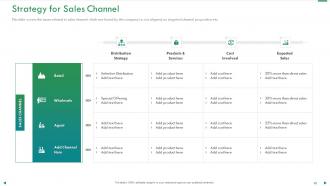
Slide 13: This slide covers the issues related to sales channel which are faced by the company i.e. not aligned, no targeted channel proposition etc.
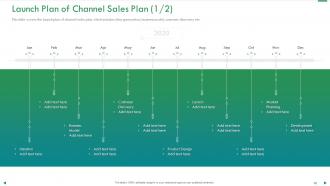
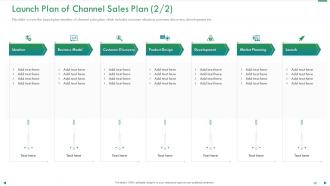
Slide 14: This slide covers the launch plan of channel sales plan which includes idea generation, business model, customer discovery etc.
Slide 15: This slide covers the launch plan timeline of channel sales plan which includes customer ideation, customer discovery, development etc.
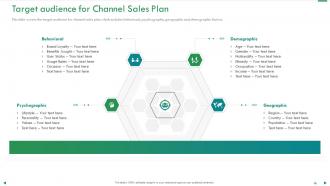
Slide 16: This slide covers the target audience for channel sales plan which includes behavioral, psychographic, geographic and demographic factors.
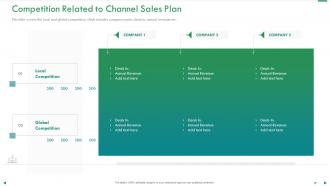
Slide 17: This slide covers the local and global competition which includes company name, deals in, annual revenue etc.
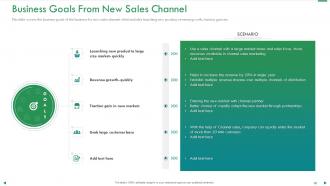
Slide 18: This slide covers the business goals of the business for new sales channel which includes launching new product, revenue growth, traction gain etc.
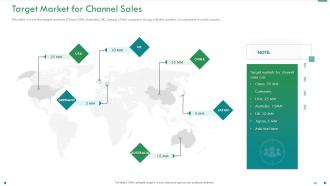
Slide 19: This slide covers the target markets (China, USA, Australia, UK, Japan) of the company along with the number of customers in each country.
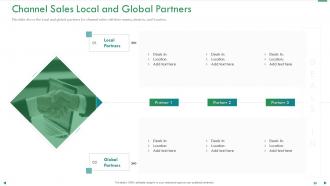
Slide 20: This slide shows the local and global partners for channel sales with their names, deals in, and location.
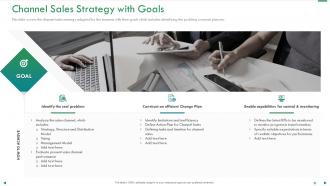
Slide 21: This slide covers the channel sales strategy adapted by the business with their goals which includes identifying the problem, construct plan etc.
Slide 22: This slide shows Table of Content.
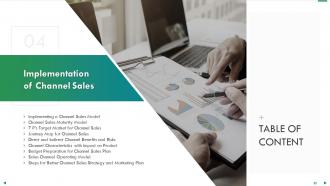
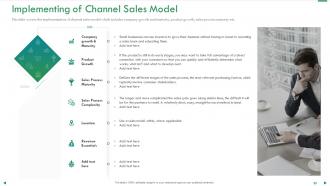
Slide 23: This slide covers the implementation of channel sales model which includes company growth and maturity, product growth, sales process maturity etc.
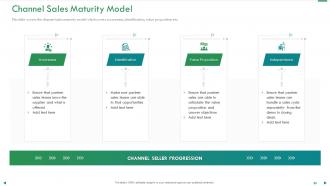
Slide 24: This slide covers the channel sales maturity model which covers awareness, identification, value proposition etc.
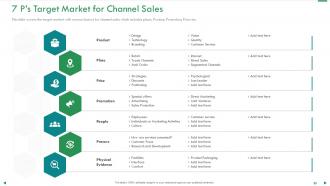
Slide 25: This slide covers the target market with various factors for channel sales which includes place, Product, Promotion, Price etc.
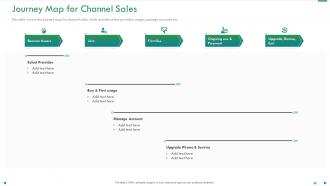
Slide 26: This slide covers the journey map for channel sales which includes select provider, usage, manage accounts etc.
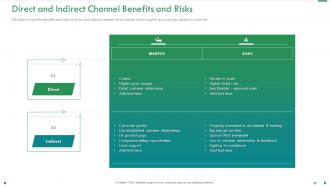
Slide 27: This slide covers the benefits and risks of direct and indirect channel which include control, higher gross margin, harder to scale etc.
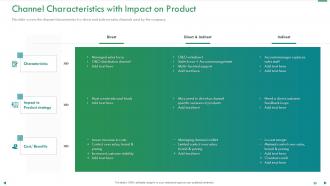
Slide 28: This slide covers the channel characteristics for direct and indirect sales channels used by the company.
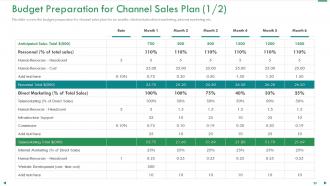
Slide 29: This slide covers the budget preparation for channel sales plan for six months which includes direct marketing, internet marketing etc.
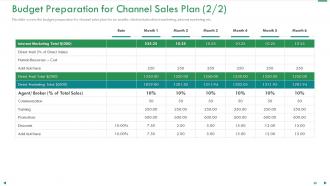
Slide 30: This slide covers the budget preparation for channel sales plan for six months which includes direct marketing, internet marketing etc.
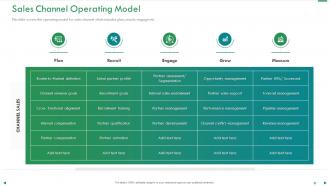
Slide 31: This slide covers the operating model for sales channel which includes plan, recruit, engage etc.
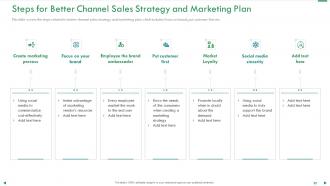
Slide 32: This slide covers the steps related to better channel sales strategy and marketing plan which includes focus on brand, put customer first etc.
Slide 33: This slide displays Table of Content.
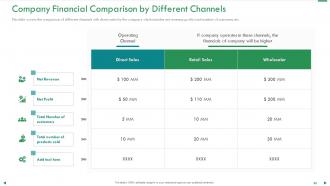
Slide 34: This slide covers the comparison of different channels with direct sales by the company which includes net revenue, profit, total number of customers etc.
Slide 35: This slide displays Table of the content.
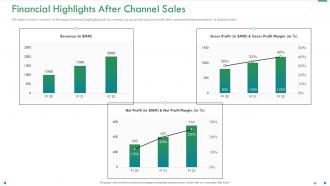
Slide 36: This slide covers overview of the major financial highlights such as revenue, gross profit and net profit after successful implementation of channel sales.
Slide 37: This slide shows Table of Content.
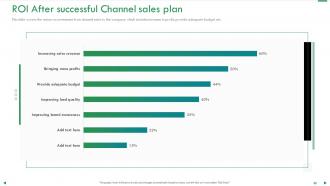
Slide 38: This slide covers the return on investment from channel sales to the company which includes increase in profit, provide adequate budget etc.
Slide 39: This slide shows Table of Content.
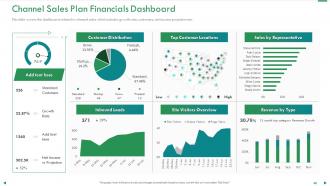
Slide 40: This slide covers the dashboard related to channel sales which includes growth rate, customers, net income projection etc.
Slide 41: This is Icons Slide for Channel Sales Marketing Plan and Strategy to Increase Sales
Slide 42: This slide is titled as Additional Slides for moving forward.
Slide 43: This slide shows Vision, Mission and Goals.
Slide 44: This is Our team slide with Names and Designations.
Slide 45: This is About Us slide to showcase Company specifications.
Slide 46: This slide displays Comparison
Slide 47: This is financial slide showing finance related stuff.
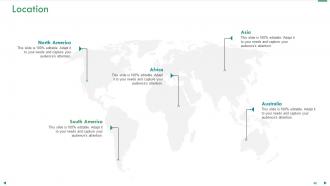
Slide 48: This slide depicts Company's location.
Slide 49: This slide is titled as Post it notes.
Slide 50: This slide shows Timeline process.
Slide 51: This is Thank you slide with Contact details.
Channel Sales Marketing Plan And Strategy To Increase Sales Powerpoint Presentation Slides with all 51 slides:
Use our Channel Sales Marketing Plan And Strategy To Increase Sales Powerpoint Presentation Slides to effectively help you save your valuable time. They are readymade to fit into any presentation structure.




FAQs for Channel Sales Marketing Plan And Strategy To Increase Sales
Okay so you need five things to make this work. First, figure out which partners actually matter - tier your resellers by who's got potential vs who's dead weight. Your value prop needs to be partner-focused too (what do THEY get out of it). Joint marketing is where the magic happens - co-branded stuff, splitting event costs, sharing leads. Oh and enablement materials are huge... sales tools, training, battlecards, all that. Honestly the tracking part is boring but you gotta measure performance and do regular check-ins. Bottom line: make it brain-dead easy for them to sell your product and show them real money.
First thing - figure out what you actually need from a partner. Market reach, customer overlap, tech skills that fill your gaps. Check their sales history and whether they're financially solid (you don't want them going under in six months). Also, are they gonna treat this seriously or like some weekend project? Look at their territory coverage and existing partnerships - might create weird conflicts with your current setup. Cultural fit matters more than people think, honestly. I'd make some kind of scoring sheet to compare everyone objectively. Keeps you from picking someone just because you liked them in the meeting.
Honestly, just focus on three big areas: revenue, relationships, and how smoothly things actually run. Partner-driven revenue and deal registration rates are obvious ones. But here's what most people miss - track how many partners are *actually* selling vs just sitting there doing nothing (it's depressing how low that number usually is). Monitor engagement levels, training completion, average deal size through channels. Oh and definitely watch for channel conflict incidents because those blow up fast. Partner satisfaction scores will tell you tons. Look, tracking 5-7 metrics consistently beats drowning in spreadsheets. Start with partner revenue contribution and satisfaction - those two alone show you if your strategy's working or if you're just wasting time.
Dude, training and support will literally make or break this whole thing. Your partners need to know your products cold, otherwise they'll just push whatever's easiest to sell (hint: not yours). Give them solid sales materials, lead gen tools, maybe some co-marketing stuff. I mean, you're basically asking them to choose your product over simpler options they already understand. Map out where your current partners are struggling knowledge-wise. Then build some kind of structured onboarding - doesn't have to be fancy, just consistent. Without this foundation, you're setting everyone up to fail.
So digital marketing is basically like giving your channel partners superpowers. You can whip up co-branded campaigns and hand them ready-to-go social media posts, email templates, landing pages - all that good stuff. Plus everything's trackable, which is honestly pretty cool because you'll see exactly who's killing it and who needs help. Think of it as your sales team working around the clock for everyone in your network. Oh, and definitely start with a partner portal where they can just download whatever they need. Partners eat that stuff up when it's professional and ready to use immediately.
So you definitely want one solid brand guide that partners can actually find and use - logos, messaging, voice, all that stuff. Check in with them regularly too because I swear some partners will just make up their own version of your brand if you let them! Templates are a lifesaver here. Give them pre-made email templates, social posts, sales sheets, whatever they need most. Honestly, the easier you make it to follow the rules, the less likely they are to go completely off-script. Make staying on-brand the path of least resistance.
Honestly, it all comes down to three things: cash, ego, and not making their lives harder. Set up tiered incentives - better margins when they hit volume targets, bonuses for pushing certain products, quarterly rewards. Recognition stuff works way better than you'd think too. Partners love getting called out at events or earning some special status tier. Make selling your stuff dead simple with solid training and marketing materials they can actually use. Oh, and streamline everything so they're not jumping through hoops. When your products become their easiest win for quota, you've got them.
Track revenue, not just leads - that's where most people screw up their budgets. Put your money into 3-4 top partners instead of spreading it everywhere. Honestly, I've watched so many companies blow cash on these flashy co-marketing campaigns that look great but don't actually sell anything. Better to go deep with your best partners on joint campaigns and solid enablement stuff. Oh, and negotiate your MDF terms upfront so you're not constantly chasing people down for reimbursements later. Do quarterly reviews with your channel team to shift money around based on what's actually working.
Honestly, the worst thing you can do is treat all your partners the same - they're totally different and need different approaches. I made the mistake once of launching a campaign without asking partners what they actually needed first. Big mistake! Make sure everyone knows their role upfront and what winning looks like. Also, your training materials better be solid because partners can't sell what they don't understand. Oh, and don't just disappear after launch - they need ongoing support. Start by grouping your partners into tiers and customize everything from there.
Honestly, customer feedback is like having a cheat sheet for your channel strategy. It shows you which channels actually work and which ones are just burning money. The messaging part is huge too - you'll figure out what makes people buy vs. what makes them bounce. What's wild is when customers love your product but absolutely hate how your partners pitch it. That disconnect happens more than you'd think. Set up regular check-ins with your best partners first, then expand from there. Oh, and don't forget to get feedback from actual end customers too - they see totally different pain points than your partners do.
Honestly, start with whatever CRM you're already using - Salesforce or HubSpot handle partner stuff surprisingly well. Then look at PRM platforms like Channeltivity or Crossbeam for the heavy lifting on performance tracking. Slack channels keep communication smooth between everyone. Deal registration tools are a must unless you want partners stepping on each other's toes constantly (been there). Marketing automation makes co-branded campaigns way less painful too. I'd skip the fancy dedicated tools at first - your current CRM plus some basic communication setup will get you pretty far until your partner network actually grows.
Here's how I'd tackle it: first figure out your partner types - big enterprise resellers vs smaller regional ones need totally different approaches. Once that's sorted, help each partner group break down their own customers by industry, size, buying patterns, location stuff. Honestly the whole thing reminds me of those Russian dolls but actually makes you money! You'll want custom marketing materials for each combo. Oh and your best partners? Give them content they can slap their own branding on for their VIP clients.
Honestly, co-marketing can bump your channel sales by like 15-30% if you don't screw it up. Split costs, bigger audience reach - the usual benefits. But here's the thing that actually matters: your partners get way more excited about selling your stuff when their brand is plastered all over the campaign too. Makes sense, right? Just don't skip the boring upfront work on messaging and target audiences or you'll hate each other by week two. Oh and definitely test with one partner first on something small. I learned that one the hard way lol.
Honestly, you gotta nail down clear guidelines first - brand messaging, pricing, sales processes, all that stuff. Training programs are a must too. I'd set up regular check-ins and audits because partners will definitely go rogue if you don't stay on top of them. Communication is huge - give them a way to ask questions fast instead of just winging it. Oh, and make their lives easier with actual tools they can use. Marketing materials, scripts, templates. If you hand them everything upfront and do consistent follow-ups, they're way more likely to stick to what you want. It's extra work but totally worth it.
Honestly, AI tools are taking over partner enablement right now - everyone's obsessed with tracking performance data. COVID basically forced the whole industry to go digital-first, which actually worked out pretty well. Account-based marketing used to be nice-to-have, now it's mandatory for channel programs. Partners want real collaboration too, not just transactional BS. Oh, and invest in decent partner portals ASAP if you haven't already. Your competition is probably way ahead on automation tools. I learned this the hard way last quarter when our portal crashed during a major launch.
-
Content of slide is easy to understand and edit.
-
Great quality slides in rapid time.