


Klinische Versuchsphasen Powerpoint-Präsentationsfolien




Try Before you Buy Download Free Sample Product
 Impress Your
 Audience
 100%
100% Editable
 Save Hours
 of Time


Klinische Versuchsphasen umfassen verschiedene Schritte, die befolgt werden, um die Sicherheit und Wirksamkeit des neu entwickelten Medikaments sicherzustellen, indem es an bestimmten Personen in einer kontrollierten Umgebung getestet wird. Schauen Sie sich unsere effizient gestaltete PowerPoint-Vorlage für klinische Studienphasen an. In dieser Präsentation haben wir den Prozessablauf klinischer Studienphasen zusammen mit wichtigen Meilensteinen behandelt. Es enthält auch primäre und sekundäre Ziele, Anzahl und Art der Patienten, Dosierungsdetails und Ergebnisse jeder entsprechenden Phase der klinischen Studie. Dieses PPT enthält auch Diagramme, anhand derer die Erfolgsrate des Versuchs und die mit jeder Phase verbundenen Kosten visuell dargestellt werden können. Erstellen Sie selbst eine leistungsstarke Vorlage wie diese und buchen Sie jetzt eine kostenlose Demo bei unserem Forschungsteam.
People who downloaded this PowerPoint presentation also viewed the following :
Inhalt dieser Powerpoint-Präsentation
Folie 1 : Diese Folie stellt klinische Studienphasen vor. Geben Sie Ihren Firmennamen an und beginnen Sie.
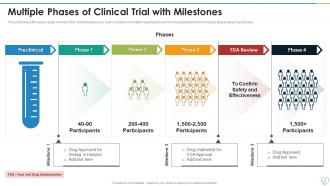
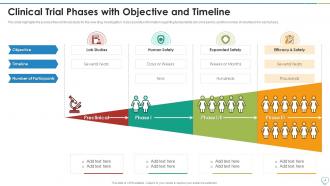
Folie 2 : Diese Folie zeigt die verschiedenen Schritte des klinischen Studienprozesses.
Folie 3 : Diese Folie zeigt die wichtigsten Schritte des klinischen Arzneimittelprüfungsprozesses.
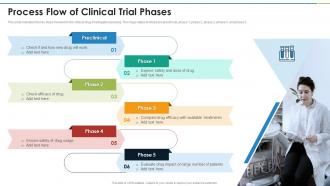
Folie 4 : Diese Folie zeigt den Prozessablauf der klinischen Studie für die neue Arzneimitteluntersuchung.
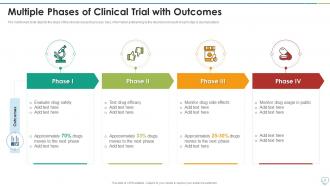
Folie 5 : Diese Folie zeigt mehrere Phasen einer klinischen Studie mit Ergebnissen.
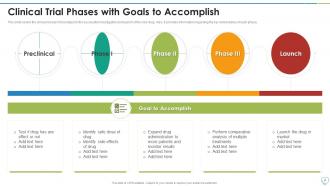
Folie 6 : Diese Folie behandelt die klinischen Studienschritte für die erfolgreiche Erforschung und Markteinführung des neuen Medikaments.
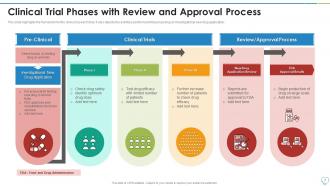
Folie 7 : Diese Folie zeigt klinische Studienphasen mit Überprüfungs- und Genehmigungsprozess.
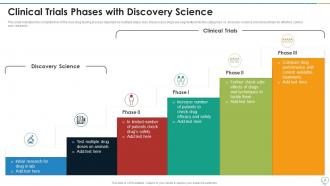
Folie 8 : Diese Folie zeigt klinische Studienphasen mit Discovery Science.
Folie 9 : Diese Folie zeigt den Forschungsprozess für die Entwicklung neuer Medikamente.
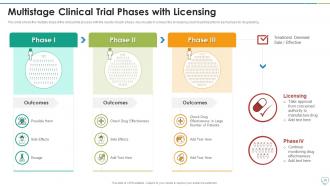
Folie 10 : Diese Folie zeigt die mehreren Schritte des klinischen Studienprozesses mit den Ergebnissen jeder Phase.
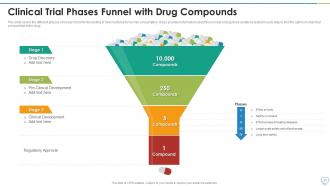
Folie 11 : Diese Folie zeigt den Trichter klinischer Studienphasen mit Wirkstoffen.
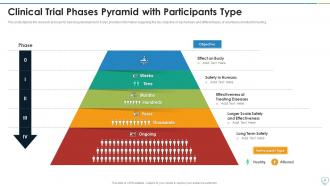
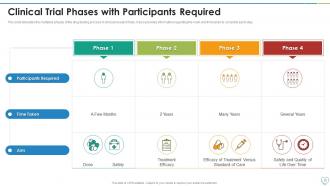
Folie 12 : Diese Folie zeigt klinische Studienphasen mit erforderlichen Teilnehmern.
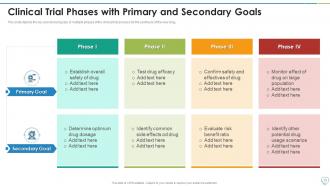
Folie 13 : Diese Folie stellt Phasen klinischer Studien mit primären und sekundären Zielen dar.
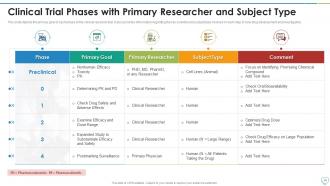
Folie 14 : Diese Folie zeigt klinische Studienphasen mit Primärforscher und Probandentyp.
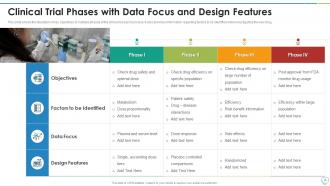
Folie 15 : Diese Folie zeigt klinische Studienphasen mit Datenfokus und Designmerkmalen.
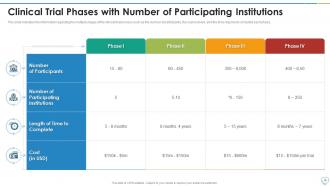
Folie 16 : Diese Folie zeigt klinische Studienphasen mit der Anzahl der teilnehmenden Institutionen.
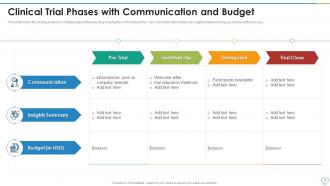
Folie 17 : Diese Folie zeigt klinische Studienphasen mit Kommunikation und Budget.
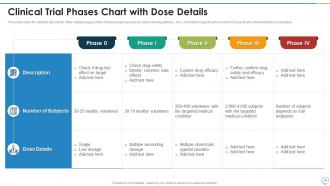
Folie 18 : Diese Folie behandelt die detaillierte Beschreibung der verschiedenen Phasen des klinischen Forschungsprozesses.
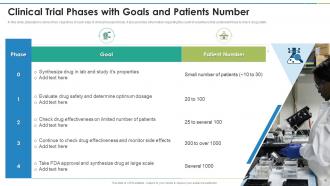
Folie 19 : Diese Folie stellt klinische Studienphasen mit Zielen und Patientenzahlen dar.
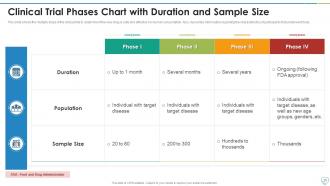
Folie 20 : Diese Folie zeigt das Diagramm der klinischen Studienphasen mit Dauer und Stichprobengröße.
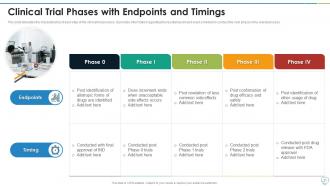
Folie 21 : Diese Folie zeigt klinische Studienphasen mit Endpunkten und zeitlichen Abläufen.
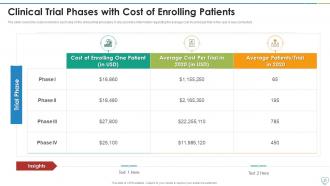
Folie 22 : Diese Folie zeigt klinische Studienphasen mit Kosten für die Aufnahme von Patienten.
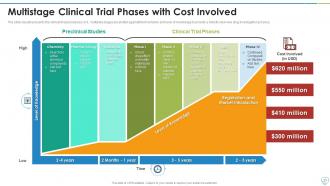
Folie 23 : Diese Folie zeigt mehrstufige klinische Studienphasen mit Kostenbeteiligung.
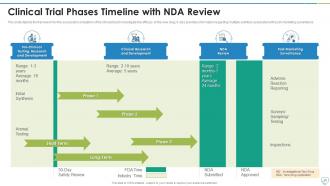
Folie 24 : Diese Folie zeigt die Zeitleiste der klinischen Studienphasen mit NDA-Überprüfung.
Folie 25 : Diese Folie veranschaulicht die mehreren Schritte, die an der klinischen Forschungsstudie beteiligt sind.
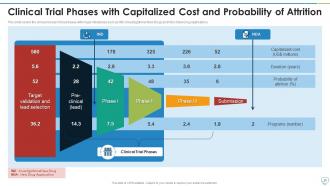
Folie 26 : Diese Folie zeigt klinische Studienphasen mit kapitalisierten Kosten und Abgangswahrscheinlichkeit.
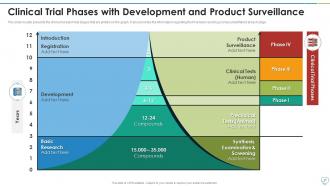
Folie 27 : Diese Folie zeigt klinische Studienphasen mit Entwicklung und Produktüberwachung.
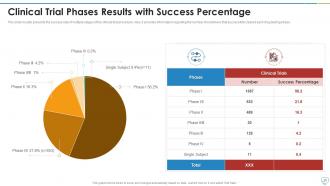
Folie 28 : Diese Folie zeigt die Ergebnisse der klinischen Studienphasen mit Erfolgsprozentsatz.
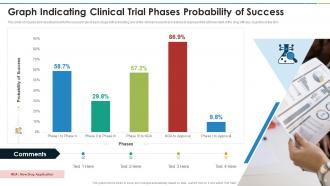
Folie 29 : Diese Folie zeigt ein Diagramm, das die Erfolgswahrscheinlichkeit klinischer Studienphasen anzeigt.
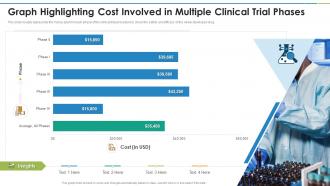
Folie 30 : Diese Folie stellt ein Diagramm dar, das die an mehreren klinischen Studienphasen beteiligten Kosten hervorhebt.
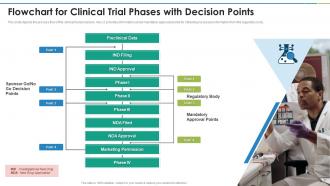
Folie 31 : Diese Folie zeigt ein Flussdiagramm für klinische Studienphasen mit Entscheidungspunkten.
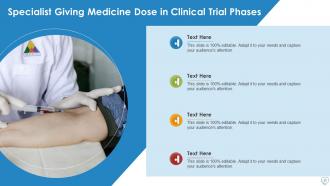
Folie 32 : Diese Folie zeigt die Verabreichung von Arzneimitteldosen durch einen Spezialisten in klinischen Studienphasen.
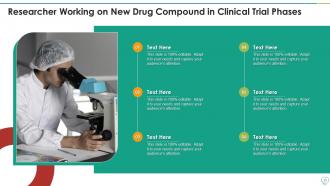
Folie 33 : Diese Folie zeigt Forscher, die an einem neuen Wirkstoff in klinischen Studienphasen arbeiten.
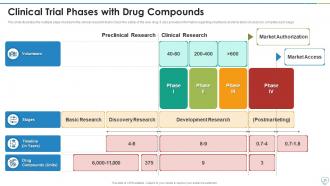
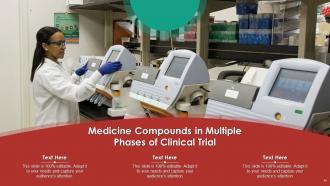
Folie 34 : Diese Folie zeigt Arzneimittelverbindungen in mehreren Phasen einer klinischen Studie.
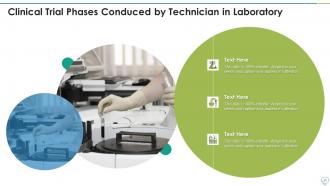
Folie 35 : Diese Folie stellt klinische Studienphasen dar, die von einem Techniker im Labor durchgeführt wurden.
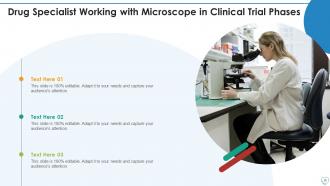
Folie 36 : Diese Folie zeigt einen Arzneimittelspezialisten, der in klinischen Studienphasen mit dem Mikroskop arbeitet.
Folie 37 : Diese Folie zeigt klinische Studienphasen, die von einem Apotheker durchgeführt wurden.
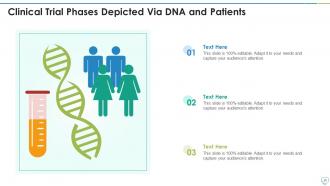
Folie 38 : Diese Folie zeigt klinische Studienphasen, die anhand von DNA und Patienten dargestellt werden.
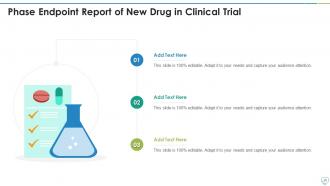
Folie 39 : Diese Folie zeigt den Phase-Endpunkt-Bericht eines neuen Medikaments in der klinischen Studie.
Folie 40 : Diese Folie repräsentiert medizinische Berichte mit Injektion für klinische Studienphasen.
Folie 41 : Diese Folie zeigt ein Mikroskop mit medizinischer Lösung in klinischen Studienphasen.
Folie 42 : Diese Folie zeigt das Poster der klinischen Studienphasen mit Arzneimitteln und Gesundheitsmonitor.
Folie 43 : Diese Folie zeigt Symbole für klinische Studienphasen.
Folie 44 : Diese Folie trägt den Titel „Zusätzliche Folien“, um voranzukommen.
Folie 45 : Dies ist die Folie „Über uns“, um Unternehmensspezifikationen usw. anzuzeigen.
Folie 46 : Dies ist unsere Missionsfolie mit zugehörigen Bildern und Texten.
Folie 47 : Dies ist die Folie „Unser Team“ mit Namen und Bezeichnung.
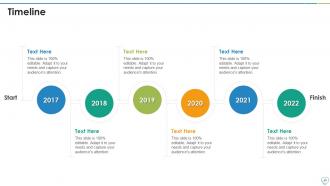
Folie 48 : Dies ist eine Timeline-Folie. Zeigen Sie hier Daten zu Zeitintervallen an.
Folie 49 : Diese Folie enthält einen 30 60 90-Tage-Plan mit Textfeldern.
Folie 50 : Diese Folie zeigt Haftnotizen. Posten Sie hier Ihre wichtigen Notizen.
Folie 51 : Diese Folie zeigt ein Venn-Diagramm mit Textfeldern.
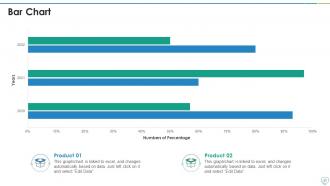
Folie 52 : Diese Folie zeigt ein Balkendiagramm mit zwei Produktvergleichen.
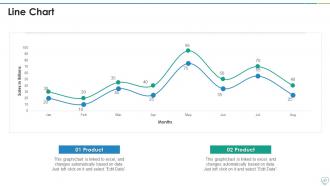
Folie 53 : Diese Folie beschreibt das Liniendiagramm mit zwei Produktvergleichen.
Folie 54 : Dies ist eine Dankeschön-Folie mit Adresse, Kontaktnummern und E-Mail-Adresse.
Klinische Studienphasen Powerpoint-Präsentationsfolien mit allen 59 Folien:
Verwenden Sie unsere Powerpoint-Präsentationsfolien zu Phasen klinischer Studien, um Ihnen effektiv dabei zu helfen, wertvolle Zeit zu sparen. Sie sind gebrauchsfertig und passen in jede Präsentationsstruktur.





FAQs for Clinical Trial Phases
So there are four phases to clinical trials, each one getting bigger and more intense. Phase I is small (like 20-100 people) and they're basically figuring out if it'll kill you and what dose to use. Phase II brings in 100-300 people to see if the thing actually works while still watching for side effects. Then Phase III goes big - we're talking thousands of people comparing the new treatment to whatever's already out there. Honestly, this is where they prove it's better than current options. Phase IV happens after FDA approval to catch any weird long-term stuff. If you're thinking about joining one, definitely ask which phase because that tells you everything about what you're signing up for.
So there's actually a ton of safety stuff built into trials. IRBs have to approve everything upfront, and participants get detailed consent forms so they know what they're getting into. Trials also have strict rules about who can join, plus safety monitoring boards watching everything. Honestly, the paperwork alone is insane - any bad reaction gets documented and reviewed right away. Most studies have committees that can literally shut things down if something looks sketchy. Oh, and the participant's safety always comes first over the research goals, which is good obviously. Just make sure you understand the stopping rules before anyone enrolls.
So inclusion criteria - age range, disease stage, biomarkers, whatever fits your study goals. For exclusions, focus on safety stuff like pregnancy, bad comorbidities, meds that'll mess with your intervention. Also boot anyone who can't consent properly or follow protocol. Here's the thing though - be specific enough to get your target group but not so narrow you can't actually find people. I've seen studies die because criteria were too strict. Oh, and definitely loop in your biostatistician early to check if your numbers make sense for recruitment.
So basically you walk them through all the study details - risks, benefits, what else they could do instead. Give them time to think it over without being pushy about it. They sign forms that explain everything in normal language (nobody wants to decode medical speak). Keep the original, give them a copy. Oh and here's something that trips people up - if you change the protocol later, you've got to get their consent again. I always write down our conversations in my study notes too, just covers your bases. The paperwork part is honestly pretty simple once you get the hang of it.
So basically you need placebo groups to prove your treatment actually does something beyond just the mind game stuff. The placebo effect is crazy strong - like people genuinely feel better just thinking they're getting medicine. Your control group gets fake pills that look exactly like the real ones, then you compare results. Otherwise you're just guessing if your drug works or if it's all psychological. I mean, without that comparison you can't really separate cause from correlation, you know? Just make sure the fake treatment looks identical or people will catch on.
So power analysis is how they figure out sample sizes - you're basically juggling four things: effect size, statistical power (usually 80-90%), significance level (typically 0.05), and how much variability you expect. Honestly, it's pretty subjective when you're guessing effect sizes from sketchy prior data. Don't forget dropout rates because people bail on studies constantly. The real trick? Focus on what actually matters clinically, not just what'll show up statistically. Oh and definitely pad your numbers for dropouts - learned that one the hard way!
So there are three big ones: RCTs, cohort studies, and case-control studies. RCTs randomly split people into treatment vs control groups - they're considered the best for proving something actually causes an effect. Cohort studies track groups over time to see who gets sick. Case-control studies flip it around, starting with people who already have the disease and looking back at what might've caused it. Honestly, everyone obsesses over RCTs but cohort studies are underrated for tracking long-term stuff. My advice? Figure out if you need to prove causation first - that'll basically tell you which design to pick.
So once your trials are done, you send everything to the FDA - all your data, safety stuff, how you make the drug, everything. Usually takes 6-12 months for them to decide. Breakthrough treatments can move faster though, which is nice when people really need it. Honestly the waiting is brutal for companies. They might approve you, ask for more info, or just say no. Oh and definitely plan for delays - I swear these reviews never go as smoothly as you think they will. Always build in extra time.
Honestly? Finding people is brutal. Everyone's crazy busy and half of them bail halfway through because they're scared of side effects or just don't trust researchers anymore - can't really blame them. Location kills you too. If someone has to drive 3 hours each way, they're out. People drop out constantly. The treatment feels like too much work, they don't see results fast enough, or life happens. Building real relationships with participants helps though. Make everything as easy as possible - remote check-ins, flexible appointments, whatever it takes to keep them around.
So basically, clinical trials are great for showing if a drug works under perfect lab conditions, but real-world evidence shows what actually happens when regular doctors prescribe it to regular patients who forget doses and have other health issues. RWE catches long-term side effects and tells you how different age groups or ethnicities respond - stuff that controlled trials miss. Honestly, trials are still needed for FDA approval and all that, but RWE is where you see if treatments actually help people in practice. Both have their place, you know?
EDC systems basically killed off paper forms - way more accurate and efficient now. Wearables and health apps are everywhere, which is actually pretty cool because you get continuous data instead of just appointment snapshots. AI's getting good at catching data quality issues before they blow up. Cloud platforms handle everything from finding patients to regulatory stuff. Oh, and remote monitoring is worth looking into - saves money and the data quality is usually better. Honestly, the whole industry's moving so fast it's hard to keep up sometimes.
Oh man, so when bad stuff happens during trials, documentation is everything - literally drop what you're doing and write it all down. Serious events? You've got 24-48 hours to report to regulatory folks, which is honestly pretty stressful. The tricky part is figuring out if it's actually from your treatment or just random bad luck (sometimes you'll never know for sure). You'll assess how severe it is, maybe pull the participant if needed, and update all your safety reports. Trust me, set up your reporting systems way ahead of time because scrambling mid-crisis is the worst.
Your trial results literally shape everything that happens next in medicine. Good data fast-tracks FDA approval and gets insurance companies on board. But honestly? Failed trials might be even more valuable - they kill awful drugs before companies waste millions more. I've seen one solid study completely flip treatment guidelines overnight, which is pretty insane when you think about it. The data also feeds into future research designs and safety protocols. Just crazy how much weight these studies carry. So yeah, no pressure, but you're basically laying groundwork for patient care that could last decades.
Cultural stuff is huge for trial participation. Trust issues run deep in some communities - and honestly, they're not wrong to be skeptical given the history. Language barriers are obvious, but it goes way beyond just translation. Different communication styles matter. Some cultures need whole family buy-in for medical decisions, others have religious concerns about specific treatments. I'd definitely connect with community leaders super early in your planning. They know what'll actually work for outreach versus what just looks good on paper. Way more effective than trying to figure it out yourself later.
It's really about the money and motives. Pharma companies fund industry trials to get their drugs approved - they want that FDA stamp fast. Government trials? They're more interested in pure science, like comparing treatments or studying weird rare diseases nobody profits from. Industry ones usually have way bigger budgets and move quicker, which honestly makes sense. But government-funded studies are typically more open with their data. Both can be legit research - just depends what question they're trying to answer. Always peek at who's writing the checks though, because that totally shapes how they design the whole study.
-
Kudos to SlideTeam for achieving the high success rate in delivering the top-notch slides.
-
SlideTeam is the best in the business. Their templates are engaging and customizable. You can rely on them.