


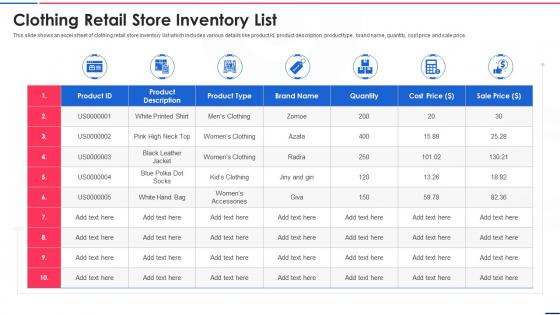
Clothing Retail Store Inventory List




Try Before you Buy Download Free Sample Product
 Impress Your
 Audience
 100%
100% Editable
 Save Hours
 of Time


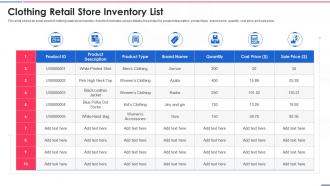
This slide shows an excel sheet of clothing retail store inventory list which includes various details like product Id, product description, product type, brand name, quantity, cost price and sale price.
People who downloaded this PowerPoint presentation also viewed the following :
Clothing Retail Store Inventory List with all 6 slides:
Use our Clothing Retail Store Inventory List to effectively help you save your valuable time. They are readymade to fit into any presentation structure.





FAQs for Clothing Retail
Dude, get yourself a barcode scanner and pair it with something like Cin7 or TradeGecko. Trust me on this one - it'll save you hours of tedious data entry. RFID is actually amazing if you've got the cash upfront since it tracks everything without you lifting a finger. I know spreadsheets seem easier at first, but once you're dealing with 500+ SKUs? Total disaster waiting to happen. Do cycle counts throughout the year instead of those brutal annual inventory sessions. Oh, and track all your size/color/style variations separately - learned that the hard way. Whatever you pick, make sure it updates in real-time so you don't accidentally oversell your bestsellers.
Dude, get some barcode scanners or RFID tags - they'll track stuff automatically so you're not counting by hand anymore. Real-time inventory software shows exactly what's in stock, which honestly saves so much headache. The smart systems can even predict what you'll need based on past sales (mind-blowing, right?). Hook it up to your POS and inventory updates itself when things sell. Manual counting errors? Gone. Oh, and you'll actually know when to reorder before running out of your bestsellers. Start basic with barcode scanning if you're doing everything by hand now.
Ugh, seasonal demand is everything in clothing - it literally controls your whole buying strategy. You're basically gambling on weather months ahead, ordering sweaters in July hoping people will actually want them come winter. I always tell people to study last year's sales patterns religiously, but honestly? Weather forecasts are trash so you need wiggle room. Keep some buffer stock for those random heat waves or cold snaps. Just don't go crazy buying trendy seasonal stuff that might sit there forever. The key is flexibility - you can't predict Mother Nature, but you can prepare for her mood swings.
Start by checking how fast different stuff sells - basics like tees fly off the racks but seasonal items are way more unpredictable. I'd pull like 12-18 months of data to spot the patterns. Your steady sellers need way more stock obviously, but don't go crazy on trendy pieces since they can tank overnight (seriously, those neon joggers were such a mistake lol). Figure out your supplier's lead times too. If they take 8 weeks, you need enough buffer so you don't run out. Set reorder points around 2-3 weeks of average sales, then tweak from there based on what actually happens.
Honestly, start with demand forecasting - dig into your sales history and seasonal patterns instead of just guessing. Set automatic reorder points for your main products. ABC analysis helps too - figure out which items actually matter and focus there. Regular inventory counts are a pain but necessary. For stuff that moves slow, maybe try dropshipping to cut your risk? I learned this the hard way but there's this sweet spot between having enough stock and not drowning in cash tied up in products collecting dust. Most people either overstock everything or run out constantly.
Faster inventory turnover = more money in your pocket, honestly. You're getting cash quicker and not paying to store stuff forever. Fresh stock keeps customers coming back, plus you avoid those brutal markdowns on items that just sit there. Fashion moves so crazy fast now! Don't go overboard though - being constantly sold out pisses people off. I'd track different categories separately since like, scarves probably move way different than jeans. Seasonal stuff should flip 4-6 times yearly minimum. It's basically about finding that balance where you're not drowning in inventory but aren't empty either.
Do them quarterly minimum, but monthly's better if you've got crazy turnover. Honestly, clean up your space first - counting through messy racks will make you want to quit halfway through. Go section by section, size by size. Double-check the pricey stuff because that's where mistakes hurt. Digital tracking beats paper every time since you can actually see patterns developing. Your POS system should match your counts, so dig into big gaps right away. Stick with the same process each time or you'll never catch shrinkage trends. Consistency is everything here.
So basically, good data analytics looks at your past sales, seasonal stuff, and how customers actually behave to predict what you'll need. You can figure out which products move when and catch trends before they blow up. Plus it factors in random things like weather or local events that mess with buying patterns - honestly that part's pretty cool. Track your current turnover rates first though, that'll show you exactly where the analytics will help most. No more getting stuck with tons of inventory you can't move!
Yeah so inventory stuff is actually pretty bad for the environment. Most of it comes down to making way too much stuff that just sits there. All those unsold clothes? They literally get thrown in landfills or burned - wild, right? Better forecasting helps you avoid overordering in the first place. Returns are another thing to think about - maybe donate them or find ways to resell instead of tossing everything. I'd start tracking how much you're wasting and work backwards from there. It's crazy how much gets produced just to end up as trash.
Honestly, you've gotta bake this into your system from the start or you'll hate yourself later. I'd do 30-60 day windows - gives people enough time without being crazy generous. When stuff comes back, quality check everything before it goes back out. Damaged returns? Straight to clearance or trash (retail's most depressing moment). Here's the thing though - speed matters more than you think. The longer good returned items sit around, the more likely they end up marked down. Train your team to actually look at everything, and make sure your POS updates inventory automatically when returns hit.
Ugh, fashion ecommerce is rough. Returns will kill you - the rates are absolutely insane. Then you've got SKU explosion from all the size/color combos, plus seasonal swings that make forecasting impossible. Trends die so fast you'll get stuck with dead stock constantly. Managing photos for hundreds of variants? Total mess. Oh and size charts are inconsistent across brands, which just drives returns up even more. Honestly though, if you nail your categorization early and get decent inventory software that handles variants, you'll save yourself major headaches later.
Dude, get a barcode scanner ASAP. Manual inventory is such a pain - all those typos when you're typing SKUs and item numbers. With scanning, everything goes straight into your system automatically. No more fat-finger mistakes messing up your counts. It's crazy how much faster receiving and cycle counts become. I swear my last inventory took like half the time once I started scanning everything. Even a cheap handheld scanner will change your life - seriously, try it on your next count and you'll never go back to doing it manually.
Check out TradeGecko (it's QuickBooks Commerce now), Cin7, or Lightspeed - they're made for fashion with size/color tracking. Trust me, don't try forcing a basic inventory system to work for clothing. Been there, total mess. These handle seasonal buying and work across multiple stores plus your POS. Smaller business? inFlow or Zoho work fine too. I'd say list your worst headaches first - like is it tracking sizes or dealing with seasonal stock? Then demo maybe 2-3 systems that actually fix those specific problems.
Dude, fast fashion completely flips inventory on its head. Instead of those old seasonal buys, you're dealing with 2-4 week product cycles - it's honestly insane how quick everything moves now. TikTok can make something blow up literally overnight, so forecasting becomes this crazy guessing game. You'll need to do smaller, frequent orders and make your supply chain super flexible. The suppliers who can turn samples around fast? Yeah, they cost more per unit, but it's worth building those relationships. Oh, and get used to being wrong sometimes - trends die as fast as they start.
Honestly, you NEED solid supplier relationships - they're your lifeline for consistent stock. Good suppliers will prioritize your orders during crazy busy seasons and actually call you when there's delays instead of leaving you hanging. Payment terms get way better too. The ones who trust you? They'll bend minimums or rush stuff when you're panicking about being out of stock. Oh, and they share trend info that's super helpful for buying decisions. I learned this the hard way - start building those relationships early and stay in touch regularly. It'll save your butt later.
-
Amazing slides! Unique, attractive, and easy to understand.
-
The quality of PowerPoint templates I found here is unique and unbeatable. Keep up the good work and continue providing us with the best slides!