


Co Branding Investor Pitch Deck Ppt Template




Try Before you Buy Download Free Sample Product
 Impress Your
 Audience
 100%
100% Editable
 Save Hours
 of Time


Co-branding is a strategy to combine two or more businesses to add value to each others products and services to access broader markets. Grab our competently designed Co-branding pitch deck that shows the overview and includes mission, core values, and revenues. It covers the problems faced by prospects and possible solutions offered by co-branding firms. This deck depicts key focused parameters, people involved, benefits, marketing campaign, and value proposition to boost equity. Also, you can showcase a strategic co-branding model, competitive advantage from entering into the partnership, various competitors existing in the global market, etc., by having your hands on this pitch deck. Further this deck talks about the competitive positioning map of different brands, financial progress in product performance, actual and project revenue, and client testimonials. At last, it incorporates a contact us slide with address, contact number, and email address. Customize this 100 percent editable pitch deck based on your business requirements now.
People who downloaded this PowerPoint presentation also viewed the following :
Content of this Powerpoint Presentation
Slide 1: This slide displays title i.e. 'Co-Branding Investor Pitch Deck' and your Company Name.
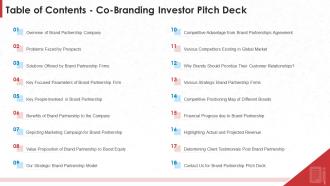
Slide 2: This slide presents table of contents.
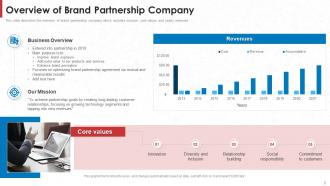
Slide 3: This slide describes the overview of brand partnership company which includes mission, core values and yearly revenues.
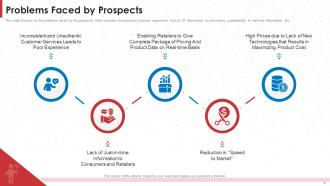
Slide 4: This slide focuses on the problems faced by the prospects which includes inconsistent customer experience, lack of JIT information to consumers, etc.
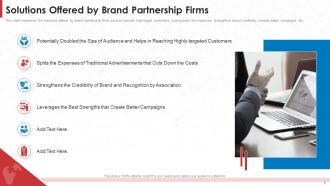
Slide 5: This slide represents the solutions offered by brand partnership firms such as reaches high-target customers, cutting down the expenses, etc.
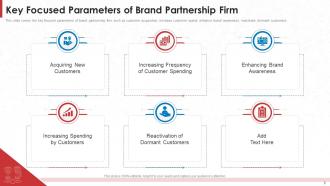
Slide 6: This slide covers the key focused parameters of brand partnership firm such as customer acquisition, increase customer spend, enhance brand awareness, etc.
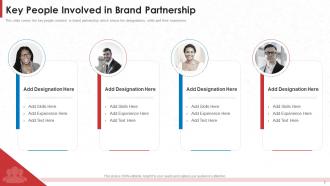
Slide 7: This slide covers the key people involved in brand partnership which shows the designations, skills and their experience.
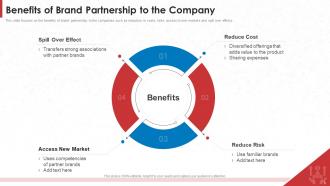
Slide 8: This slide focuses on the benefits of brand partnership to the companies such as reduction in costs, risks, access to new markets and spill over effects.
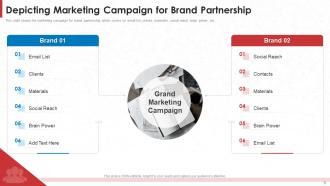
Slide 9: This slide shows the marketing campaign for brand partnership which covers on email list, clients, materials, social reach, brain power, etc.
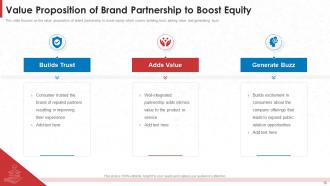
Slide 10: This slide focuses on the value proposition of brand partnership to boost equity which covers building trust, adding value and generating buzz.
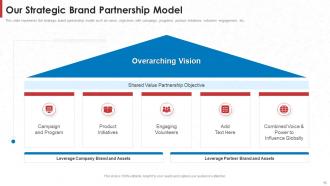
Slide 11: This slide represents the strategic brand partnership model such as vision, objectives with campaign, programs, product initiatives, volunteer engagement, etc.
Slide 12: This slide shows the competitive advantages to the brands by entering into partnership such as increase product visibility and perception, etc.
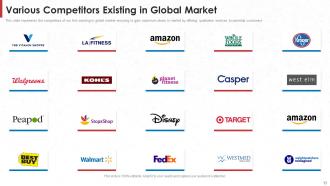
Slide 13: This slide represents the competitors of our firm existing in global market ensuring to gain maximum share in market.
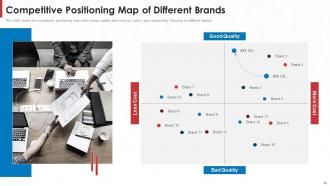
Slide 14: This slide shows the competitive positioning map which shows quality and costs on x and y axis respectively focusing on different brands.
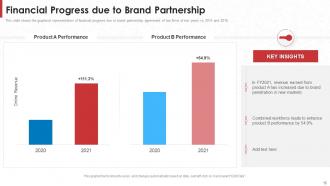
Slide 15: This slide shows the graphical representation of financial progress due to brand partnership agreement of two firms of two years i,e, 2015 and 2016.
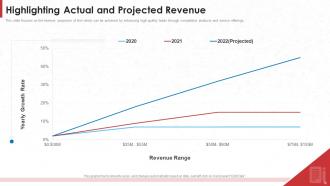
Slide 16: This slide focuses on the revenue projection of firm which can be achieved by enhancing high-quality leads through competitive products and service offerings.
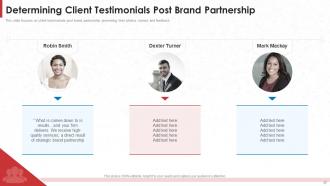
Slide 17: This slide focuses on client testimonials post brand partnership presenting their photos, names and feedback.
Slide 18: This slide focuses on the information for contacting that includes company logo, name, office address, contact number and email address.
Slide 19: This is the icons slide.
Slide 20: This slide presents title for additional slides.
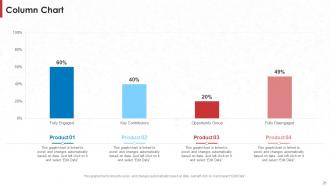
Slide 21: This slide exhibits column charts for different products. The charts are linked to Excel.
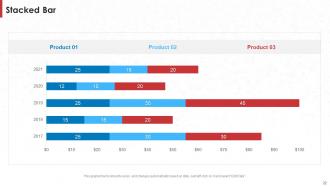
Slide 22: This slide exhibits yearly stacked bar charts for different products. The charts are linked to Excel.
Slide 23: This slide shows about your company, target audience and its client's values.
Slide 24: This slide presents your company's vision, mission and goals.
Slide 25: This slide depicts 30-60-90 days plan for projects.
Slide 26: This slide depicts posts for past experiences of clients.
Slide 27: This slide presents goals of the company.
Slide 28: This slide exhibits yearly timeline.
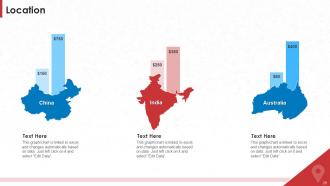
Slide 29: This slide exhibits location of company in different regions of the world.
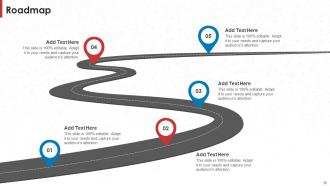
Slide 30: This slide shows roadmap.
Slide 31: This is thank you slide & contains contact details of company like office address, phone no., etc.
Co Branding Investor Pitch Deck Ppt Template with all 36 slides:
Use our Co Branding Investor Pitch Deck Ppt Template to effectively help you save your valuable time. They are readymade to fit into any presentation structure.











FAQs for Co Branding Investor Pitch
So co-branding is basically when two companies join forces on a product or campaign - both brand names, both logos, the whole deal. Nike + Apple with their running gear is a perfect example. Regular branding? You're doing your own thing solo. But with co-branding, you're sharing customer bases and credibility to hit new audiences. Pretty smart move when it works. The main difference is shared ownership and risk - if it flops, you both take the hit. One thing though - the brand values have to actually match up. Customers can totally tell when partnerships feel forced or weird, and it just doesn't work.
Honestly, the biggest wins are hitting way more people and splitting costs. You're basically trading audiences - they get yours, you get theirs. Super helpful when your budget's tight. Also, partnering with legit brands makes you look more credible by association. Like how Apple Pay teamed up with all those banks, or Nike with athletes. I've seen brands mess this up though by just going after big names without thinking if they actually fit together. You want partners who share your vibe, not just whoever has the most followers. Makes a huge difference.
Look for brands that hit similar audiences but aren't direct competitors - you want complementary vibes, not someone stealing your customers. Check their social media engagement and recent campaigns to see if they're actually legit (trust me, you don't want to partner with someone who's about to implode). Your brand values need to mesh too, otherwise it'll feel super forced and people will totally notice. Demographics should overlap but they're selling something different than you. Honestly, I'd test it out with something small first - maybe a simple collab post or mini campaign before diving into anything huge. Way safer that way.
Dude, there's some killer co-branding stuff to check out. Nike + Apple's running app was massive back in the day. Spotify letting you control music in Uber rides? Pure genius. GoPro and Red Bull basically built this whole extreme sports content machine together - honestly those guys are everywhere now. The Oreo collabs are wild too, they're always dropping random flavors. What really works is when both brands actually complement each other and share similar audiences. You want partnerships where you're creating something neither of you could pull off solo. That's where the magic happens.
Honestly, consumer perception can totally make or break this whole thing. Your customers need to see both brands as a good match - like they actually belong together. If there's some weird disconnect in values or quality, people will spot it immediately and just... nope out. Remember that luxury brand that tried partnering with a discount store? Total disaster waiting to happen. Survey your existing customers first about potential partnerships. See what they actually think before you commit to anything. The partnership has to feel natural to them, not forced or random.
Co-branding is basically splitting costs while doubling your reach - pretty sweet deal if you ask me. You get access to their customers, they get yours. The trick is finding brands that complement what you do without stepping on your toes. Like how Nike teamed up with Apple, or Spotify with Uber. Both sides bring different strengths to the table. Your partner should share similar values but offer something you don't. That way nobody's competing and everyone wins. Just make sure you're not the only one putting in effort - I've seen partnerships go sideways when one brand gets lazy.
Honestly, picking the right partner is everything - don't rush this part. Check their reputation thoroughly, look at their finances, see if your values actually match up. I've seen too many people get burned by sketchy partners who looked good on paper. Get everything in writing with clear roles and exit strategies (trust me on this one). Regular check-ins help you catch problems early. Keep some control over your own messaging too, so you're not totally screwed if they mess up. Always have a backup plan ready because partnerships can go south fast.
Yeah, co-branding can totally boost loyalty! Think of it like when your two favorite brands team up - you already trust both, so the partnership feels solid. Customers get more confident because they recognize both names. Plus you're borrowing each other's credibility, which honestly is pretty smart. The products usually end up being better too since you can combine what each brand does best. Just make sure you pick a partner that actually fits with your vibe - I've seen some weird collaborations that just confused people. But when it works, your customers feel like they're getting something special that neither brand could've made alone.
So first thing - find what values you both actually share, don't just force it. Then blend your brand stories together naturally instead of just throwing both logos everywhere. Social media's perfect for this stuff. I swear half the co-brand campaigns I see feel super awkward and obvious. Your visuals and messaging need to genuinely reflect both brands. Cross-promote on each other's channels, maybe create a hashtag that's actually about the partnership. The whole thing should feel smooth, not like some weird business handshake moment, you know?
Honestly, the biggest pain is when your partner messes up and it makes you look bad too - like those celebrity endorsements that blow up in everyone's face. Your brand messaging gets diluted since you can't control everything they do. Revenue splits get messy, customers might get confused if the brands don't fit well together. Plus your internal teams will probably butt heads over creative stuff. Oh, and sometimes these partnerships end up competing with your own products, which is awkward. Just make sure you've got really clear agreements upfront about who does what and how to bail if things go south.
Co-branding totally shifts how people see your brand - you become this hybrid thing instead of just your original identity. Like when Spotify teamed up with Starbucks, suddenly they weren't just a music app but part of that whole coffee shop vibe. You'll inherit some of your partner's reputation and what they represent. Here's the thing though - if your values don't actually mesh well together, customers get confused about what you're supposed to be. Honestly, I've seen partnerships that made zero sense and just muddied both brands. Map out how this'll change people's perception of you before you commit.
Track the brand stuff first - awareness, sentiment, whether you're actually reaching their audience. Then dig into the business numbers: revenue from the campaign, what you're spending to get new customers, conversion rates. Social buzz is where these things really shine though. People love co-brand stuff for some reason. Compare your share of voice to when you run solo campaigns - the combo usually punches way above its weight. Oh, and grab your baseline metrics before you launch. Otherwise you're just guessing at what actually worked.
Honestly? Value alignment can make or break the whole thing. I've watched partnerships completely implode when one brand cared about profit and the other was all about sustainability - total disaster. Your customers will pick up on that mismatch right away, and then trust goes out the window. Even when the numbers look incredible, those constant value clashes just eat up time and energy. You'll fight about messaging, target audiences, how to handle complaints... everything becomes harder than it needs to be. Have some real conversations about your core values first and maybe run through some "what if" scenarios together.
Honestly, co-branding has gotten way more interesting lately. Instead of just slapping logos together, brands are doing these cool experiential things - like how Spotify partnered with Uber so you can actually control the music in your ride. Nike and Apple did something similar with fitness tracking. Oh, and those limited drops are huge now (that Travis Scott McDonald's thing was everywhere). Digital stuff opened up so many possibilities I can't even keep track. But here's the thing - focus on how you can actually make your partner's product better for customers, not just the marketing buzz. That's where the magic happens.
Honestly, partnering up with other small businesses is such a game-changer. Find companies that target the same customers but aren't direct competitors - like that coffee shop and bookstore combo actually works really well. You're basically doubling your reach without spending double the money. Make a list of places your customers probably already shop, then reach out with collaboration ideas that help both of you. I mean, even something simple like cross-promoting each other can make your brand look way more established. It's wild how much bigger you seem when you're not going it alone.
-
Spacious slides, just right to include text. SlideTeam has also helped us focus on the most important points that need to be highlighted for our clients.
-
Impressive templates. Designing a presentation is fun now!