

Commencement of an it project powerpoint presentation slides





Try Before you Buy Download Free Sample Product
 Impress Your
Audience
 100%
Editable
 Save Hours
of Time


A well-planned project kickoff ensures that organizations are heading in the right direction of accomplishing the common objectives. Here is an efficiently designed Commencement of an IT Project that will benefit the companies that want to complete their IT project of system up-gradation and maintenance successfully. The company can use the slide to ensure project success by overcoming challenges to overcome their previous projects challenges, low workplace productivity, poor communication, and risk management. To overcome critical challenges, companies can use sections, namely establishing a project management team and assigning responsibilities covering required skill sets, RACI matrix to assign roles and responsibilities, effective risk management section covering risk breakdown structure and mitigation plan, managing effective communication section covering project communication plan. Companies can use implementation timeline slides and section naming checklists for project management covering project kickoff and activity checklists for successful IT project implementation. To identify factors that impact the projects success, the company can use the slide factors affecting project success. Dashboards to assess project performance section can be used by the company to evaluate its project success. Customize this 100 percent editable template now.
People who downloaded this PowerPoint presentation also viewed the following :
Content of this Powerpoint Presentation
Slide 1: This slide introduces Commencement of an IT Project. State Your Company Name and begin.
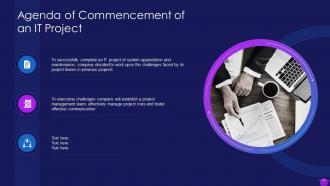
Slide 2: This slide shows Agenda of Commencement of an IT Project.
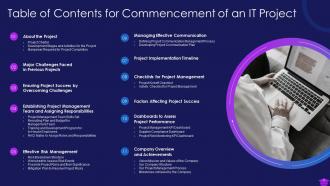
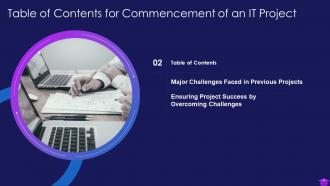
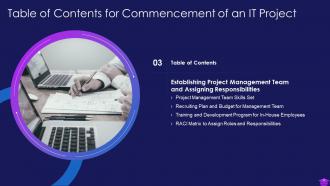
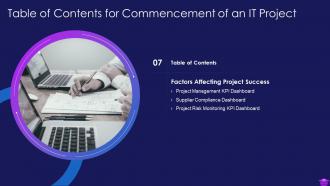
Slide 3: This slide presents Table of Contents for Commencement of an IT Project.
Slide 4: This slide shows title for topics that are to be covered next in the template.
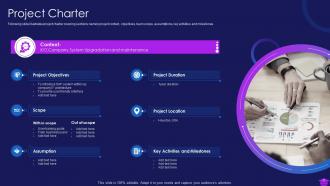
Slide 5: Following slide illustrates project charter covering sections namely project context, objectives, team scope, etc.
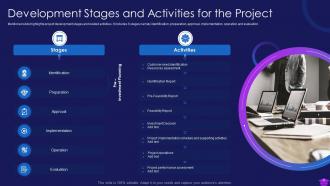
Slide 6: This slide displays Development Stages and Activities for the Project.
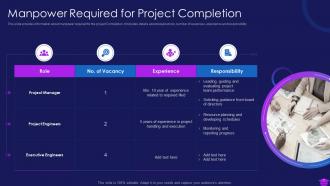
Slide 7: This slide represents Manpower Required for Project Completion.
Slide 8: This slide shows title for topics that are to be covered next in the template.
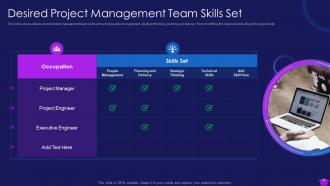
Slide 9: This slide showcases Desired Project Management Team Skills Set.
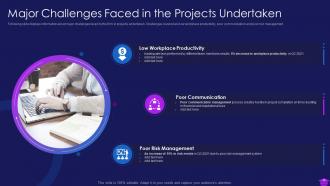
Slide 10: This slide presents major challenges faced by the firm in projects undertaken.
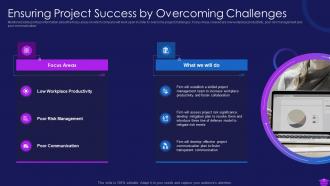
Slide 11: This slide showcases Ensuring Project Success by Overcoming Challenges.
Slide 12: This slide shows title for topics that are to be covered next in the template.
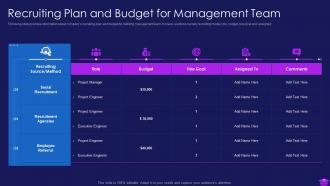
Slide 13: This slide presents Recruiting Plan and Budget for Management Team.
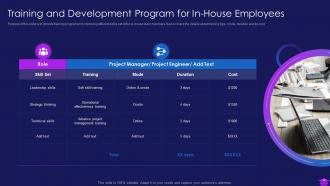
Slide 14: This slide displays Training and Development Program for In-House Employees.
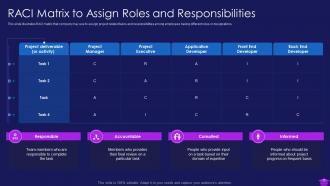
Slide 15: This slide represents RACI Matrix to Assign Roles and Responsibilities.
Slide 16: This slide shows title for topics that are to be covered next in the template.
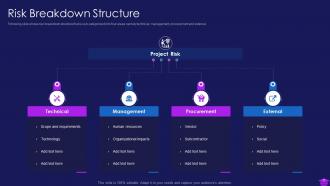
Slide 17: Following slide shows risk breakdown structure that is sub-categorized into four areas.
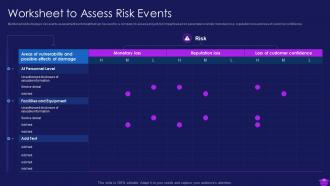
Slide 18: Mentioned slide displays risk events assessment worksheet that can be used by a company.
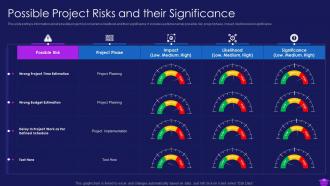
Slide 19: This slide portrays information about possible project risk occurrence likelihood.
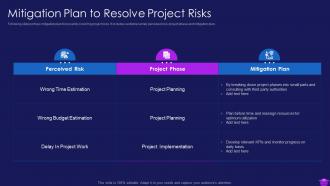
Slide 20: This slide displays mitigation plan for possibly occurring project risks.
Slide 21: This slide shows title for topics that are to be covered next in the template.
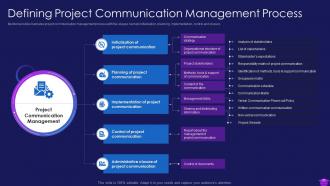
Slide 22: This slide presents project communication management process with five stages namely initialization, planning, implementation, etc.
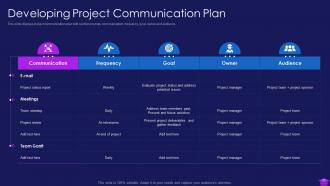
Slide 23: This slide displays project communication plan with sections namely communication, frequency, goal, etc.
Slide 24: This slide shows title for topics that are to be covered next in the template.
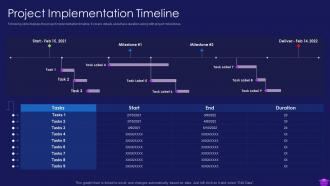
Slide 25: Following slide displays the project implementation timeline.
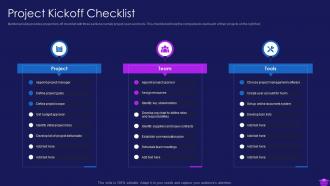
Slide 26: Mentioned slide provides project kick-off checklist with three sections namely project, team and tools.
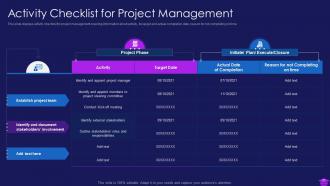
Slide 27: This slide displays activity checklist for project management.
Slide 28: This slide shows title for topics that are to be covered next in the template.
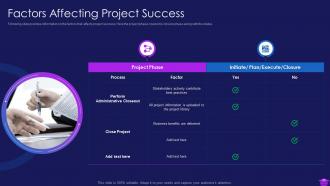
Slide 29: Following slide provides information on the factors that affects project success.
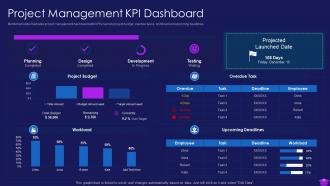
Slide 30: This slide showcases project management dashboard with KPIs namely project budget, overdue tasks, etc.
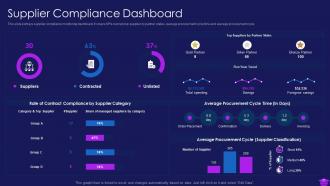
Slide 31: This slide portrays supplier compliance monitoring dashboard.
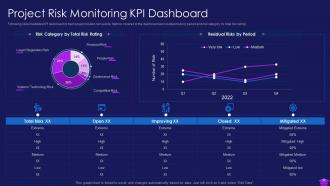
Slide 32: Following slide illustrates KPI dashboard to track project related risk events.
Slide 33: This slide shows title for topics that are to be covered next in the template.
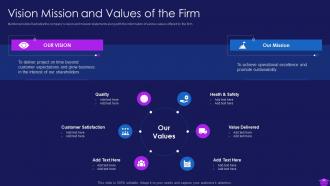
Slide 34: Mentioned slide illustrates the company’s vision and mission statements.
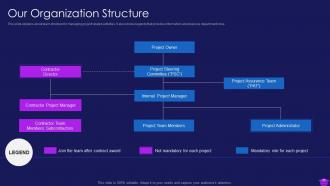
Slide 35: This slide explains about team structure for managing project related activities.
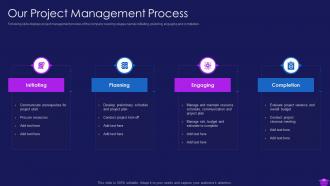
Slide 36: Following slide displays project management process of the company.
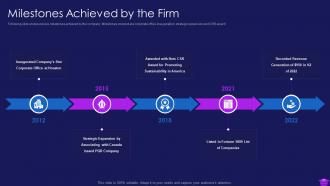
Slide 37: This slide represents various milestones achieved by the company.
Slide 38: This slide is titled as Additional Slides for moving forward.
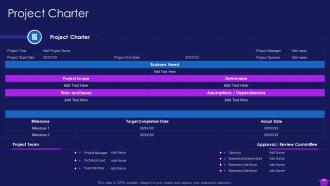
Slide 39: This slide presents Project Charter with related icons and text.
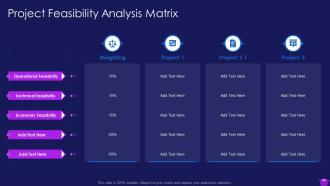
Slide 40: This slide displays Project Feasibility Analysis Matrix.
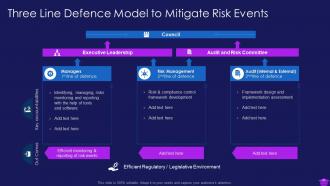
Slide 41: This slide showcases Three Line Defence Model to Mitigate Risk Events.
Slide 42: This slide shows Icons for Commencement of an IT Project.
Slide 43: This is About Us slide to show company specifications etc.
Slide 44: This slide shows Post It Notes. Post your important notes here.
Slide 45: This is Our Mission slide with related imagery and text.
Slide 46: This slide depicts Venn diagram with text boxes.
Slide 47: This is Our Goal slide. State your firm's goals here.
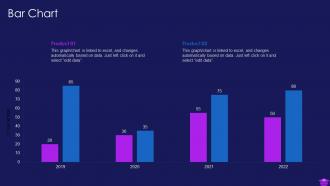
Slide 48: This slide presents Bar chart with two products comparison.
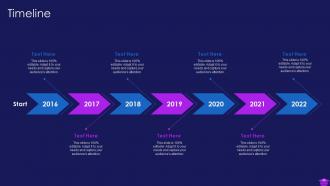
Slide 49: This is a Timeline slide. Show data related to time intervals here.
Slide 50: This slide presents Roadmap with additional textboxes.
Slide 51: This is a Thank You slide with address, contact numbers and email address.
Commencement of an it project powerpoint presentation slides with all 56 slides:
Use our Commencement Of An IT Project Powerpoint Presentation Slides to effectively help you save your valuable time. They are readymade to fit into any presentation structure.






FAQs for Commencement of an it project
Ok so you'll want to nail down five things right off the bat. Clear scope and objectives first - trust me, this prevents so much pain down the road. Get your success metrics figured out early too. Stakeholder buy-in is huge, so identify everyone who matters and loop them in. Timeline with milestones comes next, but be realistic about it (we've all been burned by overly optimistic deadlines). Budget and resources last. Honestly though? The real game-changer is getting those stakeholder meetings locked in during week one. Sets the whole tone.
First thing - figure out who actually cares about this project. I'm talking end users, department heads, that one guy who always freaks out about tech changes, everyone. Make a quick grid showing who has power vs who's actually interested. The big shots need constant updates and face time, but others can just get the occasional email. Honestly, the worst thing is when someone pops up halfway through like "why wasn't I involved??" So document what everyone expects upfront - their concerns, how they like to communicate, all that stuff. Trust me, it's way better than dealing with surprise drama later.
Dude, you absolutely need a feasibility study before jumping into any IT project. It's like a sanity check that covers three big things: can we actually build this tech-wise, will it be worth the money, and can our team handle the changes? Honestly, I've watched so many projects crash because people got excited and skipped this part. You'll catch problems early instead of halfway through development when it's expensive to fix. Plus your boss will actually approve the budget if you show them it makes sense first. Trust me - spend the time upfront proving it works on paper.
Build risk assessment straight into your project charter from the start. Look for obvious stuff first - budget, timeline, technical issues. Then hunt for the weird ones that bite you later, like key people being unavailable or vendor problems. Honestly, I've seen too many teams get wrecked by things they never saw coming. Set up a basic risk register with impact ratings and how you'll handle each one. Your sponsors will actually appreciate seeing you've thought this through ahead of time. Make your team help brainstorm risks too - way better than doing it solo.
Write down every single thing you're delivering - features, systems, all of it. Here's the thing though: you HAVE to list what's not included too. Trust me on this one. People will assume the weirdest stuff is part of the deal. Make sure your main stakeholders actually read and approve everything before you start. Skip the technical mumbo jumbo - write it like you're explaining to your mom. Yeah, plan for small changes, but anything bigger needs to go through proper approval. Otherwise you'll be six months in with someone going "wait, I thought we were building a mobile app too."
Honestly, I'd start by looking at similar stuff you've built before and just adjust for what's different this time. No past projects? Industry benchmarks work - like cost per feature or story point. Three-point estimation is my go-to though: best case, worst case, realistic case, then average them out. You could also break everything into chunks and estimate piece by piece, but that's kinda tedious early on. Whatever you do, write down what you're assuming and tack on 20-30% extra because - let's be real - scope creep happens every single time.
Definitely grab a good project charter template first - gets everyone on the same page from day one. RACI matrices are clutch for mapping out who does what. Business case templates help too, though honestly I always forget to use them until halfway through (oops). Stage-Gate works great if you want structure, but Design Thinking workshops are way more fun and you'll actually understand what users need. Tools like Jira or Monday.com keep the chaos organized. Here's the thing though - pick ONE approach and don't get fancy mixing methodologies. Trust me on this one, it gets messy fast.
First thing - map out who needs what info. Executives just want the big picture stuff, but your devs need all the technical details. I'd pick your communication channels early (Slack for quick stuff, email for the formal updates). Honestly, I tried winging this once and it was a disaster. Templates are your friend here - saves you from writing status reports from scratch every damn week. Oh, and ask people how they actually want updates. Some people get annoyed with constant pings while others expect daily check-ins. Worth knowing upfront.
So here's what I'd watch for - stakeholder buy-in is probably the biggest one. Did people actually get excited or just nod politely? Also check how fast you got budget approval and your team together. Time-to-kickoff matters too (like from initial idea to when work actually started). Scope clarity is another big one - can everyone explain what you're building without stumbling? Oh, and risk identification. Half your project success honestly comes down to spotting problems early. I usually just throw these into a basic spreadsheet and check them after the first couple sprints. You'll know pretty quick if something got missed.
Honestly, just drag everyone into a room right from the start - business people and devs together. Business folks need to explain what they actually want without all that corporate jargon nonsense (seriously, nobody understands what "synergistic optimization" means). Your tech people can then figure out what's realistic and what'll break everything. Create some kind of shared doc that connects each business goal to the actual technical stuff behind it. That way when someone asks "why does this take three weeks?" you can point and show them. Oh, and don't forget regular check-ins because things always change halfway through.
Dude, you really want to get your core team sorted early on. Trust me on this - I've seen projects crash because people waited too long to nail down who's actually doing what. You need to know if you've got the right skills and if people are actually bought in before you start building stuff. Getting everyone on the same page upfront saves you from those super awkward conversations later where nobody knows who's responsible for what. Plus your team will probably catch things during planning that you'd miss otherwise. Even if they're not working full-time yet, lock in your key people during the initial phase. It's honestly one of those things that seems obvious but so many people skip.
Honestly, just get everyone together upfront - like actually together, not some half-assed email chain. Walk through what you're building and why. Define what "done" looks like with real numbers, not vague stuff like "user-friendly." I swear, that phrase has caused more arguments than pineapple on pizza. Write it all down in normal words, get sign-offs, then check in regularly so nobody goes rogue. Yeah, it's boring prep work, but you'll thank me when you're not rebuilding everything six months later.
Start with data privacy laws - GDPR, CCPA, whatever hits your users. Industry stuff like SOX or HIPAA matters too if you're touching sensitive data. Compliance is such a pain but seriously, building it in now beats trying to fix it later when you're scrambling. Don't forget IP issues with third-party tools or open source stuff - that bit me once. Get legal involved early because they catch things you won't see coming. Nobody wants a surprise audit later.
Ugh, cultural stuff will absolutely torpedo your project if you're not careful. Communication styles are all over the map - some people are brutally direct, others dance around problems forever. And it's not just time zones screwing you over. Different cultures have totally different ideas about deadlines and who gets to make decisions. Half your team might wait for permission before mentioning any issues, while the other half won't shut up with suggestions. Honestly, figure out your team's cultural mix upfront and set communication rules that actually work for everyone involved.
Oh man, unclear requirements will absolutely kill you - like seriously, nobody knows what they actually want until you build the wrong thing. Get everyone in a room early and make them hash out priorities before you touch anything. Document everything because people have goldfish memories about what they agreed to. Push back hard on crazy timelines too - I learned that one the hard way. Honestly the stakeholder alignment stuff is brutal, it's basically herding cats who all think they're in charge. Start with a project charter that people actually sign, not just nod at.
-
Understandable and informative presentation.
-
Professional and unique presentations.
-
Topic best represented with attractive design.
-
Helpful product design for delivering presentation.
-
Qualitative and comprehensive slides.