


Commercial insurance services business plan powerpoint presentation slides




Try Before you Buy Download Free Sample Product
 Impress Your
 Audience
 100%
100% Editable
 Save Hours
 of Time


A strategic business plan enables a roadmap for developing a successful insurance firm. It captures the firms objectives, product offerings, target market, financial projections. Here is a competently designed template on Commercial Insurance Services that will develop startup business plans for insurance agencies with fundamental essentials associated with the business plan. The deck will help build financial, marketing, and workforce plans for setting up an insurance agency. The development of a business plan will aid in making realistic objectives, allocating resources, streamlining workflows, improving communication and business expansion. The deck covers slides about the firms overview, growth potential analysis in terms of SWOT analysis, PESTLE analysis, Porters five forces analysis, go-to-market strategy, market assessment, target client groups for the insurance business, segmentation, firm positioning, etc. It portrays slides regarding the marketing plan in terms of the product marketing mix, brand building, and advertising strategies. The deck covers slides regarding personnel planning in terms of personnel management in insurance agencies, workforce training, and development roadmap. It showcases slides about financial planning in terms of projected financial statements, namely, income statements, balance sheets, etc. It caters to various risks associated with the insurance business tracking dashboard. Get access to it now.
People who downloaded this PowerPoint presentation also viewed the following :
Content of this Powerpoint Presentation
Slide 1: This slide introduces Commercial Insurance Services Business Plan. State Your Company Name and begin.
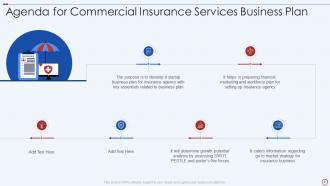
Slide 2: This slide shows Agenda for Commercial Insurance Services Business Plan.
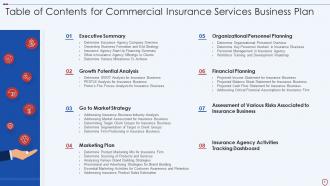
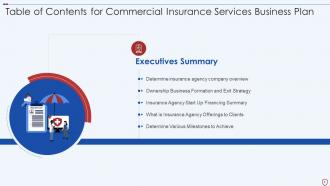
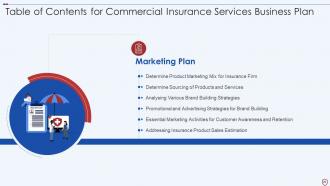
Slide 3: This slide presents Table of Contents for Commercial Insurance Services Business Plan.
Slide 4: This slide shows Table of Contents for Commercial Insurance Services Business Plan.
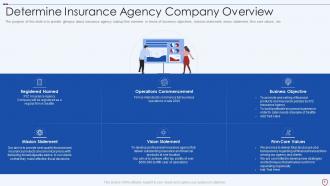
Slide 5: This slide displays Determine Insurance Agency Company Overview.
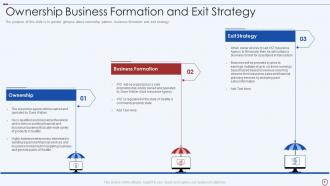
Slide 6: This slide represents Ownership Business Formation and Exit Strategy.
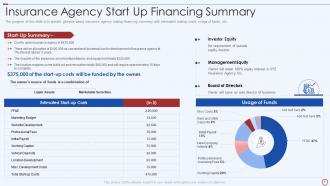
Slide 7: This slide shows Insurance Agency Start Up Financing Summary.
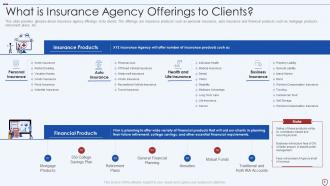
Slide 8: This slide presents insurance agency offerings to its clients.
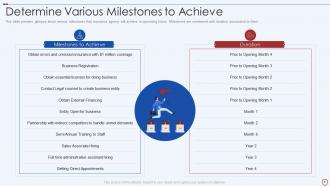
Slide 9: This slide shows various milestones that insurance agency will achieve in upcoming future.
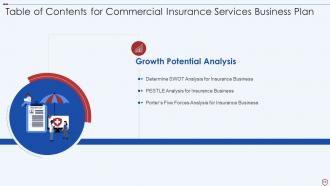
Slide 10: This slide displays Table of Contents for Commercial Insurance Services Business Plan.
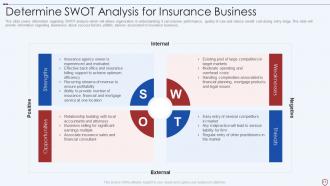
Slide 11: This slide represents Determine SWOT Analysis for Insurance Business.
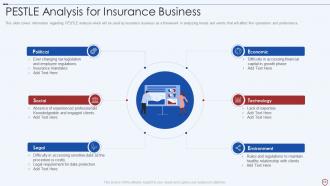
Slide 12: This slide shows PESTLE analysis which will be used by insurance business as a framework.
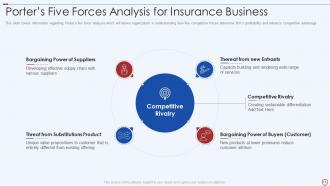
Slide 13: This slide presents Porter’s Five Forces Analysis for Insurance Business.
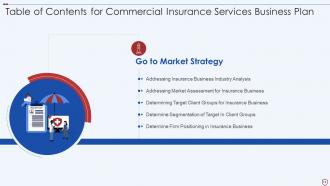
Slide 14: This slide shows Table of Contents for Commercial Insurance Services Business Plan.
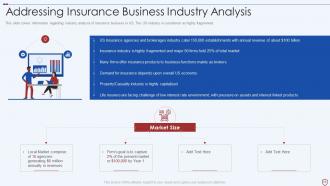
Slide 15: This slide displays industry analysis of insurance business in US.
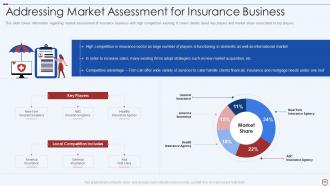
Slide 16: This slide represents Addressing Market Assessment for Insurance Business.
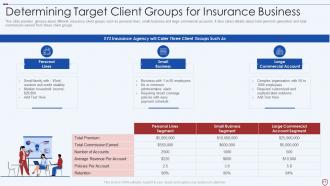
Slide 17: This slide shows Determining Target Client Groups for Insurance Business.
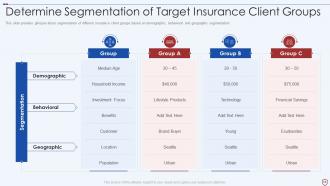
Slide 18: This slide presents Determine Segmentation of Target Insurance Client Groups.
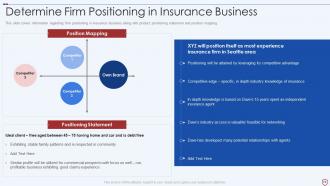
Slide 19: This slide shows Determine Firm Positioning in Insurance Business.
Slide 20: This slide displays Table of Contents for Commercial Insurance Services Business Plan.
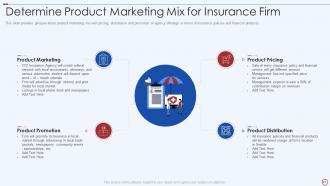
Slide 21: This slide represents Determine Product Marketing Mix for Insurance Firm.
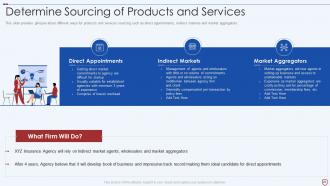
Slide 22: This slide shows Determine Sourcing of Products and Services.
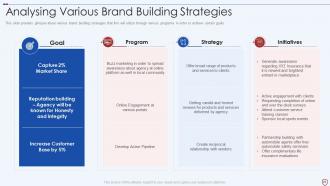
Slide 23: This slide presents Analysing Various Brand Building Strategies.
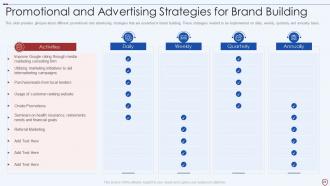
Slide 24: This slide shows Promotional and Advertising Strategies for Brand Building.
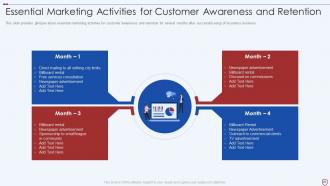
Slide 25: This slide displays Essential Marketing Activities for Customer Awareness and Retention.
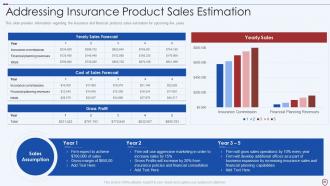
Slide 26: This slide represents Addressing Insurance Product Sales Estimation.
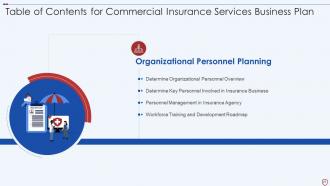
Slide 27: This slide shows Table of Contents for Commercial Insurance Services Business Plan.
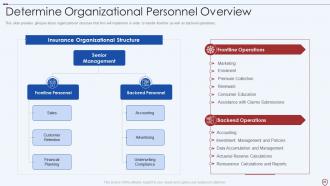
Slide 28: This slide presents organizational structure that firm will implement in order to handle frontline.
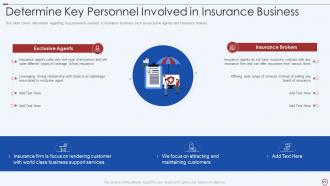
Slide 29: This slide shows Determine Key Personnel Involved in Insurance Business.
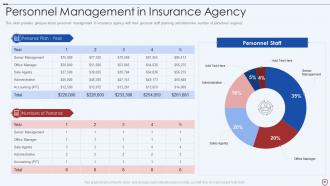
Slide 30: This slide displays personnel management in insurance agency with their personal staff planning.
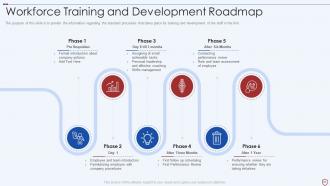
Slide 31: This slide represents information regarding the standard procedure that takes place for training and development.
Slide 32: This slide presents Table of Contents for Commercial Insurance Services Business Plan.
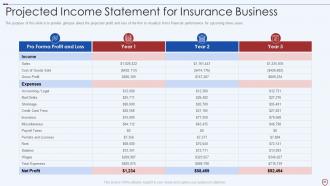
Slide 33: This slide shows Projected Income Statement for Insurance Business.
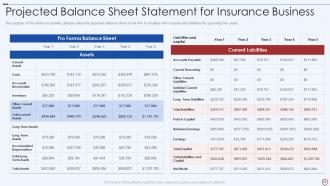
Slide 34: This slide shows Projected Balance Sheet Statement for Insurance Business.
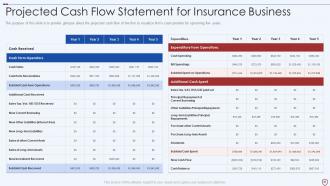
Slide 35: This slide displays Projected Cash Flow Statement for Insurance Business.
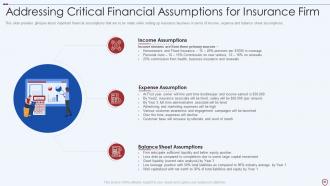
Slide 36: This slide represents Addressing Critical Financial Assumptions for Insurance Firm.
Slide 37: This slide shows Table of Contents for Commercial Insurance Services Business Plan.
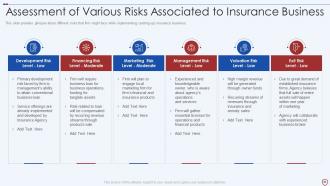
Slide 38: This slide presents Assessment of Various Risks Associated to Insurance Business.
Slide 39: This slide shows Table of Contents for Commercial Insurance Services Business Plan.
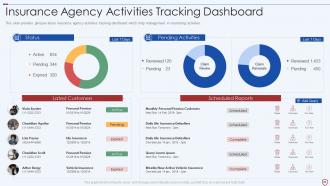
Slide 40: This slide displays Insurance Agency Activities Tracking Dashboard.
Slide 41: This slide represents Icons for Commercial Insurance Services Business Plan.
Slide 42: This slide is titled as Additional Slides for moving forward.
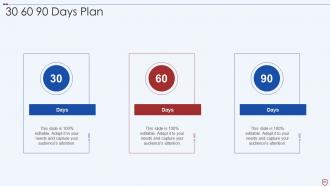
Slide 43: This slide presents 30 60 90 Days Plan with text boxes.
Slide 44: This slide displays Weekly Timeline with Task Name.
Slide 45: This slide shows Roadmap with additional textboxes.
Slide 46: This slide represents Venn diagram with text boxes.
Slide 47: This slide shows Post It Notes. Post your important notes here.
Slide 48: This is Our Target slide. State your targets here.
Slide 49: This is a Timeline slide. Show data related to time intervals here.
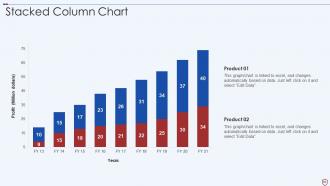
Slide 50: This slide displays Stacked Column Chart with two products comparison.
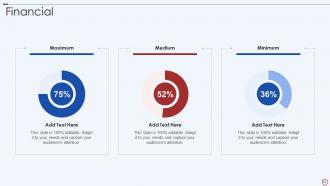
Slide 51: This is a Financial slide. Show your finance related stuff here.
Slide 52: This is an Idea Generation slide to state a new idea or highlight information, specifications etc.
Slide 53: This slide presents Puzzle with related icons and text.
Slide 54: This is a Thank You slide with address, contact numbers and email address.
Commercial insurance services business plan powerpoint presentation slides with all 62 slides:
Use our Commercial Insurance Services Business Plan Powerpoint Presentation Slides to effectively help you save your valuable time. They are readymade to fit into any presentation structure.










FAQs for Commercial insurance services business plan
So general liability is for when you accidentally mess up someone else's day - like if they slip in your store or you damage their property while working. Property insurance covers YOUR stuff - building, equipment, inventory - from fires, theft, weather, whatever. You'll probably need both since they're totally different risks. The names actually make sense when you break it down... liability means you're on the hook for hurting others, property protects your own assets. Most brokers can bundle them together for less money. Worth asking about at least.
Start with calculating all your business stuff - equipment, inventory, property value, plus whatever liability risks come with your industry. Most places need enough property coverage to replace everything and liability that's like 2-3x annual revenue, but that's honestly just where you begin. A restaurant's gonna have way different risks than some consulting business, you know? Get quotes for different coverage amounts and see what the price jumps look like. Then find an agent who actually knows your industry - trust me, they'll catch stuff you never even thought about. Way better than trying to figure it out solo.
Your industry's the biggest factor - construction and manufacturing get hit way harder than something like consulting because of accident risks. Business size matters too (revenue, employee count), plus your claims history obviously. Location's huge - cities and disaster-prone areas cost more. Honestly, the whole system feels designed to squeeze you sometimes. Coverage limits and deductibles you pick will change your rate. Best ways to save: solid safety training for your team, shop around every year, and maybe bump up that deductible if you've got decent cash flow to cover it.
Yeah, absolutely! Insurance companies will cut you deals if they see you're not just hoping nothing bad happens. Get your employees trained on safety stuff and keep up with equipment maintenance - that's the bare minimum. Security cameras, fire systems, non-slip floors, all that protective gear can snag you discounts. Document everything you do safety-wise because insurers eat that up. Honestly, doing regular risk assessments is probably the smartest move since you'll catch problems before they cost you. Oh, and start with a safety audit to see where you're most vulnerable. Way better than dealing with claims later.
So business interruption insurance basically saves you when disasters force you to shut down - fires, storms, that kind of stuff. Lost income gets covered, plus ongoing expenses like rent and payroll. Sometimes they'll even pay extra costs to reopen faster. Here's the annoying part though: you have to prove what you would've made during the closure. Insurance companies are obsessed with documentation (shocking, I know). File your claim with detailed financial records showing normal revenue patterns. Oh, and start documenting literally everything the second something happens. Trust me, they'll ask for receipts on receipts.
So basically it's your backup when clients decide to blame you for stuff going wrong. Covers legal fees, settlements, all that expensive drama if they claim your work cost them money or wasn't up to standards. Like malpractice for doctors but for any professional - consultants, accountants, IT people, whatever. Honestly, even when you do everything right, clients will still point fingers sometimes. I learned this the hard way watching a friend deal with a nightmare client last year. You'll want to shop around though since different insurers have pretty different coverage options and prices.
Honestly, get yourself a good commercial insurance broker first - someone who actually knows your state's rules inside and out. They're expensive but totally worth it for this maze of requirements. You'll need the basic stuff like workers' comp and general liability at minimum levels, obviously. Keep those certificates up to date too. What I'd do is set up quarterly check-ins with your broker to spot problems early. Way better than scrambling later when something's already messed up. Oh, and put annual policy reviews on your calendar - especially when you're adding employees or expanding. That's usually when people get tripped up.
Honestly, the worst exclusions are pollution liability, cyber stuff, and professional liability - they'll totally screw you over. Watch out for the usual suspects too: intentional acts, criminal activity, war/terrorism (though some insurers are getting weird about terrorism coverage lately). Employment practices and product recalls are also commonly excluded. Business interruption gets tricky with natural disasters like floods and earthquakes. Here's the annoying part - every insurer does exclusions differently, so there's no standard list. Seriously, make your broker sit down and go through each exclusion with real examples from your actual business. Don't just skim that section.
So worker's comp is pretty much required in most states anyway, but it's actually a solid deal. Your employees get their medical bills covered plus lost wages if they're injured - doesn't matter whose fault it was. On your end, you're protected from lawsuits, which honestly could destroy a small business overnight. Plus your team sees you've got their back, so they stick around longer. Just double-check your coverage matches your actual payroll and job types. I learned that one the hard way when my cousin got audited last year.
Honestly, start with checking their financial ratings on A.M. Best - you don't want them going under when you actually need to file a claim. Make sure they cover your industry's specific risks and can grow with your business. The claims process is where things get real though. I'd definitely ask other business owners about their actual experiences, not just read online reviews. Oh, and talk to reps from at least three companies before deciding. Cheapest isn't always best - you'll regret it if they're impossible to reach when something goes wrong.
Yeah, bundling usually saves decent money - like 10-25% compared to separate policies. Way easier dealing with one carrier instead of three different companies calling you about renewals and stuff. The coverage works better together too, so you won't have weird gaps between your liability and property insurance. Oh and the underwriting goes faster since they see your whole business at once instead of piecemeal. Honestly though, just get quotes both ways because every situation's different. Sometimes the savings aren't as good as they make it sound.
So here's the deal with tech and insurance - it hits you in two spots: coverage and cost. Your regular business insurance probably won't cover cyber stuff, which honestly is annoying but makes sense I guess. You'll need separate cyber coverage if you store customer info or run everything digitally. Insurance companies are also really nosy now about your security setup. They want to know about employee training, backups, all that stuff. Better security = cheaper rates though. I'd start with figuring out what data you actually collect and where you're vulnerable. That way you're not buying coverage you don't need.
Take photos of everything and save every single receipt - trust me on this one. Insurance companies are obsessed with documentation so give them what they want. Don't just wait around for your adjuster to call you either, bug them regularly. Oh and read through your actual policy beforehand, not when disaster strikes because that's honestly the worst timing ever. When they make their first offer? Don't take it. They're basically testing you and expect you'll negotiate. Most people don't realize they lowball on purpose.
Your location basically determines everything insurance-wise. Hurricane area? You'll need rock-solid property coverage plus business interruption. Earthquakes are the same headache, different disaster. Cities usually require higher liability limits - more people around means more lawsuits waiting to happen, honestly. Flooding's where people get screwed though, since regular policies don't cover it. I've seen businesses go under from that mistake. Rural spots sometimes get hit with weird workers' comp rates or can't even find certain coverage. Really depends on how far out you are. Start by figuring out what disasters could actually hit you, then work backwards from there.
Dude, you definitely need business auto insurance if you've got a fleet. Your regular business policy won't touch vehicle stuff - learned that the hard way from a friend's nightmare situation. Without fleet coverage, any accident becomes your personal problem, and we're talking potentially bankruptcy-level lawsuits here. Most states require it anyway, so you don't really have a choice. Look for liability, collision, comprehensive - the usual suspects. Oh, and medical payments coverage is smart too. Skip the big general insurers though. Go with companies that actually specialize in fleets - they'll give you better rates and usually throw in some fleet management tools that are actually useful.
-
Good research work and creative work done on every template.
-
Enough space for editing and adding your own content.
-
Innovative and Colorful designs.
-
It saves your time and decrease your efforts in half.
-
Professional and unique presentations.