

Company Sales Review Powerpoint Presentation Slides





Try Before you Buy Download Free Sample Product
 Impress Your
 Audience
 100%
100% Editable
 Save Hours
 of Time


Review your business goals and results with Company’s Sales Review Powerpoint Presentation Slides. Specify the financial performance of the company on the basis of four parameters given in the PPT deck. Showcase the steps to conduct annual sales review with the help of business performance assessment PPT graphics. Utilize this readily available sales performance review PowerPoint layouts and present sales team compensation plan. Analyze the actual value versus the target value of the sales by using the visually appealing graphs present in this PowerPoint complete deck. Take the assistance of this business performance review PPT slideshow to showcase sales promotion tools such as premiums, price reduction, coupons, rebates, and refunds, sampling, etc. Mention the obstacles you foresee in carrying out your planned task by utilizing these sales performance management PowerPoint template. Showcase the product sales performance based on revenue to inform your sales team which products are selling well. Meet your sales goals by downloading our ready to use Annual Sales Performance Review Powerpoint Presentation Slides.
People who downloaded this PowerPoint presentation also viewed the following :
Content of this Powerpoint Presentation
Slide 1: This slide introduces Company Sales Review. State Your Company Name and begin.
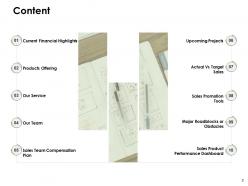
Slide 2: This slide shows Content of the presentation.
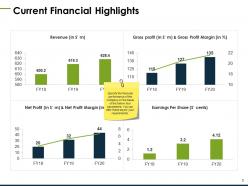
Slide 3: This slide presents Current Financial Highlights with the help of bar graphs.
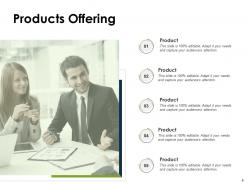
Slide 4: This slide displays Products Offering with related diagram and icons.
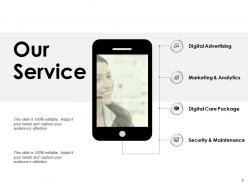
Slide 5: This slide showcases Our Services describing- Digital Advertising, Marketing & Analytics, Digital Care Package, Security & Maintenance.
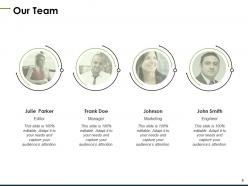
Slide 6: This is Our Team slide with names and designation.
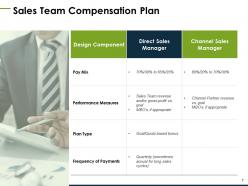
Slide 7: This slide shows Sales Team Compensation Plan in tabular form with categories as- Design component, Direct Sales Manager and Channel Sales Manager.
Slide 8: This slide presents Upcoming Projects with related imagery.
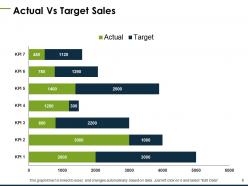
Slide 9: This slide displays Actual Vs Target Sales in graphical form.
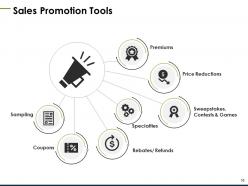
Slide 10: This slide represents Sales Promotion Tools describing- Premiums, Coupons, Rebates/ Refunds, Specialties, Sweepstakes, Contests & Games, Sampling, Price Reductions.
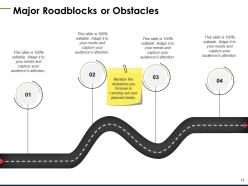
Slide 11: This slide showcases Major Roadblocks or Obstacles. You can add or edit text as per requirements.
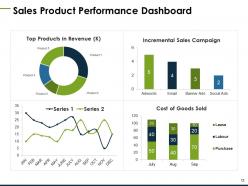
Slide 12: This slide shows Sales Product Performance Dashboard with the help of graphs.
Slide 13: This slide displays Company Sales Review Icons.
Slide 14: This slide is titled as Additional Slides for moving forward.
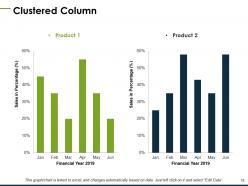
Slide 15: This slide shows Clustered Column chart with two products comparison.
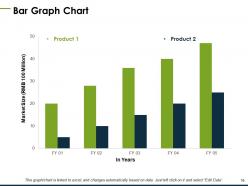
Slide 16: This slide presents Bar Graph Chart with two products comparison.
Slide 17: This is About Us slide to show company specifications etc.
Slide 18: This is a Puzzle slide with text boxes to show information.
Slide 19: This slide is titled as Post It. Post your important notes here.
Slide 20: This is a Bulb or Idea slide to state a new idea or highlight information, specifications etc.
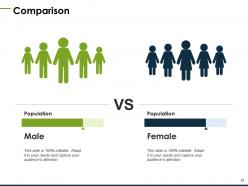
Slide 21: This is a Comparison slide to state comparison between commodities, entities etc.
Slide 22: This is a Thank You slide with address, contact numbers and email address.
Company Sales Review Powerpoint Presentation Slides with all 22 slides:
Use our Company Sales Review Powerpoint Presentation Slides to effectively help you save your valuable time. They are readymade to fit into any presentation structure.



FAQs for Company Sales Review
Track your revenue against targets first - that's the big one. Conversion rates through each funnel stage matter too, plus average deal size and how long your sales cycles run. I always pull activity metrics like calls and meetings, but honestly? Quality beats quantity every day of the week. Win/loss ratios give you the real story though. Pipeline health is huge too - can't stress that enough. For your next review, grab last quarter's numbers and stack them against your goals. You'll spot the gaps pretty quick that way.
Ugh, sales reviews can be such a mood killer if you're not careful. Like, if you only hammer on missed numbers and screw-ups, your team's gonna hate life. But flip it around - celebrate the wins, give props for effort, and turn problems into "okay what can we learn here" moments? Game changer. I've seen teams get genuinely pumped after tough reviews when the manager balanced the hard stuff with recognition. Everyone needs to walk out knowing they matter and what to work on next. Don't just critique - actually help them grow.
Look, customer feedback is honestly where you'll find the real truth about your sales process. Both complaints and compliments will show you patterns - like which reps are great at building relationships vs. the ones who come off too aggressive. Yeah, some feedback hurts to hear, but that's usually the most valuable stuff. I'd recommend collecting it consistently after every deal, whether it closes or not. Then actually talk about those insights during team meetings instead of just filing them away somewhere. It's pretty much the best way to see what's actually happening with your buyers.
Quarterly reviews are probably your sweet spot - gives you actual data to work with without being crazy reactive to every little blip. If your sales cycle's super short though, monthly might make more sense. I've watched teams burn themselves out doing weekly reviews (like why would you do that to yourself?). Pick whatever feels right but then actually stick to it. Your team's gonna hate you if the schedule keeps changing because they can't prep properly. Honestly, I'd just start quarterly and see how it goes - you can always tweak it later based on what the numbers are telling you.
Start with the basics - compare your actual numbers to targets. That's where the obvious stuff shows up. Break it down by territory, product line, and each rep to find patterns. Conversion rates at each funnel stage are huge - dig into those. Win/loss ratios and deal cycle times matter too (sometimes it's not revenue, it's just how slow you're moving). Oh, and definitely look at where competitors beat you out. Honestly, just grab last quarter's data and run it against these metrics. You'll spot the problem areas pretty quick.
Honestly, you'd be surprised how much tech can help with sales reviews. Your CRM can pull all those numbers automatically instead of you digging through spreadsheets for hours. Real-time dashboards show conversion rates and pipeline stuff right away. AI finds patterns too - like which deals will actually close or why some reps are killing it while others aren't. Recording sales calls is clutch for reviewing what actually happened (way better than relying on memory). Oh, and definitely sync your CRM with review meetings so you're looking at current data, not old stuff.
Don't just stare at the numbers - dig into why things went the way they did. Making excuses for missed targets? Skip that, it's pointless. Look for patterns in your wins and losses instead. Those deals that fell through are actually gold mines for insights, so don't ignore them. Here's the thing - most people rush through reviews just to get them done. Take your time and come up with 2-3 specific actions for next quarter. Vague stuff like "sell more" won't cut it. You want concrete changes you can start tomorrow.
Benchmarks basically show what "good" actually looks like in your industry. Hit 85% of quota? Sounds decent until you find out the industry average is 92% - now you're underperforming compared to competitors, not just missing some random company target. They're kinda tricky though. Sometimes they reveal your goals were totally unrealistic from the start. Your review will probably dig into where you stand versus the competition instead of just internal numbers. Oh, and definitely look up some industry data beforehand so you can get ahead of the conversation. Trust me on that one.
Start with the big numbers - revenue, conversions, pipeline stuff. Then tell the story of what's actually happening behind those metrics. Charts are your friend here because honestly, spreadsheets make everyone's eyes glaze over. Break everything down by time, territory, product lines, whatever makes sense so people can follow along. Here's the thing though - for every slide, ask yourself "so what?" If you can't answer that in five seconds, toss it. Oh, and don't forget to bring 2-3 specific action items. That's really what they want anyway.
Honestly, it depends on your team size. Small teams (under 10) can get away with weekly one-on-ones plus monthly group sessions where everyone shares wins and challenges. Bigger teams need more structure though - bi-weekly regional calls work well, then quarterly all-hands meetings. Remote teams are tricky. Video calls help, but sometimes async updates actually work better since your reps are always running around. The trick is making sure meetings don't become soul-crushing time wasters that nobody wants to attend. Start simple with whatever feels doable right now, then adjust based on what actually helps people close deals. That's really what matters at the end of the day.
Dude, competitive analysis is a game changer for sales reviews. You get actual context instead of just staring at your numbers wondering what went wrong. Track how you're doing against competitors and suddenly those lost deals start making sense. Pick maybe 2-3 main competitors though - don't go crazy trying to analyze everyone (learned that the hard way). You'll spot gaps in how you're positioning stuff, pick up new ways to handle objections, and honestly? It's pretty satisfying when you see where you're crushing it. Market trends become way more obvious too, which helps you adjust your whole approach.
Honestly, aligning your sales goals with company strategy makes reviews so much better. You're not just throwing around random numbers anymore - you're actually measuring stuff that moves the needle for the business. Market growth, keeping customers happy, whatever you're prioritizing that quarter. The cool thing is everyone finally gets why certain metrics matter more than others. Your feedback hits different when it's tied to real objectives. Plus you can actually see where sales efforts aren't matching up with company direction (which happens more than you'd think). Before your next review cycle, just map each metric to a specific business goal. Trust me on this one.
Get your team using the same deal review template first - makes everything way easier to compare. MEDDIC or challenger selling frameworks are solid for giving everyone the same language. Gong and Chorus are clutch because you can actually listen to calls together and break them down. Role-playing feels super weird at first but honestly works better than you'd think. The biggest thing though? Stop letting people show up unprepared. I swear that's like 80% of why these reviews suck. Make prep mandatory and you'll see a huge difference right away.
Honestly, just hit whatever's blocking deals first - that's your money on the table. After that, go for the high-value stuff. I always use this impact vs effort thing where you plot everything out, helps you see what's actually worth doing vs busy work. Get a shared doc going or use whatever project tool you have. Assign people, set deadlines, the usual. But seriously, writing it all down is like 80% of the battle - otherwise things just disappear. Oh and make sure you're actually checking on this stuff in meetings. If someone's drowning, move their tasks around. Keep it visible, keep people honest about what they're doing.
Honestly, stop looking at just the big picture numbers - they don't tell you much. Break down your win/loss rates by deal size and which competitors you're facing. That's where the real patterns emerge. Also track what your team's actually doing versus results... the connections are weird sometimes but super telling. During reviews, keep asking "why did this happen?" instead of just going through what happened. Oh and this is key - assign someone specific next steps for every insight, or you'll just have these pointless expensive meetings about Excel sheets. Trust me on that one.
-
Top Quality presentations that are easily editable.
-
Understandable and informative presentation.
-
Very well designed and informative templates.
-
Unique and attractive product design.