


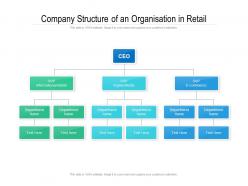
Company structure of an organisation in retail





Try Before you Buy Download Free Sample Product
 Impress Your
 Audience
 100%
100% Editable
 Save Hours
 of Time


Instill greater courage in the disabled with our Company Structure Of An Organisation In Retail. Inspire folks to care for the disabled.
People who downloaded this PowerPoint presentation also viewed the following :
Company structure of an organisation in retail with all 2 slides:
Cheer on the invalids with our Company Structure Of An Organisation In Retail. Don't allow disabilities to dishearten them.
FAQs for Company structure of an
So you need clear departments first - merchandising, ops, marketing, finance. Keep managers to like 5-7 direct reports max, trust me on that one. If you're multi-location, add regional managers between corporate and stores. Centralized buying is huge too. Here's the thing though - I've watched so many retailers create way too many layers and it kills everything. Map out what you have now and find where decisions get stuck. Make sure everyone knows who makes what calls. Oh, and communication can't just flow down - store teams need to be heard too. Structure should fit your actual size, not what you think looks impressive.
Honestly, your org structure makes or breaks customer service speed. Too many management layers? Customers wait forever while their issue bounces between like five different people - drives me crazy when that happens to me as a shopper. Flatter is better. Give your frontline people actual power to fix stuff instead of just saying "let me get my manager." They need clear rules about what they can handle solo, plus easy ways to escalate the weird situations. Short answer: put decision-making as close to customers as possible.
Okay so basically tech is just wiping out all those middle management layers in retail. Data analytics and inventory systems let the big bosses make calls that used to need like three different approvals. District managers can handle way more stores now with remote tech - it's honestly crazy how fast this happened. The routine operational stuff? Mostly automated at this point. Remote work probably sped this up too, though that's kinda obvious. If you're in retail management, you gotta pivot to more strategic thinking and relationship stuff since the day-to-day operational things basically run themselves now.
Dude, flat structures are honestly game-changers for decision speed. No more waiting for approvals through like five different managers - your frontline people can just fix problems immediately. Communication gets so much cleaner too, none of that corporate telephone game nonsense. Your team will probably love having more autonomy, and you'll definitely save money on all those middle management salaries. I'd throw that cash into better training instead. Just heads up though - make sure whoever's leading has decent people skills since they'll be managing way more direct reports than usual.
Ugh, the decision-making becomes painfully slow when everything has to climb through like five different managers. Plus info gets totally warped as it travels up and down - you know how that game of telephone goes, except now it's screwing with actual business stuff. Your front-line people end up feeling super disconnected from the top brass too. Market changes? Good luck pivoting quickly. I'd honestly try setting up some direct channels between levels and maybe cut out a few of those middle management positions if you can swing it.
Honestly, getting your teams to actually work together is a game-changer for retail. No more silos where marketing promises stuff that inventory doesn't have - been there, it's painful. Regular check-ins help tons. Even just 15 minutes weekly prevents those "wait, nobody told us this?" disasters. Your merchandising, ops, and supply chain people need to be talking constantly. Problems get solved faster when everyone's on the same page. Plus customers notice when your whole operation runs smoothly instead of like separate companies fighting each other.
Cross-train everyone so they're not bored out of their minds doing one task forever. Match personalities to roles - social people with customers, detail nerds with inventory stuff. Give your best employees actual decision-making power instead of making them ask permission for everything (seriously, this one's huge). Map out clear promotion paths so people don't feel stuck. Oh, and flexible schedules help tons with keeping people around. Start small though - find who wants more responsibility first, then slowly expand what they handle. Trust me, most people want to grow if you give them the chance.
So here's the thing - small retail shops can totally run with everyone doing a bit of everything, but once you start growing? You'll need actual structure or it gets messy fast. Department managers come first, then maybe regional people if you're expanding locations. Specialized roles like buyers or loss prevention usually come later. I've seen businesses wait too long and then scramble to catch up, which sucks. Big chains end up with these crazy corporate/regional/store hierarchies that look complicated but actually work. Just add layers as you actually need them, not because some business book told you to.
Multi-channel is your friend here - mix Slack/Teams for quick stuff with regular meetings and store huddles. District managers love becoming info bottlenecks (ugh), so watch for that. Tailor your messaging though - buyers care about totally different things than floor staff. Oh, and make sure feedback flows up too, not just orders flowing down. I'd start by figuring out where info currently gets stuck in your system. Short version: audit what you've got, then build those two-way channels. Works way better than hoping everyone just "gets the message" somehow.
Honestly, good org structure is a game changer for sales teams. You avoid all that confusion about who owns which customers or territories - nothing kills a deal faster than "uh, let me find the right person for you." Your reps know exactly what they're responsible for, so tracking performance becomes way easier. Customers don't get bounced around either, which they hate. The trick though? Make sure you're structuring around how people actually want to buy, not just what makes sense internally. I've seen too many companies create these perfect-looking charts that totally miss how their customers operate.
E-commerce is basically forcing retailers to completely restructure how they operate. Gone are the days of slow, hierarchical decision-making - you need agile digital teams that can pivot quickly. Supply chains have to work seamlessly between online and physical stores now. Companies are hiring way more tech people than traditional retail ever required, which is honestly kind of wild when you think about it. Most successful retailers are ditching the old silo approach where digital and brick-and-mortar operated separately. Cross-functional teams and data-driven roles are becoming the norm. I'd start by figuring out which departments desperately need better collaboration - that'll show you where to restructure first.
Dude, cultural differences will absolutely wreck your retail setup if you're not careful. Japan and Germany? They want tons of management layers and formal structures. But try that in Scandinavia and people will think you're insane - they prefer flat organizations where everyone collaborates. Some cultures expect clear boss-employee chains, others hate that power dynamic. Oh, and don't forget local employment laws totally change how you can staff things. Shopping behaviors vary too, which affects your whole model. Look up Hofstede's cultural dimensions before you design anything - saved my ass when we expanded to Asia.
Look at sales per employee and inventory turnover first - those show if people can actually get stuff done. Customer satisfaction is key too since messy organizations usually screw up the customer experience. Employee turnover tells you a lot - good structures keep talent around. Oh, and track how fast you respond to market changes. If decisions take forever, you're probably too bureaucratic (been there). Honestly, just pick 3-4 metrics and check them quarterly. Don't overthink it.
Honestly, you've got to flatten that whole org chart thing. Your decision-makers are probably like three levels away from actual customers, which is insane when people expect instant everything these days. Those silos between online/in-store/customer service? Tear them down - customers don't give a damn about your internal setup, they just want stuff to work smoothly. Cross-train people so they can jump between different areas. Give your frontline folks real power to fix problems instead of saying "let me ask my manager." Oh, and map out one complete customer journey first - you'll probably find like 5 spots where your structure just creates headaches.
Honestly, you can't run retail without solid leaders at every level - store managers, district people, corporate, all of it. Communication dies without them, and then your stores just become these weird little islands doing whatever they want (which is a nightmare btw). Good leaders bridge that gap between what corporate wants and what actually happens on the sales floor. They adapt when stuff changes too - holiday rushes, new markets, whatever. Your org chart looks nice on paper, but it's useless if you don't have people who can actually execute the strategy. Focus on developing those bridge-builders.
No Reviews