


Compensación y beneficios en diapositivas de presentación de PowerPoint de GRH





Try Before you Buy Download Free Sample Product
 Impress Your
 Audience
 100%
100% Editable
 Save Hours
 of Time


Ventajas y beneficios de formar parte de nuestra organización Para mantener a la fuerza laboral motivada, la compensación y los beneficios son un aspecto importante. Se refiere a todos los beneficios, tanto monetarios como no monetarios, que se transfieren a los empleados por formar parte de la organización. Esta plantilla de PowerPoint de volumen territorial es un paquete completo que consta de 35 diapositivas. Todas las diapositivas son completamente editables y se pueden cambiar según sus necesidades y requisitos. Esta presentación de PowerPoint de salario más también se puede utilizar para mostrar los diversos paquetes de compensación ofrecidos y qué área está cubierta bajo esos paquetes. Esta plantilla de PowerPoint de asignaciones y beneficios cubre diapositivas como diseño básico de compensación para empleados, componentes de compensación para empleados, desglose de compensación para empleados, sistema de compensación para empleados, tipos de planes de compensación para empleados, paquete de compensación para empleados, marco del plan de compensación, estructura de compensación para empleados, lista de beneficios para empleados, etc. Deje que su creatividad crezca. Nuestras Diapositivas de Presentación de PowerPoint de Compensación y Beneficios en Recursos Humanos cumplirán felizmente con sus demandas.
People who downloaded this PowerPoint presentation also viewed the following :
Contenido de esta presentación de Powerpoint
Diapositiva 1: Esta diapositiva presenta la Compensación y Beneficios en la GRH. Indique el nombre de su empresa y comience.
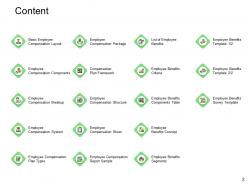
Diapositiva 2: Esta diapositiva muestra el contenido de la presentación.
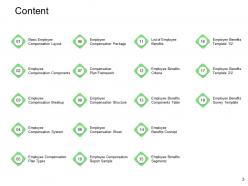
Diapositiva 3: Esta es otra diapositiva que continúa con el contenido de la presentación.
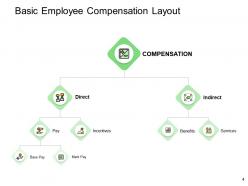
Diapositiva 4: Esta diapositiva muestra el diseño básico de la compensación de los empleados.
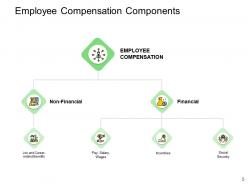
Diapositiva 5: Esta diapositiva presenta los componentes de la compensación de los empleados que describen: pago, salario, salarios, incentivos, seguridad social, beneficios relacionados con el trabajo y la carrera.
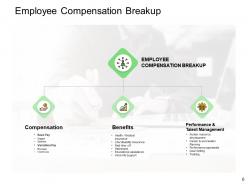
Diapositiva 6: Esta diapositiva muestra el desglose de la compensación de los empleados que describe: beneficios, compensación, gestión del rendimiento y el talento.
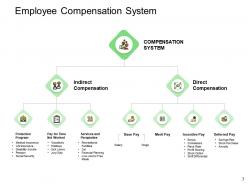
Diapositiva 7: Esta diapositiva representa el sistema de compensación de los empleados que describe: programa de protección, pago por tiempo no trabajado, servicios y beneficios adicionales, pago base, pago por méritos, pago por incentivos, pago diferido.
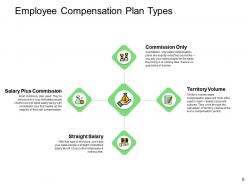
Diapositiva 8: Esta diapositiva muestra los tipos de planes de compensación de los empleados como volumen territorial, salario fijo, salario más comisión, solo comisión.
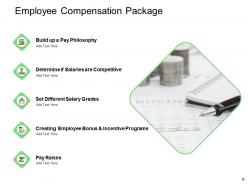
Diapositiva 9: Esta diapositiva muestra el paquete de compensación de los empleados que describe: desarrollar una filosofía salarial, establecer diferentes grados salariales, determinar si los salarios son competitivos, aumentos salariales, creación de programas de bonificación e incentivos para empleados.
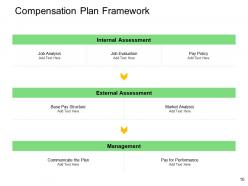
Diapositiva 10: Esta diapositiva presenta el marco del plan de compensación con evaluación interna, evaluación externa, gestión.
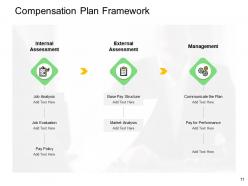
Diapositiva 11: Esta es una diapositiva opcional para el marco del plan de compensación.
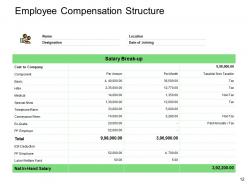
Diapositiva 12: Esta diapositiva muestra la estructura de compensación de los empleados que describe el desglose salarial.
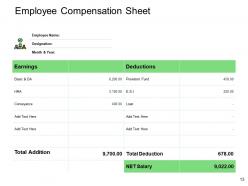
Diapositiva 13: Esta diapositiva representa la hoja de compensación de los empleados que muestra los ingresos, deducciones y salario neto.
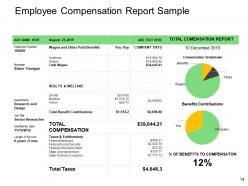
Diapositiva 14: Esta diapositiva muestra una muestra del informe de compensación de los empleados.
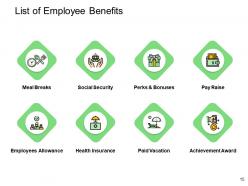
Diapositiva 15: Esta diapositiva muestra la lista de beneficios para los empleados que describe: pausas para comidas, seguridad social, primas y bonos, aumento salarial, asignaciones para empleados, seguro médico, vacaciones pagadas, premio por logros.
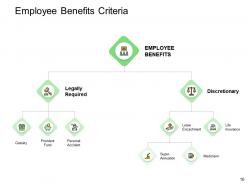
Diapositiva 16: Esta diapositiva presenta los criterios de beneficios para los empleados en forma jerárquica.
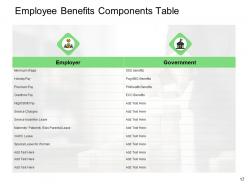
Diapositiva 17: Esta diapositiva muestra una tabla de componentes de beneficios para los empleados que describe los beneficios proporcionados por el empleador y el gobierno.
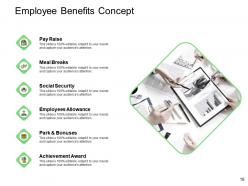
Diapositiva 18: Esta diapositiva representa el concepto de beneficios para los empleados con: pausas para comidas, seguridad social, primas y bonos, aumento salarial, asignaciones para empleados, premio por logros.
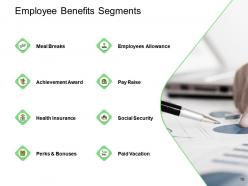
Diapositiva 19: Esta diapositiva muestra los segmentos de beneficios para los empleados.
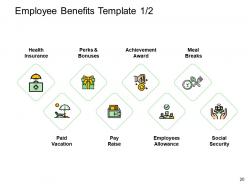
Diapositiva 20: Esta diapositiva muestra la plantilla de beneficios para los empleados. Puede agregar o editar datos según los requisitos.
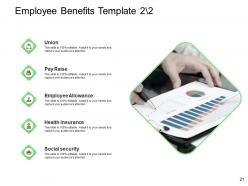
Diapositiva 21: Esta es otra diapositiva que presenta la plantilla de beneficios para los empleados.
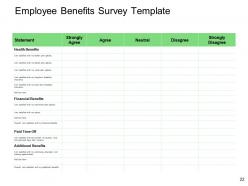
Diapositiva 22: Esta diapositiva representa la plantilla de encuesta de beneficios para los empleados con un rango de escala desde muy de acuerdo hasta muy en desacuerdo.
Diapositiva 23: Esta diapositiva muestra iconos para compensación y beneficios en la GRH.
Diapositiva 24: Esta es otra diapositiva que muestra iconos para compensación y beneficios en la GRH.
Diapositiva 25: Esta diapositiva se titula Diapositivas adicionales para avanzar.
Diapositiva 26: Esta es la diapositiva de Nuestra Misión con imágenes y texto relacionados.
Diapositiva 27: Esta es la diapositiva de Nuestro Equipo con nombres y cargos.
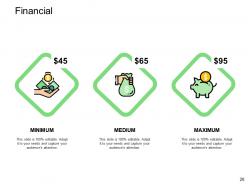
Diapositiva 28: Esta es una diapositiva financiera. Muestre aquí su información relacionada con las finanzas.
Diapositiva 29: Esta es la diapositiva Sobre Nosotros para mostrar las especificaciones de la empresa, etc.
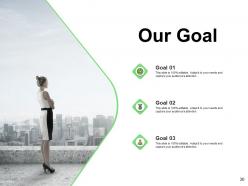
Diapositiva 30: Esta es la diapositiva de Nuestras Metas. Muestre aquí las metas de su empresa.
Diapositiva 31: Esta es una diapositiva de Citas para transmitir mensajes, creencias, etc.
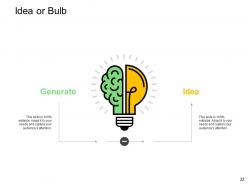
Diapositiva 32: Esta es una diapositiva de Idea o Bombilla para exponer una nueva idea o resaltar información, especificaciones, etc.
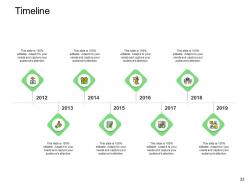
Diapositiva 33: Esta es una diapositiva de Línea de Tiempo para mostrar información relacionada con un período de tiempo.
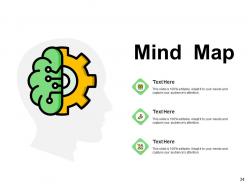
Diapositiva 34: Esta diapositiva muestra un Mapa Mental para representar entidades.
Diapositiva 35: Esta es una diapositiva de Gracias con dirección, números de contacto y dirección de correo electrónico.
Compensación y beneficios en la presentación de diapositivas de PowerPoint de GRH: 1. Introducción a la compensación y los beneficios 2. Objetivos de la compensación y los beneficios 3. Componentes de la compensación 4. Salario base 5. Incentivos y bonos 6. Beneficios 7. Tipos de beneficios 8. Beneficios obligatorios 9. Beneficios voluntarios 10. Diseño de un sistema de compensación y beneficios 11. Factores que influyen en la compensación 12. Equidad interna 13. Equidad externa 14. Capacidad de pago 15. Estrategia de compensación 16. Estructura salarial 17. Bandas salariales 18. Evaluación de puestos 19. Encuestas salariales 20. Administración de la compensación 21. Análisis de puestos 22. Descripción de puestos 23. Evaluación de puestos 24. Estructura salarial 25. Ajustes salariales 26. Beneficios y su administración 27. Tipos de beneficios 28. Administración de beneficios 29. Comunicación de la compensación y los beneficios 30. Importancia de la comunicación 31. Canales de comunicación 32. Retroalimentación y mejora continua 33. Monitoreo y evaluación 34. Mejora continua 35. Conclusión
Alternativas con nuestra presentación de diapositivas de PowerPoint sobre compensación y beneficios en la gestión de recursos humanos. Ayudan a generar consenso para el cambio.


FAQs for Compensation And Benefits In Hrm
So you'll want base salary obviously, plus variable stuff like bonuses and commissions. Benefits are huge too - health insurance, retirement, PTO. Then there's the fun extras like equity if you're that type of company. Honestly, the hardest part is figuring out what actually matters to your people versus what you can swing budget-wise. I'd start by checking what competitors are doing for similar roles. Some teams care more about flexibility, others want straight cash. Market research first, then see which pieces your workforce actually values. Don't blow your budget trying to match Google's perks if nobody cares about them.
Dude, benefits packages are seriously underrated for keeping people around. Like, I've seen people turn down higher salaries just because the health insurance was trash at the other place. Good coverage, flexible time off, maybe some random wellness stuff - it all adds up to people feeling actually cared about. Financial stress kills job satisfaction, so when you remove that burden, people stick around. The catch? Cookie-cutter benefits are useless now. You've gotta ask your team what they actually want instead of guessing. Some people care more about mental health coverage, others want better parental leave. Survey them and build from there.
Yeah, bonuses totally work when you set them up right. Make the criteria super specific though - none of that "exceeds expectations" garbage that means nothing. People need to see exactly how their extra work = extra cash. That direct connection is what actually drives performance. Oh, and be consistent with how you judge everyone. I've seen places where bonus decisions seemed totally random and it just crushed morale. Nobody's gonna bust their ass if they think the whole system's rigged, you know?
Honestly, don't just think about base salary - you can get super competitive with benefits and perks that won't break the bank. Remote work flexibility or a killer health plan sometimes beats cash anyway. Do your homework on what other companies are paying so you're not guessing. Performance bonuses work great if you can swing them. Here's what actually works though: just ask candidates what they care about most during the negotiation. Some people want money, others want time off or professional development opportunities. Getting creative with your compensation mix is way better than trying to match everyone's salary demands. Trust me, it's saved my ass multiple times when budgets were tight.
Yeah so remote work is totally changing the pay game. Companies are doing location-based salaries now - like, you might get paid less if you move somewhere cheaper. Benefits are shifting too. Less free office snacks, more home office money and mental health stuff. Honestly, a lot of companies are still winging it which is kinda wild. Flexible PTO is becoming huge. When you're negotiating, definitely ask what their remote pay philosophy actually is. And find out if moving would mess with your salary - that's been biting people lately.
Honestly, once a year isn't enough anymore - the market moves too fast. I'd do a quick pulse check every 6 months just to stay on top of things. Full deep dives should happen annually, but also whenever you're bleeding talent or can't fill positions. Those off-cycle adjustments are crucial too. Like, why lose someone great just because it's not "review time" yet? Set up reminders for both your mid-year checks and annual reviews. Track turnover rates between reviews - that'll tell you if you're falling behind. The whole "wait til annual review" thing is honestly outdated at this point.
Right now people are obsessed with flexibility - remote or hybrid work is non-negotiable for most. Mental health support has become massive too, like genuinely a dealbreaker. Professional development matters a ton, plus good health benefits obviously. Unlimited PTO is everywhere now. Student loan help and childcare support are getting popular. But here's the thing - career growth usually beats everything else for keeping people around. I'd honestly just survey your team first though, because what they want might surprise you. Don't just guess what'll work.
Do regular pay audits first - check for gaps between genders, races, whatever across similar roles. Transparent salary bands are huge too. Document everything when you're doing promotions and raises, trust me on this one. Post salary ranges in job postings since everyone's doing it now anyway. Don't wait around for issues to pop up - review your comp data quarterly and fix stuff before it becomes a problem. The whole thing falls apart if you're not staying ahead of it.
Honestly, you gotta track both the hard numbers and what people actually think. Turnover rates, time-to-fill positions, cost-per-hire - that's your baseline stuff. But employee satisfaction surveys matter just as much because good metrics are useless if everyone's burned out. Pay equity ratios and benefits usage are worth watching too, plus how you stack up against market rates. Oh, and don't just check this stuff once a year - quarterly makes way more sense. My advice? Pick 3-4 things you can actually do something about instead of collecting a million data points that'll just sit there.
Oh man, this is such a minefield! Different cultures care about totally different things - like in some places, education benefits or healthcare matter way more than just throwing money at people. Scandinavians obsess over work-life balance perks, but that might not fly elsewhere. Then you've got regions where 13th-month bonuses are just expected, not optional. Honestly, I'd just ask each team what they actually want instead of guessing. You can build packages that flex to local stuff while keeping things fair. Stock options vs. cash bonuses - it all depends on where your people are.
Honestly, wellness programs have gotten so much better lately. Companies are finally doing mental health support, financial coaching, meditation apps - not just the basic gym membership thing. Though I still love a good yoga class, not gonna lie. These programs are actually replacing some traditional perks now, which is smart because they're cutting healthcare costs and people are staying at their jobs longer. If you're looking at your benefits package, figure out what your team actually wants first. Some places go overboard with stuff nobody uses.
Look into HRIS systems - they'll automate your payroll and benefits stuff automatically. Real-time analytics help you catch pay equity problems early too. Your HR team will love you because no more spreadsheet hell every week. Oh, and employees can handle their own benefits through self-service portals instead of constantly asking HR questions. I'd start by figuring out what's currently driving everyone crazy, then see where tech can fix those headaches first. Trust me, the time savings alone make it worth it.
So benefits compliance is actually a maze - ERISA covers most employee plans and has tons of reporting requirements. The ACA kicks in if you're a bigger employer, plus COBRA gives people continuation rights when they leave. Non-discrimination rules are honestly where most companies mess up because they're so convoluted. You'll also need to think about FMLA stuff, whatever your state requires, and tax implications. I'd start by checking what you have now against all these regs. Then definitely get a lawyer involved before making any big moves - trust me on that one.
Yeah, transparency totally builds trust. When people know how pay decisions work, they're not sitting around wondering if they're getting screwed over (which honestly, we all do). It just eliminates that mental drain. Clear salary bands and promotion criteria? Game changer - kills the resentment that builds up from guesswork. Companies end up being more fair too since everything's visible. I'd start small, maybe share your pay philosophy with the team first. Even baby steps toward openness help a ton.
Honestly, there's some pretty interesting stuff happening with comp packages right now. More companies are throwing equity at people, not just tech startups anymore. Skills-based raises are huge too - you can actually get bumped up for getting certified instead of waiting around for a promotion. The whole "design your own benefits" thing is catching on where you pick what you want. Performance bonuses are getting weird though, like quarterly instead of once a year. Unlimited PTO is everywhere now (we both know how that really goes lol). Definitely check what your competitors are doing before you negotiate - that's your best ammunition.
No Reviews