

Continuous Service Enhancement Powerpoint Presentation Slides





Try Before you Buy Download Free Sample Product
 Impress Your
Audience
 100%
Editable
 Save Hours
of Time


Identify opportunities for improvement using Continuous Service Enhancement PowerPoint presentation slides. Analyse which metrics need to be monitored and measure the impact of improvement efforts with the help of content-ready continuous service enhancement PPT templates. Let these professionally designed continuous service enhancement PPT slides take methods from quality management to learn from past success and failures. Work towards improving the efficiency of IT processes and services by adding ITIL continual service improvement PowerPoint templates. This ready-to-use continuous service enhancement complete PowerPoint deck consists of templates like CSI strategy and goals, continual service improvement methods, CSI process, lifecycle of service, the service portfolio, and more. Use CSI PowerPoint templates as a tool to analyse, document and plan for improvements. These ready-made continuous service PowerPoint templates will help you align services with changing needs of business by determining and executing improvements to IT services that support business process. Grab your hands on this professionally designed IT continual service PPT slides to make the improvements to the processes, infrastructure, services and more. Grow in their eyes with our Continuous Service Enhancement Powerpoint Presentation Slides. Do better than they ever expected.
People who downloaded this PowerPoint presentation also viewed the following :
Content of this Powerpoint Presentation
Slide 1: This slide introduces Continuous Service Enhancement. State Your Company Name and get started.
Slide 2: This is an Agenda slide. State your company agendas here.
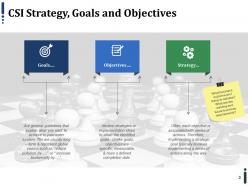
Slide 3: This slide showcases CSI Strategy, Goals and Objectives. Strategy- (Often, each objective is associated with series of actions. Therefore, Implementing a strategic goal typically involves Implementing a series of actions along the way). Objectives- (decline strategies or implementation steps to attain the identified goals. Unlike goals, objectives are specific, measurable, & have a defined completion date). Goals- (Are general guidelines that explain what you want to achieve in your water system. The are usually long – term & represent global visions such as “reduce pollution by ” or “ increase biodiversity by…”What business outcome am I trying to achieve? What are the existing and future business requirements?).
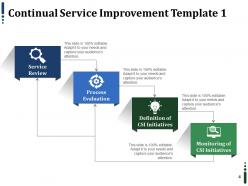
Slide 4: This slide displays Continual Service Improvement Template with the following sub headings- Process Evaluation, Definition of CSI Initiatives, Monitoring of CSI Initiatives, Service Review.
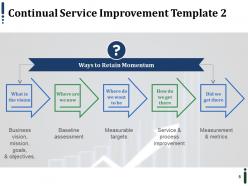
Slide 5: This slide showcases Continual Service Improvement Template with sub heading of Ways to Retain Momentum. The constituents of this sub heading are- What is the vision, (Business vision, mission, goals,& objectives). Where do we want to be, (Measurable targets) Where are we now, (Baseline assessment) How do we get there, (Service & process improvement), Did we get there, (Measurement & metrics).
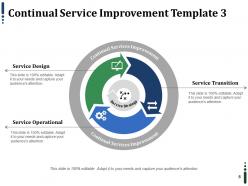
Slide 6: This slide presents Continual Service Improvement Template with the following sub headings with Service strategy in center- Service Transition, Service Design, Service Operational.
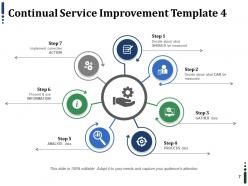
Slide 7: This slide presents Continual Service Improvement Template with steps. The steps shown are: Step 1- Decide about what SHOULD be measured. Step 2- Decide about what CAN be measured. Step 3- GATHER data. Step 4- PROCESS data. Step 5- ANALYZE data. Step 6- Present & use INFORMATION. Step 7- Implement corrective ACTION.
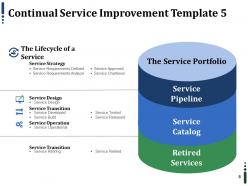
Slide 8: This slide presents Continual Service Improvement Template with The Lifecycle of a Service as the main sub heading. The main points include- Service Strategy: Service Requirements Defined, Service Requirements Analyze, Service Approved, Service Chartered ,Service Transition: Service Developed, Service Build, ,Service Design: Service Design ,Service Operation: Service Operational ,Service Transition: Service Retiring, Service Retired, Service Tested, Service Released. The Service Portfolio includes- Service Pipeline, Service Catalog, Retired Services,
Slide 9: This is a Coffee Break slide to halt.
Slide 10: This slide is titled Additional Slides to proceed.
Slide 11: This is an About Us slide. State highlights, specifications etc. here.
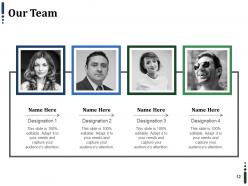
Slide 12: This slide presents Our Team with name, image box and designation.
Slide 13: This is a Target slide with image and text boxes to go with.
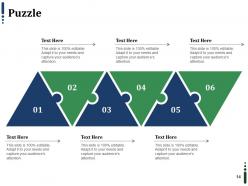
Slide 14: This is a Puzzle slide to show information, specifications etc.
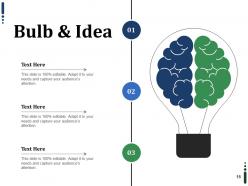
Slide 15: This is a Bulb & Idea slide to show information, specifications etc.
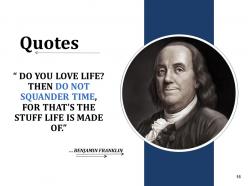
Slide 16: This is a Quotes slide. The following quote has been showed as an example- “ DO YOU LOVE LIFE? THEN DO NOT SQUANDER TIME, FOR THAT’S THE STUFF LIFE IS MADE OF.” ... BENJAMIN FRANKLIN. State a quote, highlights etc here.
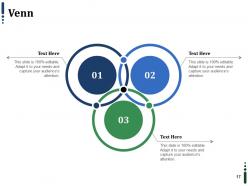
Slide 17: This is a Venn diagram slide to show information.
Slide 18: This slide is titled Charts & Graphs to proceed forward.
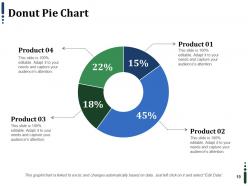
Slide 19: This slide shows a Donut Pie Chart for product comparison etc.
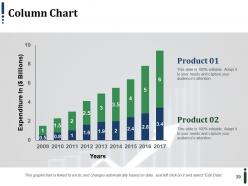
Slide 20: This is a Column Chart slide to show growth, share etc. in terms of years.
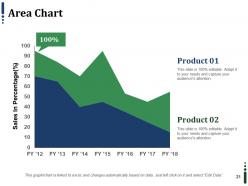
Slide 21: This is an Area Chart slide to show sales etc. of two products.
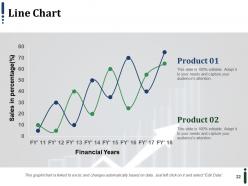
Slide 22: This slide presents a Line Chart for two product comparison.
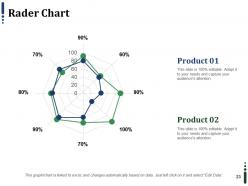
Slide 23: This is a Radar Chart to show products in comparison.
Slide 24: This is a Thank You slide with Address# Street number, city, state, Email Address, Contact Numbers.
Continuous Service Enhancement Powerpoint Presentation Slides with all 24 slides:
Caution folks about insanitary conditions with our Continuous Service Enhancement Powerpoint Presentation Slides. Initiate action to establish a healthy environment.


FAQs for Continuous Service Enhancement
Honestly, CSI is just common sense stuff. Measure everything first - get that baseline so you know where you're starting from. Focus on changes that actually help your business, not random tweaks that look good on paper. Small improvements work way better than massive overhauls (learned that the hard way). Data should drive your decisions, though sometimes your gut isn't totally wrong either. The whole thing works because you're constantly monitoring and adjusting - it's like a feedback loop that never stops. Just pick one service that's annoying users and start there.
Track both the hard numbers and what people actually tell you. Resolution times, satisfaction scores, efficiency gains - that stuff matters. But honestly? The real gold comes from casual conversations with your team and customers about what's genuinely better now. Don't chase metrics that just look pretty on reports but mean nothing. Regular before-and-after reviews are key, and always connect improvements to outcomes your stakeholders give a damn about. Oh, and avoid getting sucked into vanity metrics - been there, it's a waste of time.
Dude, feedback is everything for CSI - it's literally how you find out what's broken and what's not. Without it, you're just shooting in the dark hoping something sticks. I've watched so many companies skip this step and wonder why their "improvements" flop. Real customer input shows you pain points your internal data totally misses. Plus it helps you figure out what to fix first instead of wasting time on stuff nobody cares about. Just start simple - surveys, support conversations, maybe some quick user chats. Then actually use what you learn to make changes and see if they worked.
Look, data analytics is basically your detective tool for finding what's actually broken in your service - not what you *think* is broken. Track customer feedback, performance metrics, all that stuff over time instead of just random snapshots. You'll catch patterns that would fly right past you otherwise. Honestly, I've seen teams spend months fixing the wrong problems because they guessed instead of looking at the data. Focus on trends that show real bottlenecks and predict when things might fail. Pick maybe 2-3 key metrics and just... track them consistently for a month. Shows you what'll actually move the needle on customer happiness and costs.
So there's ITIL, Lean Six Sigma, and Kaizen - though honestly most people just cherry-pick what works. ITIL's got this seven-step improvement thing that's decent for IT stuff specifically. Lean cuts out waste, Six Sigma fixes defects and wonky processes. Kaizen is more about tiny changes that stack up over time (which sounds boring but actually works pretty well). I'd probably start with ITIL since it's built for IT services, then throw in some Lean concepts once you get the hang of it. Nobody really does just one methodology anyway.
Honestly, tech can be a game-changer for CSI stuff. Automated monitoring catches patterns you'd totally miss doing it by hand. Real-time dashboards show you what's actually happening with your services, plus you get automated incident tracking. The AI prediction thing is pretty neat - it flags issues before they become disasters. Oh, and process mining tools are clutch because they show you where the real bottlenecks are (spoiler: usually not where you think). Just don't go crazy picking tools that'll make your team want to quit. Find stuff that plays nice with what you already have.
Honestly, you've gotta make improvement feel rewarding instead of like more busy work. Celebrate when people spot problems or pitch ideas - even the wonky ones. Hold regular retrospectives where everyone can speak up without getting blamed. Most teams I've worked with totally skip this part, then act shocked when nothing changes lol. Block out actual time for improvement stuff too, don't just cram it into packed schedules. Lead by example - own your mistakes and show how you're fixing things. Maybe start small with 15-minute weekly "how can we do better?" chats.
Honestly, the biggest pain points are gonna be people fighting change, no clear way to measure success, and leadership that doesn't really back you up. Quick wins are your friend here - start small to prove it works, then expand. You absolutely need baseline data first or you're just guessing. Leadership has to actually champion this stuff, not just give it a thumbs up. Oh, and here's the key thing - let your team help identify what needs fixing instead of just telling them what to change. When people feel heard, they're way less likely to resist everything you're trying to do.
Honestly, just treat CSI like it's part of what you're already doing instead of some separate thing. During your regular service reviews and incident post-mortems, start spotting improvement opportunities. Most teams overthink this - they assume it needs to be super formal when it really doesn't. Build it into everyone's daily work routine. Set up improvement workshops that people actually want to attend. Track metrics that matter to your services, not just random numbers that look good on paper. Create those feedback loops between your ITIL processes. Document what you learn and turn it into real improvements for next time.
Look at Toyota - they basically changed everything about making cars by cutting waste and constantly tweaking their process. Virginia Mason Medical Center copied their playbook to slash wait times and reduce mistakes (pretty smart honestly). Amazon's always messing with their delivery algorithms to get stuff to you crazy fast. Oh, and Starbucks? They use this approach for barista training and figuring out the best store layouts based on how customers move around. My advice - pick one annoying process your team deals with every day, track what's happening, then adjust based on what you find out.
Honestly, it starts with leaders making improvement part of everyone's regular job, not some random side thing. They gotta actually ask "how do we fix this?" in meetings and - this is crucial - listen when people answer. Budget some money for these projects and celebrate wins publicly. People eat that stuff up. Your team needs to feel safe calling out problems without getting their heads bitten off. Oh, and leaders should admit when they mess up too - shows everyone it's okay to fail and learn. I'd say pick one messy process and tackle it together first.
So for tracking CSI stuff, ServiceNow and Jira Service Management are solid choices - they handle everything from incident patterns to performance metrics. Freshservice is decent too. Honestly though, if you're on a smaller team, don't sleep on a good spreadsheet. I know it sounds basic but it works if you actually keep it updated (that's the hard part lol). Power BI makes nice dashboards that your boss will actually understand. Oh and Kepner-Tregoe is clutch for root cause analysis. Just pick whatever plays nice with your current service management setup - nobody uses tools that are a pain to integrate.
Honestly, Agile and CSI work together pretty seamlessly. They're both obsessed with short improvement cycles and getting constant feedback from users. Instead of waiting months for some massive review, you're measuring and tweaking things every few weeks. Sprint retrospectives? They're basically CSI sessions where your team figures out what's broken and what's actually working. I'd treat service improvements like mini-sprints - maybe set small goals every 2-3 weeks and track whether they're actually helping users. The whole "fail fast, learn quick" mentality applies to both. Makes way more sense than the old waterfall approach, if you ask me.
CSI work is pretty much half spreadsheets, half people management if I'm being honest. Data analysis is massive - measuring performance, tracking trends, finding where things could improve. Process mapping and root cause stuff too. Communication skills are clutch though because you're constantly selling ideas to stakeholders. Plus you'll run workshops and manage change (since nobody loves being told to work differently). Project management keeps the chaos organized. Oh, and being genuinely curious helps - always questioning why things work the way they do. I'd focus on whatever feels like your weak spot first.
Don't treat CSI like some side hobby - make it part of how you actually work. Monthly or quarterly review meetings are perfect for checking metrics and feedback. Someone needs to own this stuff though, or it'll just fizzle out (seen it happen way too many times). Put it right in people's job descriptions so they know it counts. Short wins deserve celebrating too - keeps everyone motivated. Honestly, the hardest part is just getting started. Schedule that first review this week and set it to repeat. Once you get the rhythm going, it becomes way easier.
-
Perfect template with attractive color combination.
-
Unique and attractive product design.