


Cost estimate powerpoint presentation slides




Try Before you Buy Download Free Sample Product
 Impress Your
 Audience
 100%
100% Editable
 Save Hours
 of Time


Estimate the cost of the project by utilizing the Cost Estimate Powerpoint Presentation Slide. Employ the cost strategy PPT templates and offer your customers relatively low prices to stimulate demand and gain market share. Examine all reasonable alternatives before making a decision by utilizing the opportunity cost PPT slideshow. Determining all business expenses pertaining to the creation of company products by taking the assistance of product costing PowerPoint graphics. Identify and evaluate activities that a business performs using the activity-based costing PPT graphics. Take the assistance of the customer profitability analysis PPT layouts to set up the budget during the front end of projects. Forecast the financial and other resources needed to complete a project within a defined scope. Showcase cost estimation strategies by downloading our ready to use budget forecasting PPT Presentation.
People who downloaded this PowerPoint presentation also viewed the following :
Content of this Powerpoint Presentation
Slide 1: This slide introduces Cost Estimate. State your company name and begin.
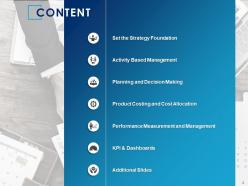
Slide 2: This slide displays the Content of the presentation.
Slide 3: This slide describes to Set the Strategy Foundation containing- Cost Strategy, Rationale behind picking up the cost strategy, Opportunity Cost, Product Costing, Cost Estimation.
Slide 4: This slide displays Cost Strategy with- Differentiation, Differentiation Focus, Cost, Focus, Cost Leadership, Board, Narrow, Differentiation, Cost, Scope.
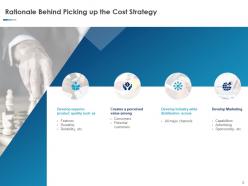
Slide 5: This slide depicts Rationale Behind Picking up the Cost Strategy.
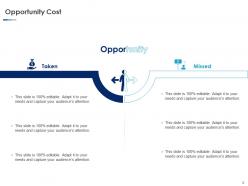
Slide 6: This slide represents the Opportunity Cost.
Slide 7: This slide describes Opportunity Cost.
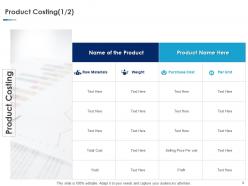
Slide 8: This slide represents Product Costing.
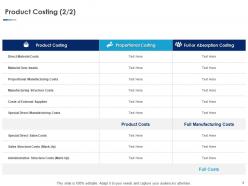
Slide 9: This slide also represents Product Costing.
Slide 10: This slide displays the Cost Estimation.
Slide 11: This slide depicts Activity Based Management with- Activity-Based Costing Systems, Managing Quality and Time to Create values, Customer Profitability, Customer-product profitability analysis, Customer profitability analysis.
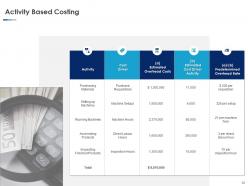
Slide 12: This slide showcases Activity Based costing.
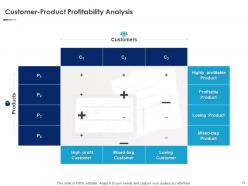
Slide 13: This slide showcases Customer-Product Profitability Analysis with- Customers, Products.
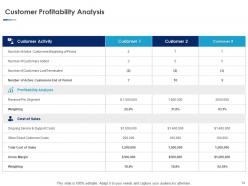
Slide 14: This slide describes Customer Profitability Analysis.
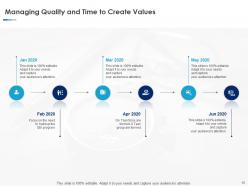
Slide 15: This slide displays Managing Quality and Time to create Values.
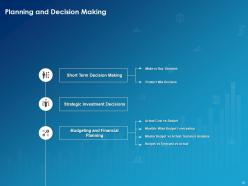
Slide 16: This slide showcases Planning and Decision Making.
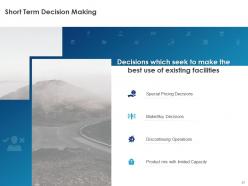
Slide 17: This slide represents Short term Decision Making containing- Decisions which seek to make the best use of existing facilities, Special Pricing Decisions, Product Mix with Limited Capacity, Discontinuing Operations.
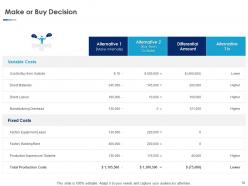
Slide 18: This slide describes Make or Buy Decision.
Slide 19: This slide discusses about Product Mix Decision.
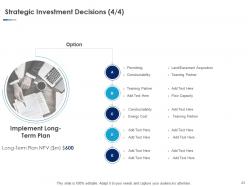
Slide 20: This slide presents Strategic Investment Decisions.
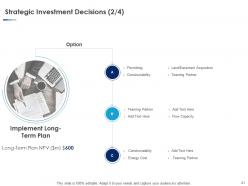
Slide 21: This slide displays Strategic Investment Decisions.
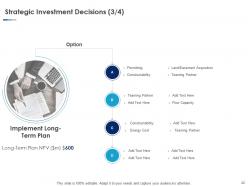
Slide 22: This slide describes Strategic Investment Decisions.
Slide 23: This slide represents Strategic Investment Decisions.
Slide 24: This slide displays Actual Cost Vs Budget.
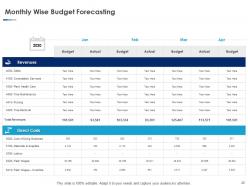
Slide 25: This slide showcases Monthly wise Budget Forecasting.
Slide 26: This slide depicts Master Budget Vs Actual: Variance Analysis.
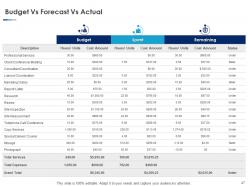
Slide 27: This slide describes Budget Vs Forecast Vs Actual.
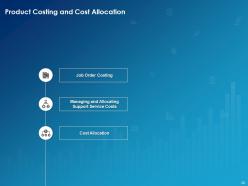
Slide 28: This slide presents Product Costing and Cost Allocation with- Job Order Costing, Managing and Allocating Support Service Costs, Cost Allocation.
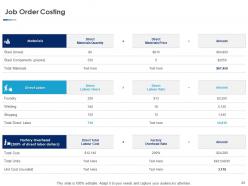
Slide 29: This slide showcases Job Order Costing.
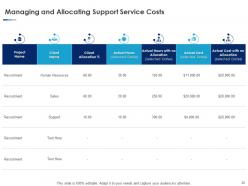
Slide 30: This slide represents Managing and Allocating Support Service Costs.
Slide 31: This slide displays Cost Allocation.
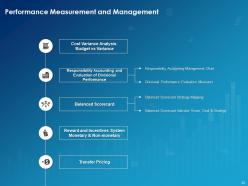
Slide 32: This slide displays Performance Measurement and Management.
Slide 33: This slide depicts Cost Variance Analysis: Budget Vs Variance.
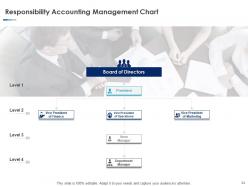
Slide 34: This slide displays Responsibility Accounting Management Chart.
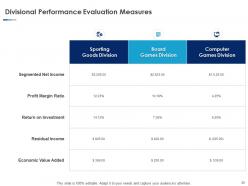
Slide 35: This slide represents Divisional Performance Evaluation Measures.
Slide 36: This slide depicts Balanced Scorecard Strategy Mapping.
Slide 37: This slide represents Balanced Scorecard Indicator Vision, Goal & Strategy.
Slide 38: This slide showcases Reward and Incentives System Monetary & Non-monetary.
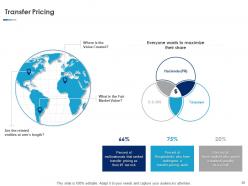
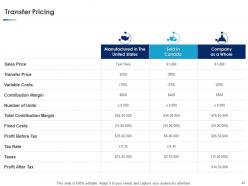
Slide 39: This slide showcases Transfer pricing.
Slide 40: This slide displays Transfer Pricing
Slide 41: This slide displays KPI & Dashboards.
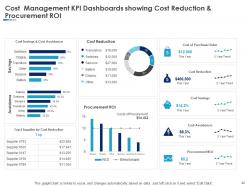
Slide 42: This slide depicts Cost Management KPI Dashboards showing Cost Reduction & Procurement ROI.
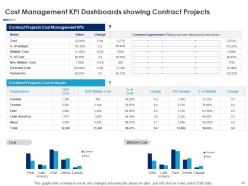
Slide 43: This slide describes Contract Projects Cost Management KPIs.
Slide 44: This slide represents Cost Management KPI Dashboards showing Return on Assets & Asset Turnover.
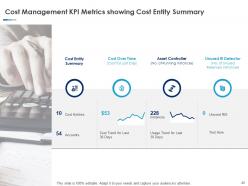
Slide 45: This slide showcases Cost Management KPI Metrics showing Cost Entity Summary.
Slide 46: This slide showcases Cost Management KPI Metrics showing Return on Investment.
Slide 47: This slide is titled as Additional Slides for moving forward.
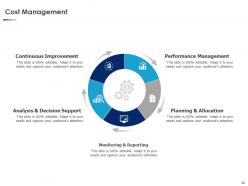
Slide 48: This slide depicts Cost Management with- Continuous Improvement, Performance Management, Planning & Allocation, Monitoring & Reporting, Analysis & Decision Support.
Slide 49: This slide displays Cost Management Steps such as- Cost Planning, Evaluation and Decision, Cost Analysis, Cost Tracking.
Slide 50: This slide depicts Cost Management with- Estimating, Project Planning, Project Cost Control, Financial Management.
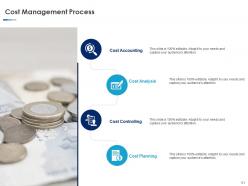
Slide 51: This slide showcases Cost Management Process.
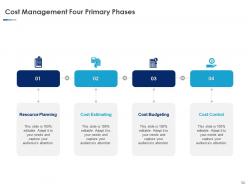
Slide 52: This slide presents Cost Management Four Primary Phases describing- Resource Planning, Cost Estimating, Cost Budgeting, Cost Control.
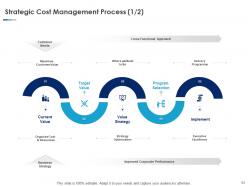
Slide 53: This slide displays Strategic Cost Management Process with- Cross Functional Approach, Improved Corporate Performance, Current Value, Target Value, Value Strategy, Program Selection, Implement, Delivery Programme.
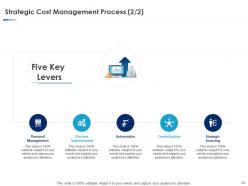
Slide 54: This slide describes Strategic Cost Management Process with- Demand Management, Process Improvement, Centralization, Automation, Strategic Sourcing, Key Levers.
Slide 55: This is Total Cost Management Icons Slide.
Slide 56: This is Our Mission & Vision slide.
Slide 57: This is Our Team slide with names and designation.
Slide 58: This is About Us slide to showcase company specifications.
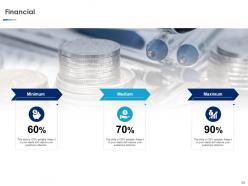
Slide 59: This is Financial slide. Showcase finance related stuff here.
Slide 60: This is Our Goal slide. State your goals here.
Slide 61: This is Comparison slide to showcase comparison between male and female social media users.
Slide 62: This is Quotes slide to convey message, beliefs.
Slide 63: This is Post it Notes slide. Post your important notes.
Slide 64: This is four years Timeline slide.
Slide 65: This is Silhouettes slide with images.
Slide 66: This is Thank You slide with address, contact number and email address.
Cost estimate powerpoint presentation slides with all 66 slides:
Denials disappear with our Cost Estimate Powerpoint Presentation Slides. They always beget approvals.






















FAQs for Cost estimate
So for your cost template, definitely break out direct stuff like materials, labor, and equipment from the indirect things - overhead, admin costs, that kind of thing. I always add 10-20% contingency because projects never go as planned, trust me on that one. List out labor by specific roles and hours rather than just "labor costs." Don't forget permits, any subcontractor fees, travel if you need it. Timeline matters too since prices change. Oh and separate line items are your friend - makes it so much easier to figure out where you screwed up later when you're comparing what actually happened versus what you thought would happen.
Break projects down into smaller pieces first - way easier to estimate that way. I always use historical data from similar work and get input from people who've actually done this stuff before. Honestly, those high-level "ballpark" guesses are disasters waiting to happen. Build in buffer time for the weird stuff that'll pop up (it always does). Write down your assumptions so you can figure out later what you got wrong or right. Oh, and don't treat your first estimate like it's set in stone - you'll learn more as the project goes on and should adjust accordingly.
Ugh, the classic mistakes are timeline optimism and scope creep. Tasks literally multiply overnight - I swear it's project management black magic. You'll underestimate everything, so pad your estimates by like 20-30% minimum. Don't forget the sneaky indirect costs either (testing, deployment, all that fun stuff). Dependencies kill timelines too - other teams move at their own pace, not yours. Oh, and write down your assumptions! When everything goes sideways (and it will), you'll actually know what changed instead of just panicking.
Yeah, it's crazy how different industries handle this stuff. Construction breaks everything down super detailed - materials, labor, equipment costs, the whole nine yards. Software teams? They're doing story points and looking at how fast they moved on past projects, which is way more abstract. Manufacturing sticks to standard costs and material lists, while consulting is usually just hours times rates. Healthcare and pharma are nuts though - they've got all these regulatory costs that nobody else even thinks about. Honestly, your best move is just digging into whatever methods your specific industry actually uses instead of trying some generic approach.
You absolutely need to look at your old projects - seriously, it's the best way to predict what'll happen next time. Find similar stuff you've done before (same complexity, team size, whatever) and see where you always go over budget. There's usually a pattern if you actually pay attention. Most teams just wing it every time, then act shocked when they blow past their estimates lol. Track your actual costs vs what you guessed, then use that info to get better at estimating. Even if you start doing this now, you'll have solid data for next project. Trust me on this one.
Dude, get yourself some digital tools - they'll change your life. CostX and Bluebeam are solid for automating takeoffs from plans. Way better than measuring stuff by hand for hours. Cloud-based platforms let your whole team work together and keep material costs updated. The AI stuff is actually pretty cool too - it looks at old projects and warns you about potential overruns before you're screwed. Oh, and don't try to switch everything at once. Pick one tool first, then add more as you get comfortable with it.
So top-down means you start with your whole budget and just divvy it up - big picture stuff. With bottom-up, you're doing the grunt work of estimating every single task first, then adding it all together. Top-down's super quick but kinda sloppy since you're basically winging it at a high level. Bottom-up is a total pain (seriously, who has time for that?) but you'll get way better numbers. Most project managers I've worked with complain about how long bottom-up takes, but it really does prevent those "oh crap" moments when costs spiral. My take? Use top-down for rough estimates, bottom-up when stakeholders want details.
Start with business impact, not tech details - executives care about what it means for their goals. Charts work way better than spreadsheets full of line items. I always compare costs to stuff they know, like "this equals two full-time hires for six months." Give them ranges, not fake precision down to the dollar. Be honest about what you're confident in and what's just educated guessing. Oh, and budget extra time for questions - they'll have tons once they actually digest the numbers. The whole point is helping them decide what to do next.
Honestly, most people screw this up by waiting way too long to update their estimates. Don't be that person. Hit those major milestones? Time to revise. Big scope change? Definitely revise. I'd say monthly reviews work well - reassess what's left based on what you've actually learned. Track your real costs against the original baseline like your life depends on it. Document why things changed too, not just the numbers. Oh, and don't do this stuff alone in a corner somewhere. Get your stakeholders involved or you'll just be updating spreadsheets nobody cares about.
Ugh, scope changes are seriously the worst for budgets. You think you're just adding one little feature, but then boom - suddenly you need extra people, more time, and half the stuff you already built needs redoing. It's like that domino effect where everything just keeps getting messier and more expensive. Honestly, even tiny changes can spiral way beyond what you'd guess. I learned this the hard way on a project last year. Always pad your budget by at least 10-20% for scope creep, and write down every single change so you can actually track where all your money's going when things go sideways.
Honestly, the biggest thing is just being straight up about your numbers - don't lowball to win work or inflate stuff unnecessarily. Be real about what you don't know and your assumptions, especially when people are making major decisions off your estimates. I've watched whole teams crash and burn because they weren't honest about the risks upfront. Also think about who's getting helped or screwed by your numbers. Are you being fair to everyone? Oh, and document how you got there so people can actually check your work later. Keeps things legit.
So basically you want to figure out which parts of your cost estimate actually matter. Pick your biggest expenses - labor, materials, timeline stuff - and mess around with them in a spreadsheet. Bump each one up or down by like 10-20% and see what happens to your total. The surprising thing? What you think will break your budget usually isn't the real culprit. I'd honestly just stick with Excel unless you're doing something massive that needs Monte Carlo analysis (which sounds way cooler than it is). Once you know what variables actually move the needle, those are the ones you'll want to watch like a hawk during the project.
So basically you want to track a few things. Estimate accuracy is huge - just compare what you predicted vs what actually happened, percentage-wise. Hit rate matters too (how many estimates actually get approved). Cycle time is worth watching since you don't want to spend ages on these things. Oh and track how often you're revising mid-project - that's usually a red flag that your upfront planning was off. Honestly though? Start with accuracy first. If your estimates are wildly wrong, nothing else really matters until you fix that part.
Honestly, good cost estimation is what separates realistic budgets from total disasters. You're working with actual data instead of just winging it. Break your project into smaller chunks and estimate each piece - way more accurate that way. Then you can actually predict when you'll need cash, spot problems before they blow up your budget, and figure out where to put your resources. I learned this the hard way on a project last year! Your forecasts become way more flexible too. You can adjust as things change instead of getting completely blindsided by overruns.
Honestly, you'll be living in Excel 24/7 so get comfortable with that first. Breaking down big projects into smaller pieces is huge - that's where the real skill comes in. You gotta understand your industry inside and out because estimating stuff you don't know is impossible. Communication matters way more than you'd think since you're always explaining your numbers to people who question everything. Oh, and pay attention to the tiny details - I've seen estimates completely tank over small oversights. Risk assessment helps too for building in buffers. Best move? Find an experienced estimator to shadow and dig into historical cost patterns.
No Reviews