


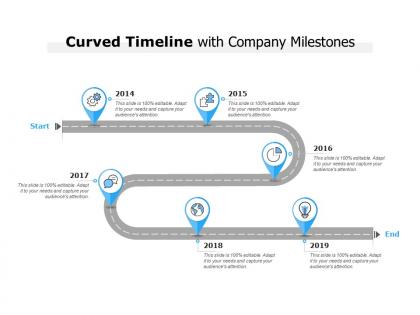
Curved timeline with company milestones




Try Before you Buy Download Free Sample Product
 Impress Your
 Audience
 100%
100% Editable
 Save Hours
 of Time


Initiate action for early diagnosis with our Curved Timeline With Company Milestones. It helps handle insidious diseases.
People who downloaded this PowerPoint presentation also viewed the following :
Curved timeline with company milestones with all 5 slides:
Identify insidious diseases with our Curved Timeline With Company Milestones. Inform folks on how to detect them.

FAQs for Curved timeline
So basically you've got four main phases - concept validation comes first to make sure you're not building something nobody wants. Then MVP development to test if your core idea actually works. After that, beta testing where real users will absolutely find ways to break your product you never thought of (seriously, users are creative like that). Finally your official launch. Every company names these differently which is super annoying, but the flow's pretty standard. Just define what "success" looks like for each phase upfront - saves your team from arguing about whether you're ready to move forward later.
Honestly, milestone tracking is a game-changer because it keeps you from that horrible "wait, where are we even at?" feeling. You'll spot bottlenecks way earlier instead of panicking at the end. Your team stays focused on what actually matters too. Those stakeholder meetings become painless - no more digging through emails trying to remember what got done. Here's the thing though: make your milestones mean something real, not just random calendar dates. I'd map out maybe 3-5 big ones for whatever you're working on now and do quick weekly check-ins.
Honestly, milestones are just checkpoints that stop you from drowning in massive projects. Break your big scary goal into smaller pieces you can actually hit every month or two. Each one needs someone responsible and a real deadline - otherwise people just ignore them. Here's the thing though: they're not just about tracking progress. Your team stays focused, you catch problems before they explode, and you've got something concrete to show your boss when they ask what you've been doing. Plus celebrating small wins keeps everyone from burning out. Way better than staring at some huge end goal that feels impossible.
Okay so first thing - chunk those massive goals down into stuff you can actually track. Like "finish user interviews" not "make product better." We're all stupidly optimistic when guessing timelines, so look at how long things actually took before. Always pad in extra time because something will definitely go sideways. Get your team involved in picking the dates too - they'll actually care about hitting them that way. Each milestone needs a super clear "we're done when..." definition. Oh and don't be married to the original plan when reality hits.
Ugh, missing big milestones is the worst - it basically nukes your whole timeline and budget. Your stakeholders start getting antsy and questioning if your team can actually deliver. Other teams who need your stuff get stuck waiting around, which pisses everyone off. Sometimes resources get pulled and moved to "more reliable" projects (harsh but true). Your team morale goes to shit when everything feels perpetually behind. The executives might even start eyeing your funding funny. Honestly, the best thing you can do is spot delays super early with regular check-ins and have backup plans ready.
So with milestones, it really depends on what methodology you're using. Waterfall means bigger, chunkier milestones - think "Requirements Done" or "Testing Wrapped Up." Agile's the opposite - smaller ones tied to your sprints. Honestly? Agile milestones can feel pretty redundant when you've already got standups and retros happening constantly. But stakeholders love them. Match your milestone timing to how you actually deliver stuff. Monthly works for Waterfall phases, every two weeks for Agile sprints. Just map out your current phases first and find those natural stopping points where you'd pause anyway.
Honestly, skip the usual cake thing - there are way better options! A "failure museum" where everyone shares their funniest project mistakes is actually genius for team bonding. Custom awards with inside jokes always kill. Escape rooms work great too, or maybe do a skill-swap where people teach random non-work stuff (I learned origami at one once, weirdly fun). Time capsules for milestones are pretty cool if your team's into that. Don't just pick something generic though. What matters is choosing whatever actually fits your team's vibe, you know?
Honestly, visual milestones are a game-changer for presentations. People get it immediately when they can see a timeline or progress bar instead of trying to decode a bunch of dates in their head. I always do green for completed stuff and blue for what's coming next - super simple but it works. Your audience will actually pay attention instead of zoning out during the boring status updates. They ask smarter questions too since they're not lost trying to figure out where you are in the project. Trust me, once you start using milestone maps or even basic timelines, you won't go back to those text-heavy slides.
Honestly, it depends on your team size and how complex things get. Asana and Monday.com are solid for timeline views - they keep everyone on the same page with deadlines. Microsoft Project is overkill unless you really need those detailed Gantt charts. Trello's perfect for simpler stuff though. Sometimes I think we overcomplicate this - a basic kanban board works great without all the extra features. Hell, even a shared Google Sheet can work wonders for quick updates. Just pick whatever your team will actually stick with consistently. Don't go for the fanciest option if nobody's gonna use it. Try the free trials first.
Oh man, this is so real! Your German teammates might stress about hitting every single deadline while your Brazilian colleagues are way more flexible with timing. Some cultures make a huge deal about relationship milestones - like when the team finally clicks - but others only care about actual deliverables. I've seen teams completely miss each other's expectations because of this stuff. High-context cultures especially value those bonding moments as major wins. Honestly, just hash this out during kickoff so everyone knows what you're tracking. Otherwise you'll have half the team celebrating while the other half's wondering what the fuss is about.
Obviously finish school and get that first real job. Certifications in your field are huge too. But honestly? The soft stuff matters just as much - like not dying during your first big presentation or learning how to push back on your boss without getting fired. Track when you lead projects or mentor people. Also those weird pivot moments when everything goes wrong but you figure it out anyway. I know it sounds cheesy, but the personal growth goals actually help with the resume stuff more than you'd expect.
Honestly, break down those big milestones into smaller team goals first. Each team lead needs to get how their stuff fits the bigger picture - I've watched way too many teams just spin their wheels because nobody told them why they're doing what they're doing. Monthly check-ins work great where teams show their progress. Don't hesitate to shift things around if priorities change (they always do). Set up some kind of shared tracker so everyone can actually see how they're moving the needle. The whole point is making sure people connect their daily grind to those major deadlines.
Honestly, the worst thing you can do is make them super vague. Like "improve customer satisfaction" tells you nothing - go with something concrete like "cut support ticket time to under 2 hours." I've literally seen project plans with 47 milestones (no joke), which is just insane. You lose track of what actually matters. Stick to maybe 3-5 that really show you're making progress. Don't get milestone-happy just because you can measure something. Focus on the checkpoints that genuinely move the needle toward your big goal.
Look, those little milestone check-ins are honestly a game changer for keeping people motivated. You get these mini celebration moments instead of slogging through months of work with zero wins. Big projects feel way less scary when you're hitting checkpoints every few weeks - plus your team can actually see their work matters. I usually do quick 15-minute reviews every 2-3 weeks (nothing fancy). People stay engaged because they're not just grinding toward some distant finish line. And yeah, you can fix stuff early instead of discovering problems at the end. Those small victories really do add up.
Track the obvious stuff first - did you hit your deadlines and budget? But that's only part of it. Stakeholder satisfaction matters way more than people think. Also check team morale and quality metrics like how much rework you're doing. Resource utilization is good too, though I sometimes skip that one if I'm being honest. Pick maybe 3-4 things that actually matter for your specific project. Don't drown yourself in data - been there, it sucks. Set up something simple to monitor these regularly.
No Reviews