


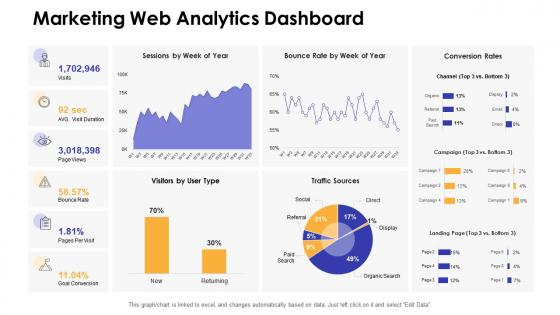
Dashboards Snapshot by function marketing web analytics dashboard




Try Before you Buy Download Free Sample Product
 Impress Your
 Audience
 100%
100% Editable
 Save Hours
 of Time


Our Dashboards Snapshot By Function Marketing Web Analytics Dashboard are topically designed to provide an attractive backdrop to any subject. Use them to look like a presentation pro.
People who downloaded this PowerPoint presentation also viewed the following :
Dashboards Snapshot by function marketing web analytics dashboard with all 7 slides:
Use our Dashboards Snapshot By Function Marketing Web Analytics Dashboard to effectively help you save your valuable time. They are readymade to fit into any presentation structure.
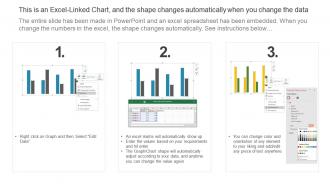





FAQs for Dashboards Snapshot by function marketing
Start with figuring out what "winning" actually means for you - more sales, better brand recognition, whatever. Then track the right stuff across all your channels (social, email, ads). Don't get caught up in fancy tools - honestly, most people way overthink this part. Use what you already have and focus on spotting trends that actually matter. The real trick is turning those insights into changes you'll make next month. I'd do monthly check-ins where you're asking "what do we pivot on?" instead of just staring at spreadsheets. Data's only useful if it changes what you do.
Dude, spreadsheets are the worst for spotting marketing patterns. Get yourself some data viz tools instead - they'll show you stuff you'd never catch otherwise. Dashboards with real-time performance, heat maps, conversion funnels... the whole thing just clicks way faster visually. I'm obsessed with Tableau but it's pricey, so maybe try Power BI or Google Data Studio first. Your team will actually get what's happening instead of staring at endless rows of numbers. Pick one metric you want to fix and build a simple dashboard around that. Trust me, those "holy shit" moments happen so much quicker when you can see everything laid out properly.
So predictive analytics is basically like having a crystal ball for your marketing campaigns, but one that actually works. You can figure out which customers are gonna convert before they do, when they'll buy, what messages hit different - all that good stuff. Way better than just scrambling to react after everything already happened. Clean historical data is key though, otherwise your predictions will be trash. I've seen people mess this up by feeding their models garbage data and wondering why nothing works. But when you get it right? You can allocate budget smarter, personalize content without losing your mind, and spot campaigns that are about to flop before they kill your ROI.
Okay so basically you're grouping your customers by what they actually do and want, right? Like instead of sending the same boring email to literally everyone, you make different messages for different types of people. Your VIP customers get special deals, new people get helpful tips - that kind of thing. Honestly, generic mass emails just annoy people anyway. When you segment properly, people actually engage because it feels personal. Just dig into your data first. Look at who buys what, how often they open emails, age groups, whatever patterns jump out. Those become your segments.
Honestly? Start with the money metrics - conversion rate, cost per acquisition, return on ad spend. Those are what actually matter. Click-through rates look pretty but they don't mean much if nobody's buying. Customer lifetime value is huge too, though it's kinda tricky to track at first. I learned this the hard way - you can get totally buried in spreadsheets measuring every little thing. Pick maybe 3-4 metrics that directly impact your revenue and focus on those. Way better than drowning in data that doesn't help you make real decisions.
Dude, just grab Google Analytics and Search Console first - both totally free and honestly better than most paid stuff. If you're posting on Facebook or Insta, their built-in insights are actually pretty solid too. Here's the thing though - don't try tracking everything or you'll go crazy. Pick like 3 metrics that actually move the needle for your business. Set up conversion tracking for whatever matters most (sales, email signups, whatever). Oh and actually look at the data weekly instead of letting it collect dust. Most small biz owners I know overthink this when the free tools do 90% of what you need.
Look, you've gotta be upfront about what data you're grabbing and why. Get people to actually opt-in - none of that sneaky pre-checked box stuff. Only collect what you truly need, not every piece of info you can get your hands on. That "hoarding data just in case" approach? Total nightmare waiting to happen legally. Make sure people can easily bail out if they want to. Oh, and definitely anonymize things when you can - keeps everyone safer. I'd start by taking a hard look at what you're doing now and writing down some basic rules your team won't ignore.
Attribution models totally flip how you read your conversion data. Last-touch gives everything to the final click, first-touch credits wherever they started - but real customer journeys are messier than that. Multi-touch models like linear or time-decay actually show the whole picture. Those display ads you think suck? They might be doing the heavy lifting while email gets credit for closing deals. Honestly depends on your sales cycle though. Pick whatever model fits your business and don't keep switching or you'll drive yourself crazy comparing apples to oranges.
Ugh, data format mismatches are the worst - every platform speaks a different language basically. Your CRM updates daily but ads sync hourly, so timing gets messy fast. Each platform has its own weird way of tracking attribution too, which makes reconciling conversion numbers a total headache. Oh, and you'll definitely run into duplicate records everywhere. Missing data creates these annoying gaps when you're trying to map customer journeys. Honestly, save yourself the pain and set up proper data governance from day one. Good ETL tools are worth the investment - they'll handle standardization and deduplication so you're not pulling your hair out later.
Honestly, analytics will blow your mind - they show when people are actually scrolling (not when you think they are) and what content gets them talking. I always check shares and comments first since those matter way more than likes. Sentiment analysis is clutch too because it tells you if people genuinely vibe with your brand or just hit like out of habit. Pull your last quarter's data and find your top 3 post types. Then tweak your posting times and content around that. Oh, and it'll help you figure out which influencers are actually worth working with instead of just guessing.
Honestly, you'll want to focus on AI-powered predictive analytics and real-time personalization first. Privacy-first measurement is huge now since cookies are basically dead. Customer data platforms are getting way better at connecting all your different data sources too. Most companies are collecting first-party data differently now, which is actually pretty cool to see. Attribution modeling has moved beyond that outdated last-click stuff - multi-touch and incrementality testing are where it's at. Oh, and don't sleep on conversational analytics from chatbots. Start by checking what data you're already sitting on though. You'd be surprised how much gold is just sitting there unused.
Dude, you gotta check your numbers while campaigns are running - not weeks later when it's too late. I watch click rates, conversions, all that stuff daily so I can catch what's tanking early. Like yesterday I moved budget from three ads that were doing nothing to one that was crushing it. Game changer. You can pause the money-wasters, fix messaging that's not hitting right, or double down on what's working. Honestly? Most people just launch and pray. Don't be those people. Set up a dashboard and actually look at it every day.
Dude, A/B testing is honestly a lifesaver. Instead of throwing money at campaigns that might bomb, you test two versions and see what actually works. Split your audience in half, try different subject lines or button colors - whatever you want to test. Real data beats hunches every time. I swear I've watched teams blow their entire budget on stuff that "felt right" but completely tanked with actual users. You'll want to start small though - maybe just test email subject lines first? Once you get the hang of it, you can test bigger things like whole landing pages.
So basically, B2B tools are all about those marathon sales cycles - you need lead scoring and attribution tracking because deals drag on forever. B2C is the opposite. People buy fast, so you're watching conversions and lifetime value in real-time. HubSpot and Marketo are solid for B2B pipeline stuff. Google Analytics works better for high-volume B2C campaigns (though honestly, their interface still annoys me sometimes). Just match your tool to how long your customers actually take to buy. That's really all that matters in the end.
For marketing analytics, you'll definitely need Excel, SQL, and either Python or R - can't really get around those. Statistical basics are huge too, plus visualization tools like Tableau. Google Analytics is pretty much mandatory these days. But honestly? The best analysts I've worked with aren't just data nerds - they can actually explain what the numbers mean to people who zone out at spreadsheets. I'd say pick one programming language first and get decent at it, then maybe tackle a viz tool. Oh, and storytelling skills will seriously set you apart from other candidates.
-
Excellent template with unique design.
-
Best Representation of topics, really appreciable.
-
Designs have enough space to add content.
-
Perfect template with attractive color combination.
-
Really like the color and design of the presentation.