

Decision making process in managerial economics powerpoint presentation with slides




Try Before you Buy Download Free Sample Product
 Impress Your
 Audience
 100%
100% Editable
 Save Hours
 of Time


Professionals often need an example of great PPT to highlight importance of managerial economics in decision making. Taking this into account here we have come up with a pre made decision making process in managerial economics PowerPoint slide deck. You can download this PPT model to illustrate economic aspects like regression analysis, correlation and computational methods of the market that affects cognitive process of decision making. Furthermore, with help of our presentation deck you can lay emphasis on principles of managerial economics as well as various factors that influence managerial decisions. Going further, our PPT sample supports professionals in solving business problems and to evaluate market situation for making effective capital purchasing decisions, business forecasting and production decisions. Apart from this, here we have included slide templates like decision making process, purpose of the decision, evaluate alternatives, evaluation matrix, contingency plan and many more to hone up a visual communication. Now, what is stopping you? Just click and get started to impress your audience with a stunning business decision making process PowerPoint show.Get all the ingredients to fit exactly with our Decision Making Process In Managerial Economics Complete Powerpoint Deck With Slides. It allows you to attempt the jigsaw.
People who downloaded this PowerPoint presentation also viewed the following :
Content of this Powerpoint Presentation
Slide 1: This slide introduces Decision Making Process in Managerial Economics. State Your Company Name and begin.
Slide 2: This is an Agenda slide. State your agendas here.
Slide 3: This is Our Mission slide. State mission aspects here.
Slide 4: This is Our team slide with names and designation to fill information for.
Slide 5: This is an About us slide. State team/company specifications here.
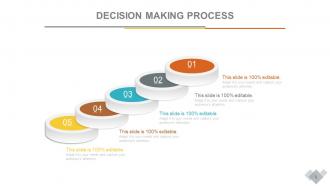
Slide 6: This slide showcases Decision Making Process. State its prospects, information etc. here.
Slide 7: This slide presents Purpose of the Decision.
Slide 8: This slide presents Identifying the Purpose.
Slide 9: This slide showcases Gather Information.
Slide 10: This slide presents Brainstorm For Judging The Alternatives.
Slide 11: This slide presents Principles For Judging The Alternatives.
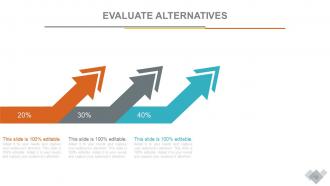
Slide 12: This slide shows Evaluate Alternatives. Present alternatives here.
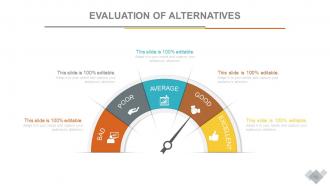
Slide 13: This slide shows Evaluation Of Alternatives. Evaluate alternatives here.
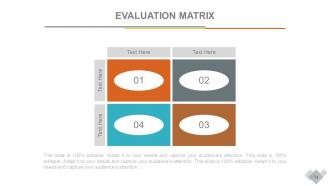
Slide 14: This slide shows Evaluation Matrix. Present relative
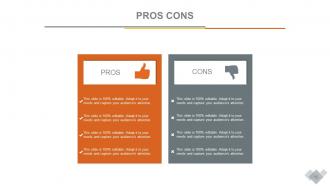
Slide 15: This is a Pros and Cons slide.
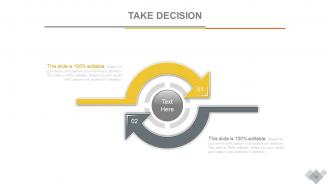
Slide 16: This slide showcases Take Decision.
Slide 17: This slide showcases Take Decision.
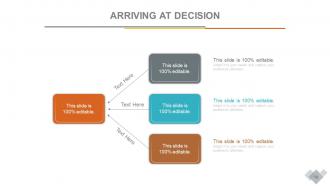
Slide 18: This slide shows Arriving At Decision.
Slide 19: This slide shows a Contingency plan to be made.
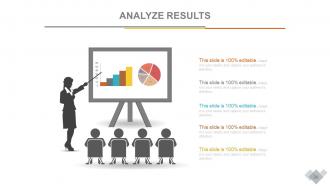
Slide 20: This is Analyze Results slide.
Slide 21: This slide showcases Evaluation of Results.
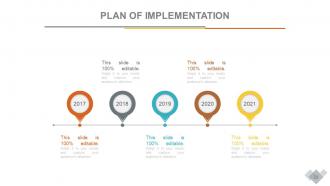
Slide 22: This is a Plan of Implementation Progress Timeline. Present journey, process, milestones etc. here.
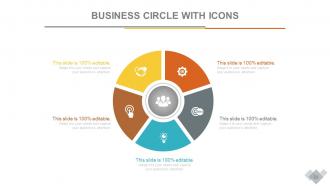
Slide 23: This slide present Business Circle with Icons.
Slide 24: This slide showcases Process Flow adopted, followed.
Slide 25: This slide shows Bulbs for Options representation.
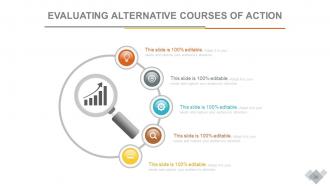
Slide 26: This slide shows Evaluating Alternative courses of Action with Magnifier With Tools and Icon imagery.
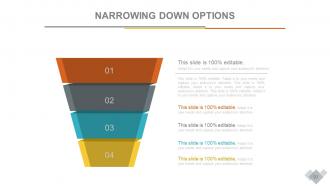
Slide 27: This slide showcases Narrowing Down Options in Funnel form.
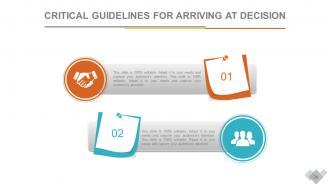
Slide 28: This slide displays Critical Guidelines For Arriving At Decision with Post It Notes.
Slide 29: This is a Newspaper slide to show important information etc. You may alter/modify the slide content as per need.
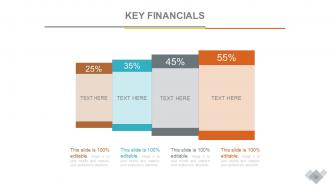
Slide 30: This is Key Financials Score slide. State financial aspects etc. here.
Slide 31: This is a Business Quotes slide. Convey message, beliefs etc. here. You may change the slide content as desired.
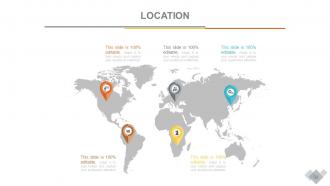
Slide 32: This is a Location slide of world map top show global marketing, growth, presence etc.
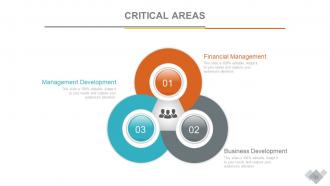
Slide 33: This is Critical Areas in Venn diagram image slide. State information, specifications etc. here.
Slide 34: This is a Mind Map Brain image slide to show information, specifications etc.
Slide 35: This is a Silhouettes slide to show people related information etc.
Slide 36: This is a Thank You slide for acknowledgement and ending a presentation.
Decision making process in managerial economics powerpoint presentation with slides with all 36 slides:
Counter biased coverage with our Decision Making Process In Managerial Economics Complete Powerpoint Deck With Slides. Expose attempts at disinformation.









FAQs for Decision making process in managerial economics powerpoint
Honestly, just think about whether the next thing you're doing is actually worth it - that's marginal analysis. Compare what you'd gain vs what it costs you. Opportunity cost is huge too. Like, what are you giving up by picking option A over B? Time matters because money now is obviously better than money later. But here's what I've learned - you can't wait around for perfect info because that never happens. Focus on the decisions that'll actually make a difference for what you want. Those other frameworks help but don't overthink it.
Dude, opportunity cost is a game changer - it makes you think about what you're actually giving up, not just what you might get. So like when you're picking between projects, you gotta consider the next best thing you're saying no to. That's your real cost right there. A marketing campaign might seem solid, but what if putting that money into R&D would've made you way more? I learned this the hard way honestly. You should always stack up your choice against what you're walking away from. Basic question: what else could these resources do for me?
So economic forecasts are basically your business weather report - not perfect but super useful for planning. You can use them to figure out inventory, pricing, when to expand or pull back. GDP trends and inflation data help you make smarter calls on capital investments too. Honestly, I've seen companies get burned by following forecasts too religiously though. Treat them as just one piece of the puzzle. Build in some wiggle room since predictions miss all the time. It's way better than flying blind, but don't bet the farm on any single forecast.
So marginal analysis is super useful for business decisions. You're basically weighing whether doing one more thing - like hiring someone new or making another product - will pay off. Compare the extra benefit to the extra cost. Worth it? Do it. The whole point is finding that sweet spot where marginal benefit equals marginal cost, since that maximizes your profit. Works for pricing, spending money, investments, you name it. I mean, once you start thinking this way it becomes second nature. Pretty much applies to any decision where you're wondering "should I do more of this or nah?"
Dude, risk assessment is basically just mapping out what could go wrong before you make big decisions. Instead of winging it, you actually think through the worst-case stuff and how likely it is to happen. I know it sounds boring, but you can put numbers on potential losses and compare your options - way smarter than just trusting your gut (though sometimes gut feelings aren't totally useless). The trick is spotting your biggest risks early and having backup plans ready. Makes you way more confident when you're choosing because you've already mentally rehearsed the disasters. Try listing 3-5 major risks for whatever you're deciding and guess how probable each one is.
Dude, sunk cost fallacy is huge - you'll keep throwing money at something just because you already spent on it. Then there's confirmation bias where you cherry-pick data that backs up what you want to believe. Analysis paralysis is another killer, honestly drives me nuts when people overthink until the moment's gone. Don't anchor on the first info you hear either. Teams fall into groupthink way too easily, and overconfidence in gut reactions? Yeah that'll bite you. Build in some reality checks where you actually ask "how could this blow up?" before you commit.
So your market structure basically tells you how much control you have over pricing. Perfect competition? You're stuck taking whatever price the market gives you - just focus on keeping costs low. Monopolies get to jack up prices and limit supply (must be nice, right?). With oligopolies, you're always playing this weird chess game against competitors. Monopolistic competition is probably the sweet spot since you can differentiate your product and charge a bit more. My advice? Figure out what type of market you're actually in first, then build your pricing strategy around that reality.
So game theory is basically predicting what your competitors will do when you make a move. Map out their likely responses before you commit to anything big - pricing changes, entering new markets, whatever. Think of it like chess but with actual money on the line (and way more stressful). Nash equilibrium shows you stable strategies, while prisoner's dilemma explains when to cooperate vs compete. I learned this the hard way in my last job - wish I'd thought through competitor reactions first! Model different scenarios beforehand and you'll avoid getting blindsided.
So traditional economics assumes people make perfectly rational decisions, but that's total BS. We're actually driven by weird biases - like paying more just because something's "premium branded" or avoiding losses way more than we should. Loss aversion, anchoring, overconfidence... this stuff rules how your customers and employees really think. Instead of designing strategies around what people *should* do, build them around what they actually do. Your pricing and marketing will be way more effective. Oh, and always test with real behavioral data instead of just guessing what makes sense on paper.
Regression analysis is your best friend for spotting patterns between different factors. Decision trees help map out complicated choices too. For testing changes, sensitivity analysis shows how tweaks impact your results - super useful. Honestly, A/B testing beats everything else when you can pull it off. Real data trumps theoretical models every time. Dashboards and KPI tracking keep you on top of things daily. Monte Carlo simulations are solid for risk stuff, though they get messy quick if you're not careful. Start simple with regression and decision trees first. They'll handle most of what you need without making your team's heads spin.
Honestly, you gotta think about both timelines before making any big calls. Ask yourself what this does right now AND where it leaves you in a few years. I learned this the hard way when quarterly pressure made me prioritize short-term cash over everything else - total mistake. Create some kind of scoring system that forces you to rate both immediate ROI and longer-term stuff like keeping good employees or not trashing your reputation. It's annoying but it works. Don't let the "we need results NOW" mentality screw over your future market position.
Honestly, knowing how your customers think is everything. You get real data on what they want, how much they'll pay, what makes them buy. Then you can actually price things right and build stuff they'll love instead of just hoping for the best. Marketing becomes way easier too when you know what gets them excited. I mean, think about it - would you rather guess what works or have actual proof? Track their buying habits and listen to their feedback. That's where the good stuff is hidden. Without it, you're basically throwing darts blindfolded.
Ugh, inflation is such a pain for businesses. Your costs shoot up - materials, labor, everything gets pricier. Then you're stuck choosing between eating the costs (bye bye profits) or raising prices and potentially losing customers. Most people have less spending power too, so you might need to focus on cheaper products. Honestly, the smart move is running different inflation scenarios ahead of time so you're not panicking later. I learned this the hard way watching my uncle's restaurant struggle - he waited too long to adjust his menu prices.
Honestly, the biggest game-changer is just defining who does what before you even start. Like, Sarah handles the budget stuff, Mike knows the technical side - whatever. Then set some basic rules so it's not just people talking over each other constantly. Create space where everyone can actually disagree without it getting weird. I'd try structured approaches too - maybe play devil's advocate or use some kind of scoring system instead of just going with whoever talks loudest (we've all been there). Oh, and brainstorm first, then tear ideas apart later. Trust me, mixing those two is a disaster. Try the role thing next time - it really works.
Dude, the amount of data you can crunch now is insane - real-time analytics, AI forecasting, all that good stuff. Decisions that used to take weeks literally happen in minutes. You can test different scenarios before throwing money at something, which is pretty clutch. But honestly? Everything moves so damn fast now, and competitors can disrupt you overnight. My advice - use the tech tools for sure, but don't get stuck overthinking every little thing. Sometimes you just gotta make the call and move forward, especially when timing matters more than having the "perfect" answer.
-
Topic best represented with attractive design.
-
Great quality product.