


Entscheidungsfindungsprozess in der Betriebswirtschaftslehre PowerPoint-Präsentation mit Folien




Try Before you Buy Download Free Sample Product
 Impress Your
 Audience
 100%
100% Editable
 Save Hours
 of Time


Profis benötigen oft ein Beispiel für eine großartige PPT, um die Bedeutung der Betriebswirtschaftslehre bei der Entscheidungsfindung hervorzuheben. Unter Berücksichtigung dieser Tatsache haben wir hier einen vorgefertigten Entscheidungsfindungsprozess im PowerPoint-Diadeck der Betriebswirtschaftslehre entwickelt. Sie können dieses PPT-Modell herunterladen, um wirtschaftliche Aspekte wie Regressionsanalyse, Korrelation und Berechnungsmethoden des Marktes zu veranschaulichen, die den kognitiven Prozess der Entscheidungsfindung beeinflussen. Darüber hinaus können Sie mit Hilfe unseres Präsentationsdecks Grundlagen der Betriebswirtschaftslehre sowie verschiedene Faktoren, die Managemententscheidungen beeinflussen, hervorheben. Darüber hinaus unterstützt unser PPT-Beispiel Fachleute bei der Lösung von Geschäftsproblemen und der Bewertung der Marktsituation, um effektive Kapitaleinkaufsentscheidungen, Geschäftsprognosen und Produktionsentscheidungen zu treffen. Darüber hinaus haben wir hier Folienvorlagen wie Entscheidungsfindungsprozess, Zweck der Entscheidung, Bewertungsalternativen, Bewertungsmatrix, Notfallplan und vieles mehr eingefügt, um eine visuelle Kommunikation zu verfeinern. Was hält Sie jetzt davon ab? Klicken Sie einfach auf und legen Sie los, um Ihr Publikum mit einer beeindruckenden PowerPoint-Show zur Entscheidungsfindung zu beeindrucken. Holen Sie sich alle Zutaten, die genau zu unserem Entscheidungsfindungsprozess in der Betriebswirtschaftslehre passen. Komplettes Powerpoint-Deck mit Folien. Es ermöglicht Ihnen, das Puzzle zu versuchen.
People who downloaded this PowerPoint presentation also viewed the following :
Inhalt dieser Powerpoint-Präsentation
Folie 1 : Diese Folie stellt den Entscheidungsfindungsprozess in der Betriebswirtschaftslehre vor. Geben Sie Ihren Firmennamen an und beginnen Sie.
Folie 2 : Dies ist eine Agenda-Folie. Geben Sie hier Ihre Agenden an.
Folie 3 : Dies ist unsere Missionsfolie. Staatsauftragsaspekte hier.
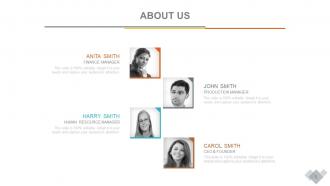
Folie 4 : Dies ist unsere Teamfolie mit Namen und Bezeichnungen zum Ausfüllen von Informationen.
Folie 5 : Dies ist eine Über uns-Folie. Geben Sie hier Team-/Firmenspezifikationen an.
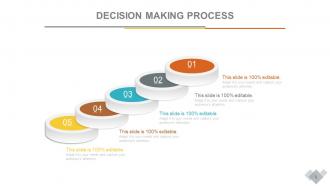
Folie 6 : Diese Folie zeigt den Entscheidungsprozess. Geben Sie hier Perspektiven, Informationen etc. an.
Folie 7 : Diese Folie zeigt den Zweck der Entscheidung.
Folie 8 : Diese Folie zeigt die Bestimmung des Zwecks.
Folie 9 : Diese Folie zeigt Informationen zum Sammeln.
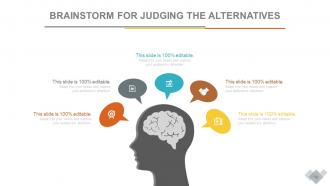
Folie 10 : Diese Folie präsentiert Brainstorming zur Beurteilung der Alternativen.
Folie 11 : Diese Folie präsentiert Grundsätze für die Beurteilung der Alternativen.
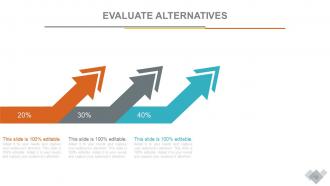
Folie 12 : Diese Folie zeigt Alternativen bewerten. Stellen Sie hier Alternativen vor.
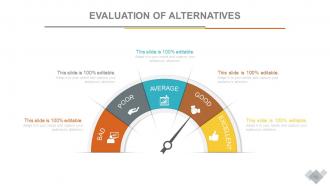
Folie 13 : Diese Folie zeigt die Bewertung von Alternativen. Bewerten Sie hier Alternativen.
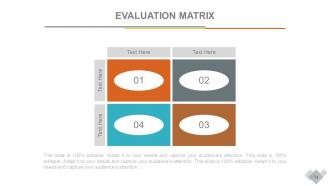
Folie 14 : Diese Folie zeigt die Bewertungsmatrix. Anwesender Verwandter
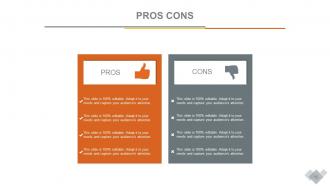
Folie 15 : Dies ist eine Folie mit Vor- und Nachteilen.
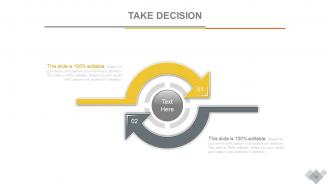
Folie 16 : Diese Folie zeigt Take Decision.
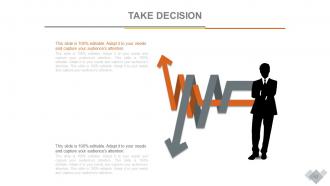
Folie 17 : Diese Folie zeigt Take Decision.
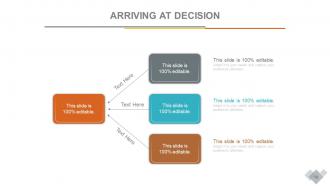
Folie 18 : Diese Folie zeigt das Ankommen bei der Entscheidung.
Folie 19 : Diese Folie zeigt einen zu erstellenden Notfallplan.
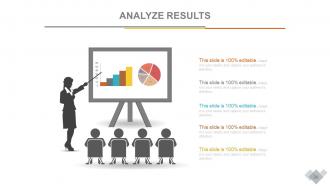
Folie 20 : Dies ist die Folie Ergebnisse analysieren.
Folie 21 : Diese Folie zeigt die Bewertung der Ergebnisse.
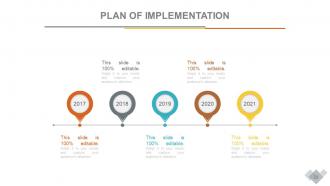
Folie 22 : Dies ist ein Zeitplan für den Umsetzungsfortschritt. Reise, Prozess, Meilensteine etc. hier darstellen.
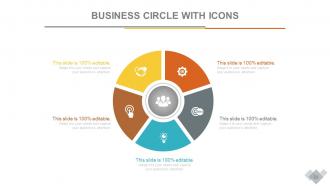
Folie 23 : Diese Folie präsentiert den Geschäftskreis mit Symbolen.
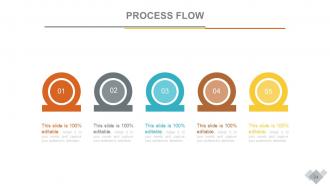
Folie 24 : Diese Folie zeigt den angenommenen Prozessfluss, gefolgt von.
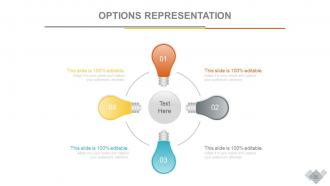
Folie 25 : Diese Folie zeigt die Darstellung von Glühbirnen für Optionen.
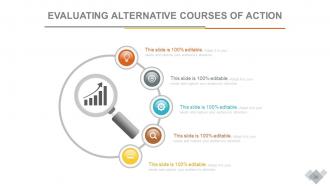
Folie 26 : Diese Folie zeigt die Bewertung alternativer Vorgehensweisen mit der Lupe mit Werkzeugen und Symbolbildern.
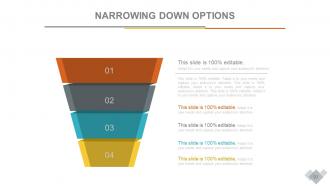
Folie 27 : Diese Folie zeigt Optionen zum Eingrenzen in Trichterform.
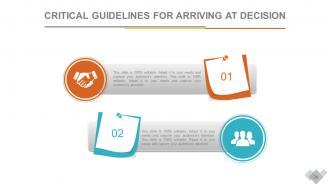
Folie 28 : Diese Folie zeigt kritische Richtlinien für die Entscheidungsfindung mit Post-It-Notizen.
Folie 29 : Dies ist eine Zeitungsfolie, um wichtige Informationen usw. anzuzeigen. Sie können den Folieninhalt nach Bedarf ändern/modifizieren.
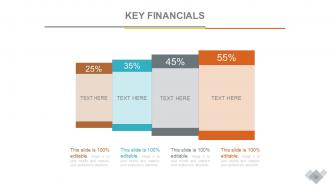
Folie 30 : Dies ist die Folie zum Finanzkennzahlen-Score. Staatsfinanzielle Aspekte etc. hier.
Folie 31 : Dies ist eine Folie mit Geschäftszitaten. Übermitteln Sie hier Botschaften, Überzeugungen usw. Sie können den Folieninhalt nach Belieben ändern.
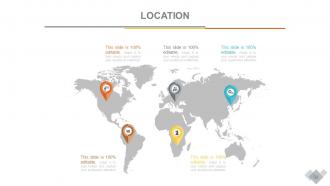
Folie 32 : Dies ist eine Standortfolie der Weltkarte, die globales Marketing, Wachstum, Präsenz usw. anzeigt.
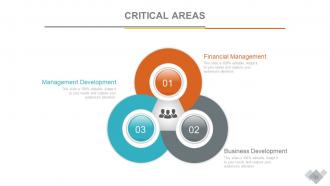
Folie 33 : Dies sind die kritischen Bereiche in der Bildfolie des Venn-Diagramms. Zustandsinformationen, Spezifikationen etc. hier.
Folie 34 : Dies ist eine Mind Map Brain-Bildfolie, um Informationen, Spezifikationen usw. anzuzeigen.
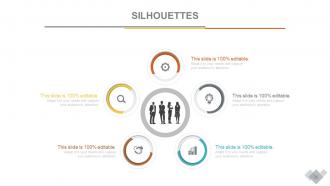
Folie 35 : Dies ist eine Silhouetten-Folie, um personenbezogene Informationen usw. anzuzeigen.
Folie 36 : Dies ist eine Dankesfolie für die Bestätigung und das Beenden einer Präsentation.
Entscheidungsprozess in der Betriebswirtschaftslehre PowerPoint-Präsentation mit Folien mit allen 36 Folien:
Gegenseitige Berichterstattung mit unserem Entscheidungsfindungsprozess in der Betriebswirtschaftslehre Komplettes Powerpoint-Deck mit Folien. Versuche der Desinformation aufdecken.








FAQs for Decision making process in managerial economics powerpoint
Honestly, just think about whether the next thing you're doing is actually worth it - that's marginal analysis. Compare what you'd gain vs what it costs you. Opportunity cost is huge too. Like, what are you giving up by picking option A over B? Time matters because money now is obviously better than money later. But here's what I've learned - you can't wait around for perfect info because that never happens. Focus on the decisions that'll actually make a difference for what you want. Those other frameworks help but don't overthink it.
Dude, opportunity cost is a game changer - it makes you think about what you're actually giving up, not just what you might get. So like when you're picking between projects, you gotta consider the next best thing you're saying no to. That's your real cost right there. A marketing campaign might seem solid, but what if putting that money into R&D would've made you way more? I learned this the hard way honestly. You should always stack up your choice against what you're walking away from. Basic question: what else could these resources do for me?
So economic forecasts are basically your business weather report - not perfect but super useful for planning. You can use them to figure out inventory, pricing, when to expand or pull back. GDP trends and inflation data help you make smarter calls on capital investments too. Honestly, I've seen companies get burned by following forecasts too religiously though. Treat them as just one piece of the puzzle. Build in some wiggle room since predictions miss all the time. It's way better than flying blind, but don't bet the farm on any single forecast.
So marginal analysis is super useful for business decisions. You're basically weighing whether doing one more thing - like hiring someone new or making another product - will pay off. Compare the extra benefit to the extra cost. Worth it? Do it. The whole point is finding that sweet spot where marginal benefit equals marginal cost, since that maximizes your profit. Works for pricing, spending money, investments, you name it. I mean, once you start thinking this way it becomes second nature. Pretty much applies to any decision where you're wondering "should I do more of this or nah?"
Dude, risk assessment is basically just mapping out what could go wrong before you make big decisions. Instead of winging it, you actually think through the worst-case stuff and how likely it is to happen. I know it sounds boring, but you can put numbers on potential losses and compare your options - way smarter than just trusting your gut (though sometimes gut feelings aren't totally useless). The trick is spotting your biggest risks early and having backup plans ready. Makes you way more confident when you're choosing because you've already mentally rehearsed the disasters. Try listing 3-5 major risks for whatever you're deciding and guess how probable each one is.
Dude, sunk cost fallacy is huge - you'll keep throwing money at something just because you already spent on it. Then there's confirmation bias where you cherry-pick data that backs up what you want to believe. Analysis paralysis is another killer, honestly drives me nuts when people overthink until the moment's gone. Don't anchor on the first info you hear either. Teams fall into groupthink way too easily, and overconfidence in gut reactions? Yeah that'll bite you. Build in some reality checks where you actually ask "how could this blow up?" before you commit.
So your market structure basically tells you how much control you have over pricing. Perfect competition? You're stuck taking whatever price the market gives you - just focus on keeping costs low. Monopolies get to jack up prices and limit supply (must be nice, right?). With oligopolies, you're always playing this weird chess game against competitors. Monopolistic competition is probably the sweet spot since you can differentiate your product and charge a bit more. My advice? Figure out what type of market you're actually in first, then build your pricing strategy around that reality.
So game theory is basically predicting what your competitors will do when you make a move. Map out their likely responses before you commit to anything big - pricing changes, entering new markets, whatever. Think of it like chess but with actual money on the line (and way more stressful). Nash equilibrium shows you stable strategies, while prisoner's dilemma explains when to cooperate vs compete. I learned this the hard way in my last job - wish I'd thought through competitor reactions first! Model different scenarios beforehand and you'll avoid getting blindsided.
So traditional economics assumes people make perfectly rational decisions, but that's total BS. We're actually driven by weird biases - like paying more just because something's "premium branded" or avoiding losses way more than we should. Loss aversion, anchoring, overconfidence... this stuff rules how your customers and employees really think. Instead of designing strategies around what people *should* do, build them around what they actually do. Your pricing and marketing will be way more effective. Oh, and always test with real behavioral data instead of just guessing what makes sense on paper.
Regression analysis is your best friend for spotting patterns between different factors. Decision trees help map out complicated choices too. For testing changes, sensitivity analysis shows how tweaks impact your results - super useful. Honestly, A/B testing beats everything else when you can pull it off. Real data trumps theoretical models every time. Dashboards and KPI tracking keep you on top of things daily. Monte Carlo simulations are solid for risk stuff, though they get messy quick if you're not careful. Start simple with regression and decision trees first. They'll handle most of what you need without making your team's heads spin.
Honestly, you gotta think about both timelines before making any big calls. Ask yourself what this does right now AND where it leaves you in a few years. I learned this the hard way when quarterly pressure made me prioritize short-term cash over everything else - total mistake. Create some kind of scoring system that forces you to rate both immediate ROI and longer-term stuff like keeping good employees or not trashing your reputation. It's annoying but it works. Don't let the "we need results NOW" mentality screw over your future market position.
Honestly, knowing how your customers think is everything. You get real data on what they want, how much they'll pay, what makes them buy. Then you can actually price things right and build stuff they'll love instead of just hoping for the best. Marketing becomes way easier too when you know what gets them excited. I mean, think about it - would you rather guess what works or have actual proof? Track their buying habits and listen to their feedback. That's where the good stuff is hidden. Without it, you're basically throwing darts blindfolded.
Ugh, inflation is such a pain for businesses. Your costs shoot up - materials, labor, everything gets pricier. Then you're stuck choosing between eating the costs (bye bye profits) or raising prices and potentially losing customers. Most people have less spending power too, so you might need to focus on cheaper products. Honestly, the smart move is running different inflation scenarios ahead of time so you're not panicking later. I learned this the hard way watching my uncle's restaurant struggle - he waited too long to adjust his menu prices.
Honestly, the biggest game-changer is just defining who does what before you even start. Like, Sarah handles the budget stuff, Mike knows the technical side - whatever. Then set some basic rules so it's not just people talking over each other constantly. Create space where everyone can actually disagree without it getting weird. I'd try structured approaches too - maybe play devil's advocate or use some kind of scoring system instead of just going with whoever talks loudest (we've all been there). Oh, and brainstorm first, then tear ideas apart later. Trust me, mixing those two is a disaster. Try the role thing next time - it really works.
Dude, the amount of data you can crunch now is insane - real-time analytics, AI forecasting, all that good stuff. Decisions that used to take weeks literally happen in minutes. You can test different scenarios before throwing money at something, which is pretty clutch. But honestly? Everything moves so damn fast now, and competitors can disrupt you overnight. My advice - use the tech tools for sure, but don't get stuck overthinking every little thing. Sometimes you just gotta make the call and move forward, especially when timing matters more than having the "perfect" answer.
-
Topic best represented with attractive design.
-
Great quality product.