


Developing Hospitality Management Plan Powerpoint Presentation Slides




Try Before you Buy Download Free Sample Product
 Impress Your
 Audience
 100%
100% Editable
 Save Hours
 of Time


Ensure that your hotel is warming, welcoming, and makes the guest feel like they are at home with our Developing Hospitality Management Plan Powerpoint Presentation Slides. The hotel management PPT design helps you to showcase the key statistics and scope of the hospitality industry covering accommodation & lodging, travel services, food & beverage services, recreation & entertainment, clubs, and convention management. With our hotel trade PowerPoint layout, choose from the segment of hotels; develop a hotel business plan, organizational structure of the hotel industry, room divisions, room information, and food & beverages, tourism, recreation, attractions, clubs, and gaming. Use the hotel business PPT presentation and highlight the managerial areas of hospitality starting from business planning in the hospitality industry, pricing strategies, and effective communication. You can also create your firm’s KPI dashboard while operating with this hotel sector PPT graphic. Keep your business in line with our Hospitality Management ppt, to always have an edge over the competitors.
People who downloaded this PowerPoint presentation also viewed the following :
Content of this Powerpoint Presentation
Slide 1: This slide introduces Developing Hospitality Management Plan. State Your Company Name and begin.
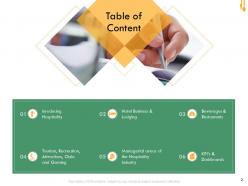
Slide 2: This slide shows Table of Content describing- Inroducing Hospitality, Hotel Business & Lodging, Beverages & Restaurants, etc.
Slide 3: This slide presents Introducing Hospitality describing- Scope of the Hospitality Industry and Key Statistics.
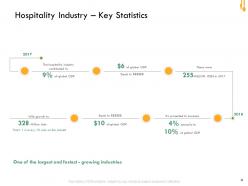
Slide 4: This slide displays Hospitality Industry – Key Statistics comparing different years data.
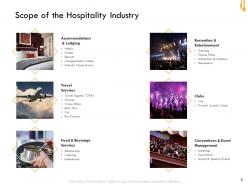
Slide 5: This slide represents Scope of the Hospitality Industry describing- Accommodations & Lodging, Campgrounds/Cabins, Recreation & Entertainment, etc.
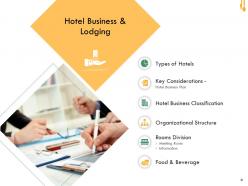
Slide 6: This slide showcases Hotel Business & Lodging describing- Rooms Division, Food & Beverage, Types of Hotels, etc.
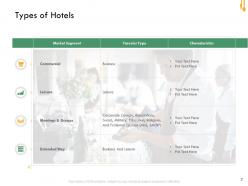
Slide 7: This slide shows Types of Hotels like- Commercial, Leisure, Extended Stray, etc.
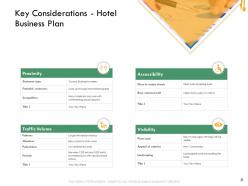
Slide 8: This slide presents Key Considerations - Hotel Business Plan.
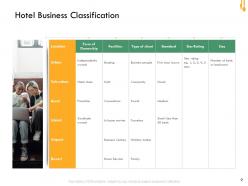
Slide 9: This slide displays Hotel Business Classification with data in tabular form.
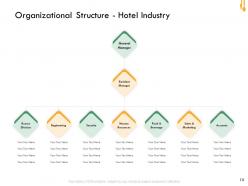
Slide 10: This slide represents Organizational Structure - Hotel Industry describing- Rooms Division, Engineering, Security, etc,
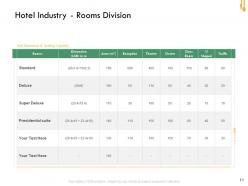
Slide 11: This slide showcases Hotel Industry - Rooms Division describing Hall Dimensions & Seating Capacity.
Slide 12: This slide shows Hotel Meeting Rooms Information with data in tabular form.
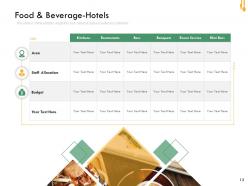
Slide 13: This slide presents Food & Beverage-Hotels describing Areas, Budget, Staff allocation, etc.
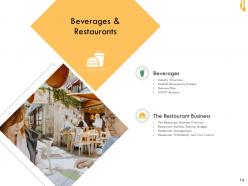
Slide 14: This slide displays Beverages & Restaurants describing- Industry Overview, Business Plan, SWOT Analysis, etc.
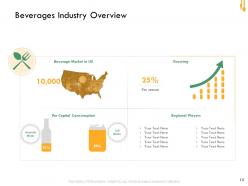
Slide 15: This slide represents Beverages Industry Overview describing- Beverage Market in US, Per Capital Consumption, Regional Players, etc.
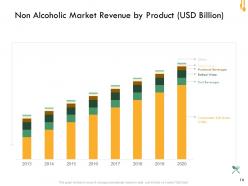
Slide 16: This slide displays Non Alcoholic Market Revenue by Product(USD Billion).
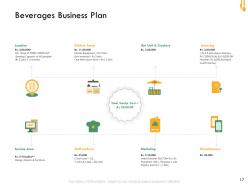
Slide 17: This slide represents Beverages Business Plan describing- Location, Kitchen Setup, Licensing, etc.
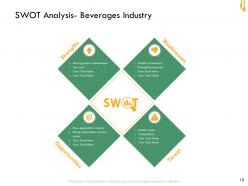
Slide 18: This slide displays SWOT Analysis- Beverages Industry with related icons.
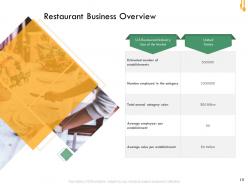
Slide 19: This slide represents Restaurant Business Overview showing data in tabular form.
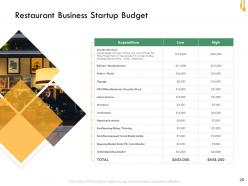
Slide 20: This slide showcases Restaurant Business Startup Budget.
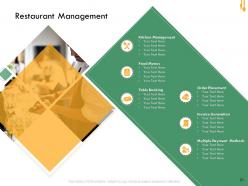
Slide 21: This slide shows Restaurant Management describing- Kitchen Management, Invoice Generation, Food Menus, etc.
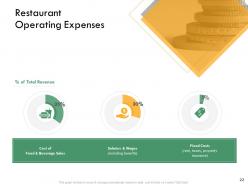
Slide 22: This slide presents Restaurant Operating Expenses describing- Cost of Food & Beverage Sales, Salaries & Wages, Fixed Costs, etc.
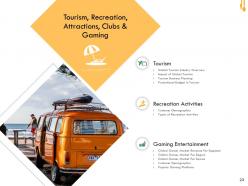
Slide 23: This slide displays Tourism, Recreation, Attractions, Clubs & Gaming.
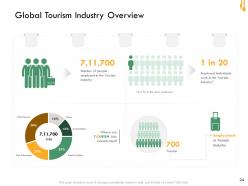
Slide 24: This slide represents Global Tourism Industry Overview with related imagery.
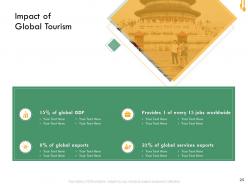
Slide 25: This slide showcases Impact of Global Tourism with related icons and text boxes.
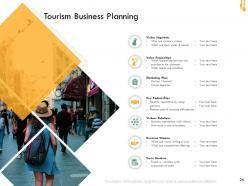
Slide 26: This slide shows Tourism Business Planning describing- Visitor Segments, Value Proposition, Marketing Plan, etc.
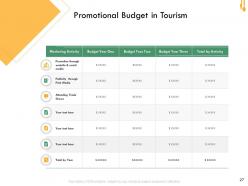
Slide 27: This slide presents Promotional Budget in Tourism showing data in tabular form.
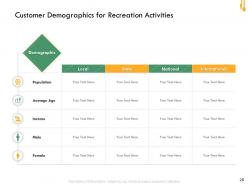
Slide 28: This slide displays Customer Demographics for Recreation Activities.
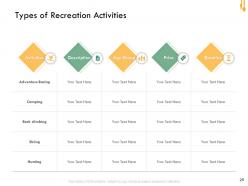
Slide 29: This slide represents Types of Recreation Activities like Camping, Skiing, Hunting, etc.
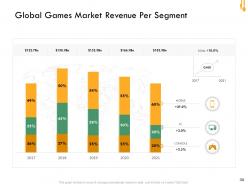
Slide 30: This slide showcases Global Games Market Revenue Per Segment with the help of Bar graph.
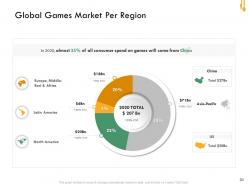
Slide 31: This slide shows Global Games Market Per Region with the help of Pie chart.
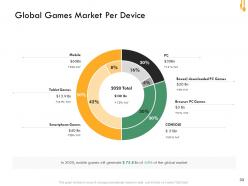
Slide 32: This slide presents Global Games Market Per Device describing- Tablet Games, Smartphone Games, Browser PC Games, etc.
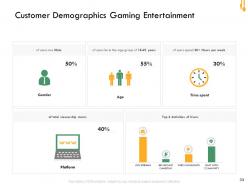
Slide 33: This slide displays Customer Demographics Gaming Entertainment like- Gender, Age, Time spent, etc.
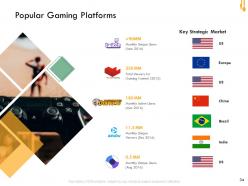
Slide 34: This slide represents Popular Gaming Platforms with relevant key strategic markets.
Slide 35: This slide displays Managerial areas of the hospitality industry.
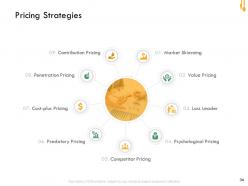
Slide 36: This slide shows Pricing Strategies describing- Market Skimming, Value Pricing, Loss Leader, etc.
Slide 37: This slide presents Effective Communication in the Hospitality Industry.
Slide 38: This slide is titled as KPIs & Dashboards for moving towards them.
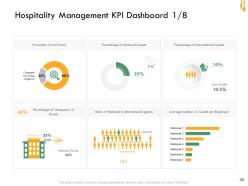
Slide 39: This slide displays Hospitality Management KPI Dashboard describing- Average number of Guests per Employee, Percentage of International Guests, etc.
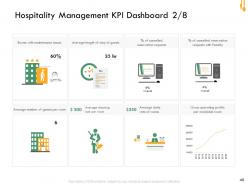
Slide 40: This slide represents Hospitality Management KPI Dashboard describing- Rooms with maintenance issues, Average length of stay of guests, Average cleaning, etc.
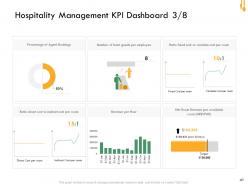
Slide 41: This slide showcases Hospitality Management KPI Dashboard describing- Revenue Per Hour, Number of hotel guests per employee, Percentage of Agent Bookings, etc.
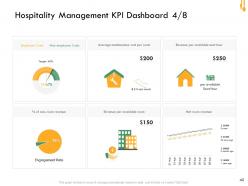
Slide 42: This slide shows Hospitality Management KPI Dashboard describing- Net room revenue, Revenue per available room, Revenue per available seat hour, etc.
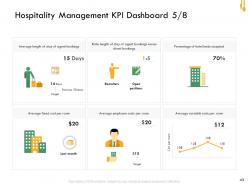
Slide 43: This slide presents Hospitality Management KPI Dashboard describing- Average variable costs per room, Average employee costs per room, Average fixed cost, etc.
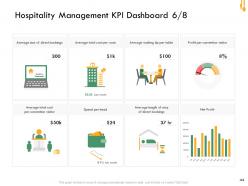
Slide 44: This slide displays Hospitality Management KPI Dashboard describing- Average size of direct bookings, Average total cost per room, Average waiting tip per table, etc.
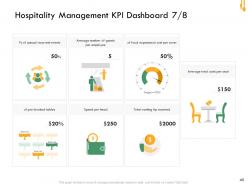
Slide 45: This slide represents Hospitality Management KPI Dashboard describing- Average total costs per seat, Average number of guests per employee, Total waiting tip received, etc.
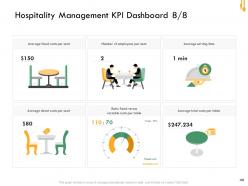
Slide 46: This is another slide showing Hospitality Management KPI Dashboard describing- Average direct costs per seat, Average serving time, Number of employees, etc.
Slide 47: This slide displays Icons Slide for Developing Hospitality Management Plan.
Slide 48: This slide is titled as Additional Slides for moving forward.
Slide 49: This is Our Mission slide with related imagery and text.
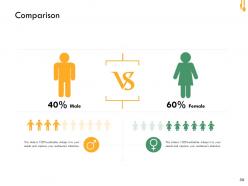
Slide 50: This is a Comparison slide to state comparison between commodities, entities etc.
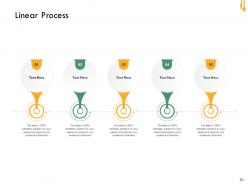
Slide 51: This slide shows Linear Process with related icons and text.
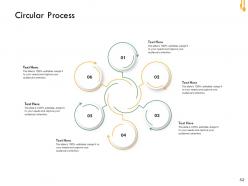
Slide 52: This slide shows Circular Process with additional text boxes.
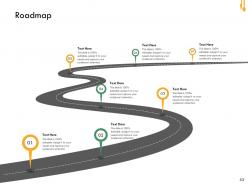
Slide 53: This slide displays Roadmap with icons and text boxes.
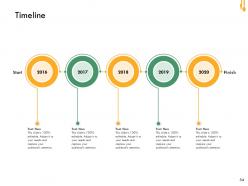
Slide 54: This is a Timeline slide. Show time intervals related data here.
Slide 55: This is a Thank You slide with address, contact numbers and email address.
Developing Hospitality Management Plan Powerpoint Presentation Slides with all 55 slides:
Use our Developing Hospitality Management Plan Powerpoint Presentation Slides to effectively help you save your valuable time. They are readymade to fit into any presentation structure.



FAQs for Developing Hospitality Management Plan
Start with guest service standards and training protocols - those are your foundation. Operational procedures come next, plus you'll need solid performance metrics to track everything. Oh, and set up clear communication between departments early on. I learned that one the hard way when front desk and housekeeping weren't talking to each other. Financial controls are non-negotiable, obviously. Quality assurance processes matter too. Don't skip the crisis management framework either. Guest experience mapping helps you spot issues before they blow up. My advice? Document what you're already doing first, then build on that instead of starting from scratch.
So for integrating tech into your hospitality plan, I'd start with stuff guests actually notice - mobile check-in, keyless entry, maybe those in-room tablets for ordering room service. Chatbots are pretty solid for handling basic questions around the clock (honestly saves your staff from answering "what time is checkout" for the millionth time). Behind the scenes, automated inventory tracking is a game changer, plus you can use analytics to predict busy periods. My advice? Pick one or two guest-facing features first, see how people respond, then build from there. Don't try to do everything at once - that's how you end up with frustrated guests and staff.
Honestly, training can make or break everything. Your policies might look perfect on paper, but if your team doesn't actually know how to do them right? You're screwed. Good training means guests get the same experience every time - that's what keeps them coming back. Staff who know what they're doing also stick around way longer. Less turnover = less stress for you. Oh, and here's something I learned the hard way - always budget way more time for training than you think. Like 20% more, minimum. You'll thank me later when you're not scrambling to fix things.
Start with an environmental audit to see where you're actually wasting resources. Then build your sustainability plan around the biggest wins - energy-efficient systems, waste reduction, local sourcing, water conservation. Staff training is huge because they're the ones implementing everything daily. Honestly, guests eat this stuff up too, so don't skip the education piece. Set concrete goals with deadlines and make each department own their part. My cousin's hotel saw their utility bills drop 30% just from switching to LED lights and fixing leaky faucets. It's not rocket science, but you need that plan to keep everyone accountable.
RevPAR is your main number - tracks how well you're filling rooms at decent rates. ADR and occupancy make up RevPAR, so watch those closely. Labor costs will eat you alive if you're not careful since it's your biggest expense after rent. Food/beverage margins are key if you've got dining. Utility bills can absolutely destroy your margins faster than you'd expect - I've seen too many places get blindsided by that. Customer acquisition cost matters too, plus lifetime value. Oh, and definitely benchmark against local competitors first so you know if you're actually doing well or just think you are.
Look, market analysis is basically your roadmap for everything. Pull competitor pricing and occupancy rates first - that data shapes your whole service strategy and staffing needs. Why plan some fancy luxury experience when your area's crawling with budget travelers? Makes no sense. Check local tourism reports and see what gaps exist. Seasonal patterns matter too - helps you set realistic revenue goals instead of shooting in the dark. I always tell people to grab this intel before writing any strategy. Trust me, it's your reality check against terrible decisions.
Honestly, personalization is everything - get a good guest profile system going so you can remember stuff like "this person hates down pillows." Game changer right there. Set up a loyalty program with actual good rewards, not just boring discounts everyone ignores. Your staff needs training to handle problems without running to managers constantly. Oh, and do a walkthrough of every guest touchpoint first - figure out where you can add those little personal moments that stick with people. Those details are what make guests book with you again instead of just going wherever's cheapest.
Honestly, don't treat crisis management like some add-on thing - build it right into your main plan from day one. Figure out what'll probably happen: power cuts, food poisoning scares, bad weather, whatever. Then map out exactly how you'll handle each one. God, I wish someone told me this before that insane storm hit us! Get your team trained on who does what and how info flows up the chain. Backup plans for everything - short staffed? Kitchen fire? You need answers ready. Oh, and actually practice this stuff quarterly. When real chaos hits, people either know what to do or they totally freeze up.
Start by scoping out businesses that'd work well with yours - transportation companies, event planners, local attractions, that sort of thing. The trick is finding real win-win situations, not just deals where one person benefits. I've watched partnerships crash and burn when people get too greedy, honestly it's painful to see. Go to networking events first, build actual relationships before pitching anything. Set clear expectations upfront about referral fees and how you'll communicate. Get simple agreements in writing - saves headaches later. Begin with maybe 2-3 solid partners instead of spreading yourself thin. Quality over quantity always wins.
Dude, cultural stuff is huge for hospitality - you can't just wing it. Japanese guests want quiet, formal service while Americans love chatty servers. Your staff needs training to pick up on these cues and switch gears. Food menus, room layouts, even noise levels matter depending on who you're hosting. Some cultures are all about privacy, others want that social vibe. Honestly, I'd spend serious time researching your main guest demographics first. Then build flexibility into everything so your team can adapt on the fly instead of using one-size-fits-all approaches.
Honestly, staff turnover is gonna be your biggest headache - new people constantly coming and going makes service quality super unpredictable. Customer expectations are all over the map too, especially during busy seasons when you're already understaffed. Budget's always tight so training programs get cut first, which just makes everything worse. Write down step-by-step procedures for everything, even stuff that seems obvious. Random quality checks help catch problems early. Mystery shoppers are worth it if you can afford them - they'll tell you what's really happening when management's not around.
Think of guest feedback as your cheat sheet for fixing what's actually broken. Grab it from surveys, reviews, conversations - honestly, even random social media posts work. Here's the thing though: look for patterns, not one-offs. If five people mention your slow wifi, that's real data you can't ignore. One complaint about room temperature? Maybe they just run cold. Schedule monthly team meetings to dig through this stuff and figure out what needs fixing first. The whole point falls apart if you don't track whether your changes actually helped. Trust me, guests notice when you're listening.
Honestly, focus on the big three first: RevPAR, occupancy rates, and average daily rate. Those tell you if you're actually making money. Guest satisfaction scores matter just as much though - nobody talks about this enough, but happy guests literally pay your bills through repeat visits. Online reviews across different platforms are huge too. Staff turnover's worth tracking because constantly training new people kills your margins. Food costs, energy efficiency if you care about that stuff. Don't try measuring everything at once or you'll go crazy. Pick maybe 5-6 metrics that actually match what you're trying to accomplish and stick with those.
So basically you gotta match your plan to how complex your operation actually is. Hotels need solid front desk and housekeeping systems, restaurants are all about kitchen flow and turning tables fast. Resorts? That's like running a small city - activities, multiple restaurants, spas, the whole nine yards. I'd map out your guest's experience first, then figure out your management structure around those make-or-break moments. Start with your core service standards and customize from there. A cute boutique place doesn't need the same staffing setup as some massive 500-room property, you know?
Honestly, marketing is like the lifeline of your whole hospitality plan. You could run the most amazing hotel ever, but if people don't know about it? You're screwed. It directly hits your occupancy rates and revenue - that's just facts. The trick is making sure what you're advertising actually matches what guests get when they show up. Nothing worse than overpromising and underdelivering, right? I'd start by looking at your current marketing stuff and seeing if it really reflects your actual service. Sometimes there's a weird disconnect there. Marketing connects all your behind-the-scenes work to actual bookings, so yeah, it's pretty much everything.
-
Easily Editable.
-
Colors used are bright and distinctive.
-
Commendable slides with attractive designs. Extremely pleased with the fact that they are easy to modify. Great work!
-
Great quality product.
-
Best way of representation of the topic.
-
Amazing product with appealing content and design.
-
Amazing product with appealing content and design.
-
I discovered this website through a google search, the services matched my needs perfectly and the pricing was very reasonable. I was thrilled with the product and the customer service. I will definitely use their slides again for my presentations and recommend them to other colleagues.
-
Graphics are very appealing to eyes.
-
Informative design.