


Devops Maturity Assessment Powerpoint Ppt Template Bundles




Try Before you Buy Download Free Sample Product
 Impress Your
 Audience
 100%
100% Editable
 Save Hours
 of Time


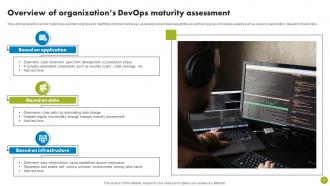
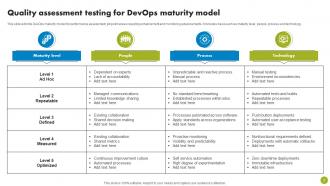
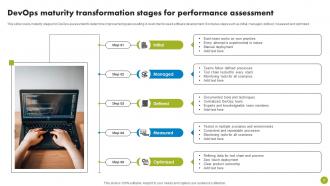
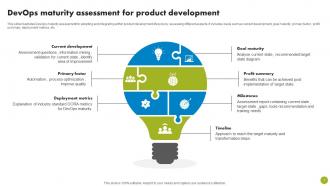
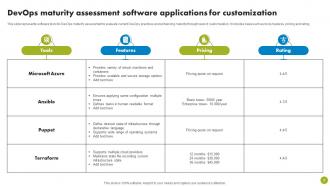
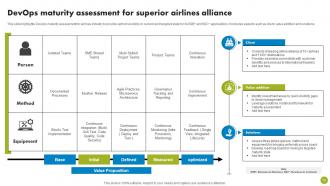
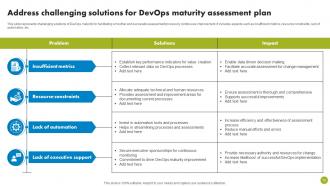
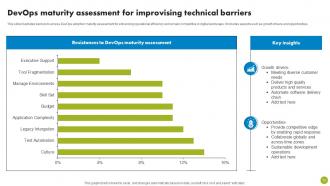
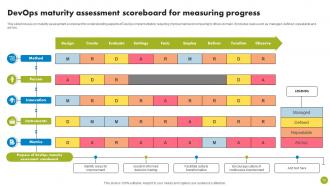
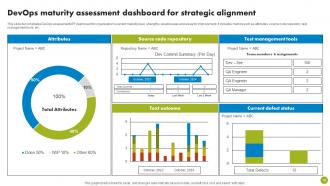
DevOps maturity assessment is a structured evaluation of an organisations DevOps practices and processes. It involves analysing key factors like automation, continuous integration and delivery, collaboration, culture, and tooling to determine the organisations level of maturity in DevOps adoption. The goal is to identify strengths, weaknesses, and areas for improvement, allowing organisations to set strategic goals and enhance their software development and IT operations. By using this assessment, businesses can establish a road map for optimising their DevOps capabilities, increasing efficiency, and fostering a culture of continuous improvement, ultimately leading to faster, more reliable software delivery and better alignment with customer needs and market demands.
People who downloaded this PowerPoint presentation also viewed the following :
Devops Maturity Assessment Powerpoint Ppt Template Bundles with all 30 slides:
Use our Devops Maturity Assessment Powerpoint Ppt Template Bundles to effectively help you save your valuable time. They are readymade to fit into any presentation structure.












FAQs for Devops Maturity Assessment Powerpoint
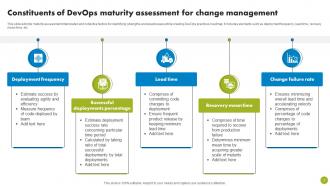
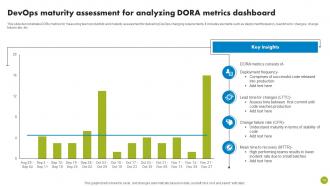
Honestly, I'd focus on four main things to see how you're doing. How often you're pushing code to production is huge - that's your deployment frequency. Lead time matters too (basically commit to deployment time). When stuff inevitably breaks, you want to track mean time to recovery. Change failure rate is the last big one - what percentage of your deployments actually cause problems? Oh and definitely look at how much manual work you're still doing versus automation. Maybe track test effectiveness while you're at it. Collect data for like a month first, then you'll know where you actually stand.
Dude, honestly? Get your leaders on board first or you're screwed. I've watched teams with solid tech totally crash because management still had that old-school blame mentality. Your execs need to actually walk the walk on collaboration - not just talk about it in meetings. Culture beats tools every time. People have to feel safe screwing up and learning from it, otherwise they'll just go back to hoarding info in their silos. Start small, celebrate when dev and ops actually work together on something. Those little wins add up. Oh, and psychological safety isn't just a buzzword - it's actually critical for this stuff to work.
Honestly, the worst thing teams do is lie to themselves about where they're at. Like they'll say they're "advanced" but still manually deploy stuff constantly. Some go the other way too - being way too harsh on themselves. Here's what really gets me though: everyone obsesses over shiny tools while their actual teamwork is garbage. Your fancy CI/CD setup is useless if people can't collaborate properly. Get a bunch of different people to weigh in and be super honest about what's actually happening. Otherwise you're just building a roadmap to nowhere.
Honestly, just use DORA metrics first - deployment frequency, lead time, recovery time, failure rate. They're legit because they studied thousands of companies. There are free assessment tools everywhere (Atlassian's got decent ones). Don't stress about being "advanced" at everything though - that's kinda pointless. Look at where you score against their percentiles, spot your worst gaps, then pick maybe 1-2 things that'll actually make your day-to-day less painful. I'd probably avoid tackling everything at once because that never works out.
Automation is what transforms DevOps from chaos to something that actually works. Start with builds and tests, then move to deployment pipelines and infrastructure stuff. Once you automate one thing, you'll get addicted - going back to manual work feels painful. Your team becomes way more confident about pushing changes because feedback happens so much faster. Honestly, self-healing systems are the dream but don't jump there first. Pick whatever manual task makes everyone groan when it comes up weekly. That's your starting point. Trust me, even automating one annoying process will make a huge difference.
Think of feedback loops as your safety net for catching stuff before it blows up. Monitor everything - commits, deployments, production metrics - so problems don't sneak past you. It's like having an actual conversation with your system instead of flying blind. Quick example: automated alerts when response times spike, plus regular team retros to dig into what went wrong. Honestly, most teams overcomplicate this at first. Just pick one solid monitoring approach and expand from there. The whole point is getting the right info to the right people fast.
Honestly, I'd start with the DORA metrics - deployment frequency, lead time, all that good stuff. Their platform is solid for tracking the big four indicators. Microsoft's got a free self-assessment tool that's pretty decent too, same with Google's DORA Quick Check. CA Technologies has this whole maturity model thing but it gets kinda bloated with corporate speak if you ask me. The State of DevOps survey framework is probably your best bet for something lightweight. Pick one, figure out where you're at now, then focus on maybe 2-3 areas to actually improve this quarter. Don't try to boil the ocean.
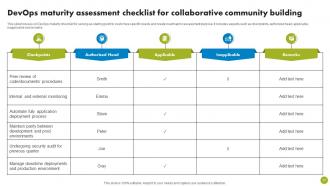
Honestly, collaboration makes or breaks your DevOps maturity score. When dev and ops teams actually work together instead of staying in their silos, everything clicks better. You stop getting those "works on my machine" headaches and the blame game when stuff breaks. Faster deployments, fewer fires to put out, everyone owns both code and reliability. What assessors really want to see? Joint planning meetings, shared metrics, people who can do a bit of everything. My advice - throw them all in a room for incident post-mortems first. That's where teams usually start actually talking to each other instead of just pointing fingers.
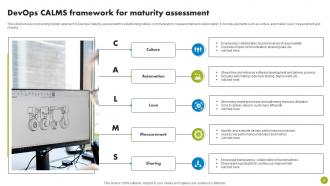
Get the right people there first - actual developers, ops folks, security, plus business people who know the daily chaos. Skip the managers-only meeting trap. Build it around culture, automation, measurement, and sharing. Anonymous voting works great for touchy stuff like blame culture. Focus on where you are vs where you want to be, not just patting yourselves on the back. Honestly, the best insights come when people start telling stories about deployments that went sideways. Always end with specific next steps and who's doing what - otherwise you just burned half a day talking in circles.
Dude, stop measuring stuff in a vacuum. Connect your DevOps metrics to what execs actually give a shit about - revenue, customer happiness, getting products out faster. Like, deployment frequency means nothing unless you show it leads to better customer retention or whatever. Honestly, I've watched so many teams obsess over technical numbers that leadership just glazes over. Work backwards from business goals instead. Figure out which DevOps stuff drives real results. Build a scorecard showing technical wins AND business impact together. That way leadership sees how your work directly affects the bottom line, not just some random engineering metrics.
Cross-functional training is your best bet - get devs learning infrastructure while ops people dive into application stuff. Workshops beat boring cert courses any day (though certs do help your resume). Pair programming and shadowing sessions work great for this. Honestly, soft skills matter more than people think since DevOps is basically about getting teams to actually talk to each other. Set up lunch-and-learns where everyone shares their screwups and wins. Oh, and create a real learning budget - don't just say you will. Even 2-3 hours weekly makes a huge difference over time.
Look at what's actually breaking your team's workflow daily - that's your starting point. Cross-reference those headaches with your assessment scores to find where low maturity meets high business pain. Honestly, skip the "nice to have" stuff even if it looks easier to knock out. You want things that'll cut manual work, speed up deployments, or reduce recovery time. Quick wins feel good but they're kinda like putting a band-aid on a broken leg. Pick 2-3 priority areas max and work through them methodically - otherwise you'll just spread yourself too thin.
Dude, cloud computing is like hitting the fast-forward button on your whole DevOps game. No more waiting around for infrastructure - you just spin stuff up instantly. The scaling happens automatically, and honestly? Most of the CI/CD headaches you're dealing with, cloud providers already figured out years ago. I mean, compared to on-premises setups, it's almost cheating how smooth everything becomes. Your monitoring, automation, all that stuff just works better. Don't go crazy though - pick managed services that fix your biggest headaches first. You'll see real improvements in like 2-3 weeks instead of months of frustration.
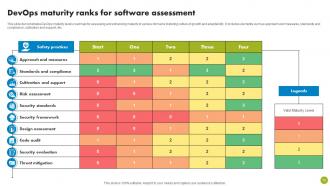
Don't just slap security on at the end - weave it through your whole pipeline. Are you scanning during CI/CD? Can devs spot vulnerabilities before they ship? How fast can you patch production issues? That "shift left" thing everyone talks about actually works - catch problems early before they become massive headaches. Map out where security happens in your current workflow first. The biggest wins come from automating your security policies and getting teams to actually work together instead of just dumping requirements on each other. Oh, and definitely identify your worst gaps - those are your starting points.
Honestly, start with just the DORA metrics - deployment frequency, lead time, recovery time, and failure rates. Those actually tell you something useful. But don't sleep on the culture side either, which is way harder to measure but probably more important? Track how often teams collaborate, whether people blame each other during incidents (they shouldn't), and knowledge sharing stuff. Cycle time from idea to production is huge too. Oh and test coverage percentage if you're into that. Just pick like 3-4 tops though - I've seen teams drown themselves trying to measure everything and then nobody looks at the dashboards anyway.
-
No second thoughts when I’m looking for excellent templates. SlideTeam is definitely my go-to website for well-designed slides.
-
Crisp and neat slides. Makes it fun and easier to curate presentations.