


Katastrophenvorbeugung und -abmilderung Powerpoint-Präsentationsfolien




Try Before you Buy Download Free Sample Product
 Impress Your
 Audience
 100%
100% Editable
 Save Hours
 of Time


Die Notwendigkeit der Gefahrenminderung ist zunehmend anerkannt. Neue Minderungstechniken werden in unserer einsatzbereiten Präsentationsvorlage "Disaster Prevention and Mitigation" behandelt. Diese visuelle Präsentation zur Katastrophenvorsorge und -minderung umfasst fertige PowerPoint-Vorlagen wie die Einführung in den Katastrophenwiederherstellungsplan, das Katastrophenwiederherstellungsteam, Rollen und Verantwortlichkeiten, Katastrophenkategorien und deren Auswirkungen auf den Umsatz, Bewertung nach Kategorie, Katastrophenwahrscheinlichkeit, IT-Betriebsauswirkungsanalyse, IT-Finanzauswirkungsanalyse, detaillierter Minderungsplan, Katastrophenwiederherstellungsplanung, Schaffung eines besseren Arbeitsumfelds, Statuscheckliste, Minderungsbudget und Kontrollhierarchie-Vorlage. Diese vorgefertigten Folien sind vollständig bearbeitbar. Darüber hinaus kann der vollständige Präsentationsordner zum betrieblichen Notfallmanagement verwendet werden, um Themen wie Unternehmenskatastrophenprävention und -vorbereitung, Katastrophenmanagement, Katastrophenrisikominderung, Prävention, Schutz und Minderungsplanung, Notfallvorsorge und -reaktion usw. darzustellen. Laden Sie die Präsentationsfolien zum Katastrophenschutzplan herunter, um Gefahren zu identifizieren und potenzielle Ziele zu definieren. Unsere Präsentationsfolien zur Katastrophenprävention und -minderung sind in sich stimmig. Jede einzelne ist genauso gut wie die andere.
People who downloaded this PowerPoint presentation also viewed the following :
Inhalt dieser Powerpoint-Präsentation
Folie 1: Diese Folie führt in die Katastrophenvorbeugung und -minderung ein. Nennen Sie Ihren Firmennamen und beginnen Sie.
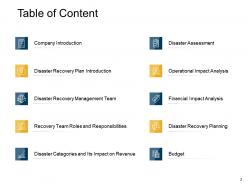
Folie 2: Diese Folie zeigt das Inhaltsverzeichnis der Präsentation.
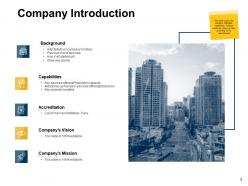
Folie 3: Diese Folie präsentiert die Unternehmensvorstellung mit Unternehmensmission, Unternehmensvision, Fähigkeiten, Hintergrund und Akkreditierung.
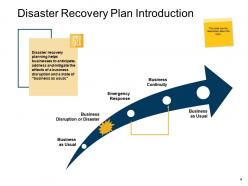
Folie 4: Diese Folie zeigt die Einführung in den Katastrophenwiederherstellungsplan.
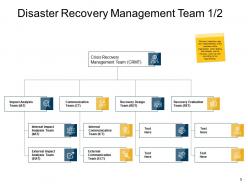
Folie 5: Diese Folie stellt das Katastrophenwiederherstellungsmanagement-Team mit einer Liste der Rollen und Verantwortlichkeiten der Mitglieder der Organisation bei der Bewältigung von Katastrophen und deren Wiederherstellung dar.
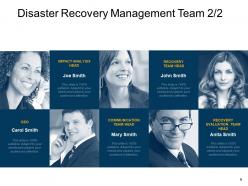
Folie 6: Diese Folie zeigt das Katastrophenwiederherstellungsmanagement-Team mit Namen und Bezeichnungen.
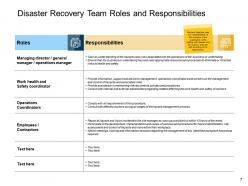
Folie 7: Diese Folie zeigt die Rollen und Verantwortlichkeiten des Katastrophenwiederherstellungsteams.
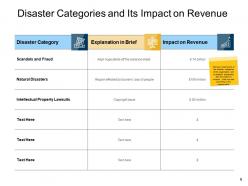
Folie 8: Diese Folie präsentiert Katastrophenkategorien und ihre Auswirkungen auf die Einnahmen.
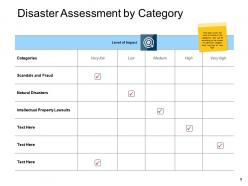
Folie 9: Diese Folie zeigt die Katastrophenbewertung nach Kategorien wie Skandale und Betrug, Naturkatastrophen, Klagen wegen Verletzung des geistigen Eigentums usw.
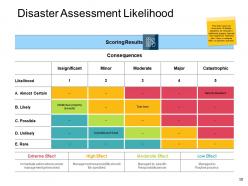
Folie 10: Diese Folie stellt die Bewertung der Eintrittswahrscheinlichkeit von Katastrophen dar, die die Möglichkeiten des Auftretens von Katastrophen abdeckt.
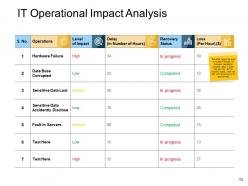
Folie 11: Diese Folie zeigt die Analyse der operativen IT-Auswirkungen, die den Einfluss der Katastrophe auf die betrieblichen Aktivitäten, Verzögerungen bei der Arbeit, Verluste pro Stunde und den Wiederherstellungsstatus abdeckt.
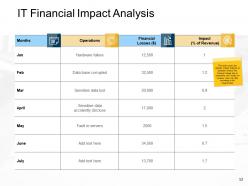
Folie 12: Diese Folie zeigt die Finanzielle Auswirkungsanalyse für IT, die die Auswirkungen der Katastrophe auf die Unternehmensfinanzen wie finanzielle Verluste aufgrund von Unsicherheiten und Auswirkungen auf die Einnahmen abdeckt.
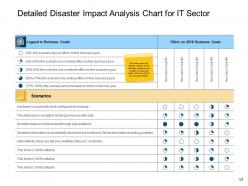
Folie 13: Diese Folie präsentiert ein detailliertes Diagramm zur Analyse der Katastrophenauswirkungen für den IT-Sektor, das die Katastropheneinstufung der Geschäftsszenarien und ihre Auswirkungen auf die Geschäftsziele abdeckt.
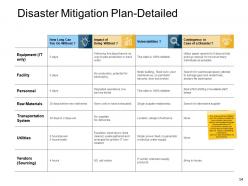
Folie 14: Diese Folie zeigt den detaillierten Katastrophenminderungsplan, der den Minderungsplan für das Unternehmen in Bezug darauf abdeckt, wie das Unternehmen ohne bestimmte Dinge überleben kann.
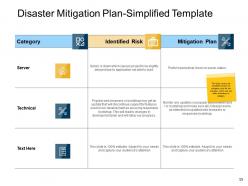
Folie 15: Diese Folie stellt eine vereinfachte Vorlage für den Katastrophenminderungsplan dar.
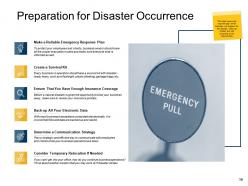
Folie 16: Diese Folie zeigt die Vorbereitung auf das Eintreten einer Katastrophe und beschreibt: Erstellen Sie einen Notfallkoffer, sichern Sie alle Ihre elektronischen Daten, erstellen Sie einen zuverlässigen Notfallplan, stellen Sie sicher, dass Sie über eine ausreichende Versicherungsdeckung verfügen, bestimmen Sie eine Kommunikationsstrategie, ziehen Sie bei Bedarf eine vorübergehende Verlegung in Betracht.
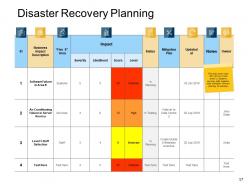
Folie 17: Diese Folie zeigt die Katastrophenwiederherstellungsplanung, die jeden Punkt in fünf entscheidende Bereiche unterteilt: Systeme, Dienstleistungen, Mitarbeiter, Lieferanten, Standorte der Katastrophenwiederherstellungsplanung für Unternehmen.
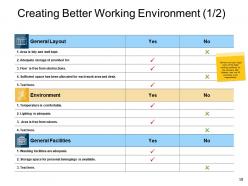
Folie 18: Diese Folie präsentiert die Schaffung einer besseren Arbeitsumgebung, indem einige der besseren Arbeitsbedingungen für das Unternehmen nach einer Katastrophe aufgelistet werden.
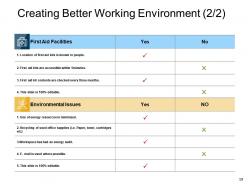
Folie 19: Dies ist eine weitere Folie zur Schaffung einer besseren Arbeitsumgebung.
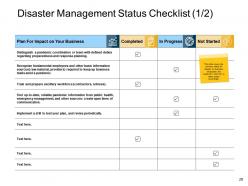
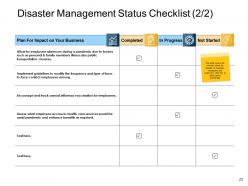
Folie 20: Diese Folie zeigt eine Checkliste für den Katastrophenmanagementstatus, die den Wiederherstellungsstatus für Katastrophen auf das Unternehmen, die Mitarbeiter und die Kunden abdeckt.
Folie 21: Dies ist eine optionale Folie für die Checkliste zum Katastrophenmanagementstatus.
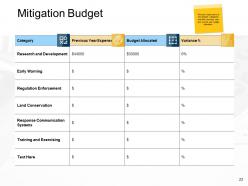
Folie 22: Diese Folie stellt das Minderungsbudget dar und listet einige Katastrophenkategorien mit ihren Budgetzuweisungen für das Vorjahr und das laufende Jahr auf.
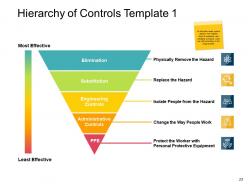
Folie 23: Diese Folie zeigt die Hierarchie der Kontrollen Vorlage 1, die die Kontrolloptionen vom höchsten Schutzniveau und der höchsten Zuverlässigkeit bis zum niedrigsten Niveau einordnet.
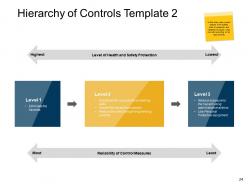
Folie 24: Diese Folie zeigt die Hierarchie der Kontrollen Vorlage 2 und beschreibt: Beseitigen Sie die Gefahren, ersetzen Sie die Gefahr durch etwas Sichereres, isolieren Sie die Gefahr von Menschen, reduzieren Sie die Risiken durch technische Kontrollen, reduzieren Sie die Exposition gegenüber der Gefahr durch administrative Maßnahmen, verwenden Sie persönliche Schutzausrüstung.
Folie 25: Dies ist unsere Unternehmensfolie, um Unternehmensangaben usw. zu zeigen.
Folie 26: Dies ist unsere Team-Folie mit Namen und Bezeichnungen.
Folie 27: Dies ist unsere Missions-Folie mit zugehörigen Bildern und Texten.
Folie 28: Diese Folie trägt den Titel Wichtige Hinweise. Tragen Sie hier Ihre wichtigen Hinweise ein.
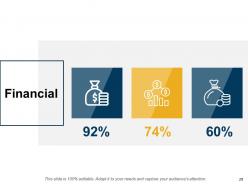
Folie 29: Dies ist eine Finanzfolie. Zeigen Sie hier Ihre finanzrelevanten Informationen.
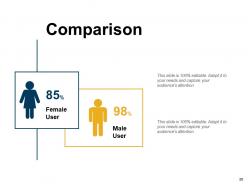
Folie 30: Dies ist eine Vergleichsfolie, um Vergleiche zwischen Waren, Einheiten usw. darzustellen.
Folie 31: Dies ist eine Puzzle-Folie mit Textfeldern, um Informationen zu zeigen.
Folie 32: Dies ist eine Venn-Folie mit Textfeldern.
Folie 33: Dies ist eine Dankesfolie mit Adresse, Telefonnummern und E-Mail-Adresse.
Katastrophenvorbeugung und -abmilderung Powerpoint-Präsentationsfolien mit allen 33 Folien: Folie 1: Einführung in Katastrophenvorbeugung und -abmilderung Folie 2: Risikobewertung Folie 3: Risikoanalyse Folie 4: Gefahrenidentifizierung Folie 5: Verletzlichkeitsanalyse Folie 6: Risikobewertung Folie 7: Risikomanagementstrategien Folie 8: Risikominderung Folie 9: Risikotransfer Folie 10: Notfallplanung Folie 11: Katastrophenmanagement Folie 12: Frühwarnsysteme Folie 13: Evakuierungsplanung Folie 14: Krisenreaktion Folie 15: Wiederaufbau und Erholung Folie 16: Finanzierung von Katastrophenvorbeugung und -abmilderung Folie 17: Öffentlich-private Partnerschaften Folie 18: Internationale Zusammenarbeit Folie 19: Fallstudie: Erdbeben in Haiti Folie 20: Fallstudie: Überschwemmungen in Bangladesch Folie 21: Fallstudie: Waldbrände in Australien Folie 22: Fallstudie: Hurrikane in den USA Folie 23: Herausforderungen und Hindernisse Folie 24: Erfolgsfaktoren Folie 25: Zukunftsaussichten Folie 26: Zusammenfassung Folie 27: Schlussfolgerungen Folie 28: Empfehlungen Folie 29: Referenzen Folie 30: Danksagung Folie 31: Fragen und Diskussion Folie 32: Kontaktinformationen Folie 33: Ende
Entwickeln Sie den Mut, mit unseren Folien zur Katastrophenvorsorge und -bewältigung zu experimentieren. Sie schaffen die Überzeugung, anders zu sein.


FAQs for Disaster Prevention And Mitigation
So there's four main phases: mitigation, preparedness, response, and recovery. Mitigation happens before anything bad hits - you're basically trying to reduce risks. Then preparedness is all your planning and training stuff. Response kicks in during the actual disaster (life-saving actions, emergency crews, that whole thing). Recovery comes after when you're rebuilding everything. Here's what's interesting though - they all blend together. You might be recovering from one thing while prepping for the next. Plus recovery teaches you what went wrong, so it loops back to mitigation. Honestly, I'd focus most on preparedness right now since that's the part you can actually control.
Dude, tech completely changes how disaster response works. You've got drones flying into dangerous areas where people can't go, checking damage in real time. AI scans satellite photos way faster than humans ever could - finds the worst-hit spots immediately. Mobile apps are huge for getting volunteers organized and letting families know everyone's okay. I mean, the speed difference from old methods is just insane. Emergency teams even watch social media now to catch problems early. Oh, and definitely check what tools your local responders already have first. Then figure out how to plug into their setup.
Your neighbors are seriously your best bet for disaster prep. They know who's elderly or has mobility issues, plus which routes actually work when roads get messy. Honestly, I'd rather have my neighbor with a pickup truck show up than wait hours for official help. Get people together now - figure out who's got medical training, chainsaws, generators, whatever. Those neighborhoods that do regular drills and keep supplies stocked? They bounce back way faster. Don't wait until something's actually happening to start organizing though, that's when everything goes sideways.
Oh man, social media is a game-changer for disasters. When power lines are down, people are still somehow scrolling on their phones - it's wild but true. Twitter's perfect for those urgent "get out now" alerts, while Facebook works better for longer community updates. Instagram? Great for showing actual damage photos. Set up your official accounts way before anything happens and train your team on what to post. The biggest thing though - you've got to watch what people are saying about you online. Misinformation spreads crazy fast, so jump on it quick with real facts. Honestly beats emergency radio by miles these days.
Start by walking around the actual area with your team - sounds obvious but you'd be surprised how many skip this step. Map out every threat you can think of: floods, earthquakes, industrial stuff nearby. Check population density, how solid the infrastructure looks, where people would evacuate. Definitely talk to locals though - they'll tell you things you'd never find in reports. Look at historical data and climate projections to figure out what happens how often. Oh, and don't just file this away somewhere. You'll need to update it regularly or it becomes useless pretty fast.
So here's the deal - government policies basically run the whole disaster management show. They decide who gets funding, which agencies are in charge, how warning systems work, all that stuff. It's wild how one policy change can mess with everything downstream. Your community getting federal help? That's all policy-driven too. Response time for resources, evacuation plans - yep, comes back to whatever's written in those documents. Honestly, if you're in this field you've gotta track policy updates constantly. Otherwise you'll be caught off guard when your tools or capabilities suddenly shift.
Disasters mess people up mentally way more than we usually talk about - PTSD, depression, anxiety, survivor's guilt, the whole deal. Look out for sleep problems, people isolating themselves, or just seeming "off" for weeks. Don't wait around hoping they'll get better on their own because that rarely happens. Get psychological first aid going immediately. Support groups help tons, honestly better than individual therapy sometimes. Community stuff works great too. Your disaster plan needs mental health resources built in from day one, not as an afterthought.
Honestly, most disaster recovery plans are garbage because people write them once and forget about them. Start by figuring out what disasters could actually screw you over - floods, hackers, power going out, whatever. Map out your three most critical business functions first (way easier than trying to do everything at once). Set up backup systems and make sure everyone knows their role when things go sideways. Here's the thing though - you've got to test this stuff regularly or it's useless. Run drills every few months and update the whole plan yearly. Don't just think IT either; you need communication plans, backup work sites, the whole deal.
Oh man, you really can't skip the training part. People freeze up when they haven't practiced stuff beforehand - it's just human nature. Drills help you figure out what's broken in your plan before everything goes sideways. Plus your team builds that automatic response thing where they don't have to think as much under pressure. Way better to screw up during practice than when it actually matters, right? I'd probably start with doing them every few months. Oh and definitely talk through what went wrong after - that's where you learn the most stuff.
Honestly, these partnerships work because companies can move way faster than government agencies when disaster hits. They've got the equipment, the specialized tech, and frankly the money to throw at problems. Meanwhile, government handles the coordination side - which is crucial but not exactly their strong suit when it comes to speed. The trick is hammering out who does what BEFORE everything goes sideways. Like, spell out the cost-sharing, responsibilities, all that boring stuff now. Otherwise you'll have companies and agencies pointing fingers at each other while people need help. Building those relationships early makes a huge difference when you actually need them.
Honestly, it's all about who gets help first and how you divide up resources. Are vulnerable people getting forgotten? Privacy gets messy too - you need personal details to help, but people are traumatized and can't always consent properly. Short vs long-term needs? That's brutal to balance. Nobody's ever gonna be 100% happy with your choices, which sucks but it's reality. My advice? Figure out your protocols way before everything hits the fan. You don't want to make these massive ethical calls when you're already drowning in chaos.
So climate change is basically cranking up the volume on disasters. Hurricanes get stronger, droughts last way longer, flooding gets brutal - all because warmer air holds more energy. Sea levels rising doesn't help either, especially for coastal cities (Miami's gonna be underwater at some point, let's be real). Then you've got deforestation removing natural buffers that used to protect us. The tricky part? We can't just plan for today's weather anymore. Infrastructure needs to handle what's coming in 20-30 years, which honestly feels like building for a different planet sometimes.
Honestly, disasters wreck local economies in ways that last for years. Infrastructure gets destroyed, businesses shut down, and cleanup costs are insane. Small businesses usually get screwed the worst - they don't have the insurance or cash reserves that bigger companies do. Then unemployment spikes when places close or move away, so fewer people are spending money locally. It becomes this nasty downward spiral. Even healthcare and schools struggle to rebuild their budgets. The crazy part? Communities that weren't even directly hit still feel the economic damage somehow. Building up diverse local economies beforehand really helps, though most places don't think about it until it's too late.
Get your volunteer groups talking to emergency management way before anything bad happens. Having random people show up during disasters is honestly a nightmare - nobody knows what to do or who's in charge. Set up databases ahead of time so volunteers are pre-registered. Joint training helps too. Your local emergency manager can walk you through volunteer credentialing (which sounds boring but actually matters). Give people specific jobs like shelter help or logistics instead of just "general disaster stuff." Oh, and definitely have liaison officers who can translate between the volunteers and official responders. Trust me, clear command structure saves everyone's sanity.
So basically, we've learned the hard way that you can't just wait for disasters to happen then scramble to respond. Early warning systems are everything - like, actually everything. Building stuff that won't fall apart in the first place beats rebuilding every time. Communication totally makes or breaks the whole thing too. People lose their minds when they don't know what's going on. The craziest part? Half the time different agencies weren't even talking to each other during major disasters. Prevention and getting everyone on the same page beforehand - that's where you put your money and effort.
No Reviews