


Economic development planning process ppt infographics





Try Before you Buy Download Free Sample Product
 Impress Your
 Audience
 100%
100% Editable
 Save Hours
 of Time


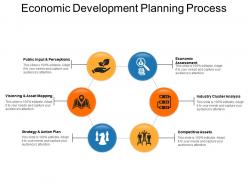
Introducing Economic Development Planning Process PPT Infographics. Take the assistance of this PowerPoint presentation template and showcase the strategies required for the development of the economy. By using the PPT slide, you can explain the importance of economic democracy. There are various steps like public input & perceptions, visioning & asset mapping, strategy & action plan, competitive assets, and financial assessments which you mention using PowerPoint presentation template. Using this PPT slide, illustrate the centralized, decentralized, or participatory forms of economic planning. With the help of our professionally designed PowerPoint presentation template, you can emphasize the steps that provide a comprehensive overview to improve the economy. The PPT slide enables you to elaborate on points that establish full employment, modernization of sectors, right to equality, and many more. The PPT slide contains high-quality icons with which you can make your presentation even more engaging. Therefore, download the ready-to-use PowerPoint presentation template and create a proper condition to improve the monetary graph of our country.
People who downloaded this PowerPoint presentation also viewed the following :
Economic development planning process ppt infographics with all 5 slides:
Feel all comfy with our Economic Development Planning Process Ppt Infographics. They allow you to be completely at ease.




FAQs for Economic development planning
So you're gonna need five main pieces: start with figuring out where your economy actually stands right now, then set some clear goals. After that, plan your strategic moves - think business development, workforce training, infrastructure stuff, plus marketing to investors. Oh and don't forget an implementation timeline. Honestly, gathering all that initial data is such a slog but you can't skip it. The key thing is setting up regular check-ins to see if you're actually making progress. I'd say begin by listing what economic info you can already get your hands on - that way you'll spot the missing pieces pretty quickly.
So most cities dive into census data and employment numbers first - the usual suspects. But here's the thing: talking to actual people beats spreadsheets every time. Set up community meetings, chat with business owners, survey residents about what they actually need. SWOT analyses help too (strengths, weaknesses, opportunities, threats). I'd honestly start by figuring out who your key players are and getting those conversations scheduled. You don't want to plan stuff nobody asked for, you know? Hard data plus real community input - that's your sweet spot. Oh, and business surveys can reveal surprising gaps in services.
Look, PPPs work when neither the public or private sector can pull off a project solo. Government brings the regulatory muscle and land access. Private companies? They've got the cash and know-how to move fast. Downtown revitalization, big infrastructure stuff, business incubators - that's their sweet spot. Too risky for companies alone, but government can't execute worth a damn without market discipline. Both sides need real stakes in the outcome, not just some handshake deal. Honestly, figure out what everyone actually contributes before you even think about sitting down to negotiate. Otherwise you're wasting time.
Look, data analytics basically lets you ditch the guesswork and see what's actually happening in your area. Instead of crossing your fingers and hoping, you can spot which industries are taking off and which ones are tanking. Honestly, the predictive stuff is pretty sick - you can forecast job creation and revenue before making big investments. Real-time tracking shows if your strategies are working or need tweaking. Start simple: grab employment data, business permits, demographic changes. Even basic number-crunching beats making decisions in the dark. Way better than the old "throw money at it and pray" approach most places still use.
Start with the basics - make permits easy to get and offer some tax breaks. Infrastructure's critical too, so you need solid roads, utilities, wifi, all that stuff. But honestly? The soft stuff matters way more than people think. Training programs for workers, making your area actually nice to live in, connecting with business groups. Oh and definitely have someone whose actual job it is to court companies. Marketing helps too obviously. Bottom line - companies will pick wherever makes their life easiest and their profits highest.
Community engagement can totally make or break your whole economic development thing. You get people involved early - residents, local businesses, whoever - and they'll actually back your plans when it's time to execute. Otherwise your brilliant strategy just sits there doing nothing. The real gold is in those listening sessions though. Don't do those fake public meetings where you've already decided everything. Local people know stuff that outside consultants completely miss. I mean, they live there, right? When people feel like they own part of the vision, that's when things actually happen instead of just looking good on paper.
First thing - nail down your key metrics before anything else. Job numbers, wage bumps, tax revenue, business retention. Don't just track the hard data though, get community feedback too. So many projects mess this up by not measuring from day one, then they're scrambling to show results later. Keep collecting data throughout the whole process, not just at the start and end. Regular stakeholder check-ins are clutch. Build a simple dashboard with maybe 4-5 main indicators - way easier to spot what's working and pivot when something's not. Trust me, you'll thank yourself later.
Think of affordable housing like roads or water lines - it's basic infrastructure your economy needs. When new businesses want to set up shop, run housing impact assessments first. Inclusionary zoning works great here - basically requiring developers to build some affordable units or pay into a fund. Tax increment financing is honestly underrated for this stuff. Map out where your workers live now versus where jobs are popping up - that gap tells you everything. The trick is baking housing targets right into your economic development goals upfront. Otherwise you end up with jobs but nowhere for people to actually live, which is pretty counterproductive.
Honestly, infrastructure is like a gift that keeps giving. During construction you get immediate jobs, then decades of economic benefits after. Businesses can move stuff faster, get better internet, reliable power - all that makes them way more productive. New companies start looking at your area too because they actually need that infrastructure to function. I've seen one highway project completely change an entire region over like 10-15 years. Pretty wild how that works. Focus on whatever your region's main industries need most and fix the biggest headaches businesses are dealing with right now. That's where you'll see the biggest bang for your buck.
Honestly, you can't really do economic development without thinking about environmental stuff anymore. Like, resource scarcity will bite you later if you ignore it now. Do your environmental assessments upfront - not when you're already knee-deep in problems. Green infrastructure and renewable energy aren't just trendy buzzwords (okay maybe a little) - they're smart business moves. Supply chains break down, regulations get stricter, resources get expensive. The whole system crashes if you build it on shaky environmental foundations. It's not about being a tree-hugger anymore, it's about not going bankrupt in ten years.
Rural development is brutal compared to cities, honestly. Infrastructure sucks, tax money's tight, and all the smart kids bail for bigger places. Capital access? Forget it. Everything costs more to ship around too - that transportation thing really adds up fast. Limited staff makes planning way harder than it should be. But you've got advantages cities don't: cheap land, better quality of life, less competition for niche stuff. My cousin's town actually did pretty well focusing on small wins first. Partner up with nearby places to split costs and resources. Don't try to be the next Silicon Valley overnight.
Honestly, tech can totally change how you track what's actually working in your economic development stuff. Digital platforms are amazing for connecting businesses with investors and resources - basically matchmaking for growth. Innovation hubs? They're like magnets for entrepreneurs and create this whole buzzy ecosystem vibe. Smart city tech helps optimize your infrastructure too, which makes areas way more appealing to businesses. Oh, and start by looking at what digital tools you're already using. Figure out the biggest gaps first - that's where you'll see the most impact right away.
Schools and colleges are literally workforce factories for your area - they're cranking out tomorrow's employees while doing research that creates new businesses. Universities are huge because they pull in students who often stay after graduating, plus they employ tons of people themselves. When industries change, community colleges are lifesavers for retraining workers. Honestly, the startup scene around universities is pretty sweet since companies can grab student talent and work with professors. If you're planning economic stuff, definitely get education folks involved early - they know exactly what skill gaps exist and can shape programs to match your goals.
Look, the trick is workforce development programs that actually help people who already live there. Set up apprenticeships and small business incubators. Zoning policies matter too - require affordable housing in new developments so you don't push everyone out. Honestly, I've watched too many cities just gentrify everything and call it "progress." When hiring for big projects, prioritize local workers. Support minority-owned businesses through procurement deals. Oh, and don't let developers build luxury condos without giving back to the community. Growth should lift up existing residents, not replace them.
Honestly, it depends on what data you've got to work with. If there's decent historical stuff, go with regression or time series models - they're pretty solid. No good data? Expert panels and surveys work better, though they're obviously more subjective. I usually mix both approaches since the economy loves to throw curveballs. Leading indicators are gold though - employment rates, business permits, that kind of thing gives you early warning signs. Figure out which trends actually matter for your area first. Then pick maybe 2-3 different methods instead of putting all your eggs in one basket.
-
Design layout is very impressive.
-
Much better than the original! Thanks for the quick turnaround.