


Effective IoT Device Management To Enhance Operational Efficiency Powerpoint Presentation Slides IoT CD




Try Before you Buy Download Free Sample Product
 Impress Your
 Audience
 100%
100% Editable
 Save Hours
 of Time


The process of IoT device management encompasses several stages, including registration, configuration, provisioning, maintenance, and ongoing monitoring of connected devices within the IoT ecosystem. Effective IoT Device Management to Enhance Operational Efficiency PowerPoint presentation provides a concise overview of IoT device management, outlining its core advantages and operational mechanisms. Additionally, the IoT Configuration PPT deck delves into essential aspects for proficient control and surveillance, encompassing provisioning, authentication, configuration, monitoring, diagnostics, and maintenance procedures. Furthermore, the information presented here is a valuable resource for individuals and entities seeking to mitigate the risks associated with unauthorized access and security breaches in IoT systems. The IoT Platform template also delves into the diverse applications of IoT device management across industries such as healthcare, manufacturing, agriculture, smart homes, and automotive sectors. Moreover, it highlights prominent device management platforms, accentuating the influence of effective management on cost reduction and return on investment. Lastly, it furnishes a dashboard that enables the continuous monitoring of IoT device health and performance, enhancing operational efficiency and facilitating informed decision making. Get access to this 100 percentage editable template now.
People who downloaded this PowerPoint presentation also viewed the following :
Content of this Powerpoint Presentation
Slide 1: This slide introduces Effective IoT Device Management to Enhance Operational Efficiency. State your company name and begin.
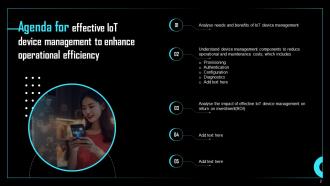
Slide 2: This is an Agenda slide. State your agendas here.
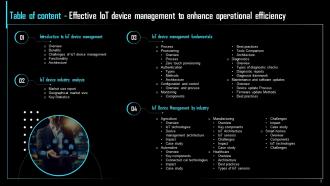
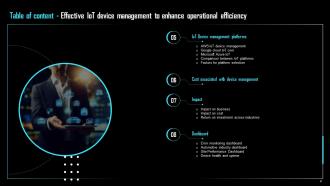
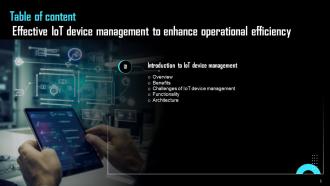
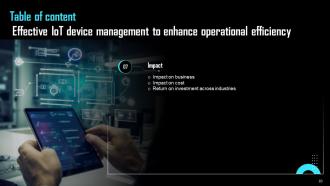
Slide 3: This slide shows Table of Content for the presentation.
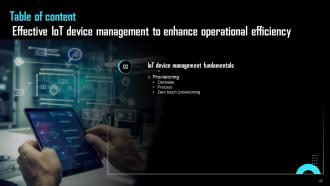
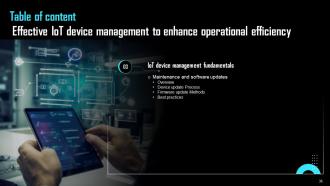
Slide 4: This slide continues showing Table of Content for the presentation.
Slide 5: This slide shows title for topics that are to be covered next in the template.
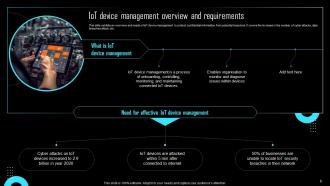
Slide 6: This slide exhibits an overview and needs of IoT device management to protect confidential information from potential breaches.
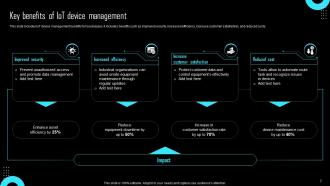
Slide 7: This slide includes IoT device management benefits for businesses.
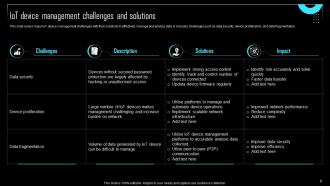
Slide 8: This slide covers major IoT device management challenges with their solutions to effectively manage and analyze data.
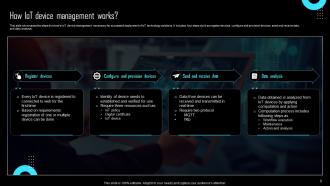
Slide 9: This slide showcases the steps involved in IoT device management necessary for successful deployment of IoT technology solutions.
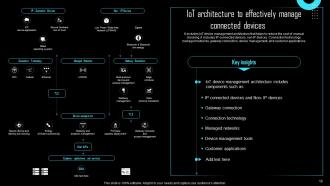
Slide 10: This slide includes IoT device management architecture that helps to reduce the cost of manual checking.
Slide 11: This slide shows title for topics that are to be covered next in the template.
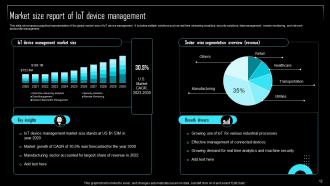
Slide 12: This slide showcases a graphical representation of the global market size of IoT device management.
Slide 13: This slide highlights the IoT device management market size in major geographic regions.
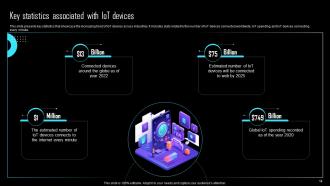
Slide 14: This slide presents key statistics that showcase the increasing trend of IoT devices across industries.
Slide 15: This slide shows title for topics that are to be covered next in the template.
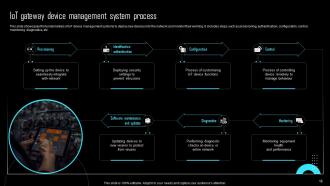
Slide 16: This slide showcases the fundamentals of IoT device management systems to deploy new devices into the network and monitor their working.
Slide 17: This slide shows title for topics that are to be covered next in the template.
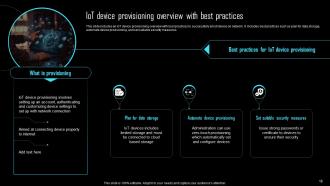
Slide 18: This slide includes an IoT device provisioning overview with best practices to successfully enroll device on network.
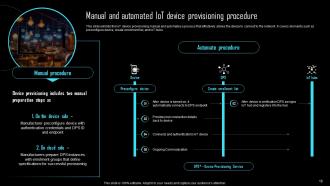
Slide 19: This slide exhibits the IoT device provisioning manual and automates a process that effectively allows the device to connect to the network.
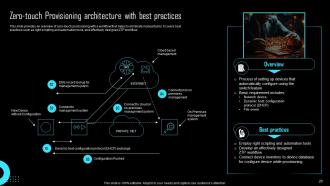
Slide 20: This slide provides an overview of zero-touch provisioning with a workflow that helps to eliminate manual tasks.
Slide 21: This slide shows title for topics that are to be covered next in the template.
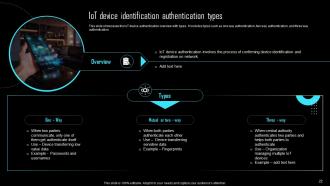
Slide 22: This slide showcases the IoT device authentication overview with types.
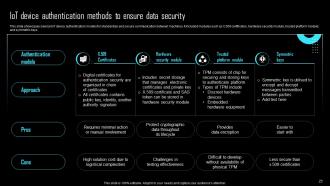
Slide 23: This slide presents several IoT device authentication models for standardise and secure communication between machines.
Slide 24: This slide shows title for topics that are to be covered next in the template.
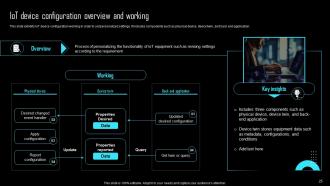
Slide 25: This slide exhibits IoT device configuration working in order to set personalized settings.
Slide 26: This slide shows title for topics that are to be covered next in the template.
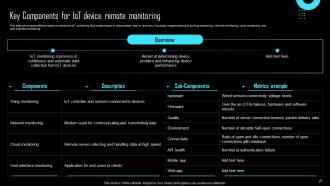
Slide 27: This slide showcases different types of metrics for IoT monitoring that enable teams to reduce mean time to recovery.
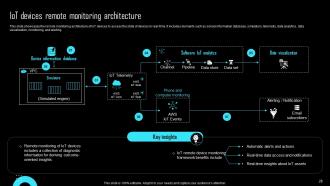
Slide 28: This slide presents the remote monitoring architecture of IoT devices to assess the state of devices in real-time.
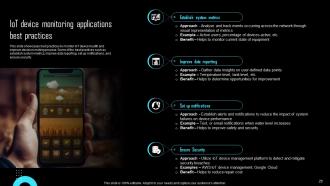
Slide 29: This slide showcases best practices to monitor IoT device health and improve decision making process.
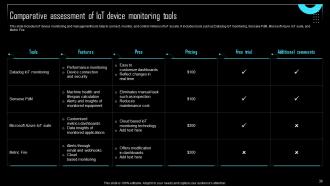
Slide 30: This slide includes IoT device monitoring and management tools help to connect, monitor, and control millions of IoT assets.
Slide 31: This slide shows title for topics that are to be covered next in the template.
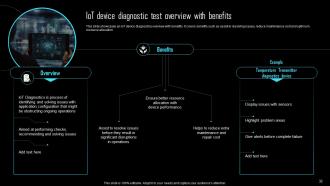
Slide 32: This slide showcases an IoT device diagnostics overview with benefits.
Slide 33: This slide provides diagnostic checks types to identify issues and block security threats.
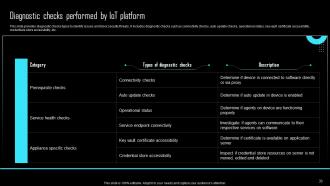
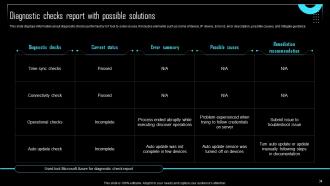
Slide 34: This slide displays information about diagnostic checks performed by IoT tool to solve issues.
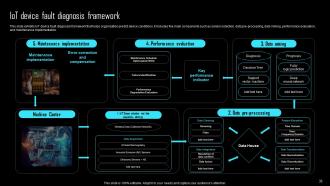
Slide 35: This slide exhibits IoT device fault diagnosis framework that helps organisation predict device conditions.
Slide 36: This slide shows title for topics that are to be covered next in the template.
Slide 37: This slide exhibits IoT device updates management overview and benefits in order to improve device performance.
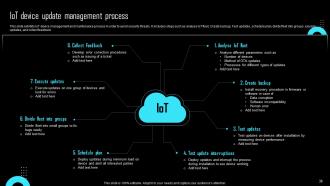
Slide 38: This slide presents IoT device management and maintenance process in order to avoid security threats.
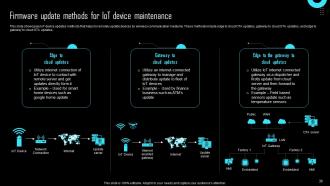
Slide 39: This slide showcases IoT device updates methods that helps to remotely update devices by wireless communication mediums.
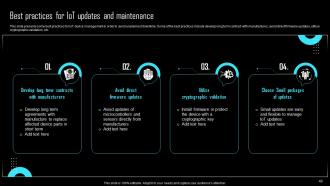
Slide 40: This slide presents some best practices for IoT device management in order to avoid unplanned downtime.
Slide 41: This slide shows title for topics that are to be covered next in the template.
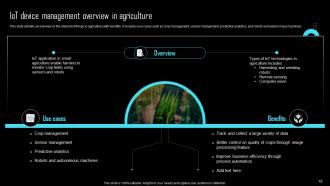
Slide 42: This slide exhibits an overview of the internet of things in agriculture with benefits.
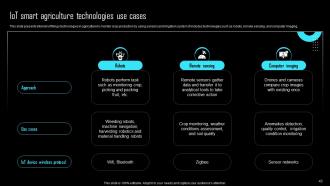
Slide 43: This slide presents internet of things technologies in agriculture to monitor crop production by using sensors and irrigation system.
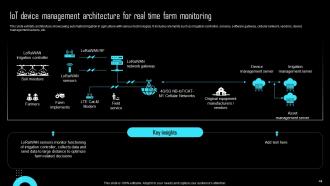
Slide 44: This slide exhibits architecture showcasing automated irrigation in agriculture with various technologies.
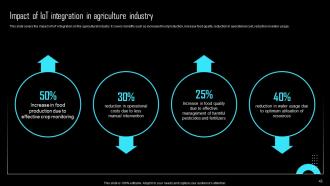
Slide 45: This slide covers the impact of IoT integration on the agricultural industry.
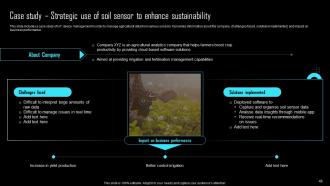
Slide 46: This slide includes a case study of IoT device management in order to manage agricultural data from various sensors.
Slide 47: This slide shows title for topics that are to be covered next in the template.
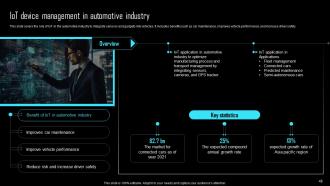
Slide 48: This slide covers the role of IoT in the automotive industry to integrate sensors and gadgets into vehicles.
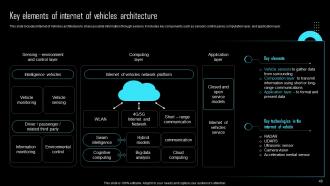
Slide 49: This slide includes Internet of Vehicles architecture to share possible information through sensors.
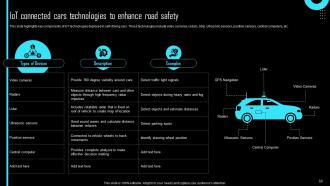
Slide 50: This slide highlights key components of IoT technologies deployed in self-driving cars.
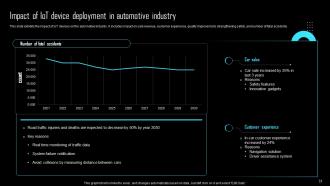
Slide 51: This slide exhibits the impact of IoT devices on the automotive industry.
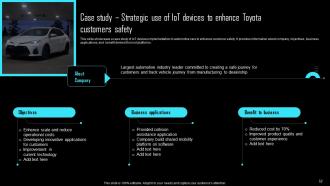
Slide 52: This slide showcases a case study of IoT devices implementation in automotive cars to enhance customer safety.
Slide 53: This slide shows title for topics that are to be covered next in the template.
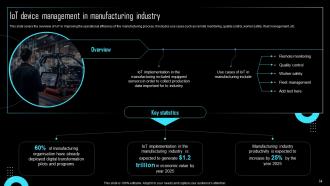
Slide 54: This slide covers the overview of IoT in improving the operational efficiency of the manufacturing process.
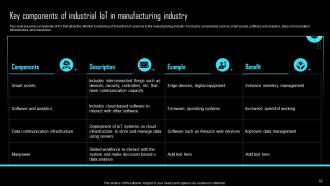
Slide 55: This slide presents components of IoT that allow the effective functioning of industrial IoT systems in the manufacturing industry.
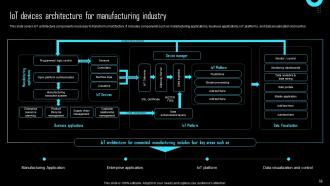
Slide 56: This slide covers IoT architecture components necessary to transform smart factory.
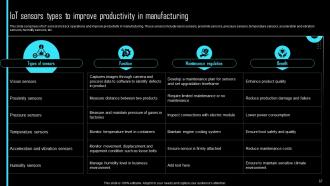
Slide 57: This slide comprises of IoT sensors to track operations and improve productivity in manufacturing.
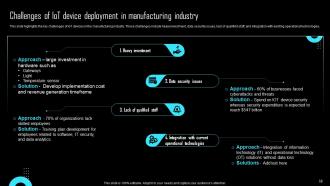
Slide 58: This slide highlights the key challenges of IoT devices in the manufacturing industry.
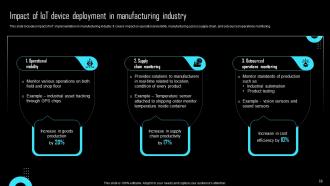
Slide 59: This slide includes impact of IoT implementation in manufacturing industry.
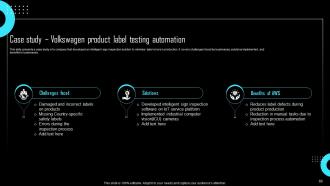
Slide 60: This slide presents a case study of a company that developed an intelligent sign inspection solution to minimise label errors in production.
Slide 61: This slide shows title for topics that are to be covered next in the template.
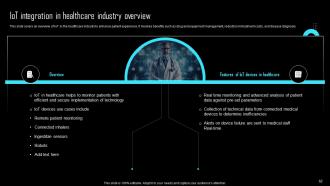
Slide 62: This slide covers an overview of IoT in the healthcare industry to enhance patient experience.
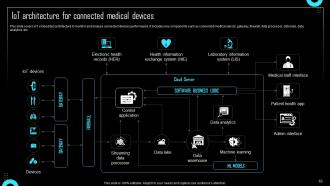
Slide 63: This slide presents IoT embedded architecture to monitor and analyse connected devices performance.
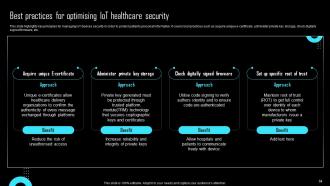
Slide 64: This slide highlights key principles for managing IoT devices security in order to protect patients personal information.
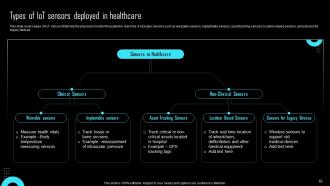
Slide 65: This slide covers types of IoT sensors that help the physician monitor the patient in real-time.
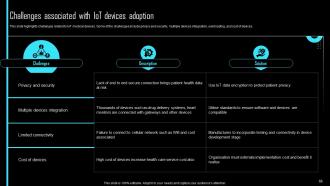
Slide 66: This slide highlights challenges related to IoT medical devices.
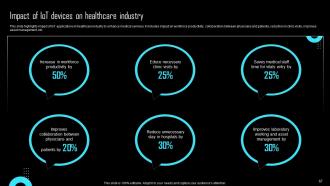
Slide 67: This slide presents impact of IoT applications in healthcare industry to enhance medical services.
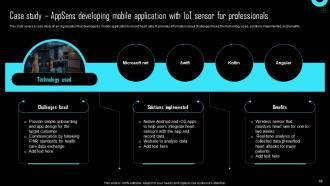
Slide 68: This slide covers a case study of an organization that developed a mobile application to record heart data.
Slide 69: This slide shows title for topics that are to be covered next in the template.
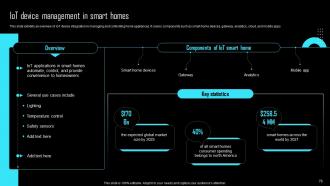
Slide 70: This slide exhibits an overview of IoT device integration in managing and controlling home appliances.
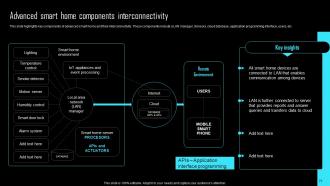
Slide 71: This slide highlights key components of advanced smart home and their interconnectivity.
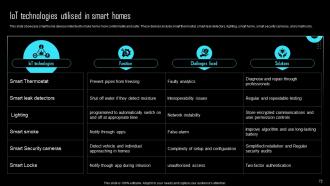
Slide 72: This slide showcase smart home devices intended to make home more conformable and safer.
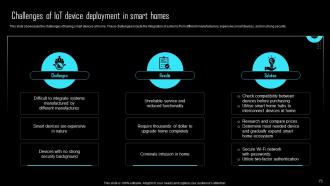
Slide 73: This slide presents the challenges of having smart devices at home.
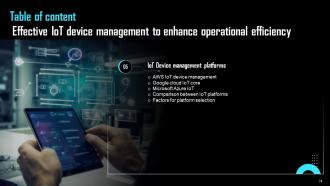
Slide 74: This slide shows title for topics that are to be covered next in the template.
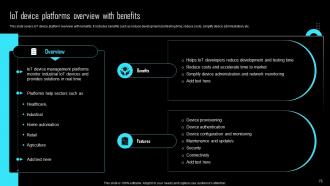
Slide 75: This slide covers IoT device platform overview with benefits.
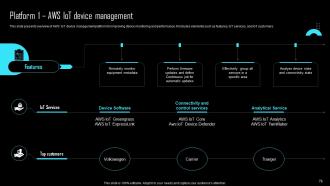
Slide 76: This slide presents overview of AWS IoT device management platform for improving device monitoring and performance.
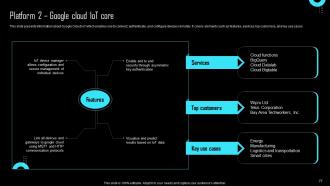
Slide 77: This slide displays information about Google Cloud IoT which enables one to connect, authenticate, and configure devices remotely.
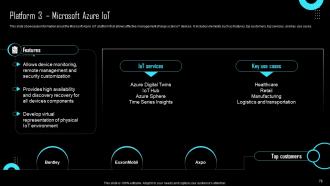
Slide 78: This slide showcases information about the Microsoft Azure IoT platform that allows effective management of large scale IoT devices.
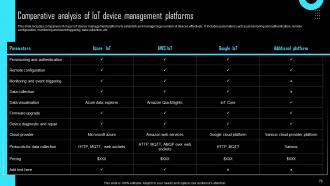
Slide 79: This slide includes comparison of major IoT device management platforms to establish and manage large number of devices effectively.
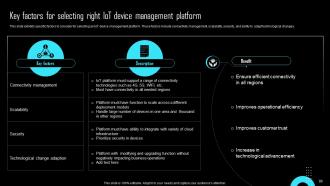
Slide 80: This slide exhibits specific factors to consider for selecting an IoT device management platform.
Slide 81: This slide shows title for topics that are to be covered next in the template.
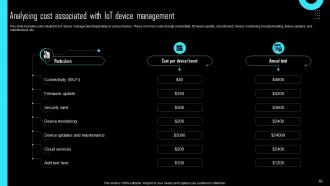
Slide 82: This slide includes costs related to IoT device management depending on various factors.
Slide 83: This slide shows title for topics that are to be covered next in the template.
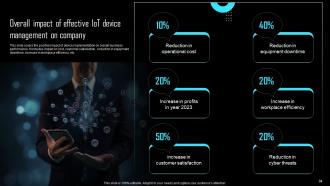
Slide 84: This slide covers the positive impact of device implementation on overall business performance.
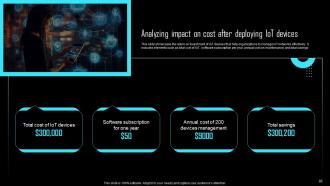
Slide 85: This slide showcases the return on investment of IoT devices that help organizations to manage IoT networks effectively.
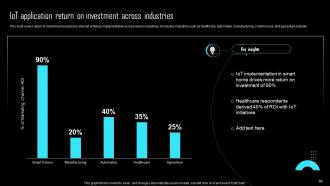
Slide 86: This slide covers return of investment received by internet of things implementation across various industries.
Slide 87: This slide shows title for topics that are to be covered next in the template.
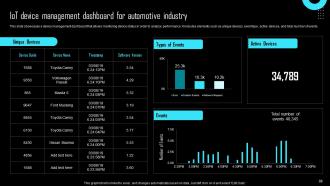
Slide 88: This slide showcases a device management dashboard that allows monitoring device status in order to analyze performance.
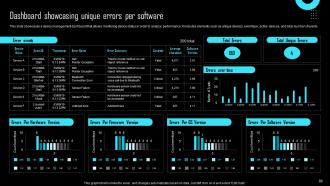
Slide 89: This slide also showcases a device management dashboard that allows monitoring device status in order to analyze performance.
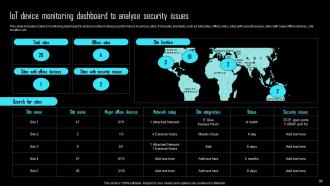
Slide 90: This slide includes a device monitoring dashboard to analyse network devices performance in various sites.
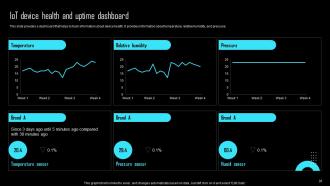
Slide 91: This slide provides a dashboard that helps to track information about device health.
Slide 92: This slide shows all the icons included in the presentation.
Slide 93: This slide is titled as Additional Slides for moving forward.
Slide 94: This slide shows Post It Notes for reminders and deadlines. Post your important notes here.
Slide 95: This is an Idea Generation slide to state a new idea or highlight information, specifications etc.
Slide 96: This slide provides 30 60 90 Days Plan with text boxes.
Slide 97: This is a Thank You slide with address, contact numbers and email address.
Effective IoT Device Management To Enhance Operational Efficiency Powerpoint Presentation Slides IoT CD with all 102 slides:
Use our Effective IoT Device Management To Enhance Operational Efficiency Powerpoint Presentation Slides IoT CD to effectively help you save your valuable time. They are readymade to fit into any presentation structure.









FAQs for Effective IoT Device Management To Enhance Operational Efficiency Powerpoint Presentation
Connectivity issues will drive you nuts, especially when devices are spread across different locations with spotty signal. Security keeps me up at night - one compromised device can mess up your whole network. Firmware updates are a total pain because you're coordinating thousands of devices without causing downtime or bricking anything. Oh, and managing different hardware generations gets messy fast since they all have different capabilities. Honestly, get a solid device management platform from day one. I learned this the hard way - trying to scale without proper tools is absolutely brutal.
Okay so first thing - pick devices from companies that actually update their firmware regularly. Default passwords are your enemy, change them right away (I can't believe how many people don't do this). Set up network segmentation so your smart doorbell can't talk to your work laptop. Monitor everything for weird behavior - with tons of devices you'll need automation for this. Keep a running list of what's connected where. Security patches? Install them fast. When stuff breaks or gets old, wipe it clean before tossing it. Trust me, skipping any of these steps will bite you later.
Dude, interoperability is huge for IoT stuff. Your devices need to speak the same language or you'll go crazy trying to manage them. I learned this the hard way when half my smart home setup couldn't talk to the other half - total nightmare. Common protocols mean you can actually monitor and update everything from one place instead of juggling five different apps. Honestly, the biggest thing is checking compatibility before you buy anything new. Trust me, spending five minutes researching standards beats spending hours troubleshooting why your new sensor won't connect to your existing system.
Dude, real-time analytics is honestly a lifesaver for IoT stuff. You go from always playing catch-up to actually seeing problems before they hit. Like, you'll notice weird battery patterns or sensors acting funky way before everything crashes. The predictive maintenance thing? Total game-changer - saves you from so many 2am emergency calls. You can tweak performance instantly and decide if devices need updates or just need replacing. Oh, and start with dashboards for your most critical metrics first. Way less overwhelming that way.
Track your uptime and latency first - that's the bread and butter stuff. Battery levels matter tons if you've got wireless devices. CPU and memory usage too, obviously. Response times are critical though, like who wants to stand there waiting forever for their smart lock? That'd drive me nuts. Monitor your bandwidth consumption and error rates. Don't skip firmware update success rates either - those failures pile up fast. Authentication failures are worth watching for security reasons. Set up dashboards that ping you when things go sideways, way before users start blowing up your phone.
Honestly, predictive maintenance is a game changer for IoT stuff. Your devices basically give you a heads up when they're starting to fail - way better than waiting for everything to crash at once. Track things like battery levels, connection quality, response times. The data patterns will show you what's going wrong before it actually breaks. Schedule fixes during normal hours instead of dealing with random 3am emergencies (been there, not fun). Keeps your costs predictable and systems running smoothly. It's like having a crystal ball for your hardware.
Honestly, automation is your best friend here. Get zero-touch provisioning working so devices just configure themselves when they hit your network - saves you from going insane later. Standardized profiles are clutch too, even though setting them up feels like a pain initially. Bulk enrollment tools help big time, and don't skip proper certificate management from the start. APIs are pretty sweet for connecting everything to your current systems. I learned this the hard way, but nailing that foundation means you won't be manually babysitting every device. Way better than the alternative.
So edge computing basically puts the processing power right next to your IoT devices instead of sending everything back to the cloud. Way faster responses, and you're not burning through bandwidth constantly. Your devices can handle data locally and only send the important stuff upstream. Firmware updates happen directly at the edge too - honestly, the speed difference is pretty noticeable. Best part? Devices keep working even when your connection sucks. I'd start by figuring out which devices in your setup would actually benefit from local processing first.
Yeah, you definitely want to keep those firmware updates current. Hackers are always finding new ways to break into IoT devices, so patches are basically your first line of defense. Plus updates fix annoying bugs and add better features. The tricky part? Most IoT stuff won't update itself like your phone does - which honestly seems backwards in 2024, but whatever. You'll need to either set up automatic updates if the option exists, or just remember to check every few months. Trust me, dealing with a hacked smart device is way more hassle than spending ten minutes updating firmware.
Honestly, IoT compliance isn't as scary as it sounds - just focus on data protection, security standards, and keeping good records. Encrypt everything (data moving around AND stored data), update firmware religiously, and document it all because regulators are obsessed with paperwork. Access controls are huge too. I'd start by figuring out which regs actually apply to your stuff first - saves you from going down rabbit holes. Oh, and monitor for vulnerabilities constantly rather than waiting for something to break. Being ahead of problems beats scrambling to fix them later.
So basically you want automated alerts watching for device problems, connection drops, weird performance stuff. Centralized dashboards are a lifesaver - way better than manually checking each device like some kind of masochist. Set up secure remote access for when things inevitably break. Keep detailed logs because patterns tell you everything. Auto-update firmware when you can. The whole point is catching issues before they screw up your operations. Honestly, predictive analytics tools are worth the money if they can spot failures coming. Oh, and don't skip the monitoring setup - I learned that one the hard way.
So instead of dealing with like 10 different dashboards, you get one place to handle everything. Push updates to all your devices at once, catch issues early, automate the boring stuff. Honestly saves so much time compared to logging into separate systems for each device type - I've wasted way too many hours doing that before. The automated alerts are clutch too. Plus bulk operations that would normally take forever to do manually. I'd start by figuring out what's eating up most of your team's time right now.
Your wifi connection is literally make-or-break for IoT stuff. Bad connectivity means your devices will be slow as hell, data won't sync properly, and everything becomes unreliable. Security cameras and real-time sensors especially hate poor bandwidth - they're data hogs. When your connection keeps dropping? Forget about it. Your devices can't stay updated or communicate back to you consistently. I learned this the hard way with my smart thermostat constantly going offline. You really need stable internet that can handle however many devices you've got running, plus their data needs. Maybe set up backup connections for anything super important.
Honestly, build training right into your rollout from the start. Basic stuff first - password changes, firmware updates. Too many people just plug devices in and call it done (I've totally done this myself). Make simple checklists for onboarding and troubleshooting. Refresher sessions help, especially with new devices. Don't make it feel like school - focus on actual skills they'll use. Set up a quick wiki where everyone can dump procedures and random tips they've learned. Keep it practical and you'll save yourself so many headaches later.
So basically AI/ML becomes like the smart brain for all your IoT stuff - handles the annoying manual work you'd hate doing yourself. It'll predict device failures before they happen, optimize energy use, and catch security issues instantly. The coolest part? It learns how your devices behave over time. You can set it to auto-adjust performance based on usage and environmental data too. Honestly, predictive maintenance is where it really shines - you're fixing problems that haven't even happened yet instead of dealing with broken devices. I'd start with anomaly detection on your most important stuff first.
-
Extensive range of templates! Highly impressed with the quality of the designs.
-
Based on my personal experience, I would recommend other people to subscribe to SlideTeam. No one can be disappointed here!