

Employee Absence Request Management Flowchart




Try Before you Buy Download Free Sample Product
 Impress Your
 Audience
 100%
100% Editable
 Save Hours
 of Time


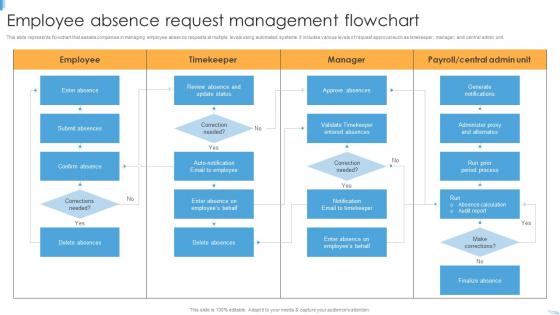
This slide represents flowchart that assists companies in managing employee absence requests at multiple levels using automated systems. It includes various levels of request approval such as timekeeper, manager, and central admin unit.
People who downloaded this PowerPoint presentation also viewed the following :
Employee Absence Request Management Flowchart with all 9 slides:
Use our Employee Absence Request Management Flowchart to effectively help you save your valuable time. They are readymade to fit into any presentation structure.








FAQs for Employee Absence
Honestly, it's usually the obvious stuff - people get sick, deal with mental health/burnout, or have kid emergencies. But you'll also see folks who just hate their boss or have completely checked out mentally. Transportation screws people over more than you'd think, especially if public transit sucks in your area. Here's the thing though - even legit absences can hide bigger problems like terrible work-life balance. I'd track patterns for a couple months because you'll probably find specific issues you can actually fix instead of just putting band-aids on everything.
Get a good HRIS system first - trust me, tracking this manually will drive you insane. Monthly reports are your friend here. Break everything down by department, employee, and absence reason. Friday/Monday absences are always sketchy, so flag those patterns. Also watch for seasonal stuff and repeat offenders. Honestly, some managers hate the extra meetings, but pull these reports quarterly minimum and actually review them together. Department-wide spikes usually mean there's drama or bigger issues brewing. The whole thing only works if you're consistent about collecting the data though.
Honestly, culture makes or breaks attendance. People show up when they actually want to be there - sounds obvious but most companies miss this completely. If your team feels valued and trusted, they won't bail on each other unnecessarily. Nobody wants to screw over coworkers they actually like, you know? But toxic workplaces? That's where you get all those mysterious "food poisoning" days that happen to fall on Mondays. Focus on psychological safety and flexible policies. Oh, and train managers to support people instead of breathing down their necks constantly.
Honestly, start with flexible scheduling if you can swing it - remote work too. People won't ditch work as much when they can actually handle life stuff. Track attendance patterns so you catch problems early, but don't make people feel guilty about real sick days. That just creates more issues. Also, decent PTO policies help a ton. Maybe throw in some wellness programs? I'd look at your current absence data first though - see what's actually happening before you change everything. Focus on the biggest problem areas and work from there.
Okay so first off, nobody actually reads employee handbooks anymore - we both know that. Put your absence policies in places people will actually see them: intranet homepage, quick reference cards, regular email reminders about FMLA deadlines and stuff. Do training during onboarding obviously, but also yearly refreshers because people forget. Here's the thing though - ditch all the HR speak and explain it like you're talking to a normal person. Walk through what actually happens when someone needs time off, step by step. A simple flowchart works wonders too since it shows the whole approval process visually.
Track your absenteeism rate, cost per absence, and how long it takes people to come back to work. Those are your main ones. Employee satisfaction with absence policies matters too - if people hate the process, you'll know something's wrong. The Bradford Factor is solid for catching serial offenders, though it can feel pretty brutal. Check trends by department and season to spot weird patterns. Honestly, benchmarking against industry standards is huge - otherwise you don't know if 3.2% is amazing or awful. Monthly dashboards work well, but don't just collect data for fun. Actually do something with it.
Honestly, just get an absence tracking system - it'll save your sanity. Employees can request time off through a portal instead of hunting you down with forms. The approval stuff happens automatically, and you get dashboards showing who's out when. Everything syncs with payroll too, which is clutch. The reporting is actually useful - you might notice patterns like your marketing team always being understaffed during launches or whatever. I'd start with a cloud-based platform since they're cheap and way better than those nightmare spreadsheets we all pretend work fine.
Attendance issues are honestly such a minefield. Document everything religiously and make sure you're consistent with everyone - that part's crucial. What seems like someone just skipping work could actually be FMLA or ADA territory, especially if they mention any health stuff. Then you've got to do that whole interactive process thing. I'd seriously run it by HR before doing anything disciplinary. The last thing you want is getting slapped with a discrimination lawsuit because you didn't realize their absences were protected. Better to be overly cautious than sorry later.
Honestly, just talk to them first - like actually ask what would help instead of guessing. Maybe they need flexible hours or remote work, maybe something totally different. Your managers need to get that chronic stuff is unpredictable, so attendance will be all over the place sometimes. I'd set up some kind of formal accommodation process if you don't have one already. Oh, and definitely look at your absence policies - they probably only work for people with the flu, not ongoing health issues. Being ahead of this stuff beats scrambling when everyone starts calling out more.
Yeah, remote work definitely cuts down on those traditional sick days. People can push through minor stuff like a cold or headache from home when they'd normally call out. Plus no more taking full days off just to wait around for the cable guy, you know? But here's the thing - you can't really measure it the same way anymore. Someone might be "present" online but totally checked out, or working while feeling crappy. I'd focus more on what people are actually getting done rather than just tracking who's logged in. The flexibility thing is honestly the biggest perk though.
Honestly, flexible schedules are game-changers for cutting down sick days. People won't burn a whole day off just for like a 2-hour dentist appointment - they'll just work around it instead. Remote work helps too since employees can handle life stuff without the stress of rigid office hours. When you trust people to manage their time, they actually want to show up more. I've seen this work really well at other companies. Survey your team first though - ask what kind of flexibility would actually help them. You'd be surprised how different everyone's needs are.
Oh absolutely, your managers need proper training on this stuff. Cover the basics first - absence policies, documentation, FMLA rules, ADA accommodations. Then teach them how to actually talk to people about attendance issues without being total jerks about it. Most of them are terrible at these conversations honestly. Don't forget the return-to-work process either - when you need medical clearance, modified duties, all that. I'd definitely do some role-playing scenarios so they can mess up in training instead of with real employees. Way too many managers just wing it and create legal nightmares later.
So here's the thing - when people feel like their job actually matters, they don't just bail over every little headache or whatever. Engagement stuff works because it fixes the real reasons people call out. Like, give them flex time or actually recognize their work, and suddenly they want to show up. Career development helps too. The mental health angle is huge - less stressed employees are literally healthier. Honestly, I'd just ask your team what they actually care about first. Then build around that instead of guessing what'll motivate them.
Honestly, regular check-ins about attendance make a huge difference. People need to understand how their absences actually impact everyone else - that clarity alone helps a ton. What I've found is that these conversations often uncover the real issues behind the absences. Maybe it's childcare falling through or some health stuff they've been dealing with. The trick is approaching it like you're problem-solving together, not lecturing them. I'd definitely avoid the whole punishment vibe. Monthly one-on-ones where you talk attendance alongside their regular work stuff? That's where you'll see real change happen.
Honestly, start with flexibility - remote work, flexible hours, that kind of stuff. But here's the thing that drives me crazy: so many companies say they support PTO then guilt-trip people for actually using it. Don't be that place. Train your managers to have real talks about workload instead of just checking boxes. Set boundaries around after-hours emails and stick to them. The whole "we value work-life balance" thing is meaningless unless your actions back it up. Oh, and actually ask your team what's making balance hard for them - you might be surprised what comes up.
-
Awesome use of colors and designs in product templates.
-
SlideTeam’s pool of 2Million+ PPTs has really benefited my team, everyone from the IT department to HR. We are lucky to have crossed ways with them.