


Employee Offboarding Process Flow Chart For Company




Try Before you Buy Download Free Sample Product
 Impress Your
 Audience
 100%
100% Editable
 Save Hours
 of Time


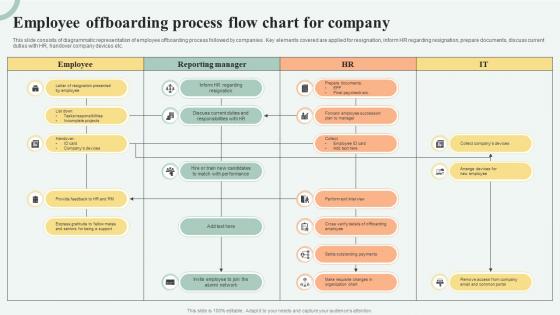
This slide consists of diagrammatic representation of employee offboarding process followed by companies . Key elements covered are applied for resignation, inform HR regarding resignation, prepare documents, discuss current duties with HR, handover company devices etc.
People who downloaded this PowerPoint presentation also viewed the following :
Employee Offboarding Process Flow Chart For Company with all 6 slides:
Use our Employee Offboarding Process Flow Chart For Company to effectively help you save your valuable time. They are readymade to fit into any presentation structure.





FAQs for Employee Offboarding Process Flow
Honestly, start your checklist like a week early or you'll be scrambling. Do an exit interview to get their honest feedback. Make sure they hand over all company stuff - laptop, badge, whatever. Knowledge transfer is huge - have them document everything or train whoever's taking over their work. I learned this the hard way when someone quit and took all their project knowledge with them, total nightmare. Revoke their system access on day one, update org charts and email lists. Final paperwork stuff like benefits and NDAs. Don't forget to loop in clients if they worked with them directly.
Have departing people write down their key stuff - processes, projects, contacts. But don't stop there. Schedule actual sit-down sessions where they walk through everything with whoever's taking over. Written docs are fine, but they miss so much context. I learned this the hard way when Sarah left and we couldn't figure out how she handled that vendor relationship for weeks. Set up some kind of shared wiki or folder where important info lives permanently. Oh, and make this whole thing part of your regular offboarding process so you're not scrambling last minute every time someone quits.
Yeah, talk to them constantly throughout the whole thing. People get weird when they don't know what's happening next or when their last day actually is. I've watched exits turn messy because someone's manager just ghosted them for like a week - super awkward. Check in with them regularly, ask how they're doing with everything. Map out their final days so there's no confusion. Honestly, you want them walking out the door still thinking you're decent people, not writing angry reviews about how poorly you handled their departure. It's worth the extra effort.
Honestly, when you handle departures well, your current team notices that you actually give a damn about people. Good handovers and real feedback sessions matter - even throwing a decent goodbye party shows you value relationships over just treating people like cogs. Here's the thing though: those departing employees become your biggest cheerleaders or worst critics in the industry. So you want them saying good things about you, right? Treat exits like transitions instead of just cutting people loose. Do proper knowledge transfer, celebrate what they brought to the table, and keep things open for down the road.
Honestly, don't rush it - that's where most people mess up. Cut their access RIGHT after you tell them, no waiting around. Security stuff isn't worth the risk. Make sure you get their laptop, badge, all that back before they leave. Knowledge transfer is huge too, especially if they're the only one who knows certain processes. Even if things are tense, try not to be a total ice queen about it. I learned that one the hard way. Oh, and do the exit interview same day while everything's fresh in their mind. Having a checklist saves your butt - trust me on this one.
Don't just ask generic questions - organize your exit interviews around specific stuff like how good their manager was, whether they understood their role, growth opportunities, that kind of thing. The open-ended questions work best: "What would've made you stay?" or "What should we stop doing?" People get weirdly honest once they're already gone, which is actually pretty helpful. Here's the thing though - you've got to track patterns across multiple interviews, not just random complaints. That's where you'll spot the real systemic problems. Then share those themes with leadership (anonymized obviously) and make actual action plans.
Final paychecks have crazy tight deadlines in most states, so figure that out first. Also grab all company stuff back - laptops, badges, whatever. COBRA paperwork is annoying but required. Most people can get unemployment unless you fired them for something serious (and documented it well). Non-competes and confidentiality stuff should get handled too. Reference policies always seem to confuse managers for some reason. Honestly? Just make a checklist with your lawyer beforehand. Way better than trying to remember everything while someone's packing up their desk.
Honestly, automation is your best friend here. Set up your HRIS to automatically cut access to everything - email, software, all company accounts - the second someone gets terminated. Digital checklists are clutch so you don't forget laptops, file transfers, exit interviews, all that stuff. Most platforms let people sign paperwork remotely now too, which saves everyone from those super awkward "come back to the office one last time" moments. Everything gets tracked automatically which is nice. Oh, and definitely connect your HR system with IT security first - that's where you'll save the most time.
Honestly, good offboarding is like free marketing that most companies totally mess up. Your former employees become walking advertisements - they'll either trash you online or actually refer good people back. I've watched places completely bomb this and get roasted in Glassdoor reviews. The smart move? Make their exit feel as polished as day one. Do proper knowledge transfers, real exit interviews, not just paperwork dumps. Document everything so managers can't wing it. When people leave feeling respected instead of bitter, they'll defend you in their networks later. It's such an easy win that everyone ignores.
Honestly, the biggest pain is just the logistics. Remote people need way more planning - you can't just swing by their desk, you know? Schedule actual video calls for knowledge transfer instead of those quick hallway handoffs. Ship them prepaid labels early because hunting down company stuff from their home office takes forever. In-person exits are so much simpler - grab the laptop, do the walkthrough, done. Same digital stuff applies to both though - revoke access, exit interview, all that. Just give yourself extra buffer time for remote workers since shipping delays can leave you hanging with security issues.
Hey! So for tracking offboarding success, start with exit survey rates and how satisfied people actually are when they leave. Time matters too - nobody wants to be stuck doing paperwork for weeks after they've mentally checked out. Knowledge transfer is critical (did the important stuff actually get passed on?). Equipment returns and IT shutdowns are boring but necessary for security. Here's what's really smart though: track how many people come back later or refer candidates. That's honestly the best sign you're doing things right. Oh, and measure how fast you can deactivate accounts - IT breaches are a nightmare.
Honestly, just ask them what they need most - you'd be shocked how much a small thing can help. LinkedIn recommendations are huge. Share job postings if you see good ones. Let them duck out for interviews if you can swing it. I've watched some managers really go above and beyond with references and networking intros, makes all the difference. Oh and some places do resume help or career services too, though not sure how common that is. Point is, don't just go through the motions - actually mean it when you're trying to help them land somewhere good.
Help them with career stuff - resume reviews, LinkedIn recs, job search tips. Shows you actually give a damn about what happens next. COBRA info is huge too, nobody wants to figure out healthcare coverage alone. Break down their final pay, unused vacation days, retirement transfers - all that boring but important stuff. Exit interviews are worth doing (you'd be surprised what people will tell you). Oh and keep an alumni network going if you can. Boomerang hires happen more than you'd think. Give them HR contact info because they'll definitely have random questions later.
Honestly, offboarding is huge for keeping your data safe when people quit or get fired. Cut off ALL their access the second they're out - email, cloud stuff, keycards, VPN, everything. Can't tell you how many companies get burned because they forgot about some random account. We had this whole mess at my last job because someone still had Slack access for like 3 weeks after leaving. Doesn't matter if they left on good terms either. Create a checklist that hits every system and actually use it. Former employees with lingering access are basically walking security disasters waiting to happen.
First thing - get them solid on the legal stuff because that's where companies get sued. Wrongful termination laws, final pay rules, COBRA notices. Then cover the practical bits: exit interviews, knowledge transfer, and revoking system access (honestly, IT security is huge and people forget). Communication training matters too - how to talk to the person leaving and their teammates without tanking morale. I'd have them watch someone experienced handle a few offboardings first. Way better than throwing them in blind and hoping for the best.
-
The way SlideTeam professionals work is exceptional. Thanks for being so helpful!
-
Definitely recommend SlideTeam to all who need help with PowerPoint presentations. Their design team can create anything you need.