


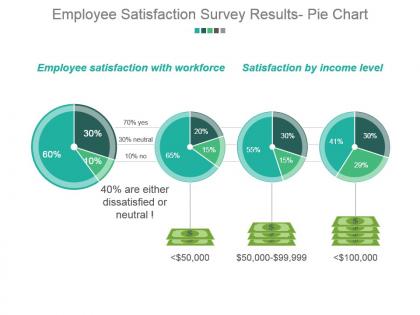
Employee satisfaction survey results pie chart powerpoint presentation examples




Try Before you Buy Download Free Sample Product
 Impress Your
 Audience
 100%
100% Editable
 Save Hours
 of Time


Benefit from a greater ease of functioning with our Employee Satisfaction Survey Results Pie Chart Powerpoint Presentation Examples. Experience the convenience it ensures.
People who downloaded this PowerPoint presentation also viewed the following :
Employee satisfaction survey results pie chart powerpoint presentation examples with all 5 slides:
Our Employee Satisfaction Survey Results Pie Chart Powerpoint Presentation Examples don't allow any differentiation to emerge. It helps display fairness for all.

FAQs for Employee satisfaction survey results pie chart
So work-life balance totally won in our survey results. Recognition and career growth opportunities were right behind it. The manager thing is actually crazy - like, having a decent boss apparently makes or breaks everything else. Compensation came in fourth, which honestly shocked a few people. Flexible schedules and actually getting heard when decisions happen also mattered a lot. My advice? Start with giving your team more schedule flexibility and do regular check-ins where you can give them props for good work. Those two things alone will probably make a huge difference.
Sales and Marketing crushed it with scores in the 80s. IT and Operations though? Yikes - mid-60s. HR landed around 72, which isn't terrible. Engineering was weird - they absolutely hated their work-life balance but loved their actual projects and teammates. Go figure. Workload management seems to be the big issue, plus leadership support in those lower departments. Honestly, I'd focus on reading through the specific feedback from IT and Operations first. That's where you'll find the real problems.
So the survey showed three big issues: work-life balance, career growth, and leadership communication. People are burnt out - that was the top complaint by far. Second thing? Everyone wants clearer advancement paths and more training opportunities. Leadership communication problems came up too, which honestly makes sense given how chaotic everything's been. But here's the thing - these are all fixable problems if management actually commits to doing something about it instead of just talking. You just need them to open their wallets a bit.
So the satisfaction scores went up 12% from last year, which honestly surprised me given how crazy things have been. Work-life balance and professional development saw the biggest jumps - people are actually feeling better about growth opportunities. Communication and leadership? Pretty much flat, so clearly we're not nailing that yet. Compensation and office resources dipped a bit, though nothing too alarming. The department breakdowns are where it gets interesting - some teams crushed it while others... didn't. Should I forward you the full report?
Honestly, having a manager who actually gives a damn makes such a huge difference. Our survey data backs this up too - teams with engaged managers report 40% higher satisfaction. Think about it: would you rather have someone who checks in regularly and cares about your growth, or that person who vanishes until review season? We've all had *that* manager, right? Even tiny things help - like regular one-on-ones or just asking "what do you need from me?" Those small gestures seriously move the needle on how people feel about their jobs.
So remote workers were 7% happier overall than office people. Work-life balance was the big winner - remote folks scored 15% higher there, plus they felt way more autonomous (12% bump). Office workers did better on collaboration and mentorship stuff, which honestly makes total sense since they're actually face-to-face with people. Remote employees also crushed it on flexibility and stress levels. If you're trying to keep people around, maybe give office workers more flex time while figuring out how to make remote people feel less isolated from their teams.
Oof, the work-life balance feedback was all over the place. Most people (like 60%) are really struggling - long hours, can't switch off after work, you know the drill. Remote folks seem way happier though, which honestly makes sense. Office people are basically drowning. Flexible start times came up in almost every response, plus everyone wants actual boundaries around those late-night emails. Parents are stressed about school breaks too - they need way more support there. The flexible hours thing should probably be our first move since literally everyone mentioned it. At least most of the suggestions aren't impossible to implement!
Just saw our survey results come back - overall comm satisfaction is sitting at 6.2/10, which honestly isn't great. Email chains are driving everyone crazy because stuff gets buried and people feel out of the loop. Slack does better, but our town halls are bombing hard (who even likes those anyway?). If you need to get something important across to your team, hit multiple channels. Skip the fancy formal announcements though - people respond way better when you just talk to them directly.
So I looked at the data and honestly? Culture is crushing everything else right now. 78% of people tied their job satisfaction directly to how they feel about working here. It's wild - work-life balance barely registered compared to whether people feel heard in meetings and trusted to do their thing. The whole sense of belonging and connecting to our mission is what's actually keeping folks around. Skip the fancy perks for now. Your retention money is way better spent on culture stuff - that's where people really care.
Yeah, we just pulled our survey data and there's definitely a connection there. Happy teams are crushing it with 15-20% better numbers across the board. Customer service and sales show it most - when people actually want to be there, you can tell. Performance feeds back into satisfaction too though, which makes sense if you think about it. Honestly, nobody wants to feel like they suck at their job. I'd probably check both metrics together if I were you - catches problems before they get ugly.
Honestly, the biggest thing that jumped out was how unhappy our long-term people are - anyone who's been here 5+ years had way lower satisfaction scores. That 35-45 age group is struggling the most, which kinda makes sense given everything they're juggling at that life stage. Younger employees actually like their work-life balance but keep asking about career advancement. Remote vs office workers? Pretty similar scores, weirdly. I'd start focusing on keeping those mid-career veterans happy since they're probably already updating their LinkedIn profiles.
Oof, the training scores were rough - 2.8 out of 5. Can't say I'm shocked though, considering how tight the L&D budget's been. 65% of people are begging for more skills training. Almost half don't see any clear path to move up here. The complaints? Outdated materials and managers who have zero clue how to develop anyone. Honestly, if you want people to stick around, this is your gold mine right here. Everyone's hungry to grow but they're just not getting fed, you know? Fix this and you'll probably solve half your retention problems.
So they're finally doing something about those survey results - three main areas they're tackling. First up is salary benchmarking in Q1, then flexible work stuff by spring. Career development's getting mentorship programs and better promotion tracks too. Honestly took them long enough after all those "we're looking into it" emails we've gotten over the years. Oh, and you'll get details next week about timelines and how to give feedback. Actually worth reading that one since they want volunteers for input groups. Might be our chance to push for real changes this time.
So benefits and pay are huge - they're driving like 35% of the satisfaction scores. People with decent benefits packages scored 2.3 points higher, which honestly makes sense given how much everyone complains about health coverage. The salary thing is even crazier though. There's a 0.68 correlation between pay satisfaction and overall happiness at work. I'd definitely bring this to leadership since fixing compensation stuff will probably give you the most impact for your effort. Way more than those team building exercises they keep suggesting.
Honestly, those comments are a goldmine if you know what to look for. Start grouping similar complaints together - when three different people complain about communication, that's not a coincidence. The suggestions part is where people literally spell out what they want changed, which makes your job way easier. I'd throw it all in a basic spreadsheet (yeah, boring but works) and track the themes. Skip the random one-off gripes and focus on what keeps popping up across teams. Then just grab the top few issues and pitch some fixes to leadership. You'll look like you actually listen to employees, which... apparently isn't that common these days.
-
Attractive design and informative presentation.
-
Best way of representation of the topic.