


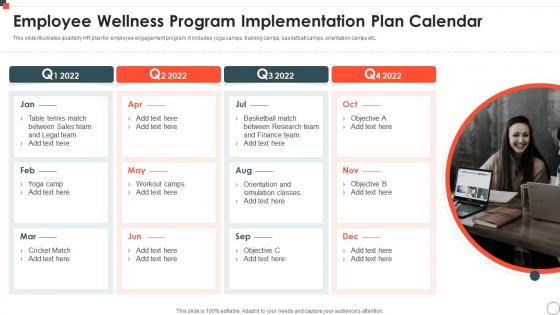
Employee Wellness Program Implementation Plan Calendar




Try Before you Buy Download Free Sample Product
 Impress Your
 Audience
 100%
100% Editable
 Save Hours
 of Time


This slide illustrates quarterly HR plan for employee engagement program. It includes yoga camps, training camps, basketball camps, orientation camps etc.
People who downloaded this PowerPoint presentation also viewed the following :
Employee Wellness Program Implementation Plan Calendar with all 6 slides:
Use our Employee Wellness Program Implementation Plan Calendar to effectively help you save your valuable time. They are readymade to fit into any presentation structure.





FAQs for Employee Wellness Program
Okay so you'll want four main things: physical stuff like gym memberships and health screenings, mental health support (which honestly most companies suck at), financial wellness education, and work-life balance policies. Leadership has to actually care though, not just pretend to. Track participation too or you're basically throwing money into the void. Oh and here's the thing - survey your people first about what they actually need. I've seen so many companies just guess and wonder why nobody uses their fancy meditation app when everyone's stressed about childcare costs.
Honestly, mix hard numbers with what people actually tell you. Track stuff like healthcare costs, sick days, turnover - the usual suspects. But here's the thing - spreadsheets don't show everything. Survey your team regularly about whether they're using the programs and if they actually like them. I'd focus on maybe 3-4 metrics that really matter to you instead of going crazy trying to measure every little thing (been there, it's overwhelming). Business impact matters, sure, but so does whether employees are happy with what you're offering. Start small and build from there.
Look, mental health has to be part of your wellness program - there's no separating it from physical health anymore. Work's gotten pretty brutal lately, and when people are stressed or burned out, everything suffers. Productivity tanks, sick days pile up, people quit. You'll want counseling services and stress workshops, sure, but honestly? The biggest thing is just making it normal to talk about this stuff without everyone getting weird about it. Oh, and actually ask your team what they need first - I see so many companies just throwing random benefits at people.
Start with something basic like step tracking apps - people get surprisingly competitive about their daily counts. Fitness wearables are solid too for monitoring heart rate and sleep patterns. Some companies do virtual workout classes which actually work pretty well if your team's into that. Mental health check-ins through apps can be helpful, though honestly you don't want to overwhelm everyone with too many platforms at once. Maybe try gamifying it with points or leaderboards? I'd say pick one or two things that match what your people actually want to use, then expand from there.
Walking meetings are honestly a game changer - way better than sitting in another conference room. I'd also try step challenges since they get competitive but anyone can join. Standing desks help too. Oh, and those ping pong tables everyone buys? Total waste - I've seen them just sit there while walking groups actually take off. Lunch fitness classes work if people are into it. Ergonomic stuff is smart because everyone's dealing with back pain anyway. But honestly? Just ask your team what they'd actually do first. You'll save yourself from buying equipment nobody uses.
Yeah, wellness programs totally work for keeping people around. Most companies see retention jump like 10-15% when they actually invest in this stuff. Mental health support and flexible wellness time seem to hit different than just throwing a gym membership at everyone, you know? The trick is figuring out what your people actually want first - maybe send out a quick survey or something. I mean, there's no point offering meditation apps if everyone's stressed about childcare. But when you nail it, employees definitely feel more valued and stick around longer. Honestly worth the investment.
Honestly, survey your people first - you'll probably be shocked at what they actually want versus what you think they do. Make it super easy to join by offering different time slots and virtual options. Remote workers always get forgotten about this stuff. Throw in some decent incentives like gift cards or extra PTO because who doesn't want free things, right? Get your managers to actually participate instead of just sending emails about it. Team challenges work great too since people get weirdly competitive. The whole point is removing whatever's stopping them from showing up and making it feel social rather than like another work thing.
Honestly, just ask your people what they actually want first. Don't assume everyone's dying for that company gym membership - some folks need childcare help, others want mental health resources or financial planning stuff. I've watched companies totally bomb when they only do fitness perks. Mixed bag approach works way better. Think about it - you've got different ages, cultures, life situations all wanting different things. Set up like a benefits menu where people pick what fits their life, then see what gets used. Way more effective than guessing what'll make everyone happy.
Honestly, getting people to actually participate is the worst part - everyone's swamped and thinks it's just corporate BS. Budget's always tight too, especially if you want anything beyond crappy gym membership discounts. Executives will bug you constantly about ROI metrics (ugh), and proving wellness programs actually work is harder than it sounds. Oh, and people get weird about sharing health data, which I totally get. Start small though - pick like two things people actually want, not what you think they need. Getting your boss to visibly join helps tons. But seriously, just ask your team what they'd use instead of guessing.
Honestly, forget the mission statement stuff and look at how people actually work day-to-day. Is everyone super collaborative or do they prefer doing their own thing? Are people competitive or more chill and supportive? Once you figure that out, build wellness around it. Don't force 7am yoga on a flexible workplace - I've seen that bomb spectacularly. Wellness stipends work way better for that crowd anyway. Survey what people actually want first. My buddy's company went all-in on meditation apps when everyone just wanted mental health days. Start small with pilots and see what sticks. The whole thing should feel natural, not like some HR initiative nobody asked for.
Dude, leadership buy-in is everything for wellness programs. Seriously. When execs actually show up and participate, you'll see participation rates shoot up 20-40%. But if they're skipping the wellness fair while expecting everyone else to attend? Total credibility killer. Employees aren't dumb - they notice that stuff. Your leaders basically set the vibe for whether wellness actually matters or it's just another corporate thing to check off. So before launching anything, get them genuinely involved first. Have them share their own wellness goals, participate in events, and actually talk about why it matters.
Start with lunch-and-learns - bring in actual dietitians to cover stuff people need, like reading labels and meal prep. Partner with local nutritionists for workshops on real issues your team faces. Energy crashes, healthy snacking, eating well on a budget. Skip the boring "eat your veggies" talks though. Try cooking demos instead, or recipe contests. Some companies even do subsidized meal delivery when things get crazy busy (honestly wish my old job did that). Put together a resource hub with practical stuff - grocery lists, quick meal ideas. The whole thing only works if it actually helps with what your people are dealing with day-to-day.
Honestly, I've seen some cool stuff work really well. Sleep challenges are huge right now, and walking meetings - people go crazy for those because everyone's stuck inside all day. Mental health stipends are smart too. Try tying wellness challenges to extra PTO days, that'll get attention fast. Some places bring in massage therapists once a month or do fitness classes at lunch. Oh, and those mindfulness apps with team competitions? Surprisingly competitive lol. Don't go overboard though. Pick like two things your team would actually do, see what happens, then build from there. Track real results, not just who shows up.
So basically, wellness programs have to follow HIPAA and ADA rules - can't force anyone to participate or discriminate against health conditions. Health screenings? Totally voluntary with proper consent. Keep that data locked down. Incentives are tricky though - gift cards are fine, but don't make them so big they feel like bribes. Oh, and genetic info is completely off-limits thanks to GINA laws. Honestly, the whole thing's a legal minefield. Just make everything optional, guard people's privacy like your life depends on it, and document everything so you're covered later.
Dude, you absolutely need employee feedback - it's like your roadmap for wellness programs. Companies waste so much money on stuff nobody wants. I've watched places blow budgets on gym memberships when their team was actually burning out and needed mental health resources or flexibility instead. Quick surveys work great. Focus groups too, or just casual conversations. The trick is actually doing something with what you learn - don't just collect responses and ignore them. Honestly, start with a simple pulse survey asking what wellness perks would actually help them day-to-day. You'll be surprised what comes back.
-
Professional and unique presentations.
-
The website is jam-packed with fantastic and creative templates for a variety of business concepts. They are easy to use and customize.