


Entrepreneurship business planning powerpoint guide




Try Before you Buy Download Free Sample Product
 Impress Your
 Audience
 100%
100% Editable
 Save Hours
 of Time


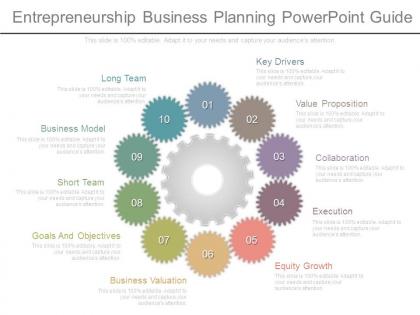
As an entrepreneur, if you want to take your business to the next top level then download our entrepreneurs business planning PowerPoint template design. The entrepreneur PPT template has been crafted by our efficient designing team to meet the industry requirements. To accomplish what you have desire as an organization can only be achieved if you have extended your product reach. You may not be able to complete the targets that have been set until you reach the target consumer. Our entrepreneurship business planning presentation slide diagram shows the different ten phases are such as key drivers, value proposition, collaboration, execution, equity growth, business, valuation, goals and objectives, short team. Setting short term goals assist you to analyze the market trend and then implement strategies that you have worked upon. Our businessmen PowerPoint template slide gives you the perfect way to share these important aspects with your audience. So, simply click and download this entrepreneurship business planning PowerPoint template slide.Pump up the volume with our Entrepreneurship Business Planning Powerpoint Guide. Hit the high notes with your ideas.
People who downloaded this PowerPoint presentation also viewed the following :
Entrepreneurship business planning powerpoint guide with all 7 slides:
Faith germinates with our Entrepreneurship Business Planning Powerpoint Guide. Client belief will begin to flourish.
FAQs for Entrepreneurship business
Dude, resilience is probably the biggest one - you're gonna fail a bunch and need to get back up. Vision matters too because you have to spot stuff other people don't see, then actually convince them you're not crazy. Being obsessive honestly helps more than people admit. Those 3am "what if we tried this instead" moments? That's when the magic happens. You need some risk tolerance but don't be stupid about it - calculate what could go wrong first. Adaptability and problem-solving are huge since your original plan will probably suck. Oh, and start working on that thick skin now because everyone's gonna have opinions about your idea.
Dude, talk to actual customers first before you build anything. Seriously, this is where most people screw up - they think their idea is amazing but never check if anyone actually wants it. Do some interviews, throw up a basic landing page to test interest. My old roommate wasted like 6 months building this "revolutionary" app that literally no one needed. Fall in love with the problem you're solving, not your specific solution, because that'll change anyway. Once you know people actually want what you're making, then start building. Trust me on this one.
Dude, you HAVE to do market research before jumping in. Too many people skip this and end up building stuff nobody wants - it's painful to watch. Talk to actual potential customers, don't just send surveys into the void. Google your competitors, see what they're charging, figure out who really needs your product. The informal conversations are honestly more valuable than expensive research tools anyway. You're basically doing a reality check so you don't waste months (and money) on something that won't sell. Start simple with basic searches and competitor stalking, then have real conversations with people.
Networking beats cold outreach every single time - it's honestly not even close. Start with industry events or online communities where your customers actually hang out. I used to think meetups were kinda lame, but they're goldmines if you pick the right ones. The key is helping people first before you ask for anything. Sounds obvious, but most people get this backwards. Your network becomes your referral engine - they'll send customers, connect you with investors, maybe even join your team. Just commit to one event this month and see what happens.
So there's a few ways to go about this. Bootstrapping with your own cash is obviously the starting point. Then friends and family rounds, angel investors, VC money, crowdfunding like Kickstarter. Small business loans and grants are actually pretty solid options too - people sleep on those. Each one means giving up different amounts of control depending on where you're at. Honestly, I'd start with whatever you can scrape together yourself or get from people who already trust you. Once you've got some real numbers to show, that's when the bigger investors start caring.
Your brand identity is seriously a game-changer - helps you stand out and builds trust super fast. When customers connect with your brand, they'll pick you over competitors even if you're pricier. Marketing becomes way easier too since you've got a clear voice and style. Oh, and investors eat this stuff up because it shows you get your market position. My advice? Nail down your core values and visuals early. I know it feels like extra work when you're just starting out, but trust me - it pays off huge when you start scaling up.
Honestly? Start with nailing customer service - reply fast and go the extra mile when stuff goes wrong. Build real relationships too, not just transactional stuff. Your content needs to actually fix their problems (I used to just make what I thought was cool... big mistake lol). Social media engagement helps, plus send personal follow-ups and ask what they need. Being genuine is huge - fake vibes kill everything. Oh, and here's something that worked for me: pick your most loyal customer and figure out exactly why they love you. Then do that same thing for everyone else.
Dude, you need five main things that actually matter: what problem you're solving, your solution, proof there's real market demand, financial numbers that aren't total BS, and how you'll actually get customers. Most business plans are honestly just fluff - I've read way too many that completely miss this stuff. Don't forget team bios and who you're competing against either. Investors want to know you can execute and what you're up against. Oh, and keep it short! Like 15-20 pages tops. Start with nailing your one-sentence pitch first, then everything else flows from there.
Just build an MVP first - enough cool stuff to test your main idea but don't go crazy with features yet. Test it with actual users before you dump money into fancy extras. Trust me, I've watched way too many startups blow their budget on shiny features that literally nobody cared about. Pick one problem and nail it. Then you can add more based on what people tell you. Set deadlines and budgets for the experimental vs. proven stuff. You want to stand out but also... actually launch something people will buy, you know?
First thing - pick your business structure (LLC, corp, whatever). Taxes and liability stuff depends on it. Your industry probably needs specific licenses too, because apparently the government regulates everything these days. If you're hiring people, employment law gets messy fast. Trademark protection might matter depending on what you're doing. Definitely get contracts sorted with customers and vendors. Liability insurance is pretty much a no-brainer. Honestly? Just pay for one consultation with a business lawyer upfront. Way cheaper than scrambling to fix things later when you're already in trouble.
Dude, first figure out what could actually screw you over - like if your cash dries up or your biggest client bails. I know it sounds boring but most people just ignore this stuff until it's too late. Once you've got that list, make backup plans. Don't rely on one client for everything (learned that the hard way). Emergency fund is clutch. Get decent insurance too. Oh, and build solid relationships with your suppliers - you'll need them when things get weird. Just do a quick risk check this week and fix your top three problems first.
Dude, starting a business now is wild compared to even 10 years ago. E-commerce platforms give you instant global reach, and you can test ideas super fast with basic online tools. Overhead costs? Way lower. I've seen people blow up just using Instagram and TikTok - no crazy ad spend needed. Remote work means you can hire talent anywhere from the start, which is honestly pretty cool. Don't go nuts trying every tool though. Pick what actually makes sense for your business. Oh, and validating concepts online before you build anything will save you so much headache later.
Honestly, I used to beat myself up over every failure until I realized that's just burning energy for nothing. Now when stuff goes sideways, I ask "what did this teach me?" instead of wallowing. Keep a little journal of lessons learned - seriously, you'll start noticing patterns after a while. Celebrate the small wins too because this entrepreneur thing is basically a never-ending rollercoaster. Find other business people who actually understand the chaos. Have backup plans ready so you're not completely screwed when things inevitably go wrong. Oh, and meditation or whatever helps you stay sane - that's not optional anymore.
Honestly, sole proprietorship is dead simple - you call all the shots and pocket everything, but if things go south, they're coming after your personal assets. Partnerships can be great though, especially when you're strapped for cash or need someone with skills you don't have. The downside? You're splitting profits and probably gonna butt heads on decisions at some point (trust me on this one). If you can swing it alone and aren't too risk-averse, stick with sole proprietorship. Need a partner? Just get everything in writing first - like, seriously everything.
Look, good entrepreneurs don't see failure as some personal attack - they treat it like useful data. When something tanks, they dig into what actually went wrong and use those lessons next time. It's basically like debugging, you know? You don't scrap everything, just fix what's broken and keep moving. The trick is failing small and fast so you can adjust quickly. They also don't take market rejection personally - it's just feedback. Honestly, ego kills more businesses than bad ideas do. Start keeping notes on what doesn't work. You'll start seeing patterns that give you an edge.
-
Commendable slides with attractive designs. Extremely pleased with the fact that they are easy to modify. Great work!
-
Use of different colors is good. It's simple and attractive.