


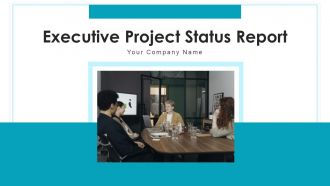
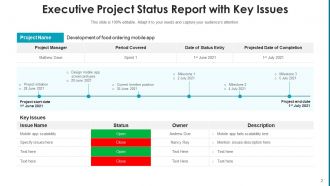
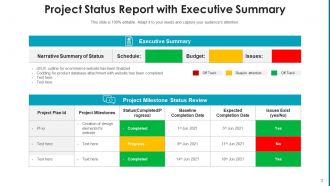
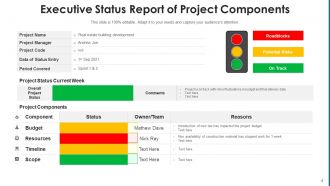
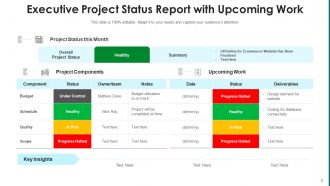
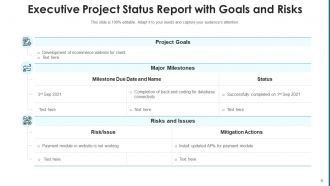
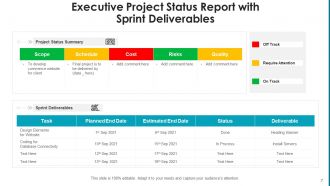
Executive project status report timeline resources milestones goals deliverables





Try Before you Buy Download Free Sample Product
 Impress Your
 Audience
 100%
100% Editable
 Save Hours
 of Time


Our Executive Project Status Report Timeline Resources Milestones Goals Deliverables are topically designed to provide an attractive backdrop to any subject. Use them to look like a presentation pro.
People who downloaded this PowerPoint presentation also viewed the following :
Executive project status report timeline resources milestones goals deliverables with all 12 slides:
Use our Executive Project Status Report Timeline Resources Milestones Goals Deliverables to effectively help you save your valuable time. They are readymade to fit into any presentation structure.
FAQs for Executive project status report timeline resources
So there's five main phases: initiation, planning, execution, monitoring, and closure. Basically your roadmap from idea to done. First you figure out what you're actually building and why anyone should care. Then comes planning - mapping timelines, resources, all that stuff. I know it sounds boring but trust me, skipping this part always bites you later. Execution's when your team actually does the work. Monitoring keeps everyone on track with check-ins and course corrections. Closure wraps everything up and captures what you learned. Don't skip phases though - they build on each other and prevent those awkward "wait what are we doing?" moments.
Honestly, good communication is like the secret sauce for any team - it stops people from working in their own little bubbles and keeps everyone on the same page about deadlines and who's handling what. You'll avoid so much wasted time when nobody's confused about their role. Those "oh crap, we're way behind" surprises? Yeah, regular check-ins help you spot problems before they blow up. Trust me, people need to feel safe asking dumb questions without judgment. Try starting with quick daily huddles or weekly syncs. Oh, and get some shared tool where everyone can actually see what's happening with the project in real time.
So there's three main ones: Agile, Waterfall, and Kanban. If your requirements keep changing (like most software projects honestly), Agile's your best bet. Waterfall works when you've got those step-by-step projects - construction, manufacturing, that kind of thing. You can't exactly un-pour concrete, right? Kanban's clutch for ongoing work since it shows you where stuff gets stuck. Most teams I know just mix and match whatever works. Quick question though - do you already know what the final thing should look like, or are you gonna figure it out along the way?
So I always start by figuring out the critical path - basically what's gonna screw you if it's late. Map out which tasks are blocking other stuff, then hit the high-impact urgent things first. That urgency vs importance matrix thing actually works pretty well, though sometimes you just gotta trust your gut about what feels risky. Oh and definitely think about whether you actually have the people/resources available. The tricky part is staying flexible when priorities shift (they always do) but not changing course every five minutes when someone panics.
Dude, stakeholder engagement is honestly what makes or breaks projects. First thing - map out everyone who has a say or gets impacted. Then actually ask what they need instead of guessing (I've learned this the hard way). Communication style matters too. Some people want detailed updates, others just need the highlights. Here's the thing though - you can't wait for problems to find you. Set up regular check-ins based on how much power they have and how invested they are. It sounds like extra work upfront, but trust me, it'll save you from those nightmare meetings later where everyone's blindsided.
Honestly, you gotta weave risk management into your timeline right from the start - don't just slap it on at the end. During those first planning meetings, figure out what could go wrong and assign someone to actually own each risk. Create real action plans for dealing with them. I've watched so many projects completely tank because risks were just rotting away in some forgotten spreadsheet. Build those risk check-ins into your regular milestone reviews so you're constantly updating things. The trick is making it feel natural - part of what your team already does. Nobody wants another boring meeting about theoretical problems, you know?
Honestly, just grab something that does the basics well - task management, timelines, team chat, resource planning. Asana's pretty good, so are Monday.com and Trello. Half the time people get stuck endlessly comparing features instead of just picking one and running with it. Gantt charts are useful if your projects are complex, plus you'll want file sharing and mobile access because let's be real, you're gonna need to check stuff on weekends. But here's the thing - whatever your team will actually open and use daily is automatically the "best" choice. So definitely loop them into the decision or you'll end up being the only one updating it.
Honestly, it's like playing jenga with deadlines and budgets. When stakeholders want more stuff, something else has to bend - either you're pushing back the launch or spending more money. There's really no way around it. What works for me is showing them a visual breakdown of what their "tiny addition" actually costs. Most people don't realize how these things snowball. Figure out early which piece can flex the most - timeline, budget, or features. Write everything down because scope creep is sneaky. The second someone suggests adding something, call it out right away. I always bring up that original scope triangle when these conversations start - keeps everyone grounded.
Honestly, mix hard numbers with the touchy-feely stuff. Budget variance and schedule tracking give you the facts, but don't skip stakeholder surveys - those reveal way more drama than you'd expect. Earned Value Management sounds intimidating but it's just fancy math to see if you're burning money for nothing. Your team will catch problems you totally miss, so do regular check-ins with them. Oh and scope creep - track that religiously or you'll be building a spaceship when they asked for a bicycle. Pick maybe 4 metrics max though. More than that and you'll spend all day making charts instead of actually managing anything.
Honestly? Team dynamics will absolutely make or break your project. Good collaboration speeds everything up, but toxic vibes create delays and crappy work. Address conflicts early through one-on-ones before they infect the whole team - I've watched too many projects crash because someone ignored personality clashes. Here's the thing: focus on work goals, not personal drama. Reframe disagreements around deliverables instead of who said what. Set communication rules upfront and don't hesitate to jump into those awkward conversations. That's basically your job - keeping everyone's eyes on the prize.
Honestly, agile is so much better for flexibility - you can actually pivot when things change instead of being stuck with some rigid plan. The feedback loops are way faster too since you're shipping working stuff every sprint. Catches problems early rather than finding out everything's broken at the end (learned that the hard way lol). Your stakeholders won't disappear either because they see real progress and can jump in with feedback. Better team collaboration overall. If there's any uncertainty in what you're building, definitely go agile for your next project.
Honestly, you're gonna need way more check-ins than you think - like, probably double what feels normal at first. Get everyone on Slack or Asana so you can actually see what's happening without playing email tag all day. Documentation becomes huge since nobody can just walk over and ask questions anymore. Oh, and set clear response time expectations, especially if people are in different time zones (learned that one the hard way). Most of your current processes can probably go digital, but figure out which ones truly need face-to-face first. Those random desk conversations? Gone. You'll miss them more than you expect.
Okay so basically a project charter is like your project's official permission slip - it authorizes everything and gives you actual authority to move forward. Include the project purpose, objectives, high-level scope, key stakeholders, success criteria, and rough budget/timeline estimates. Don't forget to name the project manager (you, hopefully!). It's honestly your go-to document for keeping everyone on the same page about what you're trying to do. I always think of it as the thing that saves you from those "wait, what are we doing again?" moments in meetings. Get stakeholders to sign off on it first though - super important.
Think of lessons learned as your "don't screw up again" cheat sheet. Document what bombed, what actually worked, and random curveballs that hit you during each phase. Yeah, it's tedious but honestly? It'll save your sanity later. Just throw everything into a spreadsheet or database your team can actually search through - none of that buried-in-email nonsense. Use it when you're planning new stuff. I always pull up similar old projects during kickoffs now. Sounds nerdy but it works.
Honestly, make retrospectives routine instead of waiting for things to blow up. After each sprint works well. The key thing I've learned? People won't be honest if they think they'll get blamed later - you've gotta make it safe to mess up. Let your team experiment with new stuff, even if it bombs sometimes. Actually write down what you learn and reference it in future projects (otherwise it's just therapy sessions, not improvement). Oh, and don't try to fix everything at once. Pick one thing per sprint and focus on that.
-
I discovered this website through a google search, the services matched my needs perfectly and the pricing was very reasonable. I was thrilled with the product and the customer service. I will definitely use their slides again for my presentations and recommend them to other colleagues.