


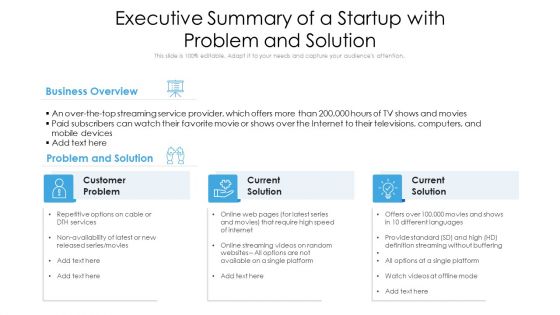
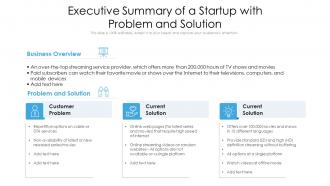
Executive summary of a startup with problem and solution





Try Before you Buy Download Free Sample Product
 Impress Your
 Audience
 100%
100% Editable
 Save Hours
 of Time


Our Executive Summary Of A Startup With Problem And Solution are topically designed to provide an attractive backdrop to any subject. Use them to look like a presentation pro.
People who downloaded this PowerPoint presentation also viewed the following :
Executive summary of a startup with problem and solution with all 2 slides:
Use our Executive Summary Of A Startup With Problem And Solution to effectively help you save your valuable time. They are readymade to fit into any presentation structure.
FAQs for Executive summary of a startup with
Honestly, start with your value prop - like, does this actually solve something people will pay money for? I know it sounds super basic but so many people skip that part and wonder why nobody cares. After that, your revenue model needs to make sense - you can't spend $100 to get a customer who only pays you $50, right? Then figure out how you'll actually get customers without burning all your cash. The team stuff matters too, but don't overthink the perfect org chart when you're still figuring out if anyone wants what you're building. Just nail that core problem first.
Honestly, market research is huge for startups. Do surveys, interviews, competitor analysis - whatever helps you figure out what customers actually want. Because let's be real, you're gonna be wrong about half your assumptions at first. This stuff guides your pricing, positioning, feature priorities, even whether you need to completely pivot. Oh and use multiple methods since they each show different angles. But here's what I'd do first - just talk to potential customers before building anything big. Seriously saved me tons of wasted dev time when I did that.
Look, innovation is what keeps your startup alive when bigger companies are trying to crush you. They've got the money and market share, but you can move fast and think different. Without it, you're basically just competing on price - which is a nightmare honestly. Every part of your business needs this mindset, from building your product to how you sell it. The trick is staying practical though. Don't innovate just to be flashy. Focus on stuff that actually fixes real problems for people. That's where the magic happens.
Honestly, dig into who's already buying from you first. What do they have in common? Their age, problems they're facing, how they found you - all that stuff matters. Build actual profiles based on what you're seeing, not what you think might work. Try small tests next - maybe run some Facebook ads to different groups or send targeted emails. I learned this the hard way, but being super specific beats trying to please everyone. Seriously, narrow it down. When something clicks and people actually respond, pour more energy into that exact approach. Way better than spreading yourself thin across everything.
So you've got a bunch of options depending on where you're at. Most people start by bootstrapping with their own cash or hitting up friends and family - honestly the least awkward route if you can swing it. Angel investors come next, they're usually cool with earlier stage stuff. VCs want more traction though, so don't expect them to fund just an idea. There's also crowdfunding like Kickstarter, plus boring stuff like small business loans and grants. Figure out how much you actually need first. That'll help you narrow down which route makes sense - no point pitching VCs for like $10k, you know?
Dude, regulatory stuff will absolutely wreck your timeline and budget if you're not careful. Different industries are nightmares - fintech and healthcare especially. You've got permits, licenses, compliance rules that change depending where you are and what you're doing. Honestly, I learned this the hard way with my last project. Don't make it an afterthought like most people do. Build that prep time into your schedule from the beginning. Yeah, hiring a regulatory consultant costs money upfront, but trust me - it's way less than rebuilding everything later or getting completely shut down.
First thing - figure out what you actually stand for and write it down. That's your compass for everything else. Keep your colors, fonts, logo consistent everywhere (seriously, don't use Comic Sans for your legal docs and Times New Roman for social media). Your voice matters too - are you the funny brand or the serious one? Pick a lane and stick with it. Honestly most startups way overthink this stuff. Just tell good stories and actually talk TO people on social, not at them. But here's the real deal: you've gotta follow through on what you promise. That's literally the only way people will trust you long-term.
Honestly, pick 2-3 platforms and crush them instead of being everywhere at once. LinkedIn's gold for B2B stuff, Instagram/TikTok if you're after younger people. Email marketing still slaps - way cheaper than ads and people actually read their emails (well, most do). Blog or podcast helps you look like you know what you're talking about in your industry. SEO's boring but pays off long-term for getting found on Google. Oh, and track everything obsessively. I learned this the hard way - you need data to see what's actually moving the needle versus what just feels productive.
Honestly, three things will make or break you as a founder. Leadership's huge - you're convincing people to join something that barely exists yet. Adaptability matters because your first plan? Yeah, that's getting scrapped within months lol. And sales skills are everything - pitching investors, recruiting people, landing customers. You're basically always selling. The technical stuff you can figure out later or just hire someone smarter than you. But these core skills? They're non-negotiable. Start working on them now, even in whatever job you have currently.
Culture's huge for startups - it literally shapes how your team talks, works together, and deals with problems. When people feel safe to mess up? They'll actually take risks and share wild ideas. Toxic vibes though... man, that's a startup killer. I've watched whole teams just fall apart because leadership ignored this stuff. It affects everything - who stays, how fast you make decisions, productivity levels. Oh and retention costs are brutal if you get it wrong. Start rewarding the right behaviors early. The conversations you allow to happen (or don't) set the whole vibe.
Honestly, just pick 3-5 metrics that actually tell you something useful. Revenue growth and customer acquisition cost are must-haves - they show if people want your thing and if growth is sustainable. For SaaS stuff, MRR and churn rate matter way more than vanity metrics like total signups (I used to obsess over those, big mistake). User engagement's key too. The golden rule? Customer lifetime value should be at least 3x your acquisition cost. Track weekly, not daily - you'll go crazy otherwise. Oh, and don't add more metrics just because you can measure them.
Look, most successful startups nail one thing nobody else can touch. Could be proprietary tech, killer partnerships, or - this is the big one - network effects where your product gets better as more users join. Facebook's the classic example there. More friends = way more useful. Data advantages work too, plus brand loyalty or making it a pain for customers to switch. I'd honestly focus on whichever moat feels most natural for your business rather than spreading yourself thin across everything. Go deep on that one thing you can actually defend long-term.
Honestly, remote teams can be amazing for startups - you get access to talent everywhere and save a ton on office costs. But the coordination stuff gets messy fast. Time zones are brutal, and building culture when everyone's scattered? Way harder than people think. Those random coffee conversations where the best ideas happen just don't exist on Slack. Plus everything takes longer to communicate since you can't just tap someone's shoulder. Oh and you'll end up documenting everything (which is actually good but feels like a pain at first). Just start with solid processes and communicate way more than feels normal.
Honestly, hire for attitude over perfect skills - startups pivot so much that adaptability beats exact experience every time. Your first 10 people literally become the company culture, so don't mess that up. I'd look for folks who've handled chaos well before, whether it's other startups, consulting gigs, or even passion projects on the side. Go for generalists first since everyone needs to wear like five hats anyway. You can get picky about specialized roles later once you actually know what those roles should be. Someone who thrives in the unknown is gold.
Dude, networking is seriously everything for startups. You'll stumble into customers, investors, and team members through connections way more than cold emails - that stuff barely works anyway. Other founders become your sanity check when you're stuck on impossible problems. We've all been there, hitting the exact same roadblocks. Those early relationships? They're usually what gets you that first big client or funding round. Oh, and here's the thing - help people out before you need anything from them. Sounds obvious but most people skip this step. People don't forget who actually made their life easier first.
-
Excellent template with unique design.
-
Visually stunning presentation, love the content.
-
Excellent work done on template design and graphics.
-
Great designs, really helpful.
-
Innovative and attractive designs.
-
Thanks for all your great templates they have saved me lots of time and accelerate my presentations. Great product, keep them up!
-
Topic best represented with attractive design.
-
Unique research projects to present in meeting.
-
Nice and innovative design.
-
Awesome use of colors and designs in product templates.
-
Page:
- You're currently reading page 1
- Page 2
-
