


Exit strategy planning for investors powerpoint presentation slides





Try Before you Buy Download Free Sample Product
 Impress Your
 Audience
 100%
100% Editable
 Save Hours
 of Time


The firm has no exit strategy at present. This product outlines the exit strategy for the startup firm to help its owners founders liquidate their stake in the business by stop investing more funds in it and start earning substantial profits if business is successful and limit losses, if business is unsuccessful. The Chief Strategy Officer will present it to top level management in an internal meeting. The current scenario of the firm is depicted through its overview, brief description about key people, milestones achieved, shareholding pattern, and firm financial performance is determined by revenues earned, profit generated, and earnings per share, etc. The firm has been through various stages to raise funds and is moving ahead towards its exit stage. It will assess the current funding pattern to raise capital over years, assessing optimal time for preferring suitable exit option, etc. Investors are searching for various exit options. They can choose from several exit strategies such as Initial public offerings, management buyout and strategic acquisition by third party, etc. This template will help firm to decide which exit option is suitable for it with their process, process timeline and their respective market insights with their success rate. It will also provide comparative analysis for various exit options with average time to exit, etc. The firm valuation is assessed through discounted cash flow model which will determine the present value of the firm depending upon the estimation of how much money it will generate in future. The future financial performance will be determined by the projected balance sheet, income statement, cashflow statement, sales projections, etc.
People who downloaded this PowerPoint presentation also viewed the following :
Content of this Powerpoint Presentation
Slide 1: This slide introduces Exit Strategy Planning for Investors. State your Company name and begin.
Slide 2: This slide depicts the Objectives. Outlining Exit Strategy for Startup
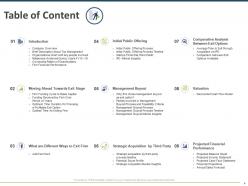
Slide 3: This slide displays Table of Content of the presentation.
Slide 4: This slide displays Table of Content.
Slide 5: This slide depicts Company Introduction.
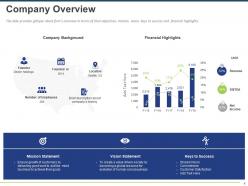
Slide 6: This slide depicts Company Overview. The slide provides glimpse about firm’s overview in terms of their objectives, mission, vision, keys to success and financial highlights.
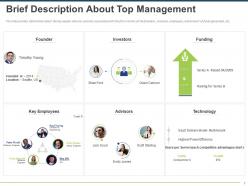
Slide 7: This slide shows Brief Description About Top Management
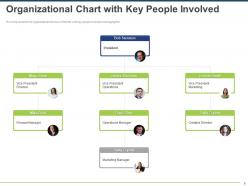
Slide 8: This slide showcases Organizational Chart with Key People Involved. This slide presents the organizational structure of the firm with key people involved in managing firm.
Slide 9: This slide showcases Milestones Achieved during Years FY15-19. The slide provides information about the key milestones firm has achieved in past few years.
Slide 10: This slide depicts Milestones Achieved during Years FY15-19. The slide provides information about the key milestones firm has achieved in past few years.
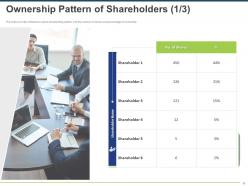
Slide 11: This slide showcases Ownership Pattern of Shareholders.
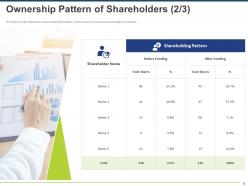
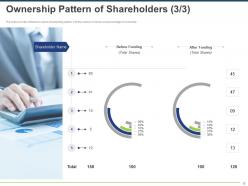
Slide 12: This slide depicts Ownership Pattern of Shareholders. The slide provides information about shareholding pattern with the number of shares and percentage of ownership.
Slide 13: This slide represents Ownership Pattern of Shareholders. The slide provides information about shareholding pattern with the number of shares and percentage of ownership.
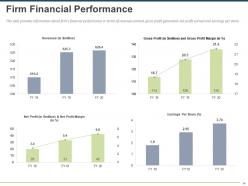
Slide 14: This slide showcases Firm Financial Performance.
Slide 15: This slide showcases Optimum time duration for choosing a profitable exit option.
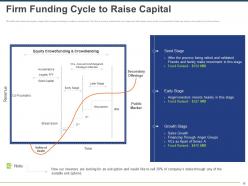
Slide 16: This slide depicts Firm Funding Cycle to Raise Capital. This slide tells about the various stages firm has gone through in order to raise funds. The firm is moving towards the exit stage and will require more funds so it essential to look out various exit options
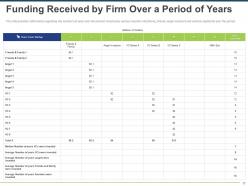
Slide 17: This slide shows Funding Received by Firm Over a Period of Years.
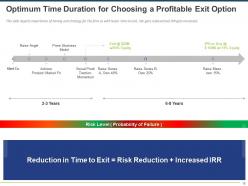
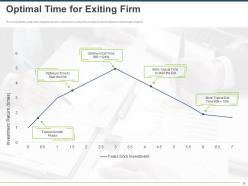
Slide 18: This slide depicts Optimum Time Duration for Choosing a Profitable Exit Option. This slide depicts importance of having exit strategy for the firm as with lesser time to exit, risk gets reduced and IRR gets increased.
Slide 19: This slide represents Optimal Time for Exiting Firm. This slide depicts what is the ideal time for the investors to exit the firm in order to secure optimum internal rate of return.
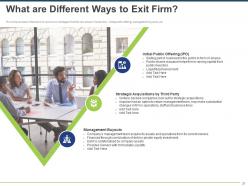
Slide 20: This slide shows What are Different Ways to Exit Firm ?
Slide 21: This slide showcases What are Different Ways to Exit Firm?. This slide provides information of various exit strategies that firm can adopt in future like – initial public offering, management buyouts, etc.
Slide 22: This slide depicts IPO Market Insights.
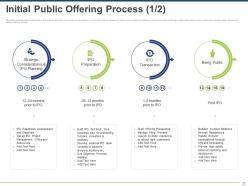
Slide 23: This slide shows Initial Public Offering Process.
Slide 24: This slide depicts Initial Public Offering Process. This slide provides information about IPO process that firm can use as an exit option. It is the first sale of company’s share to the public and listing of shares on stock exchange. It will allow firm to raise capital by creating newly issued and selling existing shares.
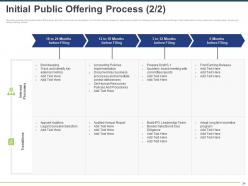
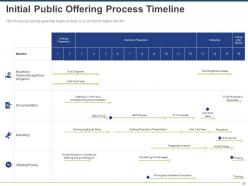
Slide 25: This slide showcases Initial Public Offering Process Timeline.
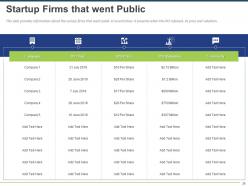
Slide 26: This slide depicts Startup Firms that went Public.This slide provides information about the various firms that went public in recent times. It presents when the IPO released, its price and valuation.
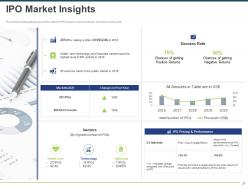
Slide 27: This slide depicts IPO Market Insights. This slide provides glimpse about the number of IPO raised in various sectors, and their success rate.
Slide 28: This slide shows Management Buyout Market Insights.
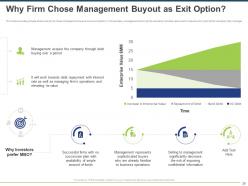
Slide 29: This slide shows Why Firm Chose Management Buyout as Exit Option?
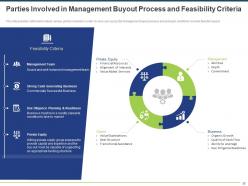
Slide 30: This slide showcases Parties Involved in Management Buyout Process and Feasibility Criteria.
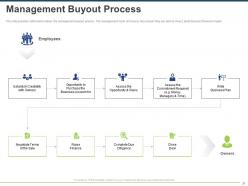
Slide 31: This slide showcases Management Buyout Process.
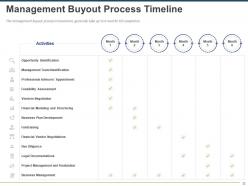
Slide 32: This slide depicts Management Buyout Process Timeline.
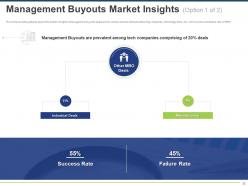
Slide 33: This slide showcases Management Buyouts Market Insights.
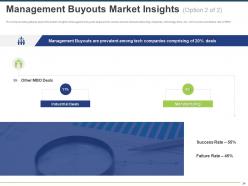
Slide 34: This slide presents Management Buyouts Market Insights.
Slide 35: This slide depicts Strategic Acquisition.
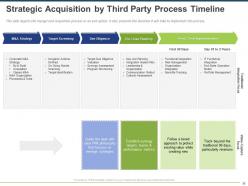
Slide 36: This slide showcases Strategic Acquisition by Third Party Process Timeline
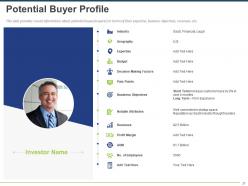
Slide 37: This slide showcases Potential Buyer Profile. This slide provides crucial information about potential buyer(acquirer) in terms of their expertise, business objectives, revenues. etc.
Slide 38: This slide showcases Strategic Acquisition by Third Party Market Insights. This slide provides glimpse about the number of strategic acquisitions completed in various sectors, and their success rate.
Slide 39: This slide showcases Comparative Analysis Between Exit Options.
Slide 40: This slide presents Average Time to Exit through Acquisition v/s IPO. This slide provides glimpse about average time firm’s investors take to exit through IPO as compared to acquisition.
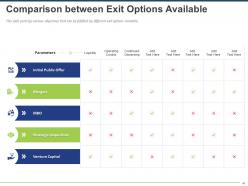
Slide 41: This slide showcases Comparison between Exit Options Available.
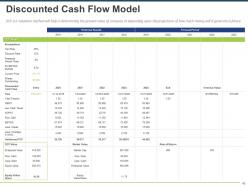
Slide 42: This slide showcases Discounted Cash Flow Model.
Slide 43: This slide showcases Discounted Cash Flow Model.
Slide 44: This slide depicts Financial Projections
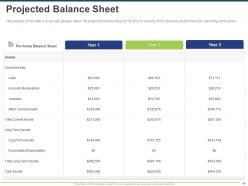
Slide 45: This slide depicts Projected Balance Sheet. The purpose of this slide is to provide glimpse about the projected balance sheet of the firm to visualize firm’s financial performance for upcoming three years.
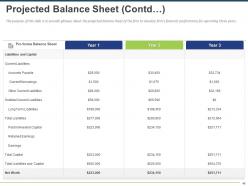
Slide 46: This slide is continued with Projected Balance Sheet.
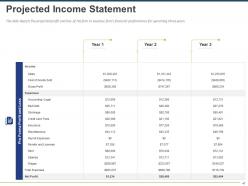
Slide 47: This slide showcases Projected Income Statement. The slide depicts the projected profit and loss of the firm to visualize firm’s financial performance for upcoming three years.
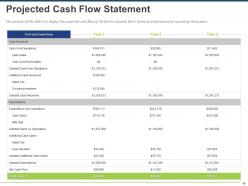
Slide 48: This slide shows Projected Cash Flow Statement.
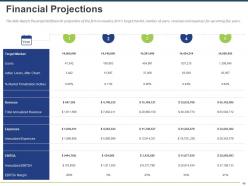
Slide 49: This slide displays Financial Projections.
Slide 50: This slide showcases Annual Sales Forecast. This slide portrays the annual sales projections of the firm.
Slide 51: This is Exit Strategy Planning for Investors Icons Slide.
Slide 52: This slide is titled as Additional Slides for moving forward.
Slide 53: This is Our Team with names and designations.
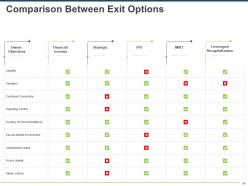
Slide 54: This slide showcases Comparison Between Exit Options.
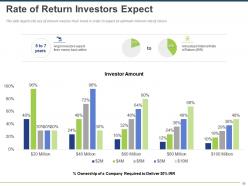
Slide 55: This slide showcases expected Rate of Return Investors. This slide depicts the size of amount investor must invest in order to expect an optimum internal rate of return.
Slide 56: This is 30 60 90 Days Plan slide.
Slide 57: This is Weekly Timeline slide with Task Name.
Slide 58: This slide displays Roadmap for Process Flow.
Slide 59: This is Our Mission slide with Vision, Mission and Goal.
Slide 60: This is About Us slide to showcase Company specifications.
Slide 61: This is Thank You slide with Contact number, Email address and Address.
Exit strategy planning for investors powerpoint presentation slides with all 60 slides:
Contend with the competition through our Exit Strategy Planning For Investors Powerpoint Presentation Slides. Establish your claim to being declared the best.




















FAQs for Exit strategy planning for investors
Look, you need three things sorted: timing, what it's actually worth, and who's gonna run it after you. Work backwards from when you want out. Get a real valuation - not the inflated number in your head lol. Figure out if it's family, employees, or selling to outsiders. Oh and start way earlier than you think. Most people wait until they're burned out to even think about this stuff. I'm talking 3-5 years minimum before you actually bounce. Don't forget all the legal paperwork either - that takes forever.
Your exit strategy basically dictates everything else you'll do. Going public? You're stuck building bulletproof processes and governance from the start - honestly such a pain but necessary for all that scrutiny later. Acquisitions are way more flexible since you can focus on what makes you attractive to buyers. IPOs need like 3-5 years of planning while M&A can pop up randomly. Here's what I'd do: pick your most likely path now, then work backwards from there. Don't try to hedge both - you'll just end up mediocre at everything.
Honestly, there's no perfect time but three things matter most. Market conditions in your industry - you want valuations high obviously. Your business needs to be killing it financially too. Personally though? You gotta be mentally ready to actually walk away, which is harder than people think. Oh and make sure the company can run without you being there every day. I'd say start planning like 2-3 years out because this stuff always drags on way longer than you expect. Don't rush it just because you're burned out - that's when you make bad decisions.
Look, your business valuation is basically the foundation for everything exit-related. Strong numbers? You can afford to wait longer or maybe go the IPO route. Weak valuation means you're probably better off finding a strategic buyer who sees value you don't. I can't tell you how many founders I know who got completely wrecked by having zero clue what their company was actually worth. The numbers also determine who you can realistically pitch to and how much you can push back in negotiations. Definitely get a pro valuation done way before you need it - gives you time to work on boosting that number.
Your potential buyers basically run the show when it comes to your exit. They set the valuation, timeline, all of it. So you've gotta figure out what different buyer types actually want - strategic buyers care about totally different stuff than PE firms, for example. If private equity groups in your space are obsessed with recurring revenue (and honestly, who isn't these days?), then you better start building that model early. I'd say start researching who's been making moves in your industry about 2-3 years before you want out. See what they're paying for and what boxes they typically want checked. Then just work backwards from there to position yourself right.
Look, you've gotta start talking to your team way earlier than you think - like 6 months out minimum. People hate being kept in the dark more than bad news itself, trust me on this. Regular meetings where you actually address their concerns instead of dancing around stuff. Everyone's gonna be freaked out anyway, so might as well be honest about it. Get super clear on who's doing what during the transition and what stays the same for each person. Oh, and document everything now - all your processes, client relationships, the works. You don't want critical knowledge disappearing when people start jumping ship.
Check your shareholder agreements and employment contracts first - those can really bite you if there are weird restrictions. Tax planning is massive, so figure out how to structure everything for the best capital gains treatment. Get your legal docs organized early because due diligence is honestly such a pain when everything's scattered. Also think about non-competes and whether you need regulatory approval (depends on your industry obviously). I'd start this whole mess at least a year out, maybe 18 months if you can swing it.
Honestly, timing is everything with exits - market trends can totally screw you over or make you rich. Hot sectors mean buyers throw money around like crazy (look at any AI company right now). Economic downturns? Good luck getting decent offers. Your buyers won't have cash or appetite for deals. Industry stuff matters just as much though - new regulations or tech disruptions can tank your valuation overnight. I learned this the hard way watching friends wait too long. Don't lock yourself into rigid timelines. Stay flexible so you can jump when the market's actually paying what you're worth.
Look, numbers alone won't sell your exit strategy - you need a story that connects emotionally. Show them the journey: where you started, what obstacles you crushed, and where this leads next. People fall asleep during financial presentations, but they remember good stories. Your exit should feel like the obvious next chapter, not just a cash grab. Honestly, I've seen deals fall apart because founders couldn't explain the "why" behind their timing. Paint the bigger picture - this is your vision coming full circle, the natural evolution of everything you built.
Dude, biggest mistake? Starting way too late - like, people literally wait until they're ready to sell before thinking about it. Also don't get all starry-eyed about what your company's worth or when things'll happen. Taxes will absolutely destroy you if you don't plan ahead (learned that one the hard way). Get your team and some good advisors involved early, not at the last second. Oh and always have a Plan B because honestly? Deals fall apart constantly. I've seen it happen to way too many people who put everything on one potential buyer.
Honestly, the timeline thing is huge - startups are basically planning their exit from day one, like 5-10 years max. Established companies? They might never exit, or it takes forever. For startups, the exit IS the point - getting bought out or going public. But bigger firms treat it more like strategic moves or passing things down. Also your options are pretty limited as a startup founder. You've got acquisition, IPO, maybe management buyout if things align perfectly. Established firms can do partial sales, spin stuff off, whatever. Oh and investors will definitely grill you about exit strategy, so have that ready.
Track revenue multiples, EBITDA margins, and cash flow consistency first - that's what drives most valuations. Debt-to-equity ratio is huge too. Buyers absolutely hate messy balance sheets (trust me on this one). Customer concentration and recurring revenue percentages matter, especially for SaaS stuff. Growth over the last 3-5 years? That's the story they want to see. Oh, and start tracking this quarterly now, not when you're ready to sell. I've seen deals fall apart because the historical data was a mess and nobody could figure out what was actually happening.
Oh totally, your exit strategy has to fit what actually matters in your space. Tech deals are all about IP and keeping key people around. Manufacturing? Asset values and making sure you're not breaking any regulations. Healthcare gets messy with licenses and patient data - honestly such a pain to navigate. Retail usually comes down to those lease agreements and what to do with inventory. Service companies though, it's really about the client book and existing contracts. I'd probably just figure out what drives value in your industry first, then work backwards from there.
Okay so think of due diligence like getting a colonoscopy for your business - buyers are gonna poke around everywhere looking for problems. Smart move is doing your own audit first so you can spot the messy stuff before they do. Financial records, contracts, compliance docs - get all that organized now because once offers start coming in, you won't have time to scramble around looking for paperwork. It's honestly like cleaning your house before putting it on the market, except way more stressful and expensive. The more prep work you do upfront, the stronger you'll look when negotiating. Trust me on this one.
Honestly, your network is everything when you're planning an exit. You need solid lawyers, accountants, investment bankers - people who actually get your industry. But here's the thing I didn't realize at first: your current business contacts might already include potential buyers. Like, that supplier you grab coffee with could know someone who's been hunting for exactly your type of company. Deals happen through random connections all the time. Map out who you know now and figure out where you're missing key relationships. Better to build those connections before you desperately need them, you know?
No Reviews