


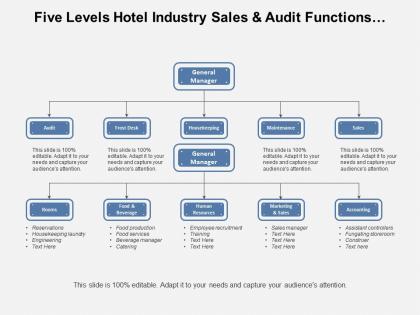
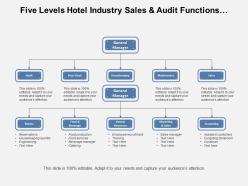
Five levels hotel industry sales and audit functions org chart




Try Before you Buy Download Free Sample Product
 Impress Your
 Audience
 100%
100% Editable
 Save Hours
 of Time


Get a fully functional modern Five Levels Hotel Industry Sales and Audit Functions Org Chart presentation template to represent hotel organization structure of Sales and Audit departments and its functions. The PPT template will make use of 5 levels of graphics of any organization chart. This is one of the phenomenal PPT diagram to represent the overview of sales and audit functions of hotel industry among a wide range of Organization structure PPT diagram as it has wonderful visuals. The PPT template has been designed by PowerPoint experts and will act an efficient tool to manage and showcase the sales and audit functions of hotel industry. The systematic positioning of pictures and text makes it as a specific demonstration for the sales and audit functions of Hotel Industry and organization chart. The understandable hierarchy Org chart in PPT template will help you to clearly define the functions, roles and responsibilities among the various team members. Download and craft this simple and creative Five Levels Hotel Industry Sales and Audit Functions Org Chart PPT template and go ahead to represent the organization chart in effective way. Folks get to experience the good in you due to our Five Levels Hotel Industry Sales And Audit Functions Org Chart. It ensures foes become friends.
People who downloaded this PowerPoint presentation also viewed the following :
Five levels hotel industry sales and audit functions org chart with all 5 slides:
Educate folks about jazz with our Five Levels Hotel Industry Sales And Audit Functions Org Chart. Inspire them to hear good bands.


FAQs for Five levels hotel industry sales and audit
So the big three are RevPAR, ADR, and occupancy rates - those are your bread and butter. Track lead conversion rates too, plus how long your sales cycles are running. Group booking pace versus last year is huge and honestly gets overlooked way too much. Revenue by market segment matters, and don't skip customer acquisition costs or lifetime value. Your sales team needs activity tracking - calls, proposals, the usual stuff. Oh, and always look at trends instead of just one-off numbers. Benchmarking against your competitors is key so you know if you're actually winning or just think you are.
So a sales audit basically shows you who's booking your hotel and how they spend. Demographics, when they stay, all that stuff. You'll see the gaps fast - like maybe you're dead on weekends because business travelers aren't there, or families skip your shoulder seasons completely. Here's where it gets good though: compare your numbers to what's actually happening in your market. If weddings are huge locally but you're only getting 15% of them? That's money sitting there. Honestly, just pick 2-3 segments you're totally missing and build campaigns around those.
Customer feedback is honestly your best reality check when you're doing a sales audit. Pull those guest reviews and survey responses - see if what you're promising actually matches what people experience. The disconnect can be brutal sometimes! Look for gaps between what your sales team says and what ops can deliver. I'd start by comparing recent complaints to your current sales scripts, that usually shows some obvious fixes. Oh and don't ignore the positive stuff either - it shows which strategies actually make guests happy. Sometimes you think something's working great but the feedback tells a totally different story.
Honestly, I'd do a full sales audit every quarter. Hotels change so fast that waiting longer puts you behind everyone else. Between those quarterly deep-dives, just do quick monthly check-ins on your main numbers - RevPAR trends and any big market changes. The quarterly ones should hit everything: rates, channels, group bookings, competitor analysis. Monthly reviews can stay simple though. Oh, and definitely audit whenever something major happens - like a new hotel opening up nearby or whatever. Block out time for your next quarterly review now. Way easier to stay ahead than scramble to catch up later.
Don't rush the documentation part - I know it's boring but you'll regret it later. Get your sales team involved from day one, seriously. Avoid cherry-picking only the good data because auditors aren't stupid. Your CRM and booking systems need to match up perfectly - learned that lesson the expensive way! Group bookings are tricky, so watch out for double-counting there. Same goes for attribution between channels, that stuff gets messy fast. Oh and have your commission calcs and rate parity records ready to go beforehand. Two weeks prep minimum, trust me.
Honestly, start with a good CRM - it'll track everything automatically so you're not constantly updating spreadsheets (which are the worst). Property management systems can sync directly with your revenue reports too. For contracts, go digital. Way easier to search through files when they're not buried in some cabinet. Real-time dashboards are pretty clutch for spotting issues before they blow up. The trick is getting all these tools to actually talk to each other - otherwise you're just creating more work. I'd map out what you're currently using first and see where you're doing stuff manually that could be automated.
Conversion rates are huge - that's literally how many leads become actual bookings. Track your average deal size and how long your sales cycle takes too. Pipeline velocity is honestly my favorite metric because it shows how fast deals actually move. Customer acquisition cost matters, plus you want to see your split between new vs repeat clients. Sales cycle length and revenue per person give you the bigger picture. Oh and don't ignore activity stuff like calls made - those predict what's coming next. Start there and you'll figure out what's actually working for you.
Just bake the revenue checks right into your regular sales audits instead of doing them separately. Check rate integrity and channel parity while you're already reviewing contracts and bookings anyway. Trust me, it feels like more work at first but then everything flows better. Watch that your negotiated rates actually match your revenue strategy - and don't let group bookings mess up your ADR forecasts. Oh, and set up those automated alerts for when rates go wonky. Monthly check-ins between sales and revenue teams will catch problems before they get ugly.
Dude, seasonal demand totally messes with your audit workload. Peak season hits and boom - you're drowning in transaction volumes, crazy group bookings, and constant rate changes. It's honestly brutal sometimes. Off-season's different though. You're digging into promotional pricing and making sure those quiet periods aren't hiding revenue leaks. Your sampling strategy has to shift too since high-value transactions need way more attention during busy times. Best advice? Map out your audit calendar around these cycles now. Trust me, you don't want to be caught off-guard when summer rolls around and booking activity triples overnight.
A sales audit basically shows you what's actually driving bookings vs. what you *think* is working. Most hotels are honestly just throwing money at marketing and hoping something sticks. You'll see which channels bring in quality leads, where people are bailing in your booking process, and what messaging actually converts different guest types. The seasonal patterns alone are worth it. Plus you get real conversion rates by source - so you can stop wasting budget on Instagram ads that look pretty but don't book rooms. Take that data and double down on what's actually making you money.
Make a simple template that covers the issue, what it affects, and what needs fixing. Always timestamp everything and note who was there - seriously, your boss will randomly ask about stuff from like 6 months ago. Screenshots and emails are your best friends for backing things up. Don't point fingers at people; just focus on what went wrong in the process. Oh, and set up one central place to track everything so you can see what's been fixed and what hasn't. Makes the next audit so much less painful.
Look, competitor analysis is what separates the successful hotels from the ones just guessing. Compare your pricing and occupancy rates against your comp set first - the results might surprise you. You'll spot exactly which amenities or packages are drawing guests away from you. Don't just focus on obvious competitors either; check out Airbnbs and other alternatives nearby too. Honestly, seeing everything laid out side by side is a total game-changer. Use what you find to tweak your positioning and discover opportunities you've been missing.
Look at your biggest money drains first - pricing and missed upsells are usually the culprits. Get your team retrained on consultative selling, especially room upgrades and extras. I bet your data shows tons of missed opportunities there. Check your rates against competitors too and fix those rate fences. Here's the thing though - don't go crazy trying to fix everything at once. That's a recipe for chaos. Pick 2-3 big wins and focus on those this quarter. Weekly revenue meetings will keep everyone honest about progress. Trust me, slow and steady beats the "let's overhaul everything" approach every time.
Honestly, a sales audit is like a reality check for your guest experience. It'll show you exactly where things are falling apart - maybe your follow-up game is weak, or you're completely missing what guests actually want during their stay. You might discover your team sucks at building real connections (which is huge for getting people back). The audit also catches missed upselling chances and tells you if you've been targeting totally the wrong crowd this whole time. Take whatever you find and use it to actually fix your guest journey. Then drill your team on the specific problems you uncovered.
Honestly, training is your best bet for tackling audit findings. First figure out if your team lacks knowledge or skills - sometimes it's both, which sucks but happens. Design training that hits the specific problems auditors found, like revenue procedures or contract compliance stuff. Don't make it a one-and-done thing though. I'd prioritize the scariest findings first, obviously. The trick is building it into your regular development plan so people actually retain what they learn. Short sessions work better than marathon training days, trust me on that one.
No Reviews