


Modèle Ppt de plate-forme de présentation de produits alimentaires




Try Before you Buy Download Free Sample Product
 Impress Your
 Audience
 100%
100% Editable
 Save Hours
 of Time


Cette plate-forme de présentation de produits alimentaires est une présentation permettant aux entreprises de présenter leur marque ou leur produit à des investisseurs ou à des partenaires commerciaux. Voici un Pitch Deck de produit alimentaire conçu de manière efficace qui peut aider à motiver la personne qui écoute et la convaincre d'accepter l'offre, d'investir dans le développement, de soutenir sa croissance. Les ponts de pitch d'ascenseur les plus efficaces ont entre 10 et 20 diapositives. Le pitch deck du produit alimentaire relève de ce plafond. Un pitch deck de produit est une collection de diapositives montrant le problème auquel votre produit répond, le marché pour celui-ci et les possibilités de revenus. Chacune de ses diapositives illustre quelques faits clés pour les expliquer de manière brève mais précise. Dans ce PPT, chaque fait montre précisément pourquoi le produit aura du succès et combien d'argent il peut rapporter. Ce pitch deck de produit est un outil utile pour visualiser la vision de l'entreprise. Cette présentation couvre également l'énoncé de mission, le public cible ou les stratégies de marketing, les offres de produits et services offerts, la répartition du budget marketing financier, un calendrier des progrès vers les objectifs et les jalons atteints tout au long de l'année. Accédez maintenant.
People who downloaded this PowerPoint presentation also viewed the following :
Contenu de cette présentation Powerpoint
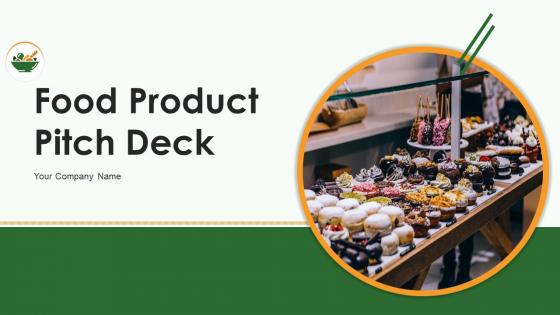
Diapositive 1 : Cette diapositive présente le Pitch Deck des produits alimentaires. Indiquez le nom de votre entreprise et commencez.
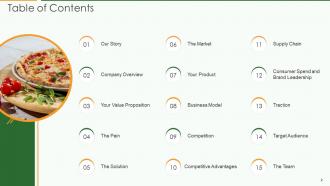
Diapositive 2 : Cette diapositive présente la table des matières de la présentation.
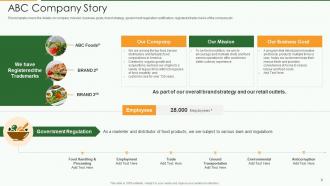
Diapositive 3 : Cette diapositive couvre les détails de la mission de l'entreprise, des objectifs commerciaux, de la stratégie de marque, etc.
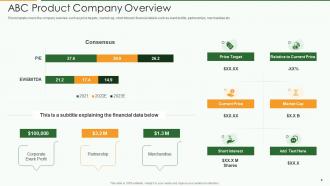
Diapositive 4 : Cette diapositive couvre la vue d'ensemble de l'entreprise, comme les objectifs de prix, la capitalisation boursière, etc.
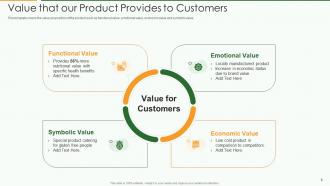
Diapositive 5 : Cette diapositive couvre la proposition de valeur du produit telle que la valeur fonctionnelle, etc.
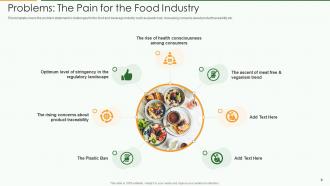
Diapositive 6 : Cette diapositive couvre l'énoncé du problème ou les défis pour l'industrie des aliments et des boissons.
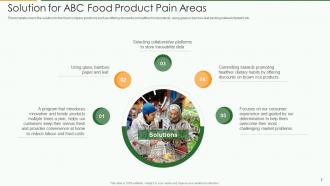
Diapositive 7 : Cette diapositive présente une solution aux problèmes de l'entreprise alimentaire tels que l'offre de rabais sur des produits alimentaires plus sains, etc.
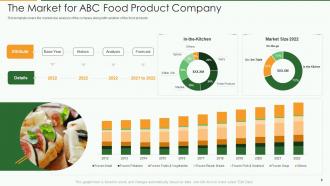
Diapositive 8 : Cette diapositive présente une analyse de la taille du marché de l'entreprise ainsi que la variation des produits alimentaires.
Diapositive 9 : Cette diapositive montre les détails et la description des produits alimentaires de l'entreprise.
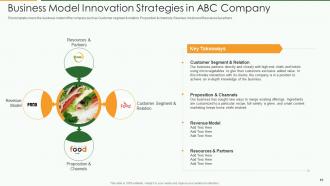
Diapositive 10 : Cette diapositive décrit le modèle commercial de l'entreprise, tel que le segment et la relation client, la proposition et les canaux, etc.
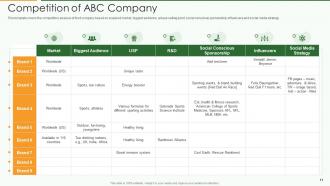
Diapositive 11 : Cette diapositive explique l'analyse des concurrents d'une entreprise alimentaire en fonction du marché acquis, de la plus grande audience, etc.
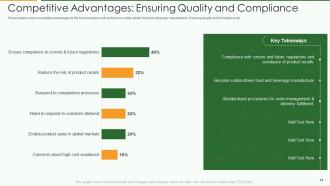
Diapositive 12 : Cette diapositive présente les avantages concurrentiels de l'entreprise alimentaire.
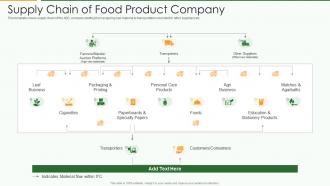
Diapositive 13 : Cette diapositive met en évidence la chaîne d'approvisionnement de la société ABC, de l'acquisition de la matière première au transport et au stent vers d'autres fournisseurs, etc.
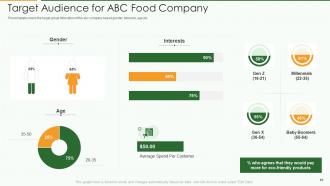
Diapositive 14 : Cette diapositive illustre la bifurcation du groupe cible de la société ABC en fonction du sexe, des intérêts, de l'âge, etc.
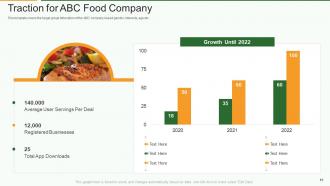
Diapositive 15 : Cette diapositive présente la traction pour l'entreprise alimentaire ABC.
Diapositive 16 : Cette diapositive montre la bifurcation des groupes cibles de la société abc en fonction du sexe, des intérêts, de l'âge, etc.
Diapositive 17 : Cette diapositive montre le nom, la désignation et la qualification de l'équipe de l'entreprise alimentaire,
Diapositive 18 : Cette diapositive affiche les icônes pour la plate-forme de présentation des produits alimentaires.
Diapositive 19 : Cette diapositive est intitulée Diapositives supplémentaires pour aller de l'avant.
Diapositive 20 : Voici la diapositive Notre équipe avec les noms et la désignation.
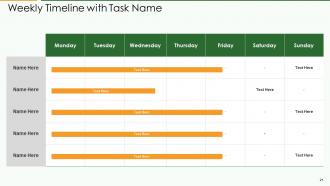
Diapositive 21 : cette diapositive montre la chronologie hebdomadaire avec le nom de la tâche.
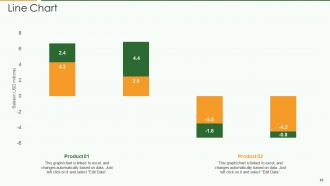
Diapositive 22 : Cette diapositive décrit le graphique linéaire avec une comparaison de deux produits.
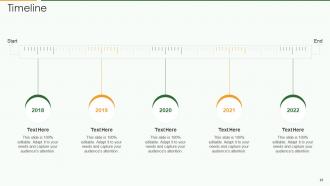
Diapositive 23 : Il s'agit d'une diapositive de chronologie. Afficher ici les données relatives aux intervalles de temps.
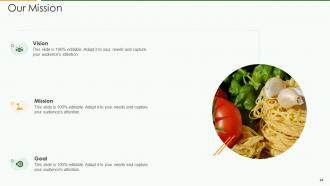
Diapositive 24 : Voici la diapositive Notre mission avec des images et du texte connexes.
Diapositive 25 : Ceci est la diapositive À propos de nous pour montrer les spécifications de l'entreprise, etc.
Diapositive 26 : Il s'agit d'une diapositive de remerciement avec l'adresse, les numéros de contact et l'adresse e-mail.
Modèle Ppt de Pitch Deck de produits alimentaires avec les 31 diapositives :
Utilisez notre modèle Ppt de présentation de produits alimentaires pour vous aider efficacement à économiser votre temps précieux. Ils sont prêts à l'emploi pour s'adapter à n'importe quelle structure de présentation.






FAQs for Food product pitch
Cover the basics: your problem/solution, target market, competition, business model, and financials. Food investors obsess over scalability and shelf life (both kinds lol). Show any traction you've got so far. Include your go-to-market plan and team background - food industry experience is gold here. Keep it under 12 slides or you'll lose them. Oh, and definitely bring samples if it's in-person! Honestly, nothing beats letting people actually taste your product. End with a clear funding ask and exactly how you'll spend their money. Visuals matter too since food is so visual.
Honestly, stories are way more memorable than just listing ingredients or whatever. People won't remember that your sauce has "premium this" or "organic that" - but they'll totally remember if you tell them about your grandma's recipe that started it all. Investors want to feel something, not just hear stats. Open with a quick story about why you created the product in the first place. Then build everything around that. Like, what problem were you actually trying to solve? Stories help them picture your brand taking off and actually care about what you're doing.
Look, investors are so tired of seeing "the food industry is worth $2 trillion" - it's basically meaningless at this point. What you actually need is three things: real market size for your specific niche (not the whole industry), solid data on who's buying and why they want YOUR thing specifically, and a breakdown of what competitors are charging. Consumer surveys help too if you've got them. The key is showing why right now makes sense for launching - like maybe there's a trend shift or gap you can hit. Don't go too broad with the stats.
Lead with your strongest differentiator right away - don't hide it on slide 5. Nobody gives a damn about your "proprietary fermentation" unless you explain how it actually makes things taste better. Use concrete numbers instead of vague claims. "30% less sugar than Coca-Cola" hits way harder than "reduced sugar content." Before/after photos work amazing too, or maybe taste test results. I always tell people to focus on benefits customers actually want, not features you think are impressive. Keep everything simple and tie it back to solving whatever annoying problem your customers deal with every day.
Dude, just make your nutrition info visual - nobody wants to read a wall of numbers. Colorful bar charts work great for showing protein vs competitors. Those traffic light systems are clutch too (green good, red bad, you know the drill). Most people zone out at nutrition labels anyway, so spotlight your 2-3 biggest wins. Maybe do an infographic thing that tells the story of your ingredients? Way better than boring lists. Oh and keep it scannable - people literally spend like 3 seconds looking at this stuff. Focus on what makes your product actually different.
Definitely put food safety front and center - like a whole slide dedicated to it. Investors freak out about recalls since they can destroy companies overnight (honestly can't blame them). Show off your HACCP plans, FDA approvals, third-party testing results. Quality control processes are huge too. If you're using co-packers, make sure their certifications are solid and mention those. Traceability systems matter a lot - how you track everything from ingredients to final product. Oh and don't forget contamination risk protocols. The goal is showing you're not messing around with this stuff because one screw-up can sink everything.
Look, trends are what make investors believe your product actually matters right now. You're not creating demand from nothing - you're catching a wave that's already building. Plant-based stuff, gut health crazes, quick meals for stressed millennials, whatever fits your product. Lead with 2-3 solid ones backed by real numbers, not just random stats you googled. Here's the thing though - don't just mention trends and move on. Weave them through your whole pitch so it's obvious you get why timing matters. Makes your opportunity feel legit instead of just another random food idea.
So for the competitive landscape slide, grab 3-5 competitors - mix of big players and newer startups in your space. Set up a simple chart comparing price, where they sell, ingredients, who they're targeting, stuff like that. Here's the thing though - don't trash talk them because that just looks bad. Actually mention what they do well, then show where you're different and better. Oh and make sure you can back up your claims if investors grill you on it later. I've seen founders get caught off guard when VCs ask why customers would switch to them instead.
Food investors are obsessed with unit economics - they'll dig into your gross margins, customer acquisition costs, and lifetime value immediately. Revenue growth is cool but repeat purchase rates matter just as much. Distribution breadth counts too (how many stores you're in vs actual sales volume). The margins in food are honestly terrible, so proving profitable scale is everything. Track velocity per store location early - that metric will totally make or break your Series A pitch. Oh and market penetration in your target demo is crucial. I learned this the hard way watching other founders get crushed on these numbers.
Don't just slap sustainability onto the end of your pitch - make it central to your story. Start with real numbers like "30% less water usage" or "carbon-neutral supply chain." Skip the vague green buzzwords, investors see right through that stuff now. Photos of your actual facilities help too. Here's the thing - you've got to connect your green story to profits AND consumer trends. Show them how being sustainable saves money while attracting conscious buyers. Include your packaging innovations, local partnerships, waste reduction stats. Basically prove you're not just greenwashing but actually building a better business model.
Look, investors don't just want to see you can make a product - they need proof you can actually sell it. Food retail is brutal (those Whole Foods shelf fees are insane). You've got to map out your exact path: farmers markets first? Direct online sales? Which retail partnerships are realistic? Honestly, without clear distribution channels and pricing strategy, you're basically showing them a recipe with no plan to get it to customers. Include real timelines and sales projections. They want to see you understand how tough this market is and that you've got a solid game plan anyway.
Don't just dump all your testimonials on one slide - that's boring as hell. Scatter them throughout your deck instead. When you're talking about the problem, throw in a customer quote that backs up the pain point. Got a chef endorsement? Perfect for your market validation section. Screenshots from social media work way better than fancy quotes anyway - people can smell fake marketing from a mile away. If you've got any big names, definitely put those up front, maybe even on your opening slide. Keep everything short and punchy. Always include names and titles or nobody will believe it's real. Oh, and tie each testimonial back to why your product rocks.
White space is your best friend - don't cram everything together. Get decent food photos, even if you have to pay someone. Those blurry phone pics? They'll torpedo your whole pitch, trust me. One message per slide, and make the font big enough so people in the back can actually read it. Bold colors work great if they match your brand. Skip the crazy animations though - they're just distracting. Oh, and show your packaging mockups early so investors can picture your stuff in stores. End each section with what you want them to remember.
Dude, you've gotta totally change your pitch depending on who you're talking to. VCs want those hockey stick growth numbers and your Series A roadmap - show them the massive market potential. Angels? They actually care about your story since most of them built companies too. Retail buyers couldn't care less about your vision - just hit them with margins and demand data. Oh and family offices are all about steady returns, not crazy growth. I learned this the hard way honestly. Do your homework on what each group actually funds, then flip your whole presentation to match what keeps them up at night.
Dude, don't be vague about market size - saying "food is huge" kills your pitch instantly. Narrow it down to your actual slice. Skip the wall-of-text slides too, nobody's reading paragraphs about your "game-changing" sauce (seriously, everyone uses that word). Get specific with your financials early. Food safety and regulatory stuff? Cover that upfront or you're dead in the water. Oh, and supply chain issues will come up so address them. Use real product photos, keep it visual. End with exactly how much you need and when - investors hate guessing games.
-
Attractive design and informative presentation.
-
Understandable and informative presentation.
-
The Designed Graphic are very professional and classic.