

Gap Analysis In Strategic Management Powerpoint Presentation Slides





Try Before you Buy Download Free Sample Product
 Impress Your
Audience
 100%
Editable
 Save Hours
of Time


Want to identify strategic and operational gaps in the organization? Not finding a right solution? We provide you our gap analysis in strategic management PowerPoint presentation slides to assess the current state of your services. This content ready and well current state future state PPT templates contain slides on a variety of topics like an overview, procedure, current state analyses, market share, financial comparison, revenue versus target, fit-need assessment, growth share matrix, product matrix, SWOT analysis, fishbone analyze etc. Well, you can also hire services of our graphic designers to get customized templates as per your requirements. Not only this, you can deploy the same business strategic gap analysis PPT presentation for the topics like product gap, strategy gap, usage gap, capability need assessment, gap assessment tools, need analysis marketing, need assistance, need gap analysis, as-is to-be etc. What are you waiting for? Simply download our gap analysis in strategic management PowerPoint presentation templates.Convince folks to fund dreams with our Gap Analysis In Strategic Management Powerpoint Presentation Slides. Generate finance for aspirations.
People who downloaded this PowerPoint presentation also viewed the following :
Content of this Powerpoint Presentation
Slide 1: This slide introduces Gap Analysis In Strategic Management. State Your Company Name and get started.
Slide 2: This is an Agenda slide. State your agendas here.
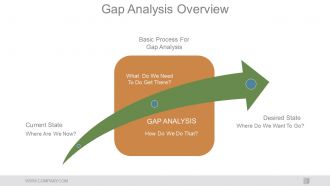
Slide 3: This slide presents a Gap Analysis Overview with the following points- Basic Process For Gap Analysis, Current State, Desired State, Where Do We Want To Go? How Do We Do That? What Do We Need To Do Get There? Where Are We Now?
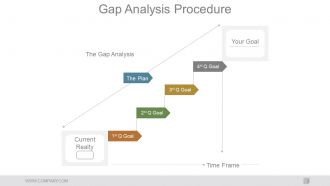
Slide 4: This slide showcases the Gap Analysis Procedure with- Time Frame, The Gap Analysis, Your Goal, Current Reality.
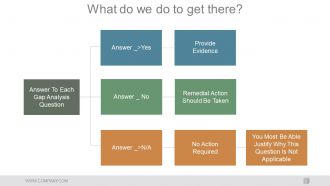
Slide 5: This slide presents What Do We Do To Get There?
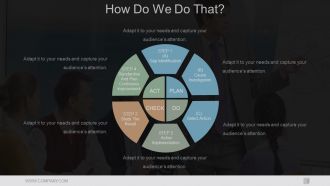
Slide 6: This slide presents How Do We Do That?
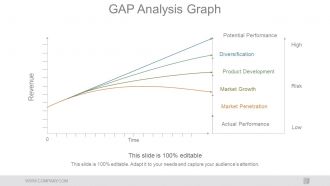
Slide 7: This slide showcases a GAP Analysis Graph with- Actual Performance Potential Performance Diversification Product Development Market Growth Market Penetration Revenue in terms of Time, Low-High Risk.
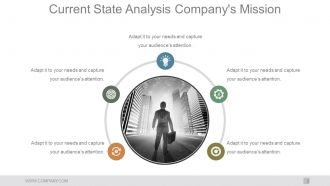
Slide 8: This slide shows Current State Analysis Company's Mission stating Our Mission.
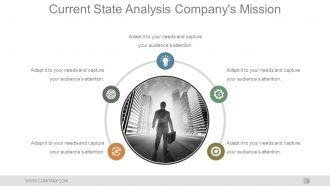
Slide 9: This slide shows Current State Analysis Company's Mission stating Our Mission.
Slide 10: This slide shows Current State Analysis Company's Goals.
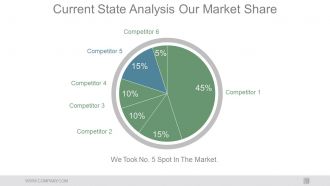
Slide 11: This slide showcases the Current State Analysis Our Market Share in pie chart form.
Slide 12: This slide shows Current State Analysis Financial Comparison graph.
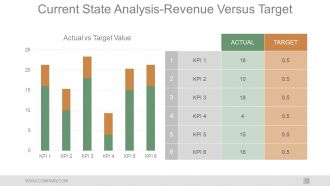
Slide 13: This slide shows Current State Analysis- Revenue Versus Target with separate graphs of- Actual vs Target Value.
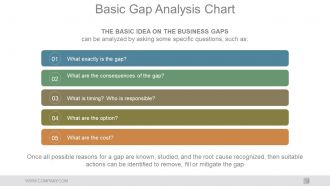
Slide 14: This slide showcases Basic Gap Analysis Chart with the follwoing points- What Exactly is The Gap? What are the Comsequences of the Gap? What is Timing? who is Responsible? What are the Options? What are The Cost?
Slide 15: This slide presents a Gap Analysis Template with- Business Area, Business Goal.
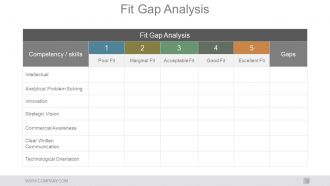
Slide 16: This slide shows a Fit Analysis Template.
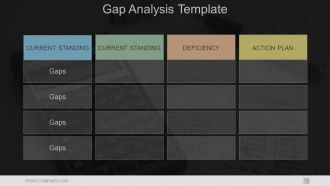
Slide 17: This slide shows a Gap Analysis Template.
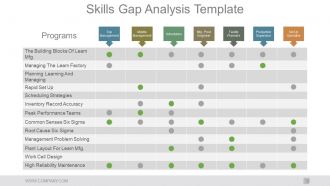
Slide 18: This slide shows a Skill Gap Analysis Template.
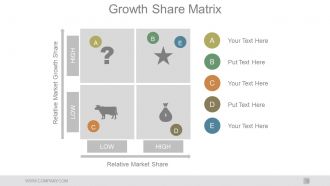
Slide 19: This slide shows a Growth Share Matrix to display infromation, specification etc.
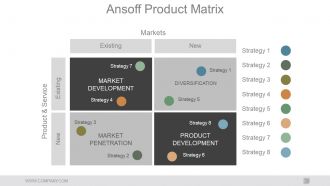
Slide 20: This slide showcases an Ansoff Product Matrix with- Product & Service, New, Existing, Market Development, Market Penetration, Diversification, Product Development.
Slide 21: This slide presents Gap Analysis Tool- Servqual with the following points- Assurance, Empathy, Tangible, Reliability, Responsiveness.
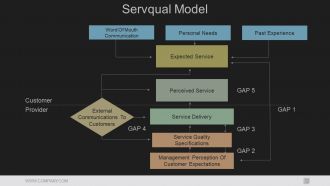
Slide 22: This slide presents a Servqual Model with the following points- Word Of Mouth Communication, Management Perception Of Customer Expectations, Personal Needs, Past Experience, Perceived Service, Service Delivery, Service Quality Specifications, External Communication To Customers, Expected Service, Customer, Provider, GAPS.
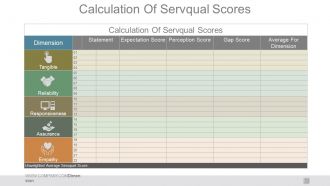
Slide 23: This slide presents Calculation Of Servqual Scores table.
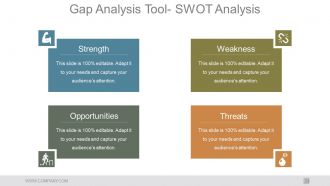
Slide 24: This slide showcases Gap Analysis Tool- SWOT Analysis.
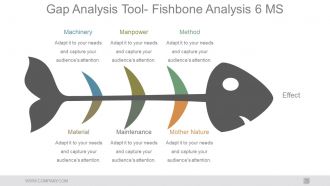
Slide 25: This slide presents Gap Analysis Tool- Fishbone Analysis 6 Ms. They are- Machinery, Manpower, Method, Material, Maintenance, Mother Nature Effect.
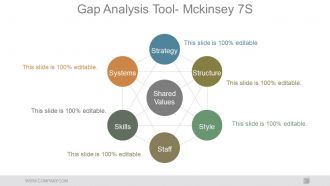
Slide 26: This slide presents Gap Analysis Tool- Mckinsey 7S. They are- Shared Values, Strategy, Structure, Style, Staff, Skills, Systems.
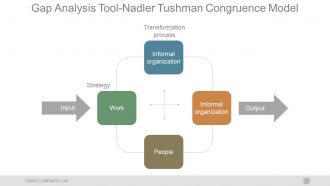
Slide 27: This slide showcases Gap Analysis Tool- Nadler Tushman Congruence Model. The constituents are- Work, Informal organization, People, Strategy, Output, Input, Transformation process.
Slide 28: This slide is titled Additional Slides to move forward. You may change the slide content as desired.
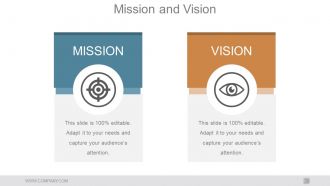
Slide 29: This slide presents Mission and Vision showing Vision, Mission.
Slide 30: This is an Our Team slide to present company/team specifications.
Slide 31: This is an About Us slide. State company/team specifications here.
Slide 32: This is Our Goals slide.State goals, targets etc. here.
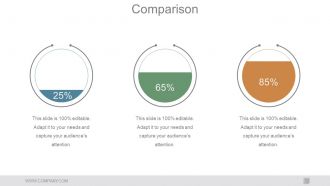
Slide 33: This is a Comparison slide to compare two entities etc.
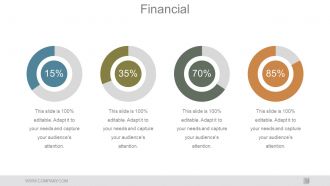
Slide 34: This is a Financial score slide. State financial aspects etc. here.
Slide 35: This is a Quotes slide to convey company/organization message, beliefs etc. You may change the slide content as desired.
Slide 36: This is a Dashboard slide to show growth factors in terms of Good, Low, Maximum and Moderate.
Slide 37: This is a Location slide of world map to show global presence, growth etc.
Slide 38: This is a Timeline slide to show growth, highlighting factors, milestones etc.
Slide 39: This is a Post It slide to show important information, notes etc.
Slide 40: This is a News Paper slide to show events, news etc. You can change the slide as per your need/requirement.
Slide 41: This is a Target slide. State targets, goals etc. here.
Slide 42: This is a Puzzle image slide. State information, specifications etc. here.
Slide 43: This is a Circular image slide for showing information, specifications etc. here.
Slide 44: This is a Venn diagram image slide. State information, specifications etc. here.
Slide 45: This is a Mind Map image slide. State information, specifications etc. here.
Slide 46: This slide presents a Matrix. State information, specifications etc. here.
Slide 47: This is a Lego image slide. State information, specifications etc. here.
Slide 48: This is a Silhouettes image slide. State people related information, specifications etc. here.
Slide 49: This slide presents a Hierarchy to showcase team/organizational structure.
Slide 50: This is a Idea & Bulb image slide. State information, specifications, innovatice aspects etc. here.
Slide 51: This is a Magnifying glass image slide. State information, specifications etc. here.
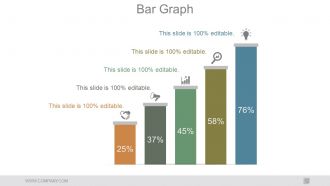
Slide 52: This is a Bar Graph slide to show product/entity comparison.
Slide 53: This is a Funnel slide to show funneling aspects, information etc.
Slide 54: This is a Thank You slide with Email Address, Address# street number, city, state, Contact Numbers.
Gap Analysis In Strategic Management Powerpoint Presentation Slides with all 54 slides:
Display a host of designs for the interiors with our Gap Analysis In Strategic Management Powerpoint Presentation Slides. Enable folks to improve the aesthetics.












FAQs for Gap Analysis In Strategic Management
Okay so basically you gotta figure out three things. Where you actually are right now (not where you wish you were - we all do this lol). Then nail down exactly where you're trying to get to. After that, look at what's missing - could be skills, resources, whatever. Honestly the hardest part is being real about your current situation. Nobody wants to admit their project's messier than expected. But once you've got that sorted, just make a plan to fill those gaps. Prioritize the biggest ones first. Sounds simple but it actually works if you don't BS yourself about where things stand.
Honestly, most teams mess this up by jumping straight to fixing stuff without actually knowing what's broken. First thing - compare where you are now to where you want to be, but use real data instead of just going with your gut. Then figure out which gaps matter most and which ones you can actually fix. Quick wins versus long-term stuff, you know? Oh, and definitely talk to other departments because they'll catch things you totally missed. Be real about what's working and what sucks, then go after the biggest problems first.
Dude, you absolutely need stakeholder feedback for gap analysis. These people deal with the broken stuff daily - they'll spot issues you'd never see from the outside. I learned this the hard way when an analysis I did totally missed the mark because I didn't talk to enough people. They know which problems actually matter vs. what's just annoying. Plus they can tell you if your fixes will even work in real life. Oh, and don't just chat with the bosses - talk to people doing the actual work too. They'll help you figure out what to tackle first.
So gap analysis is basically figuring out what your team can do now vs. what they actually need to know. Survey everyone about their skills and confidence levels first - that's your starting point. Then map that against what their roles really require (or what's coming up in new projects). The whole point is finding those specific weak spots instead of just randomly signing people up for training. Way more effective, honestly. Once you know exactly what's missing, you can build focused programs that tackle real problems. My old manager did this and it actually worked - people stopped complaining about useless workshops.
Track both process and outcome stuff to see if your gap analysis actually worked. Process-wise: how many gaps you found, what percentage got action plans, implementation timeline. But honestly? The outcome metrics are where the magic happens - did you hit those performance targets and actually fix the problem areas? Numbers moving after all that work gets me every time! Also don't forget stakeholder satisfaction because buy-in is everything. Start with maybe 3-4 metrics that tie back to your original goals. You can always add more later once you've got the foundation down.
Okay so gap analysis is super focused - it's literally just "where am I now vs where do I wanna be?" Basic but effective. SWOT is way more comprehensive, covering your strengths, weaknesses, opportunities, threats (honestly gets overwhelming sometimes). Here's how I think about it: SWOT shows you the whole picture, but gap analysis cuts straight to "what am I missing to get there?" Perfect when you've got a clear goal and just need the steps. Like, if you know you want that promotion, gap analysis tells you exactly what skills or experience you're lacking.
So there's tons of options depending on what you need. Excel or Google Sheets honestly work fine for most basic stuff - I know it sounds boring but they get the job done. SmartSheet's pretty solid if you want something more robust. Lucidchart is awesome for visual mapping if you're into that. Monday.com has built-in templates which saves time. You could also throw in some SWOT analysis tools to round things out. Complex organizational stuff might need fancier software like Prophix or Anaplan, but that's probably overkill unless you're dealing with massive companies. Just start with whatever you already have access to - most gap analyses don't need expensive tools anyway.
Honestly, data quality is your worst enemy here. You'll find stuff that's outdated, missing, or spread across like 15 different systems. Good luck getting a clear picture from that mess. Then there's getting everyone to actually agree on what "success" looks like - those meetings can get pretty heated. Oh, and scope creep is brutal. Someone always wants to throw in "one tiny thing" that turns into a whole rabbit hole. Set your boundaries early and don't budge, or you'll be stuck analyzing gaps until next year. Trust me on this one.
Gap analysis is like a reality check for your budget - shows you exactly what's broken so you can fix the right stuff first. Instead of randomly throwing cash at problems, you'll actually see which areas are bleeding money and what can wait. Honestly, most people are shocked at how backwards their spending priorities are. The best part? When you need to ask for more budget, you've got real data backing you up instead of just "we need more money." Oh, and definitely make a priority list from your findings - tackle the big impact gaps first, obviously.
So gap analysis is like your GPS for going digital - shows the difference between where you're at now and where you actually need to be. Map out your current processes first, then figure out your digital goals. The gaps in between? That's your action plan. You'll spot which stuff is still being done manually, what tech you're missing, and honestly where your team needs training. Without doing this step, you're basically just buying random software and crossing your fingers. It helps you pick what to tackle first and - this part's key - gives you a realistic timeline instead of some crazy ambitious plan that'll never happen.
Honestly? Most companies do them once a year, but that's kinda slow these days. The smart ones are doing it every 6 months, sometimes more if their market's going crazy. Tech companies especially - they're doing quarterly checks because things move so fast. I've watched businesses get totally caught off guard sticking to that rigid once-a-year thing while their competitors were already three steps ahead. Really depends on your industry though. Start annual if you want, but don't treat it like some scheduled meeting you can't miss. It's more about keeping your finger on the pulse of what's actually happening around you.
First thing - check what privacy laws you're dealing with, especially if there's personal data involved. GDPR, CCPA, HIPAA, SOX... honestly the list goes on depending on your industry. Get legal looped in early if you're not sure - way better than finding out later you screwed something up. Document every step because auditors are obsessed with paper trails. Oh, and make sure you actually have permission to access whatever systems you need. Your gap analysis might uncover compliance issues that need immediate reporting, so heads up on that. Basically don't touch anything until you know the rules.
So gap analysis is basically figuring out where you're screwing up compared to what customers actually want. Survey them first about their dream experience - response times, features, whatever. Then honestly look at what you're doing now. The difference? That's your gap. Honestly, it can be pretty brutal seeing it all laid out like that, but at least you know exactly what to fix first. Focus on the biggest gaps that'll move the needle on satisfaction scores. Sometimes it's obvious stuff like slow support, other times it's weird little things you never thought about.
So healthcare, manufacturing, and tech get the most out of gap analysis. Makes sense since they can't afford to mess up - patient safety, product quality, staying ahead of competitors. Finance does it constantly too for all their regulatory requirements (those guys analyze gaps for literally everything lol). But honestly? Any field with strict standards or fast-changing benchmarks should be doing this regularly. The consequences are just too real - whether you're risking patient harm, defective products, or losing market position. If falling behind means serious problems, you need gap analysis.
Talk to each group differently - executives want the big picture and business impact, but your ops teams need the actual action steps. Visual stuff works way better than long reports (seriously, who reads those anymore?). Focus on what's urgent first, then the nice-to-have fixes later. Always tie gaps back to real consequences like "this missing skill will push our Q3 launch back six weeks." Don't just dump problems on people though. Come with solutions ready. Nothing annoys stakeholders more than someone pointing out issues without suggesting how to fix them.
-
Excellent Designs.
-
Appreciate the research and its presentable format.