


Hierarchy presentation outline





Try Before you Buy Download Free Sample Product
 Impress Your
 Audience
 100%
100% Editable
 Save Hours
 of Time


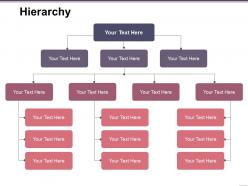
Present the different levels in a business organization using this Hierarchy Presentation Outline template. Showcase the organizational framework with various divisions and people working at different hierarchical levels by using this hierarchy chart PPT template. Display the relationship between different people in the large organization. This ready-made organizational chart PPT graphic can also be incorporated to assign the roles and responsibilities to the employees and subordinates within an organization. By presenting the structure of the organization with the assistance of this hierarchy outline PowerPoint slideshow, it will be easy for the audience to understand where they fit in the organization. Creating a proper chart can be a tedious and time consuming task so here we bring for you organizational structure PowerPoint slide design with high grade icons that helps you convey the information in a seamless manner.
People who downloaded this PowerPoint presentation also viewed the following :
Hierarchy presentation outline with all 5 slides:
Ensure a good balance with our Hierarchy Presentation Outline. Every aspect gets adequate focus.

FAQs for
Honestly, good hierarchy is a game-changer for three reasons. First, decisions happen way faster when everyone knows who's actually in charge. Second, people can't dodge responsibility because the reporting lines are crystal clear. Communication flows better too - up and down the chain without getting lost in translation. It's like... imagine driving without traffic lights? Total mess. Your team also gets clearer career paths, which keeps them around longer. Just make sure your structure actually matches how work gets done, not who has the fanciest job titles. Map out where decisions happen and see if it lines up.
Ugh, hierarchy is such a pain for decisions - everything has to go up the chain which takes forever. But honestly? It does help when you know who actually gets to call the shots. Flatter teams move way faster since there's less people to loop in. The worst is when nobody knows who's supposed to decide what. That's when you get stuck in meetings that go nowhere. Best setup I've seen is clear hierarchy for the big stuff but letting people handle their own day-to-day decisions. Maybe try mapping out who owns different types of decisions? Saves a lot of headaches later.
Honestly, it's pretty wild how much these digital tools are changing things at work. Junior people can now ping executives directly on Slack instead of going through like three managers first. Everyone gets to see project dashboards and decisions that used to be super secretive - which is nice for once. The crazy part? Your actual skills with these tools matter way more than whatever your job title says. I mean, if you're the only one who really knows the new software, suddenly people are listening to you. You should mess around with some of those cross-team collaboration platforms and see what I mean.
Think of hierarchy as your org's communication GPS - it shows people the main routes for info flowing up and down. Pretty straightforward: everyone knows who they report to, who calls the shots, and where problems go when they bubble up. Otherwise you'd have total chaos with people talking past each other constantly. But honestly? Super rigid hierarchy just creates these annoying bottlenecks where important stuff gets trapped. What works better is clear reporting lines plus some wiggle room for cross-team chats. Your people should know the official channels but not feel weird about grabbing coffee with someone from another department, you know?
Dude, you've gotta flatten that org chart - all those approval layers are killing you when people are working across time zones. Push decision-making down to your team leads so they can actually move fast without waiting for the endless email chains (ugh, those are the worst). Focus on what gets done, not micromanaging every step. Set up clear paths for when they genuinely need to escalate stuff up. Oh, and figure out which decisions you can just hand off completely - your people probably know what they're doing better than you think. Trust goes a long way when you can't just walk over to someone's desk.
Honestly, hierarchy is such a double-edged sword. Some people love having that clear ladder to climb - gives them direction, you know? But I've seen it backfire so many times. Creative folks especially get suffocated when there's too many layers above them. Everything slows down because decisions have to go through like five different people. Your team starts feeling like they're just there to take orders instead of actually contributing ideas. Communication gets weird too - everything's filtered through managers. I'd say flatten it out where you can and actually let people have a say in stuff that affects their daily work.
Here's what I'd do - keep your reporting lines but spread out who gets to decide what. There's a difference between "who do I report to" and "who makes this call," you know? So yeah, you might have managers for coordination stuff, but let teams run their own day-to-day decisions. Think of it like having coaches but players calling their own plays (probably a weird analogy but whatever). Map out what decisions actually need approval versus what your people can just handle. Honestly, most teams can do way more autonomously than we give them credit for. Start there.
Dude, startups are way flatter - like 2-3 levels tops. You'll probably report straight to the founder or some C-level person. Corporations? Good luck getting through 7+ layers just to reach someone who can actually decide stuff. I swear corporate hierarchies make simple decisions take forever. The trade-off is pretty clear though - startups let you move fast with fewer approvals, but big companies have those structured career paths mapped out. Really depends if you want quick access to decision-makers or a clear ladder to climb up.
Oh man, this stuff is so interesting! People from high power distance cultures - like a lot of Asian countries - tend to respect authority way more and stick to formal structures. Meanwhile, other cultures are all about questioning your boss and keeping things flat. Age matters huge in some places, but then you've got cultures that only care about what you actually accomplish. I've seen this play out at work and it's wild how different people's expectations are. Watch how folks communicate and make decisions - it'll tell you tons about their background. Then just adjust how you lead based on what works for them.
Honestly, tree diagrams and org charts are your friends here - they make everything super clear visually. Start with the big picture at the top, then work your way down level by level. Different colors or shapes help distinguish each level (though I always end up overthinking the color scheme). Keep your text short because cramped text in tiny boxes is the worst. Oh, and don't dump everything on screen at once - use animation to reveal sections gradually. Quick tip: sketch it out on paper first. You'll save yourself tons of time fixing the structure later instead of wrestling with slide formatting from the start.
Honestly, hierarchy can make or break your D&I work. When leadership actually commits and uses their influence? You'll see change happen quickly. The problem is most traditional hierarchies just reinforce the same old barriers you're trying to eliminate. People need to feel safe speaking up no matter where they sit on the org chart. Flatten those D&I decisions and let diverse voices actually shape outcomes - not just sit through pointless "feedback" sessions. I've seen too many companies think listening equals action when it doesn't.
Ugh, those rigid hierarchies are the worst. Everything crawls through like five different approval layers, so decisions take forever. Employees just check out mentally because why bother sharing ideas when they'll never reach anyone who matters? The whole telephone game thing happens too - by the time info gets passed up the chain, it's completely warped. Plus you're missing out on insights from people actually doing the work every day. Maybe try flattening some layers? Cross-functional teams work pretty well too. You get to keep some structure but actually move fast when you need to.
Look, visual hierarchy is basically creating a roadmap for people's eyes - you want them scanning your content in the exact order you planned. Size, color, and where you place stuff all work together to pull attention from your main points down to the smaller details. It's honestly wild how predictable our brains are with this stuff! When you nail the hierarchy, people actually remember more because the important info jumps out first. Oh, here's a trick I learned - do the squint test on whatever you're designing. If you squint and can't immediately tell what's most important, you've got work to do.
Honestly, I'd start with the simple stuff - like coffee chats between departments. Those work way better than you'd think. Get people rotating through other teams temporarily too, even if it's just for a week or two. Cross-functional projects are clutch because teams have to actually collaborate, not just send emails back and forth. Oh, and let people sit in on other department meetings as observers - sounds boring but it's super eye-opening. Don't try to fix everything at once though. Pick maybe two departments to test this stuff with first, otherwise you'll burn yourself out.
Honestly, skip-level meetings are your best bet here - plus anonymous surveys that go straight to leadership. Middle managers kill feedback faster than anything, I swear. Set up ways for people to talk directly to the top without filters. Train your managers not to get all butthurt when they hear criticism too. But here's the thing - you absolutely have to act on what people tell you or they'll just stop bothering. Maybe start with one anonymous feedback tool this quarter? See what comes up. Oh, and peer reviews help break up the usual top-down nonsense.
-
Best Representation of topics, really appreciable.
-
Really like the color and design of the presentation.