


How to Delight Customers Training Module on Customer Service Edu Ppt





Try Before you Buy Download Free Sample Product
 Impress Your
 Audience
 100%
100% Editable
 Save Hours
 of Time


This training module in detail covers the concept of how to delight customers. The PPT deck includes a customer delight framework and the difference between customer service and customer delight. It also includes strategies to ensure customer delight and KPIs to measure it. The PowerPoint deck also contains activities and questions to increase attendees participation in the training session. It also has additional slides on about us, vision, mission, goal, 30-60-90 days plan, timeline, roadmap, training completion certificate, energizer activities, detailed client proposal, and training assessment form.
People who downloaded this PowerPoint presentation also viewed the following :
Content of this Powerpoint Presentation
Slide 4
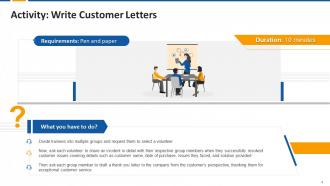
This slide depicts an activity that can be performed by the customer care executives during their training session to effectively anticipate the customer's needs.
Instructor’s Notes:
- Instruct participants to imagine how this interaction improved the customer's day and to elaborately praise the company's best features
- Then, to prompt a discussion, ask for volunteers to share their letters
- The goal here is not only to boost team morale but also to actively engage participants in thinking about what a customer is looking for when they seek assistance from one of your team members
Takeaway- We've identified some fantastic things that a company does that are all part of the service it provides. Although some interactions can be complex, a company can provide an excellent experience to its customers, and most customers expect these things when they approach the company. Take these characteristics into your following few customer conversations, and keep in mind how these best practices can help you create delighted customers
Slide 6
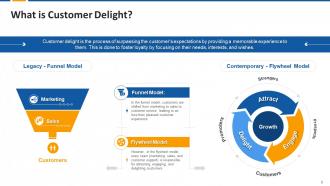
This slide provides information regarding the definition of customer delight. It also contains details of the earlier popular funnel model and existing flywheel model to ensure customer delight.
Slide 7
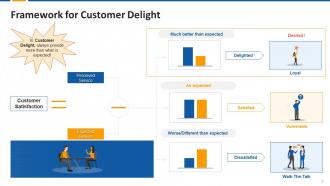
This slide highlights the model to showcasing the different customer satisfaction levels such as delighted, satisfied, and dissatisfied.
Slide 9
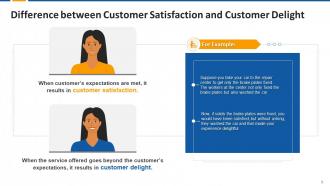
The purpose of this slide is to highlight how customer satisfaction is different from customer delight. It also contains an example to explain the same.
Slide 11
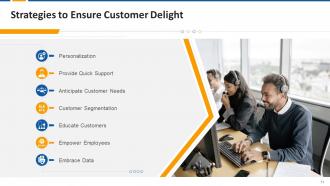
This slide provides information regarding the key approaches to give the customers a delightful experience. The major approaches discussed are personalized messaging, quick support, anticipating customer needs, customer segmentation, educating customers, empowering employees, and embracing data.
Instructor’s Notes:
The key approaches to give the customers a delightful experience are as follows:
- Personalization: Make the customer feels special by sending personalized messages on birthdays and festive occasions, curating special product combos and packages to fulfill their needs
- Provide Quick Support: Provide support to customers on platforms where they are most active such as messaging platforms (WhatsApp) or social media channels such as Twitter. Delight them by assisting them there only, so that they don't have to leave what they are doing
- Anticipate Customer Needs: Develop an ability in the agents to understand what the customer wants with limited information
- Customer Segmentation: Group customers based on product usage so that it becomes easy for agents to engage with them effectively
- Educate Customers: Send automated newsletters to customers to make them aware of new products and offers. Create and share product guides with customers containing information regarding the best practices and product usage
- Empower Employees: Empower employees to make real-time decisions to make their experience delightful. For example, employees at the Ritz Hotel chain can spend up to $2,000 to delight their customers
- Embrace Data: Use customer surveys and transactional data to make informed decisions to make customer's overall experience delightful
Slide 12
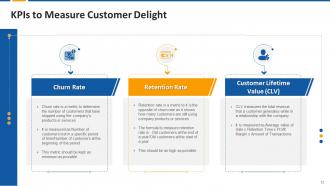
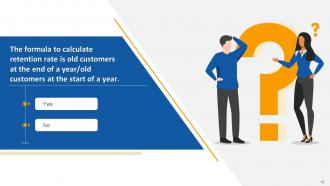
The purpose of this slide is to showcase the key performance indicators to measure customer delight successfully. The multiple KPIs highlighted are churn rate, retention rate, and customer lifetime value. It also contains the details of the formula to calculate them.
Slide 14
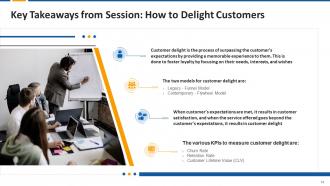
This slide depicts the summary of how to delight customers training session.
Slide 32 to 46
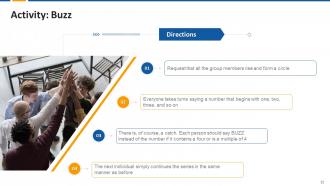
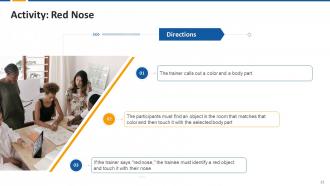
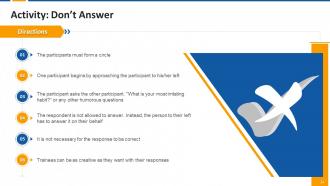
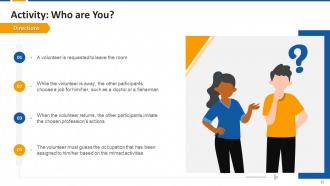
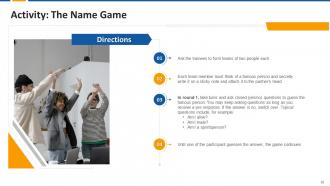
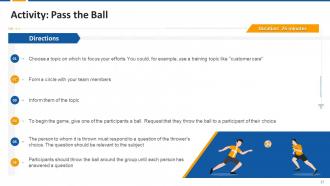
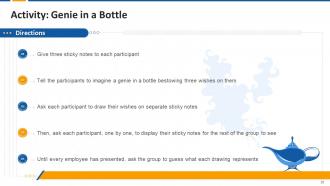
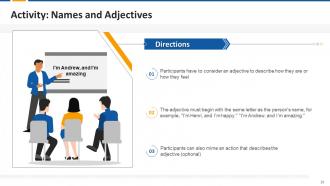
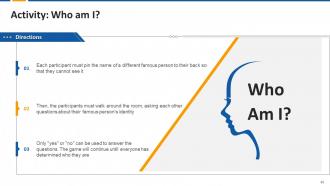
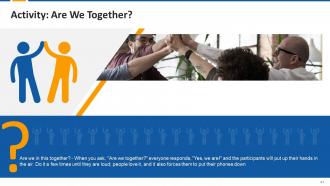
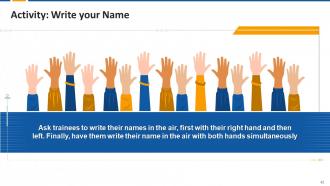
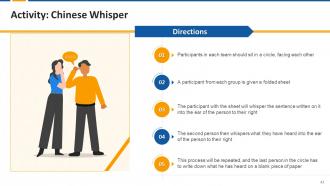
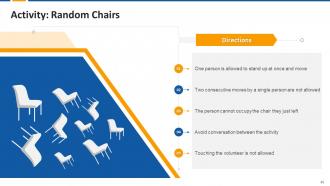
These slides depict energizer activities to engage the audience of the training session.
Slide 48
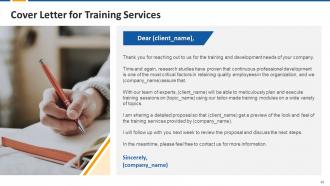
This slide highlights the cover letter for the training proposal. It includes details regarding what the company providing corporate training can accomplish for the client.
Slide 51
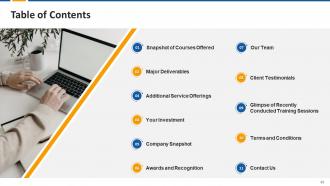
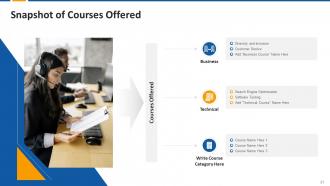
The purpose of this slide is to showcase the multiple types of courses offered by the training company.
Slide 53
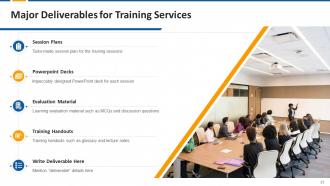
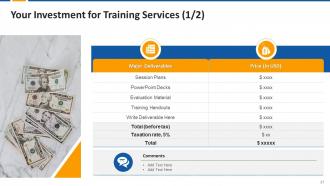
This slide indicates the major deliverables that the corporate training firm will provide to the client. The key deliverables highlighted are session plans, PowerPoint deck, evaluation material, and training handouts.
Slide 55
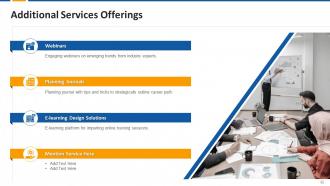
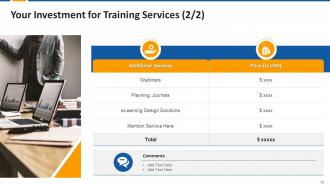
This slide represents the multiple additional services offered by the training firm to the client, such as webinars, planning journals, and e-learning design solutions.
Slide 57
This slide tabulates the major deliverables offered by the training company to the client along with their associated costs.
Slide 58
The purpose of this slide is to highlight the multiple additional services offered by the training firm along with their cost details.
Slide 60
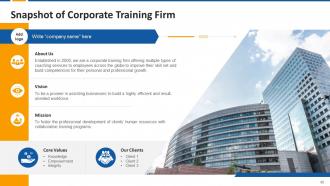
This slide provides an overview of the corporate training firm's vision and mission statements, core values, and key clients.
Slide 62
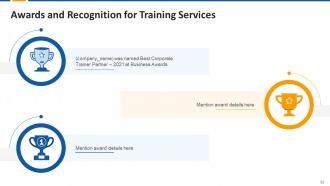
This slide highlights the major awards and recognition won by the training firm for their exceptional service to clients.
Slide 64
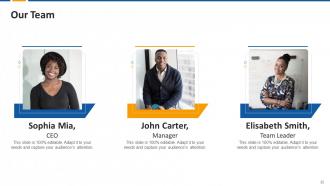
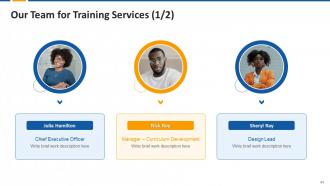
The slide provides information regarding the team members that would be providing the training services to the client. It includes details of the trainer and their respective designations.
Slide 65
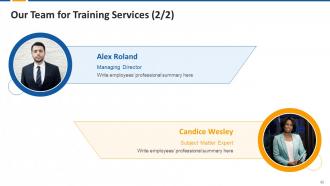
The slide provides information regarding the team members that would be providing the training services to the client. It includes details of the employees’ names and their respective designations.
Slide 67
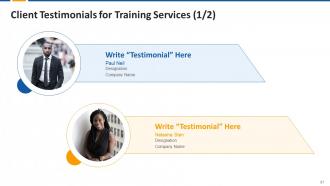
This slide provides information pertaining to testimonials given by satisfied clients of the training firm.
Slide 68
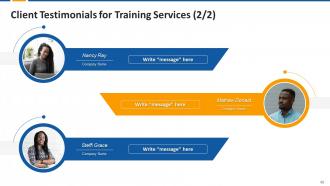
This slide highlights the testimonials from multiple satisfied clients of the training firm providing information regarding congratulatory messages, client name, and company details.
Slide 70
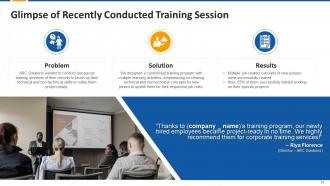
This slide showcases the case study for the training proposal. It includes information regarding the problem faced by the client and solutions offered by the training firm. It also covers details of the results and client testimonial.
Slide 72
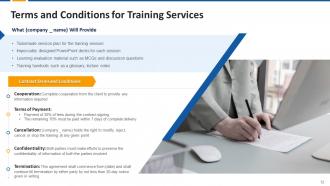
This slide provides information regarding the contract terms and conditions of the training proposal. It also includes details of deliverables that the training company will provide to the client.
Slide 74
The purpose of this slide is to provide the contact information of the corporate training firm. It includes the firm’s official address, contact number, and email address.
Slide 75
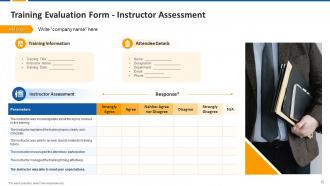
This slide highlights the training evaluation form for instructor assessment. It also includes sections to fill details of training information and attendee details.
Slide 76
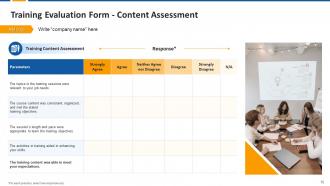
This slide showcases the questions for the assessment of the training content by the attendees.
Slide 77
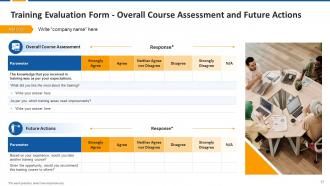
The slide indicates the evaluation form for course assessment. It also includes questions pertaining to the future actions of the attendees.
How to Delight Customers Training Module on Customer Service Edu Ppt with all 82 slides:
Use our How to Delight Customers Training Module on Customer Service Edu Ppt to effectively help you save your valuable time. They are readymade to fit into any presentation structure.













FAQs for How to Delight Customers Training Module on Customer
Look, it's all about going above and beyond at every single interaction. Train your people to really listen and let them fix stuff without running to their manager first - that's huge. Speed is everything too, honestly way more than most businesses realize. Personalized service shows you actually give a damn about who they are. Oh, and be proactive! Reach out before they even think to complain. The best part though? When you can solve problems they didn't even know were coming. Quick fixes when things go sideways will make or break you.
Okay so basically, if you can figure out what your customers are actually feeling, you've got this huge advantage. Like, you'll catch someone getting annoyed before they blow up at you. Plus you can surprise them in ways that actually hit different - not just some random "here's a discount" nonsense that everyone does. The timing thing is huge though. When you pick up on their emotional vibe, you know exactly when to step in. And honestly? Most companies are terrible at this. They just assume what customers want instead of paying attention to what's really going on.
Look, personalization is what separates good experiences from unforgettable ones. When you remember someone's preferences or past purchases, they feel seen - not just like another sale. It's honestly night and day compared to generic interactions. You don't need to overcomplicate it either. Start with basics like using their name consistently, or recommending stuff based on what they've bought before. Even tweaking your email subject lines helps. I swear, people notice when you actually pay attention to their history instead of treating everyone the same.
Don't just rely on basic satisfaction surveys - that stuff barely scratches the surface. Track repeat purchases and how often people mention you on social without being asked. NPS is decent, but I'm obsessed with customer effort scores lately. The less work someone has to do, the happier they get. Reading actual support transcripts is gold though. When customers use words like "obsessed" or "blown away," you know you've hit something. Quick pulse surveys asking what surprised them work too. Just... actually do something with the answers or it's pointless.
Dude, some companies are nailing this stuff lately. Zappos will randomly upgrade you to overnight shipping for free. Hotels stalk your Instagram then leave notes about cool local spots you'd actually like. There's this one restaurant near me that just brings out my usual without me ordering - honestly feels amazing and keeps me coming back way more than coupons ever would. It's all about using info they already have on you. Like, find one tiny thing your team could personalize from customer data you're sitting on. Those "wait, how'd they know that?" moments are pure gold.
So here's the thing - when your employees actually give a damn about their jobs, customers can totally tell. Engaged workers don't just check boxes, they'll actively look for ways to make someone's day better. Think about it: would you rather deal with someone who's clearly counting down to 5pm or someone who genuinely wants to solve your problem? Happy employees naturally go the extra mile. They listen better, get creative with solutions, and honestly seem to care more about the whole experience. I've seen it happen - fix your team's morale first and the customer satisfaction stuff usually follows.
Honestly, feedback loops are like having a crystal ball for your business. Get customers talking through surveys or just casual chats - you'll catch problems way before they blow up. The magic happens when people see you actually DO something with their suggestions. I've watched companies completely flip angry customers into total fans just by responding properly. Make it stupid easy for them to give input, then show off the changes you made because of what they said. Oh, and don't forget to circle back regularly - people want to know their voice matters.
So here's the thing—stories make boring customer interactions actually stick in people's heads. Instead of just fixing problems, you're building real emotional connections. Look at Patagonia or Airbnb (honestly, their marketing is genius). They don't sell stuff, they sell adventure and community. Your customers start seeing themselves in your brand's story, which feels way more personal than just being another transaction. Find those human moments in your customer experience and build simple stories around them. It's pretty powerful once you get the hang of it.
So your CRM basically tracks everything customers do, which is super helpful for knowing what they want before they contact you. AI can jump in to predict problems and handle the basic questions - honestly, some people actually like chatbots better for quick stuff. The cool part is when you combine them both. AI digs through all that CRM data to find patterns and tells you the best move for each customer. I'd start with automated follow-ups that trigger based on what customers are doing. That alone will change everything for you.
Oh man, this is so true! Japanese customers expect everything to be perfect - like, every tiny detail matters. Americans? We just want it fast and easy. Germans are super direct and efficient, which honestly makes sense to me, but customers from Latin American countries might think that's rude since they're all about building relationships first. Eye contact is weird too - respectful in some places, totally inappropriate in others. I've seen "amazing" service completely backfire because nobody bothered researching what that culture actually wants. You can't just copy-paste the same approach everywhere and hope it works.
Dude, happy customers are cool but *delighted* ones? Game changer. They'll literally become your biggest fans - forgiving mistakes, paying more, and telling everyone they know about you. It's wild how much more they spend over time compared to just "satisfied" people. Plus they try new stuff first and stick around forever, which saves you tons on finding new customers. The math works out crazy well in your favor. Oh and definitely track actual delight scores, not just satisfaction - there's a real difference between the two that'll blow your mind.
Honestly, visuals are a game changer for presentations. Nobody wants to stare at endless bullet points - I've been there and it's brutal. When you throw in some clean diagrams and actually useful images, suddenly people get what you're saying without having to work for it. Plus good design makes you look like you have your stuff together, which builds trust. The trick is guiding their eyes to what matters most. I'd start by swapping those bullet points for simple icons. Keep your colors consistent too. And here's the thing - your images should actually relate to what you're talking about, not just be random stock photos of people pointing at laptops.
Honestly, don't overpromise and underdeliver - that's like customer service death. Nothing pisses people off more than saying you'll respond in 24 hours then taking 3 days. Also, stop making everything so damn complicated. Your customers shouldn't need a PhD to figure out your return policy or whatever. Being too rigid with policies is another killer - people want to talk to humans, not robots reading scripts. I'd say start by looking at your current setup and ask yourself if you'd actually enjoy dealing with your own company. Set realistic expectations from the start, then beat them when you can.
Honestly, start by getting everyone on the same page about what "customer delight" even means at your company. Sales shouldn't overpromise, customer service needs freedom to actually help (not just read scripts), and product should bake in little surprises. Even accounting can wow people with super clear billing - boring but true! Pick shared metrics like NPS that everyone gives a damn about. Monthly cross-team meetings work great for sharing feedback and celebrating wins. Oh, and map out one customer journey first to see where each department fits in. Way easier than trying to fix everything at once.
Here's the thing - consistency really makes or breaks customer relationships. People need to know what they're getting from your brand every time. Trust me, one terrible experience can totally wipe out months of good work (learned this the hard way). You've got to nail it across everything - product quality, how fast you respond, the way your team talks to customers. Figure out what makes your customers happiest, then build systems so you deliver that same experience repeatedly. It's honestly harder than it sounds, but that's what separates good brands from forgettable ones.
-
Great designs, Easily Editable.
-
Great work on designing the presentation. I just loved it!