Activities For Customer Service Training Edu Ppt

Rating:
90%
Activities For Customer Service Training Edu Ppt
Slide 1 of 40
Favourites Favourites

Try Before you Buy Download Free Sample Product

Audience Impress Your
Audience
Editable 100%
Editable
Time Save Hours
of Time
The Biggest Sale is ending soon in
0
0
:
0
0
:
0
0
Rating:
90%
Presenting Activities for Customer Service Training. Our PowerPoint experts have included all the necessary templates, designs, icons, graphs, and other essential material. This deck is well crafted by extensive research. Slides consist of amazing visuals and appropriate content. These PPT slides can be instantly downloaded with just a click. Compatible with all screen types and monitors. Supports Google Slides. Premium Customer Support is available. Suitable for use by managers, employees, and organizations. These slides are easily customizable. You can edit the color, text, icon, and font size to suit your requirements.

Content of this Powerpoint Presentation

Slide 1

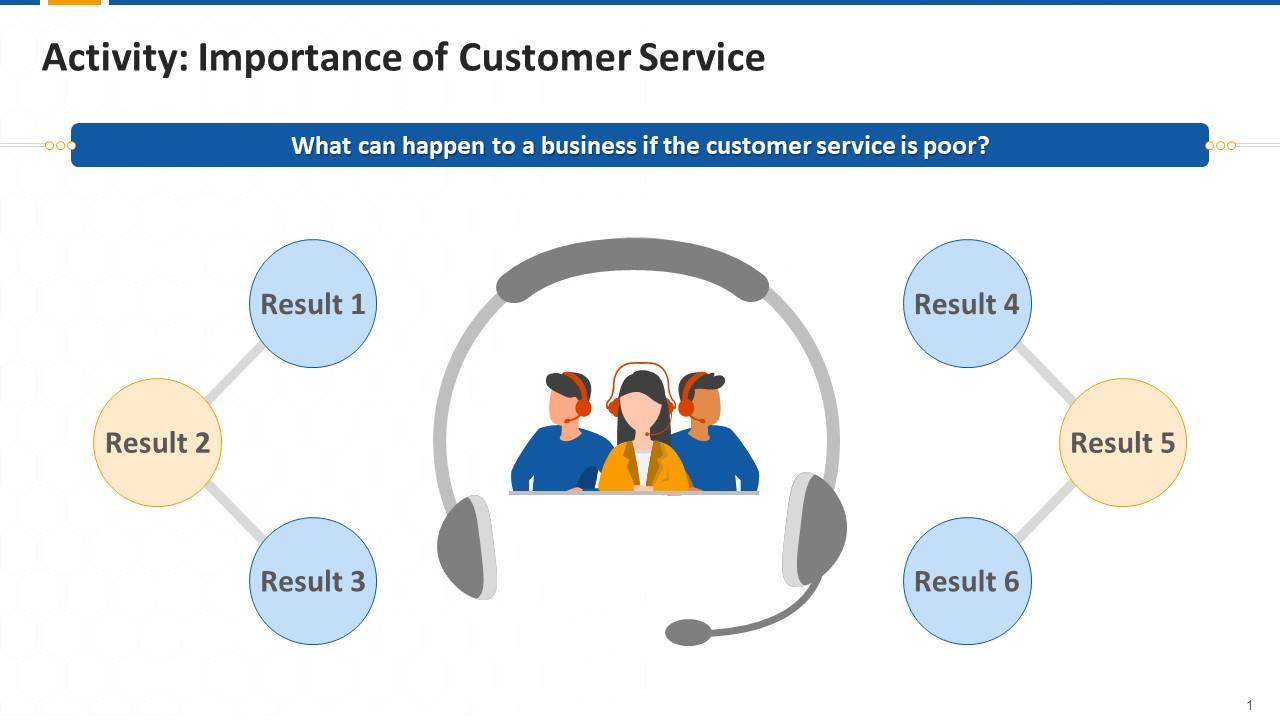
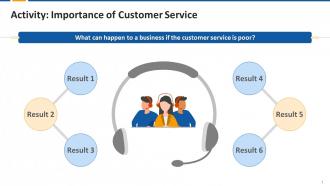
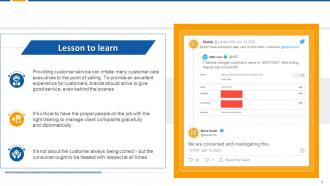
This slide depicts an activity to assist customer service representatives in understanding the value of customer service.

Slide 2

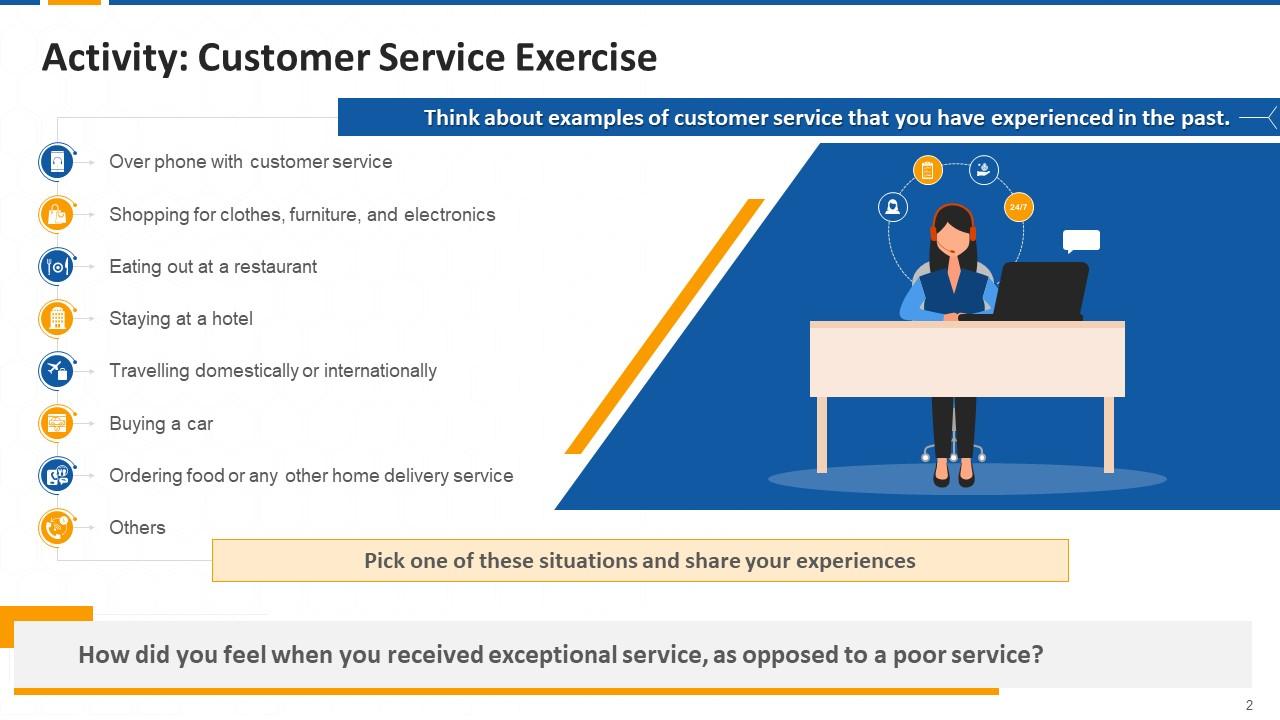
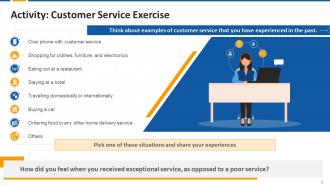
This slide contains an activity that helps the customer care team know customer service's importance.

Slide 3

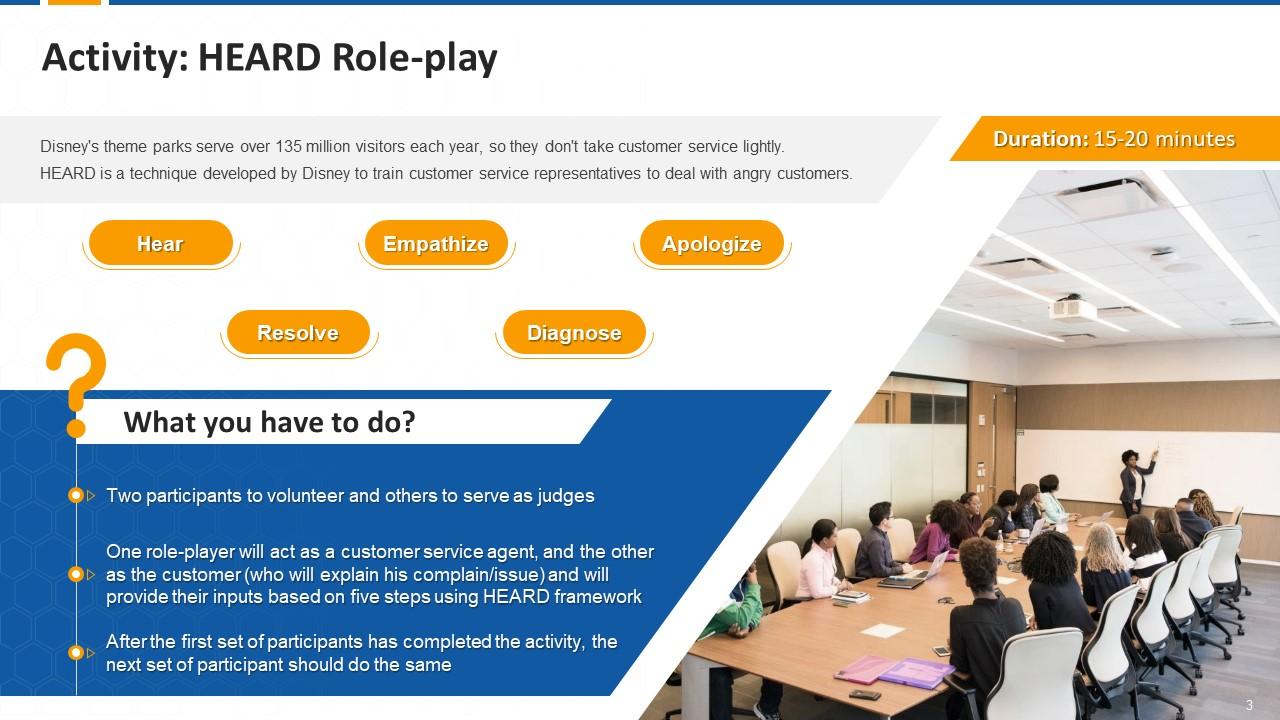
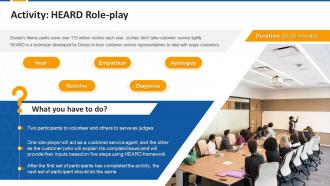
This slide depicts an activity to make customer service representatives understand the concept of HEARD technique.

Slide 4

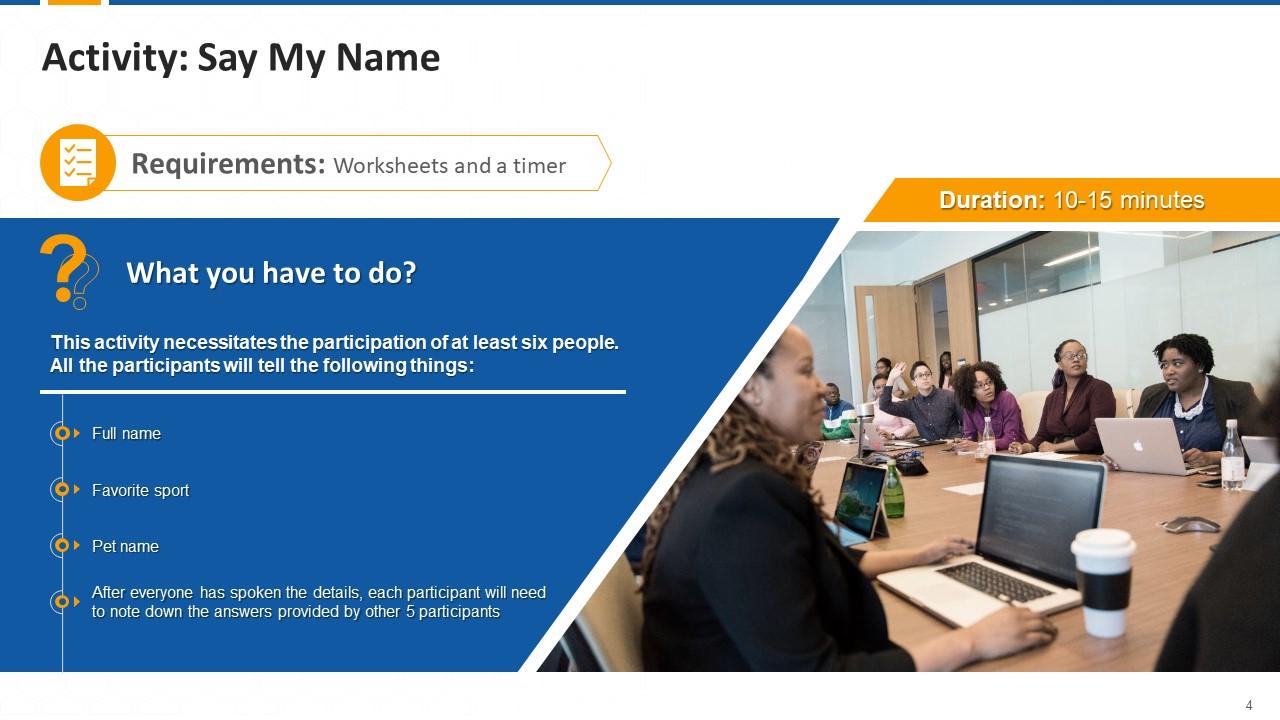
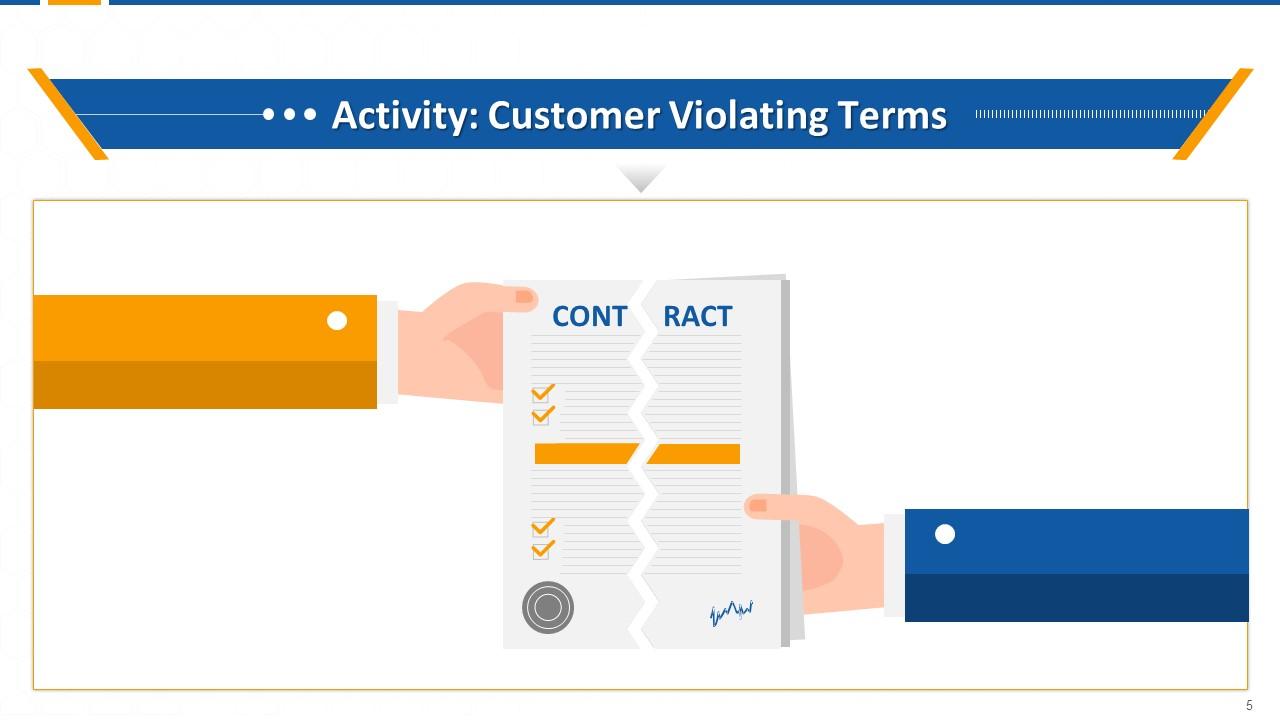
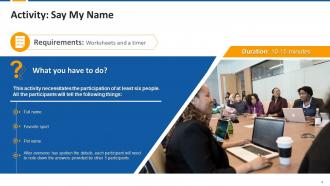
This slide depicts a trainer's activity for customer service training to improve customer care executives listening skills.

Slide 6

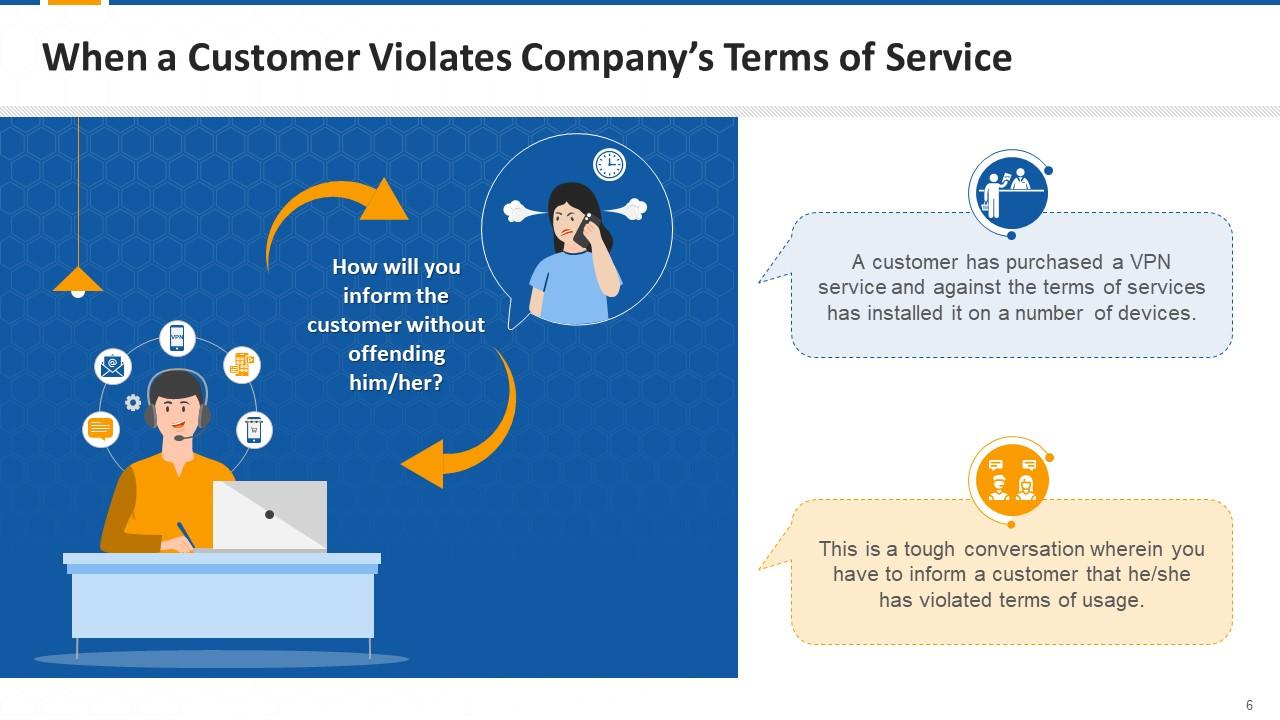
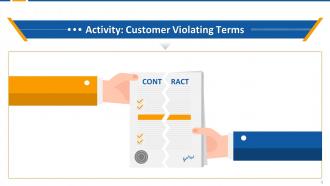
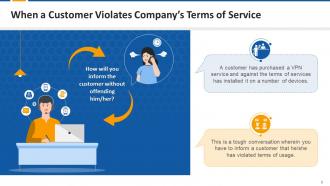
This slide covers a role-play activity for the customer service training on handling customers when they violate companies' terms and services.

Slides 7 to 9

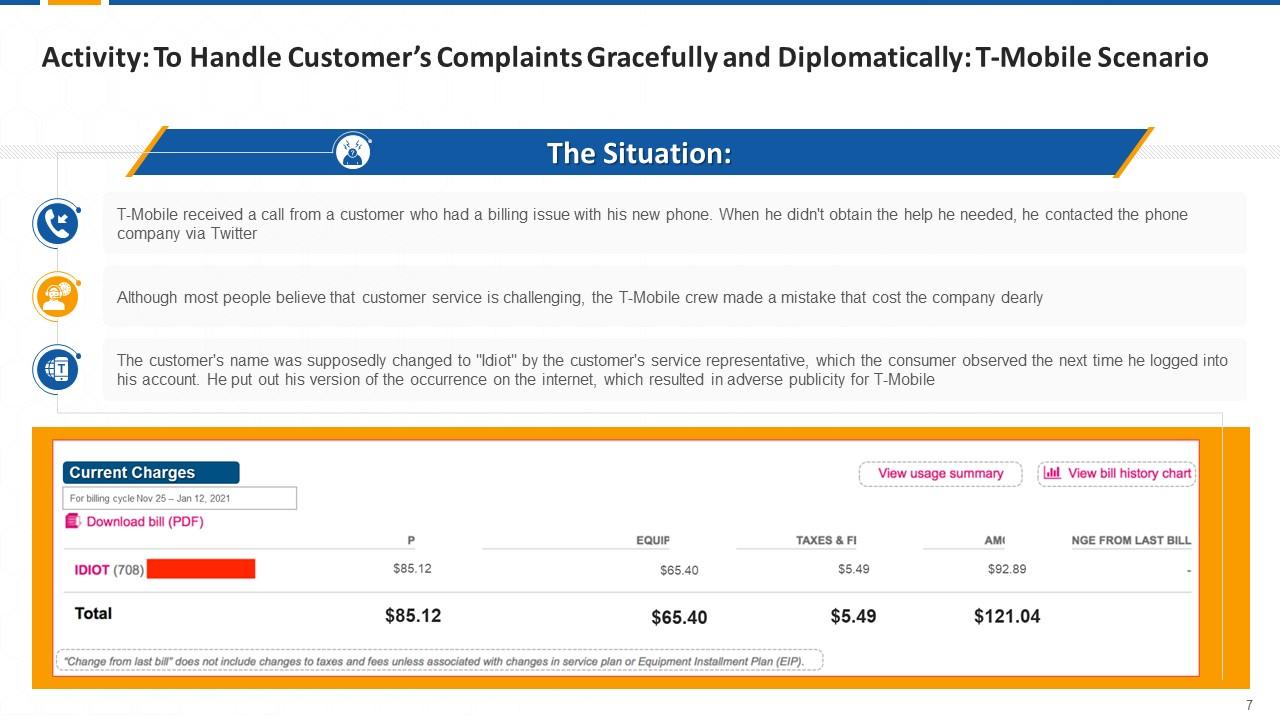
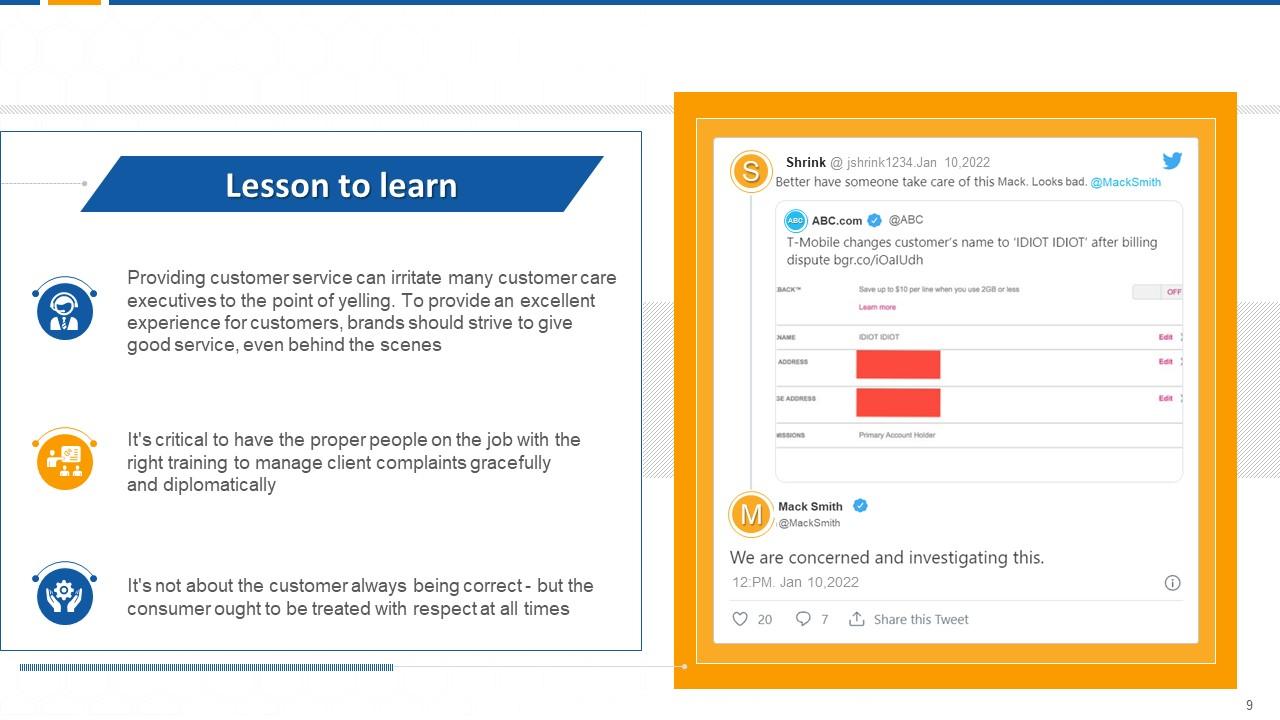
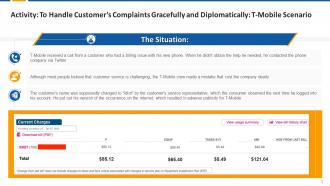
These slides contain a case study on handling customer complaints gracefully and diplomatically.

Slide 10

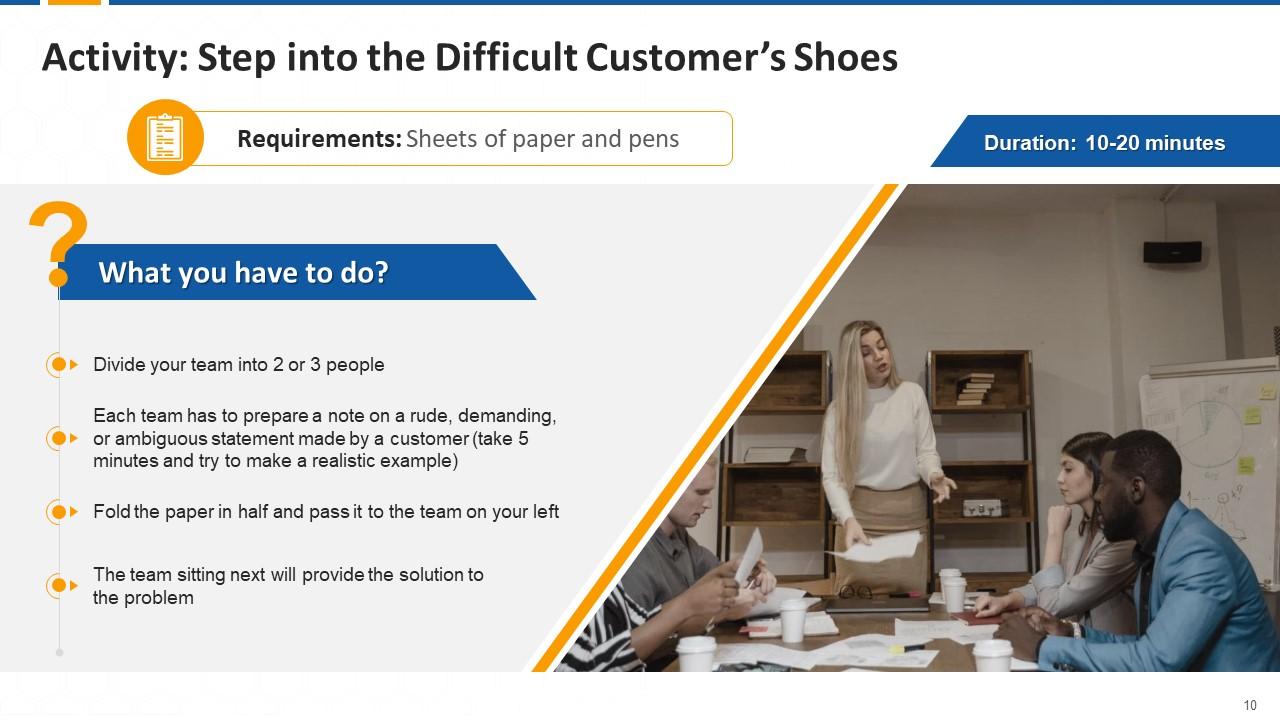
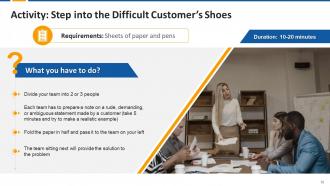
This slide depicts an activity to make customer care executives empathic toward difficult customers.

Slides 11 to 18

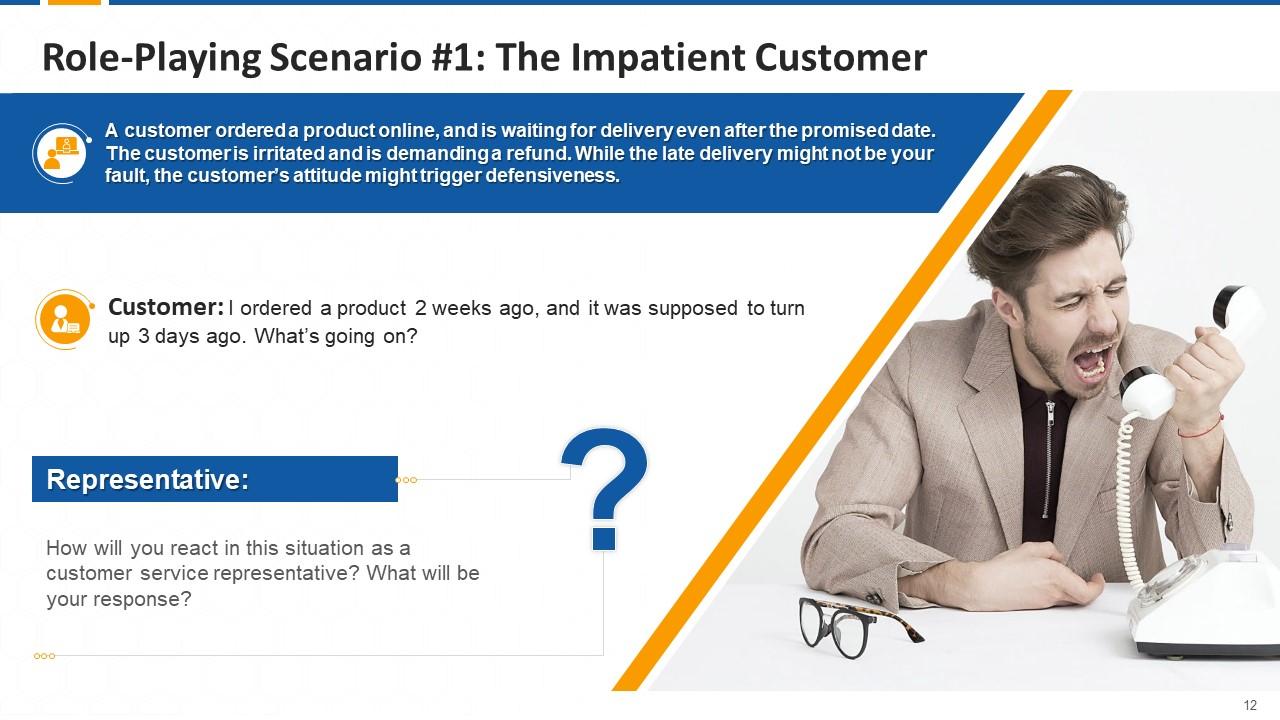
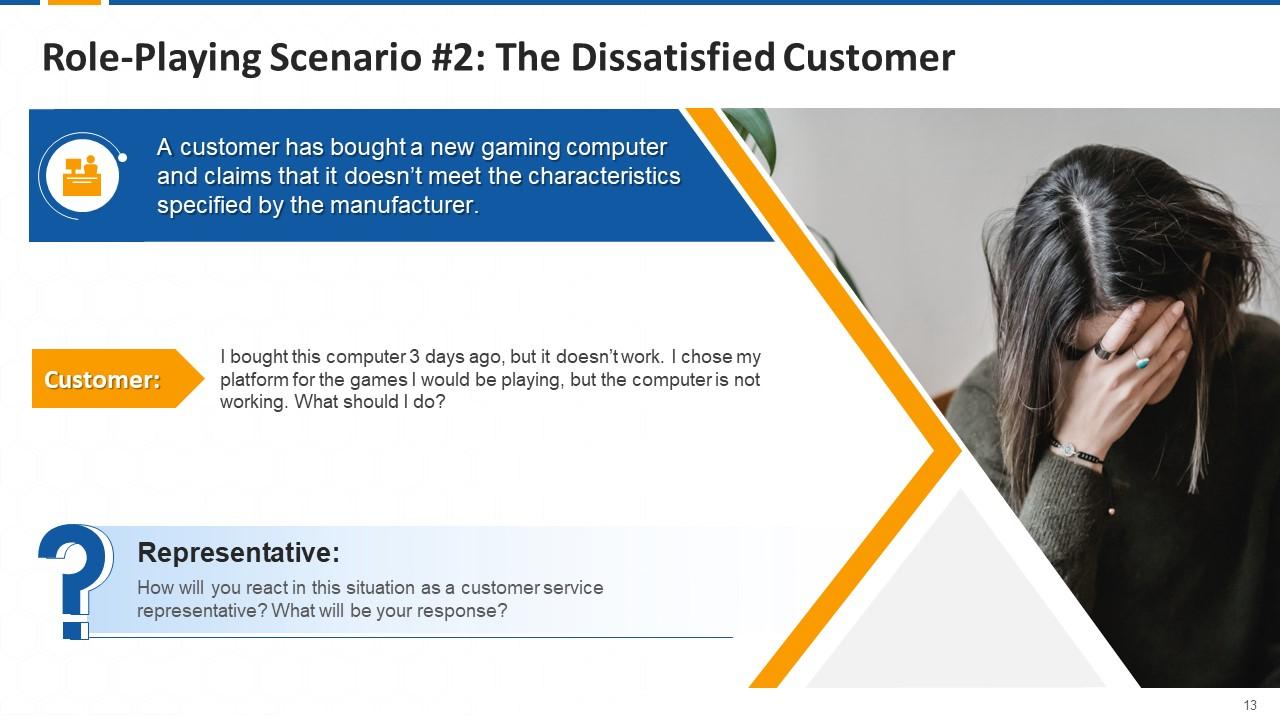
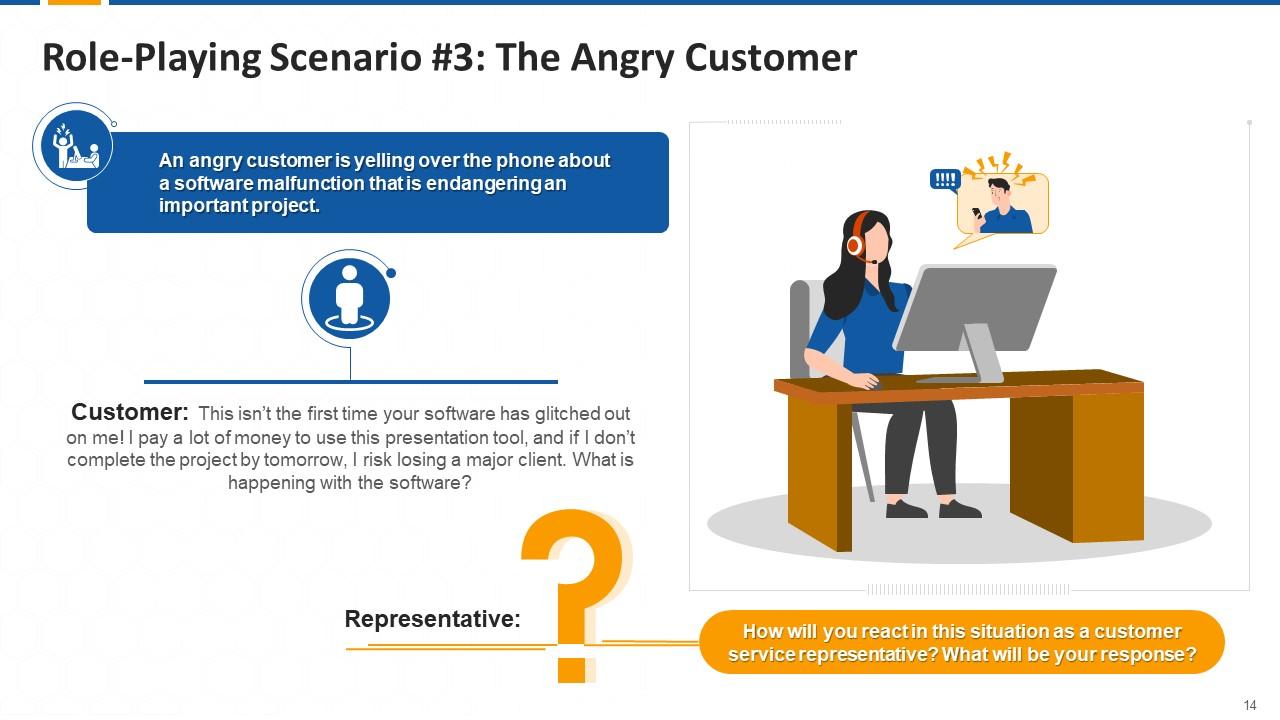
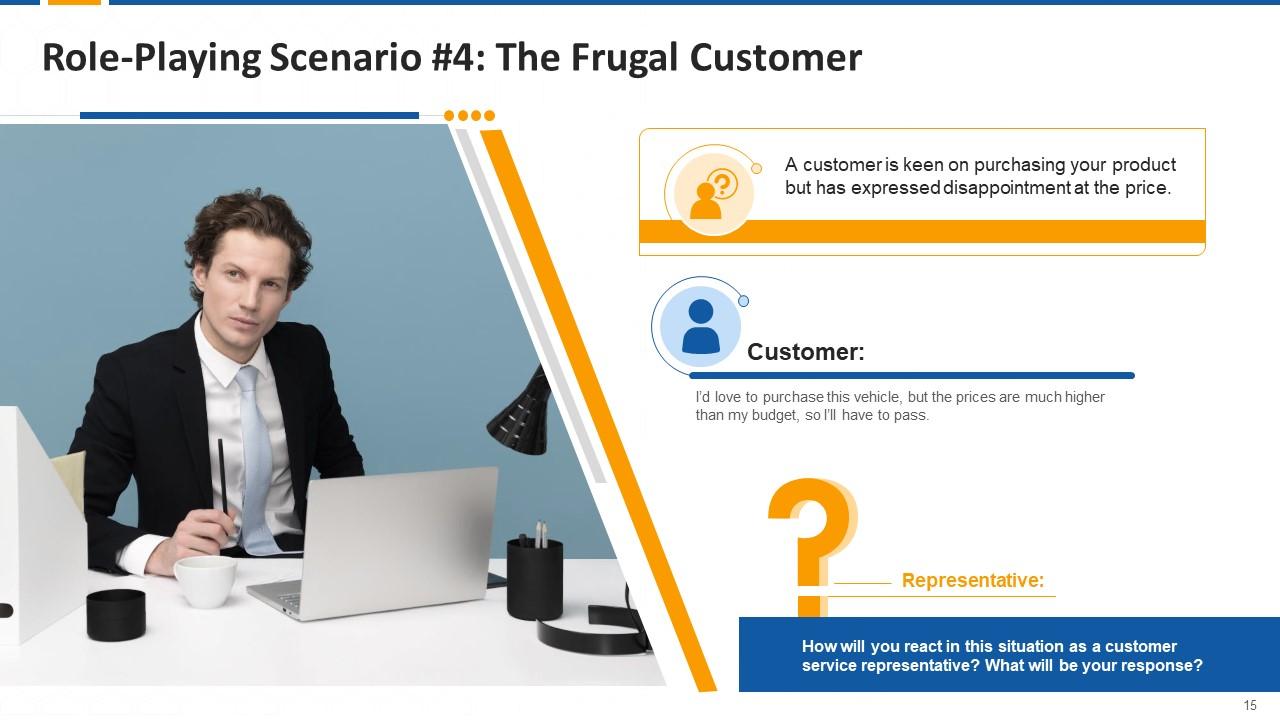
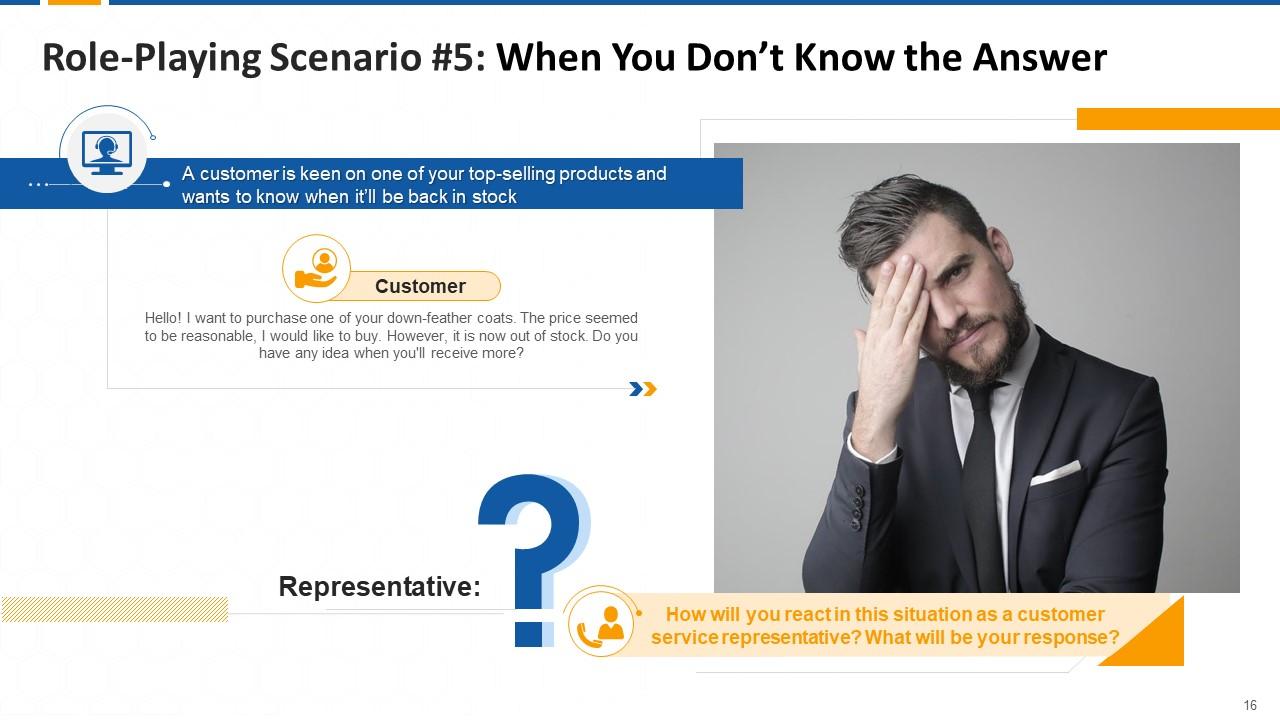
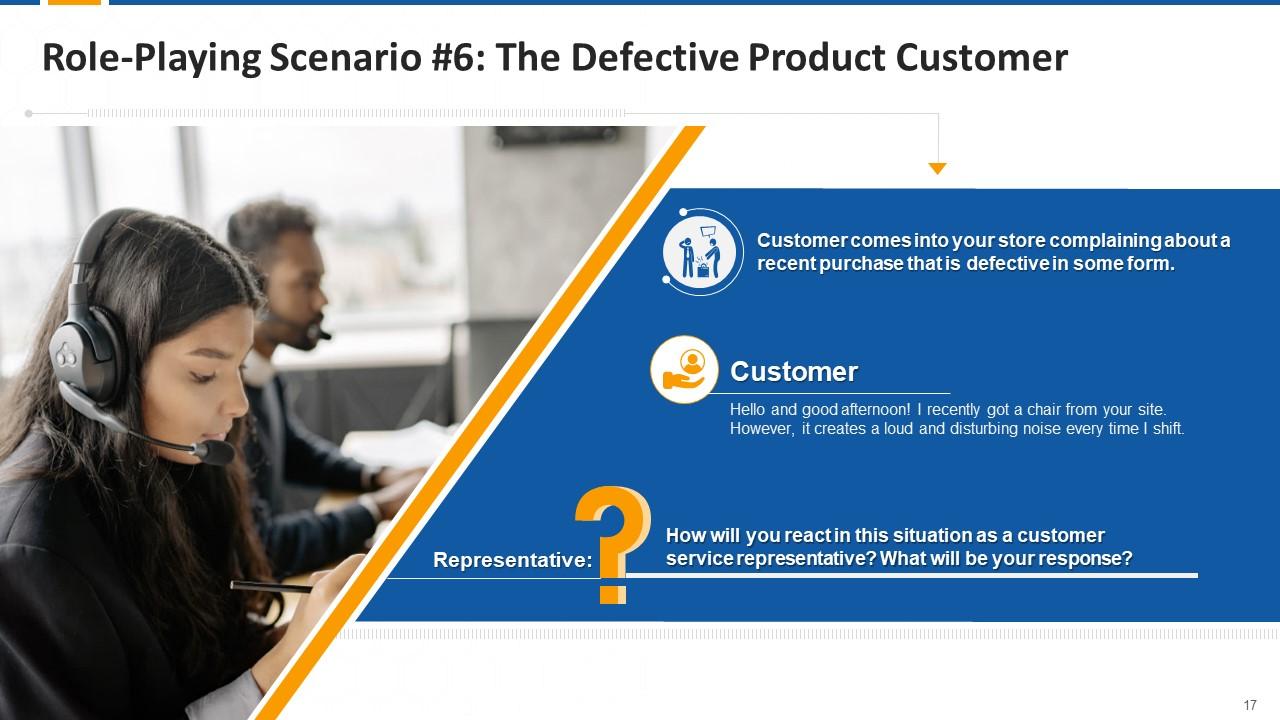
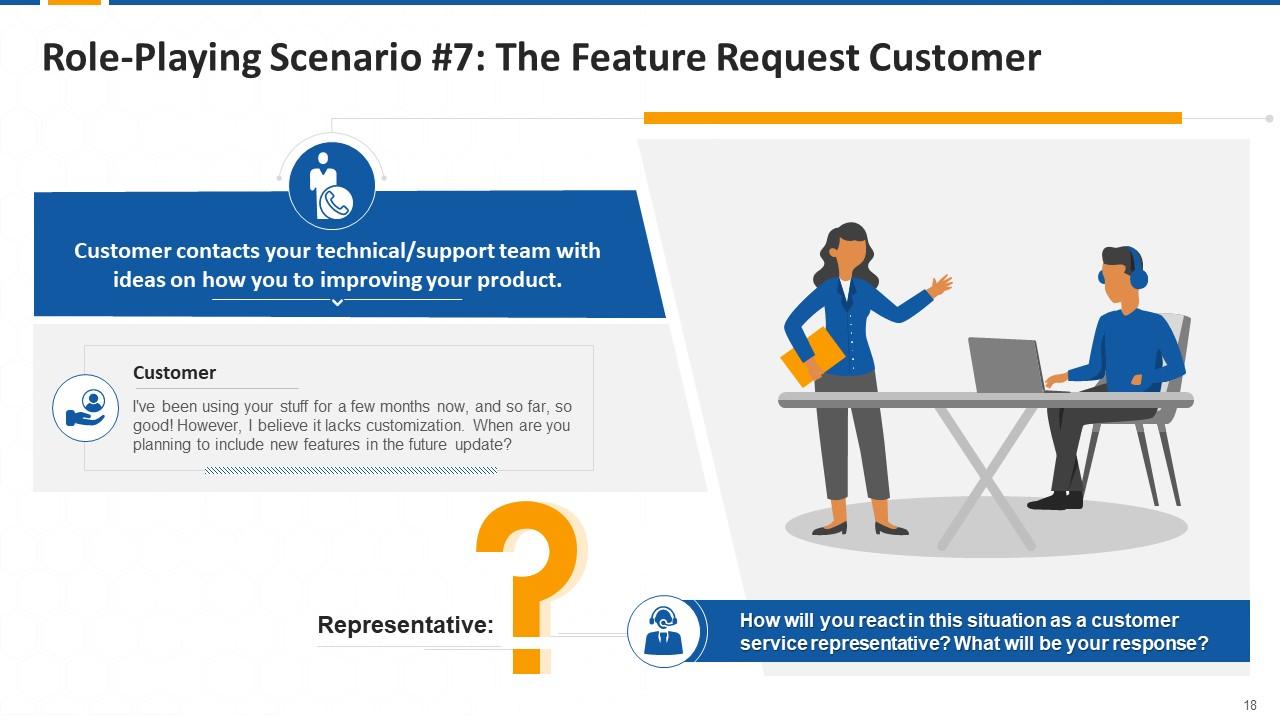
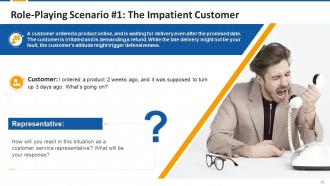
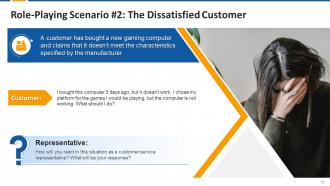
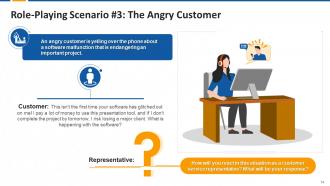
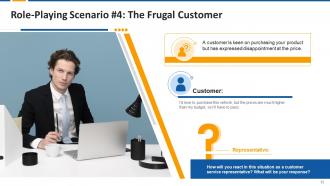
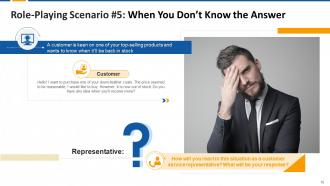
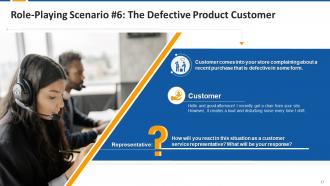
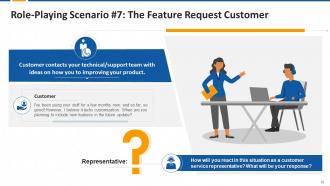
These slides contain role-play activities for the customer care team to handle different types of customers.

Slide 19

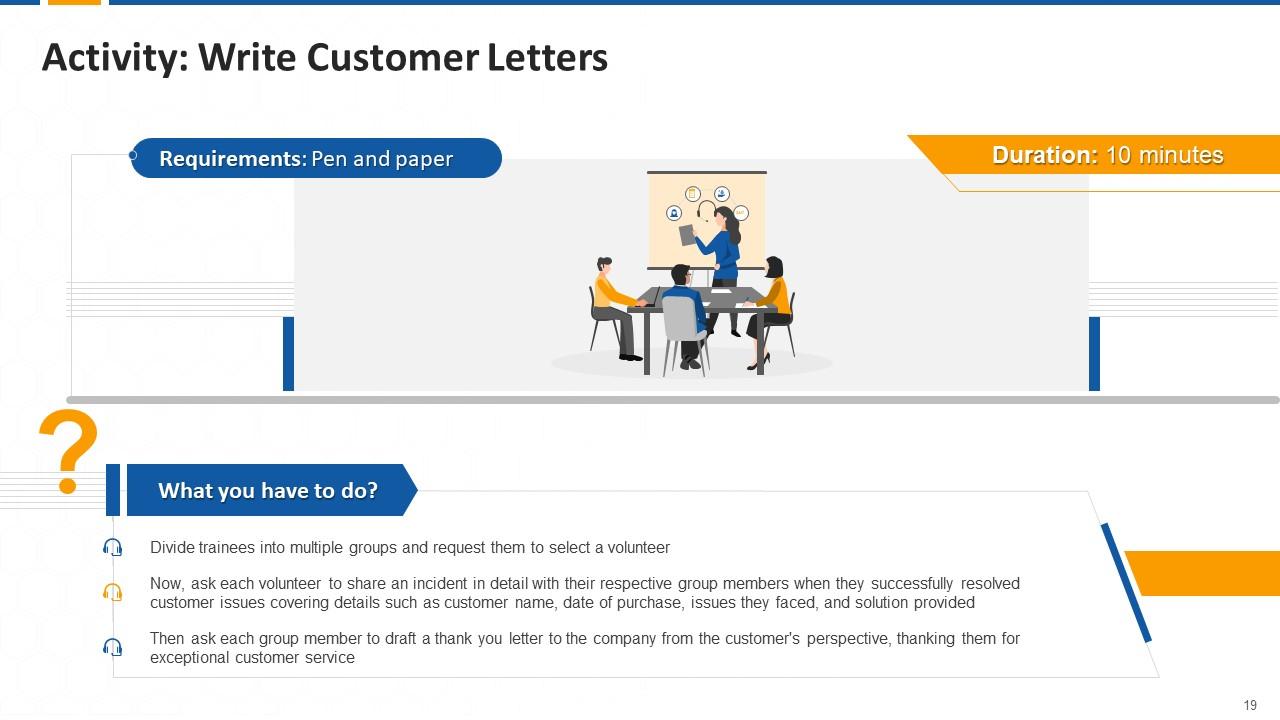
This slide depicts an activity for customer service training to effectively anticipate customer needs.

Slides 20 to 24

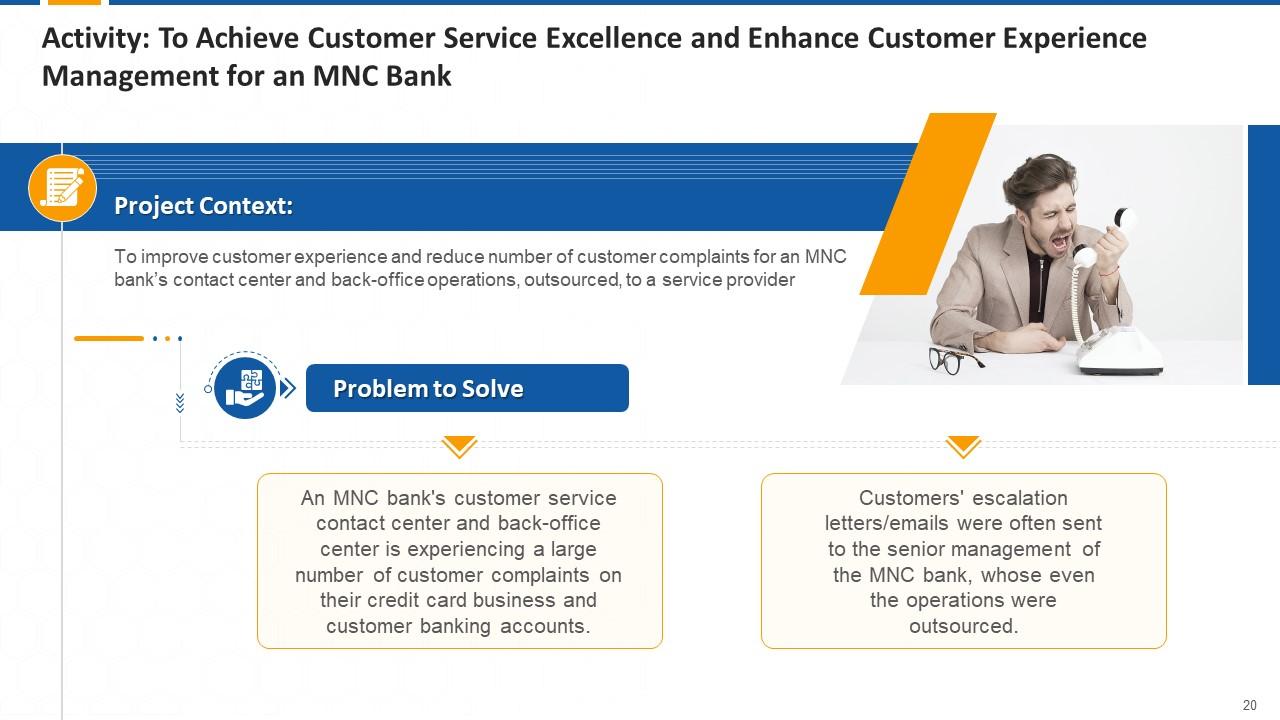
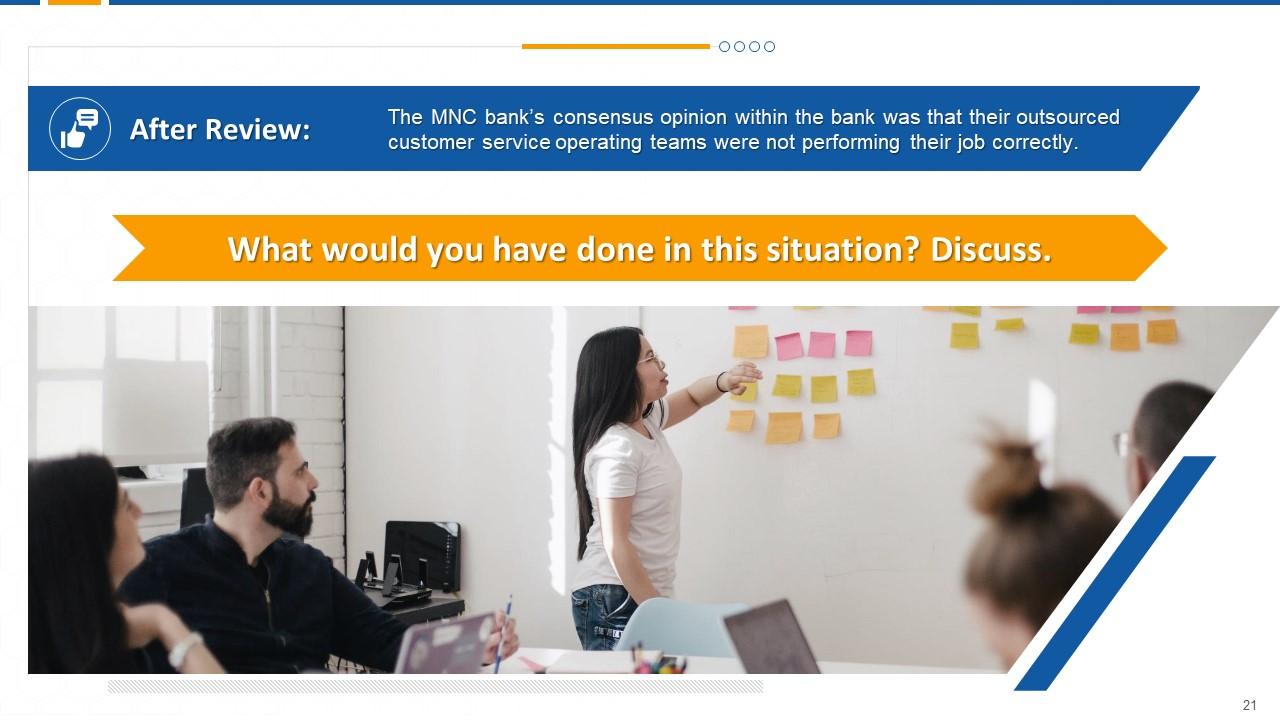
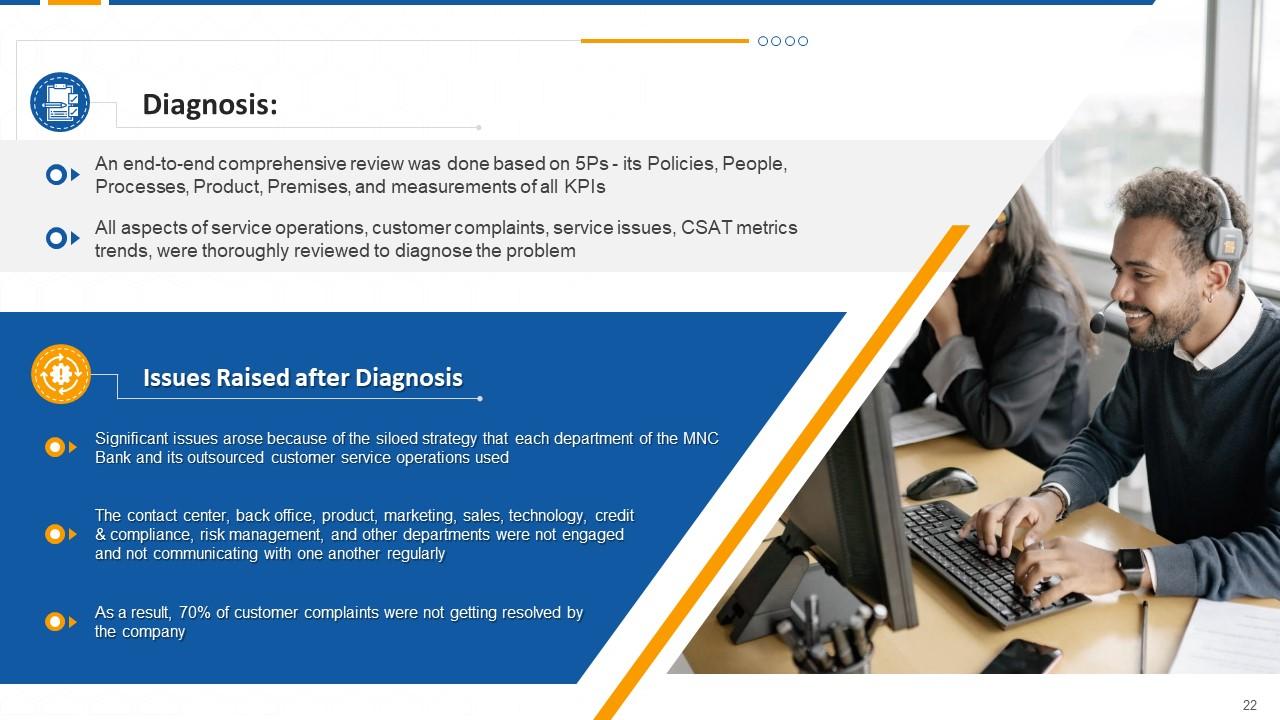
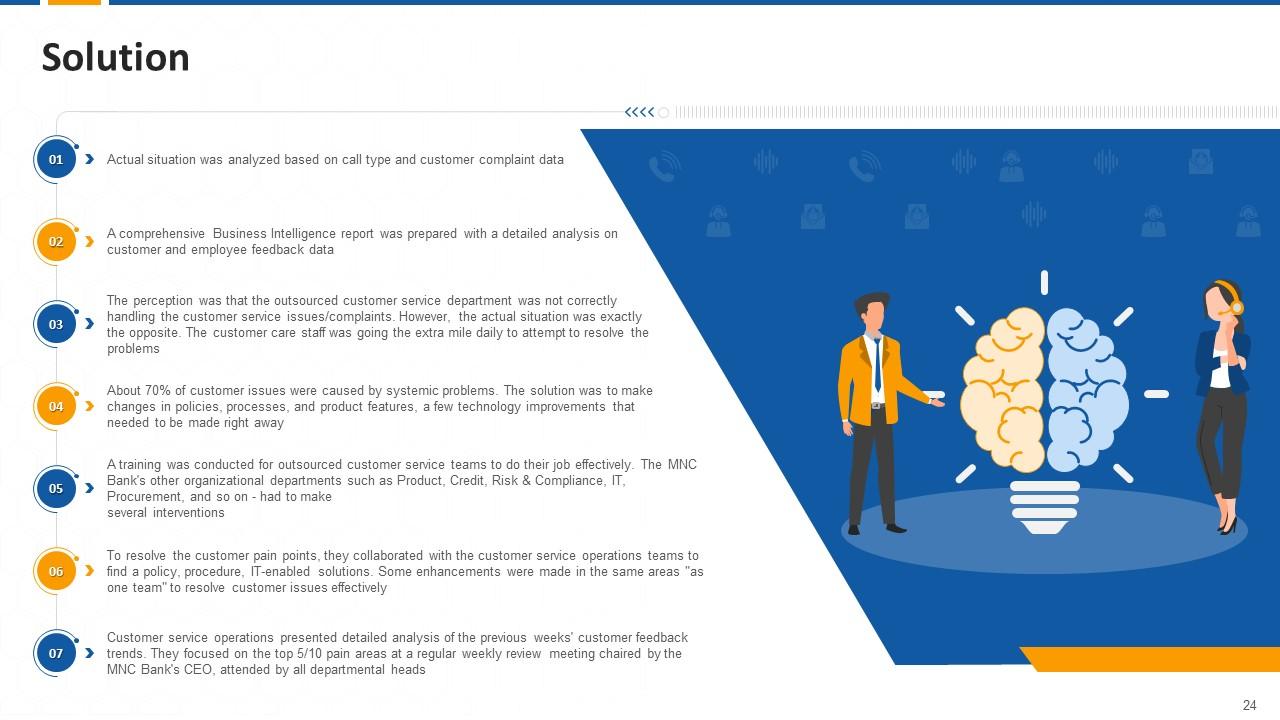
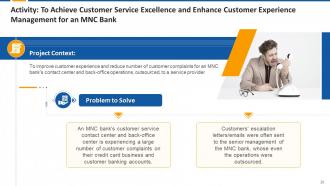
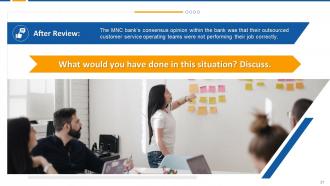
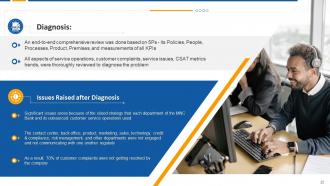
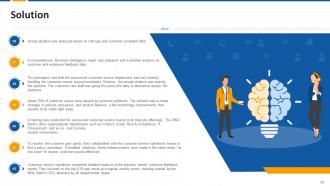
These slides cover a case study of a multinational bank, highlighting the significance of excellent customer service.

FAQs for Activities For Customer Service

Oh, this is actually pretty fun stuff! So we do role-playing with difficult customers, but here's the twist - halfway through, people switch roles. The trainee becomes the angry customer and vice versa. Sounds weird but it totally works. Mystery shopper simulations are gold too - they don't know they're being "tested" so you get real reactions. We also do empathy mapping where everyone brainstorms what the customer's actually thinking beyond just their complaints. And that improv "Yes, and..." technique? Game changer for keeping people solution-focused instead of getting all defensive. Just pick one per session though - don't overwhelm them.

Honestly, the key is using situations your team actually faces - pissed off customers, refund drama, tech problems, you know the drill. Have people switch roles so they see both sides. I love throwing in weird scenarios because customers are unpredictable as hell! The magic happens during the debrief though. Talk through what bombed, what clicked, different ways to handle it. Don't make it feel like you're grading them or anything. Recording sessions helps too - people learn tons watching themselves back, even if it's kinda cringey at first.

Honestly, I'd start with the obvious stuff - CSAT scores and how often people solve things on the first call. Those tell you the most. Average handle time matters too, but don't obsess over it since rushing customers never ends well. Employee confidence surveys are actually gold - sometimes your team feels way better before you see it in the numbers. Throw in some follow-up quizzes a few weeks later to see what stuck. The real magic happens when you combine what customers are saying with how your agents feel. Pick maybe 2-3 things you can actually track without going crazy.

VR is perfect for this - no real angry customers needed (thank god). Your team can practice tricky situations over and over until they get it right. They'll work on body language, tone, all that stuff in a totally safe space. The headsets track how they're doing too, which is pretty cool for figuring out what needs work. You can simulate anything really - crazy busy stores, phone support nightmares, whatever. I'd start with simple scenarios first though. Once everyone's comfortable with the tech, then go nuts with more complex situations.

Real customer stories are honestly a game-changer for training. Your team gets to practice with actual situations instead of those cringey role-play scenarios nobody likes. The language feels natural, emotions are genuine, and it's messy like real life - not some sanitized textbook example. Builds empathy too when they hear what customers actually go through. Oh, and it helps with the weird ones you'd never think to script. Start saving those interactions now - both the wins and disasters make perfect case studies.

Okay so first thing - set some ground rules like no judging each other and what happens here stays here. Role-play with real scenarios but obviously change the details so it's not weird. Small groups work way better than big ones, trust me on this. Give them some basic scripts at first (people panic without them), then take away the training wheels later. The awkward moments? Those are actually gold - have everyone talk through what sucked and what didn't after each round. Honestly, the messier it gets, the more they'll learn from it.

Definitely do shorter sessions - like 30-45 minutes max because remote training fatigue hits hard. Role-playing over video works great, plus breakout rooms where people can actually practice with your customer service software. I'd make it way more interactive than normal since everyone zones out on video calls (honestly, I do it too). Throw in polls, use the chat constantly, check in with people frequently. The screen-sharing practice sessions are clutch - lets them mess around with the tools in real-time. Oh, and record everything! People always want to go back and rewatch the parts they missed or didn't quite get the first time.

Honestly, gamification works because people get weirdly competitive about the dumbest things - even training points. You throw in some badges or leaderboards and suddenly everyone's actually paying attention instead of scrolling their phones. The feedback is instant too, which helps stuff stick. Like, nobody remembers boring slide presentations, but they'll definitely remember earning that "customer whisperer" badge or whatever. Makes tracking engagement super easy for you. I'd start basic - just give points for role-plays and quizzes. You can always add more fancy stuff later if it's working.

Honestly, the biggest pain is dealing with those veteran employees who think training is beneath them. Scheduling's a nightmare too - good luck getting everyone in the same room. Budget's always tight, which sucks because management wants instant results even though changing people's habits takes forever. Role-playing makes everyone cringe, so participation drops fast. Here's what actually works though: find a few people who are genuinely excited about it first. Once they start seeing results, use their stories to slowly convert the doubters. Starting small is way better than trying to overhaul everything at once.

Honestly, every 6-12 months is pretty standard for refreshing customer service training. Tech and retail probably need it more often though - like quarterly - since things change so fast. Watch for patterns in complaints too. That's usually when you know something needs updating. New communication channels pop up constantly, policies shift, customer expectations evolve. It's wild how quickly things change. Annual reviews work fine for slower-moving industries. I'd set a calendar reminder right now if I were you - even tiny tweaks help keep your team on point. Oh, and don't wait for the scheduled review if you're seeing the same issues repeatedly.

Honestly, you can't skip the feedback part - it's like flying blind otherwise. Get input from both your trainees and customers. The trainees will definitely tell you if something feels fake or awkward (probably more bluntly than you'd like). Customer feedback shows if it's actually working in real situations. I'd set up surveys after each training module, then check customer satisfaction scores every few months or so. That way you catch issues before they stick. Without feedback loops, you're basically just hoping for the best and crossing your fingers.

Role-playing scenarios work really well - have your team practice with customers from different backgrounds, cultures, and accessibility needs. Cover LGBTQ+ clients, elderly customers, people with disabilities. Most companies totally skip this stuff and you can tell! Train them on unconscious bias and how different cultures communicate. They need to practice adapting their style based on what each customer needs. Oh, and inclusive language is huge too. The trick is keeping it practical though - give them situations they'll actually face instead of just boring theory. Real examples make all the difference.

Honestly, role-playing is your best bet here. Get employees practicing with fake angry customers - way better than just talking about it. Use real scenarios you've dealt with before. Teach them active listening and empathy stuff, plus when they should just pass it up to management. Video training helps with body language too, though that might be overkill depending on your budget. Maybe bring in someone who actually knows conflict resolution? Oh, and start with your calmest employees as practice partners first. Don't throw the newbies into chaos right away - that's just mean.

Honestly, peer learning just works better because your teammates have been in those exact messy situations. When Sarah tells you how she handled that nightmare refund case, it actually sticks - way more than some corporate training video. People ask the real questions with coworkers too, not the polite ones they'd ask a trainer. I've noticed experienced reps get pretty invested in teaching the new folks, which is cool for team morale. Try pairing newbies with your seasoned agents weekly for problem-solving stuff. You'll see skills improve faster and everyone bonds more. Works every time.

Oh, "Customer Service Superheroes" is perfect for this! Have everyone share their customer service "superpower" and when they've used it. People eat that stuff up - everyone loves bragging about their wins a little. You could also flip "Two Truths and a Lie" to be all customer service stories, or just have them talk about the best service they've gotten as customers themselves. The scenario game works well too. Give them a tough customer situation and let pairs hash out solutions. Honestly, any of these will loosen people up before the real training starts. Just match whatever vibe your group has going.

Ratings and Reviews

90% of 100
Review Form
Write a review
Most Relevant Reviews
  1. 100%

    by Williams Nelson

    Innovative and Colorful designs.
  2. 80%

    by Curt Bryant

    Satisfied with the way SlideTeam resolved my query regarding the right business PPTs that I was having difficulty finding. I found the perfect match with their assistance.

2 Item(s)

per page: