


Idea development process strategies and architecture powerpoint presentation slides
The trick to attract audience towards business development ideas slide presentation starts with a simple click. Yes you require a simple click to download our idea development process strategies and architecture PowerPoint presentation. To make it further easy for you here are few tips to use this readymade PPT example. With help of this PowerPoint show you can symbolically inspire your workforce to come up with more and new product ideas for business development. Additionally, this PPT sample supports to foster a feeling of teamwork for generating business development ideas and effective strategic planning process. Apart from this, by using these PowerPoint presentation slides you can also portray various other closely related concepts like group creativity techniques, creative problem solving, mass collaboration, thinking outside the box and many more like these. To thoroughly cover the topic exclusive presentation templates like procedure of brainstorming, mind maps for brainstorming, star busting, role storming, morphological analysis, the delphi method etc. are included. In short, by downloading this PPT model it only takes few minutes to deliver a stunning visual communication about ideation. Indulge in a bit of humour with our Idea Development Process Strategies And Architecture Complete Powerpoint Deck With Slides. Drive home your ideas with a grin.
The trick to attract audience towards business development ideas slide presentation starts with a simple click. Yes you req..










-

- Google Slides is a new FREE Presentation software from Google.
- All our content is 100% compatible with Google Slides.
- Just download our designs, and upload them to Google Slides and they will work automatically.
- Amaze your audience with SlideTeam and Google Slides.
-

Want Changes to This PPT Slide? Check out our Presentation Design Services
-

- WideScreen Aspect ratio is becoming a very popular format. When you download this product, the downloaded ZIP will contain this product in both standard and widescreen format.
-

- Some older products that we have may only be in standard format, but they can easily be converted to widescreen.
- To do this, please open the SlideTeam product in Powerpoint, and go to
- Design ( On the top bar) -> Page Setup -> and select "On-screen Show (16:9)” in the drop down for "Slides Sized for".
- The slide or theme will change to widescreen, and all graphics will adjust automatically. You can similarly convert our content to any other desired screen aspect ratio.
Compatible With Google Slides

Get This In WideScreen
You must be logged in to download this presentation.


Do you want to remove this product from your favourites?
PowerPoint presentation slides
Perfect for professional like product designers, strategy planners, marketing managers, creative heads, business problem solvers.Runs smoothly with all software’s. High resolution PowerPoint slides graphics. Download instantly in a snap. Easy to insert company logo, trademark or name. Well compatible with Google slides. Free of space constraints to mention titles and sub titles. Can be easily converted into PDF or JPG formatsThe stages in this process are stages of brainstorming, brainstorming technique, rules of brainstorming.

People who downloaded this PowerPoint presentation also viewed the following :
Content of this Powerpoint Presentation
Slide 1: This slide introduces to Idea Development Process, Strategies and Architecture. State Your Company Name and get started.
Slide 2: This is an Agenda slide. State your agendas here.
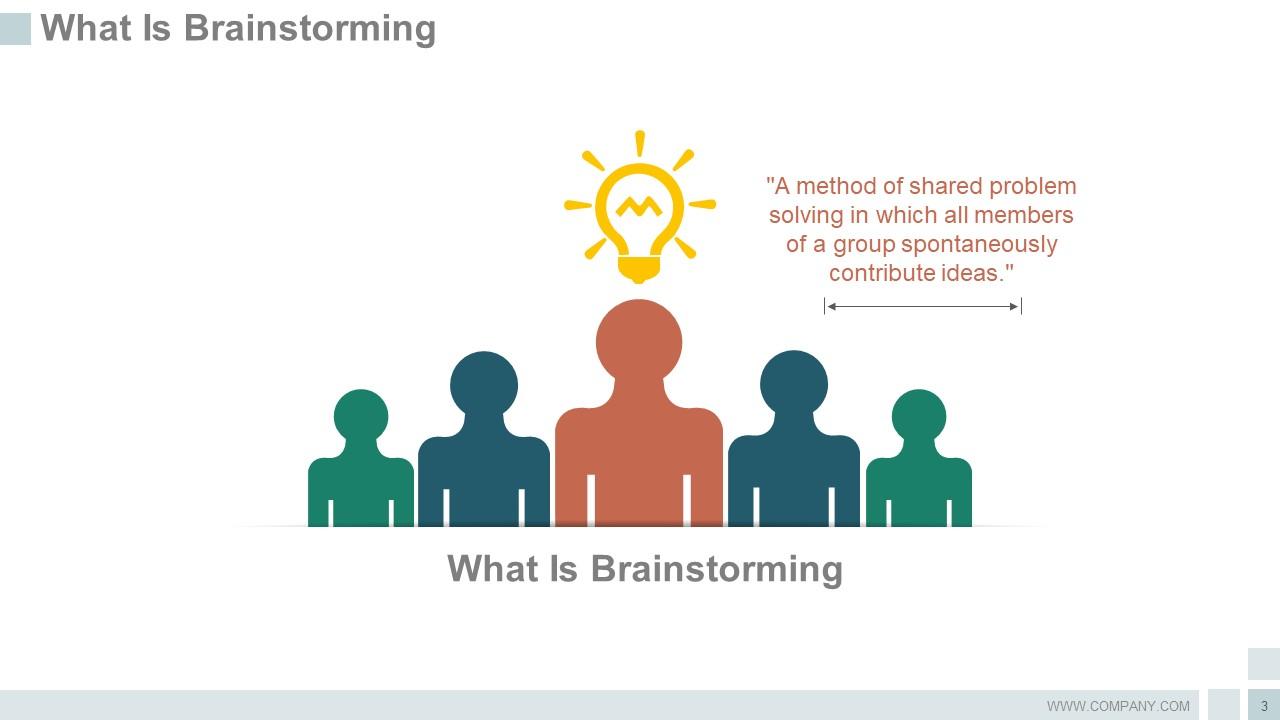
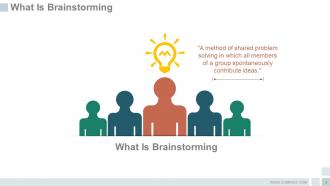
Slide 3: This slide introduces What Is Brainstorming. State your ideation process etc. here.
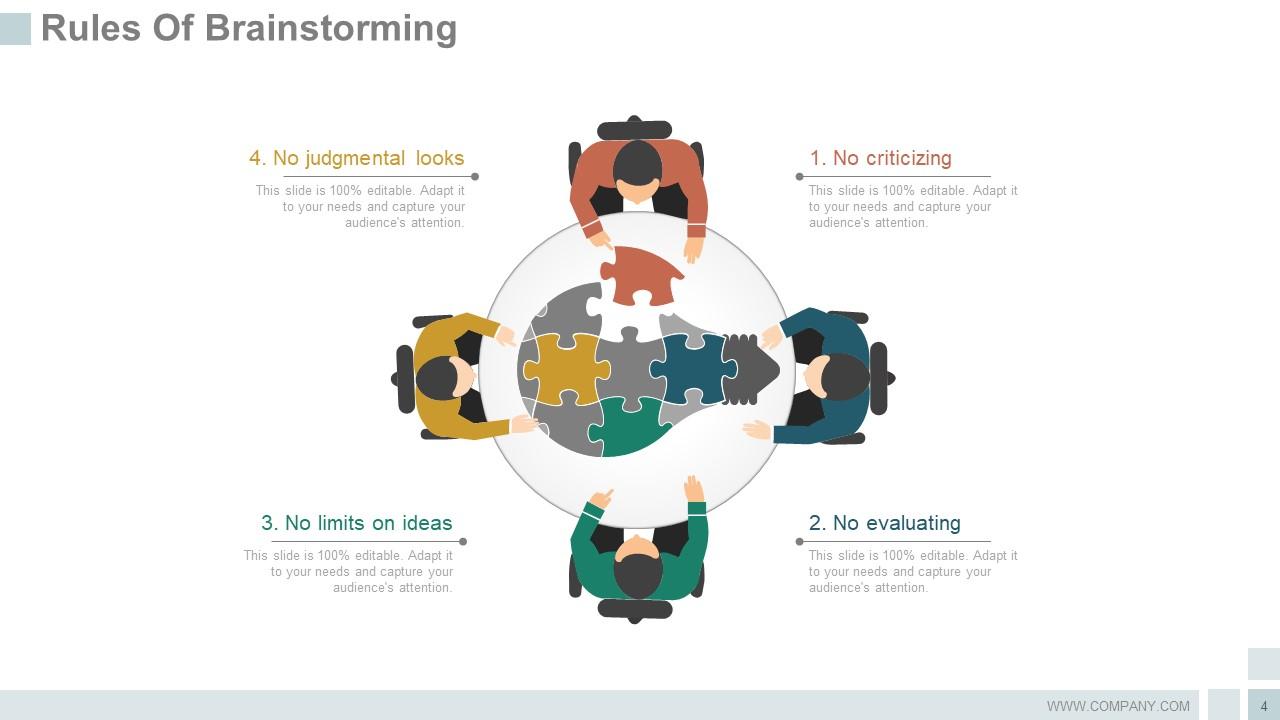
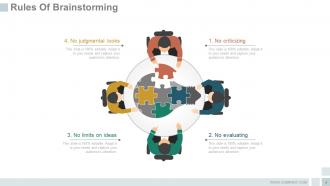
Slide 4: This slide displays Rules of Brainstorming. The listed rules are- 1. No criticizing, 2. No evaluating, 3. No limits on ideas, 4. No judgmental looks.
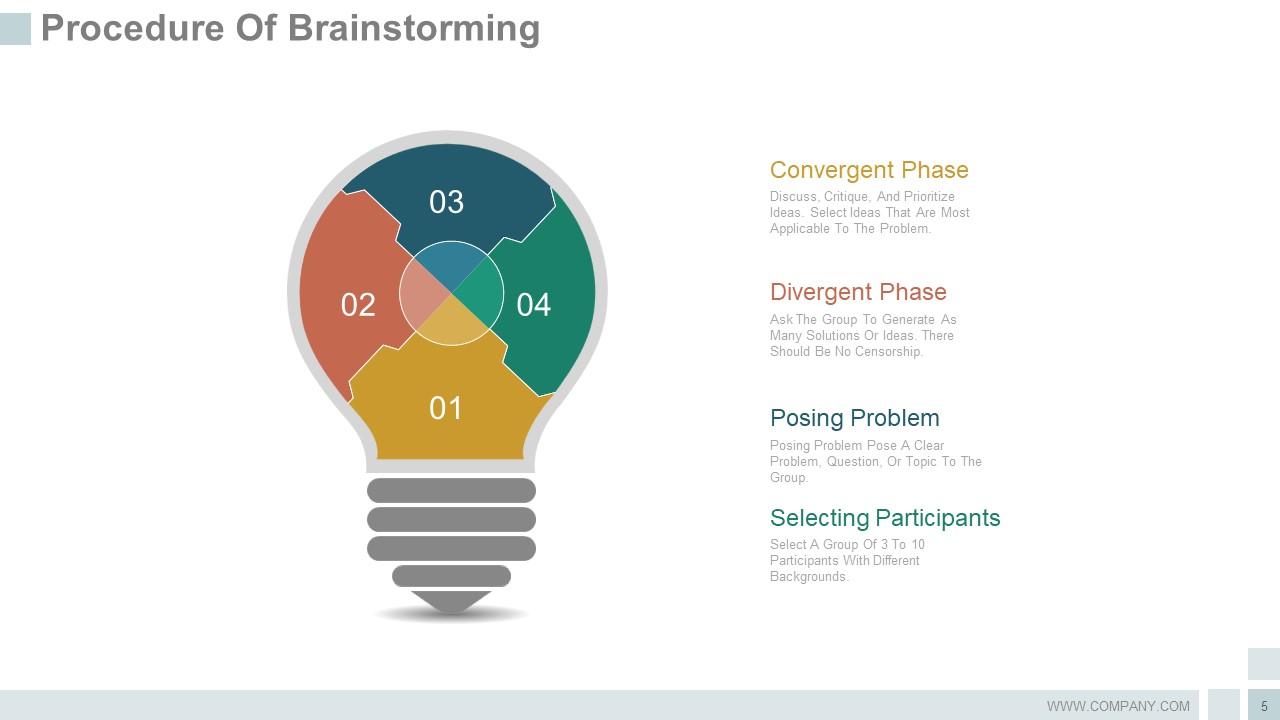
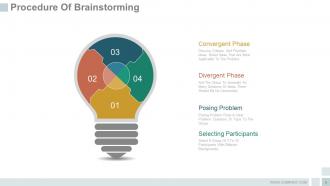
Slide 5: This slide presents the Procedure of Brainstorming. The phases include- Convergent Phase: (Discuss, Critique, And Prioritize Ideas. Select Ideas That Are Most Applicable To The Problem). Divergent Phase (Ask The Group To Generate As Many Solutions Or Ideas. There Should Be No Censorship). Posing Problem (Posing Problem Pose A Clear Problem, Question, Or Topic To The Group). Selecting Participants (Select A Group Of 3 To 10 Participants With Different Backgrounds).
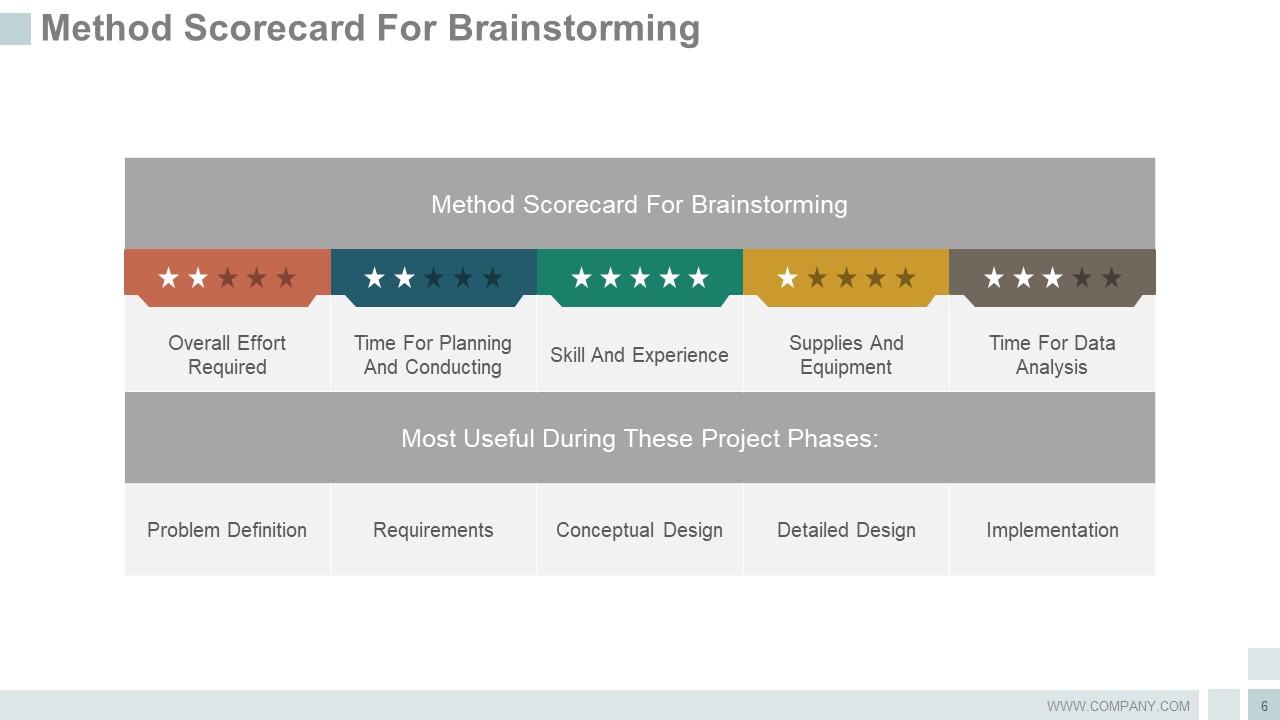
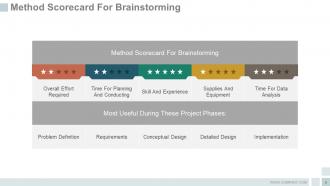
Slide 6: This slide showcases the Method Scorecard For Brainstorming.
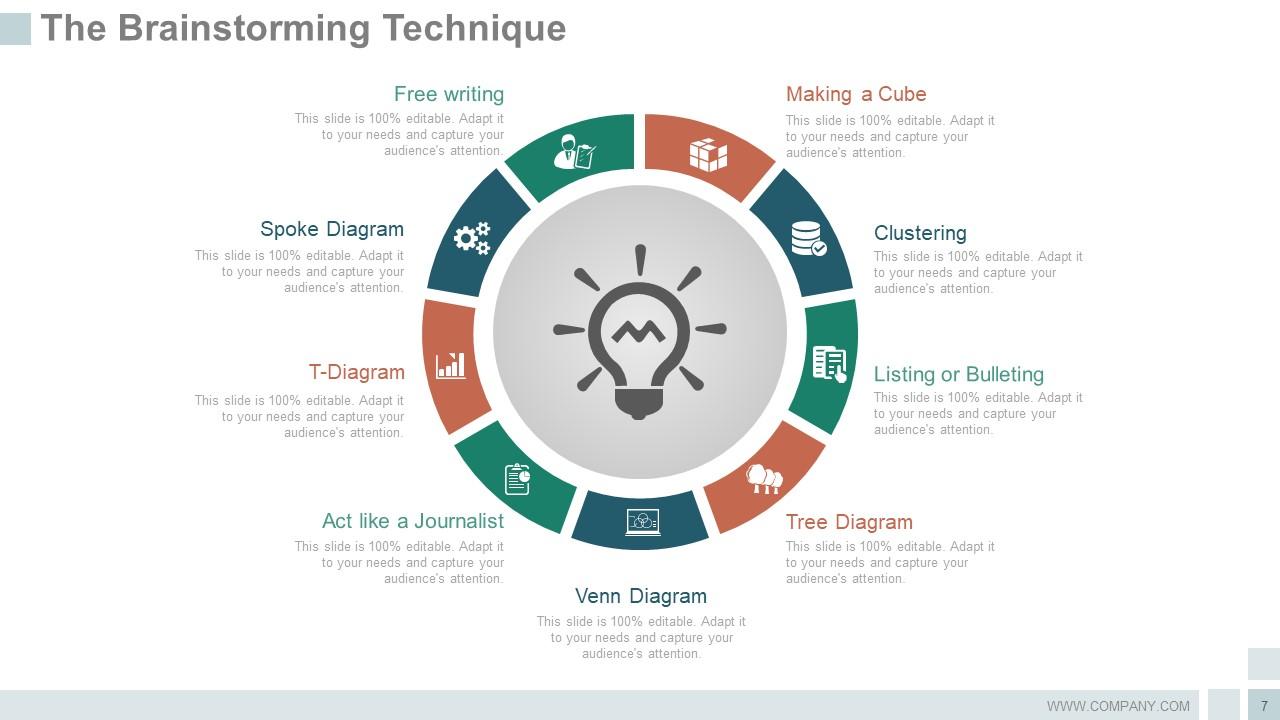
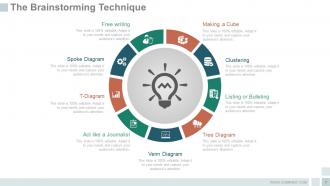
Slide 7: This slide presents The Brainstorming Technique. The listed ones are- Free writing, Making a Cube, Clustering, Listing or Bulleting, Venn Diagram, Tree Diagram, Act like a Journalist, T-Diagram, Spoke Diagram.
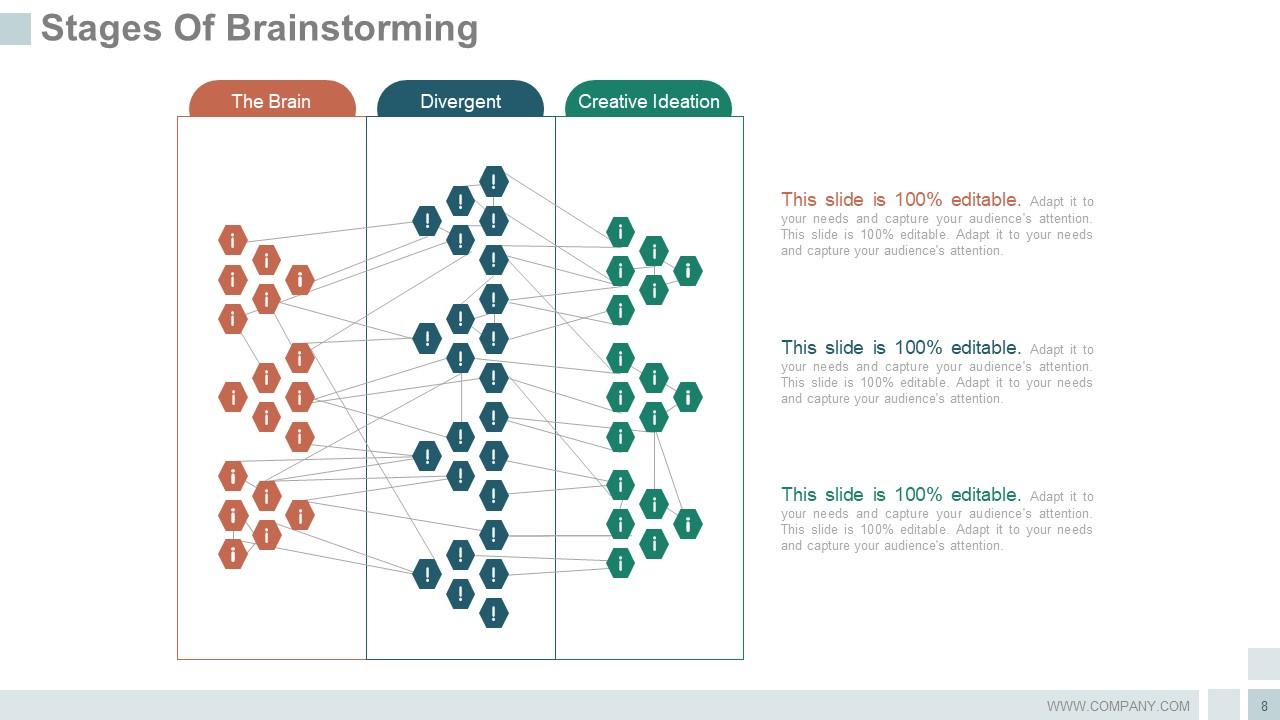
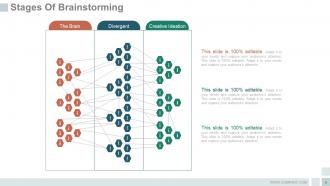
Slide 8: This slide showcases the Stages Of Brainstorming- Creative Ideation, The Brain Dump, Divergent Thinking.
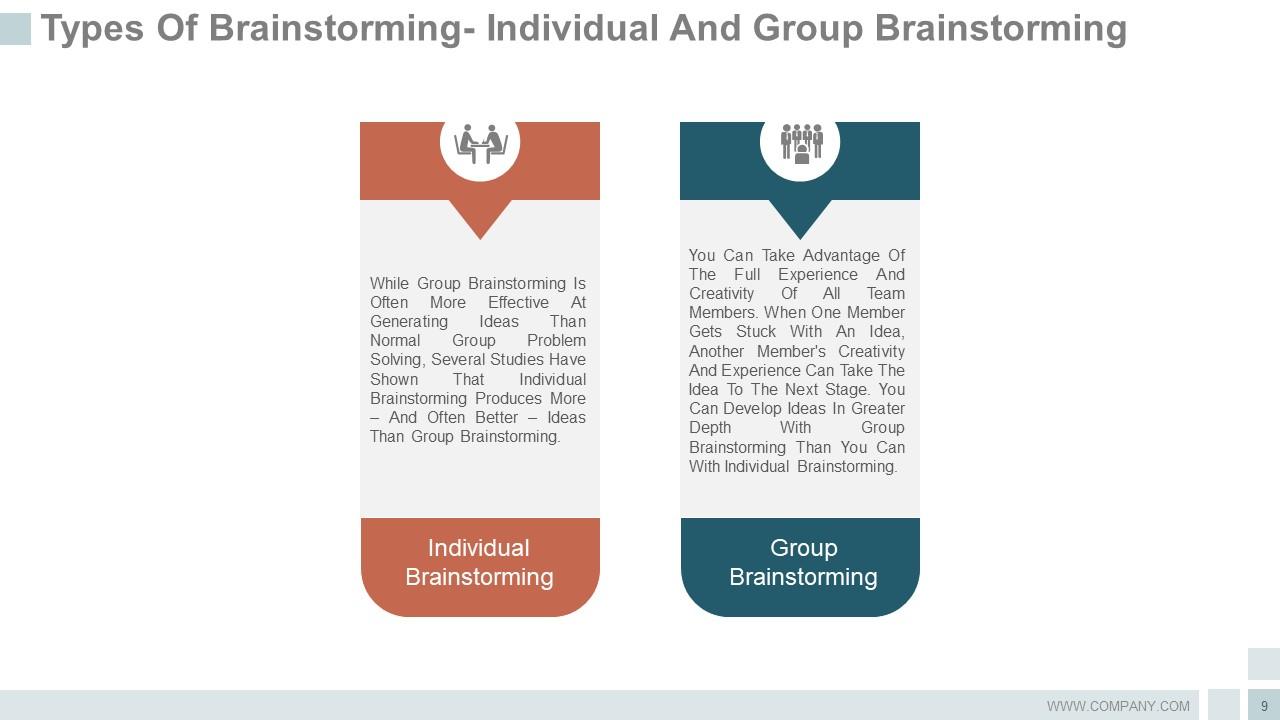
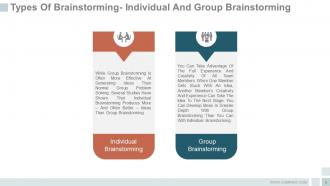
Slide 9: This slide lists factors of Types Of Brainstorming- Individual And Group Brainstorming.
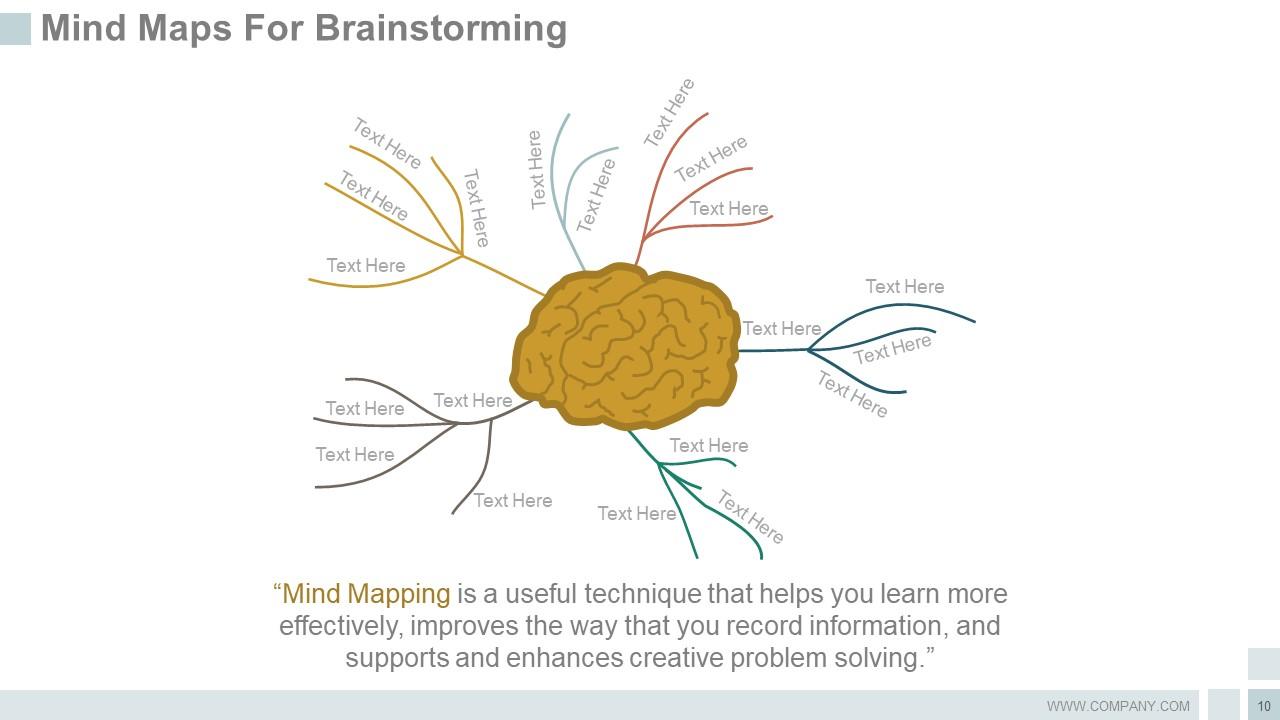
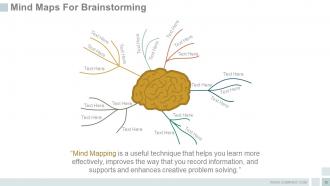
Slide 10: This slide displays Mind Maps For Brainstorming.
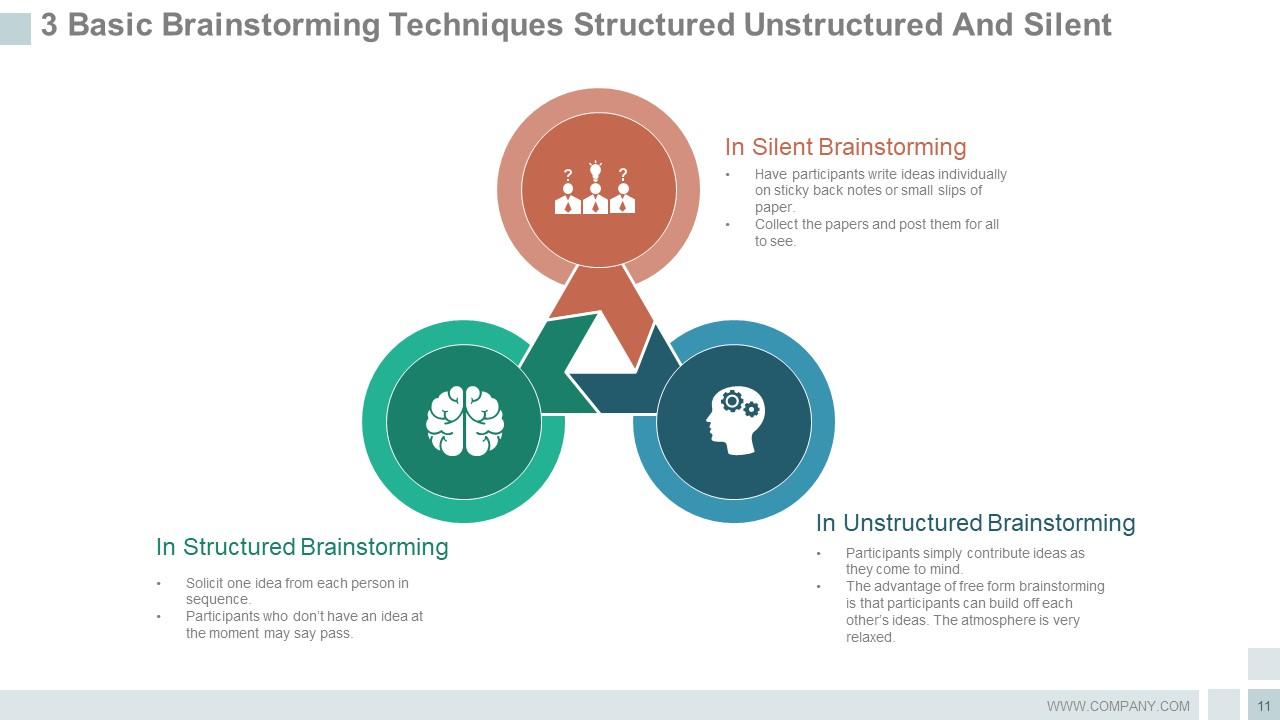
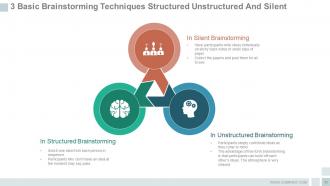
Slide 11: This slide showcases the 3 Basic Brainstorming Techniques- Structured, Unstructured And Silent.
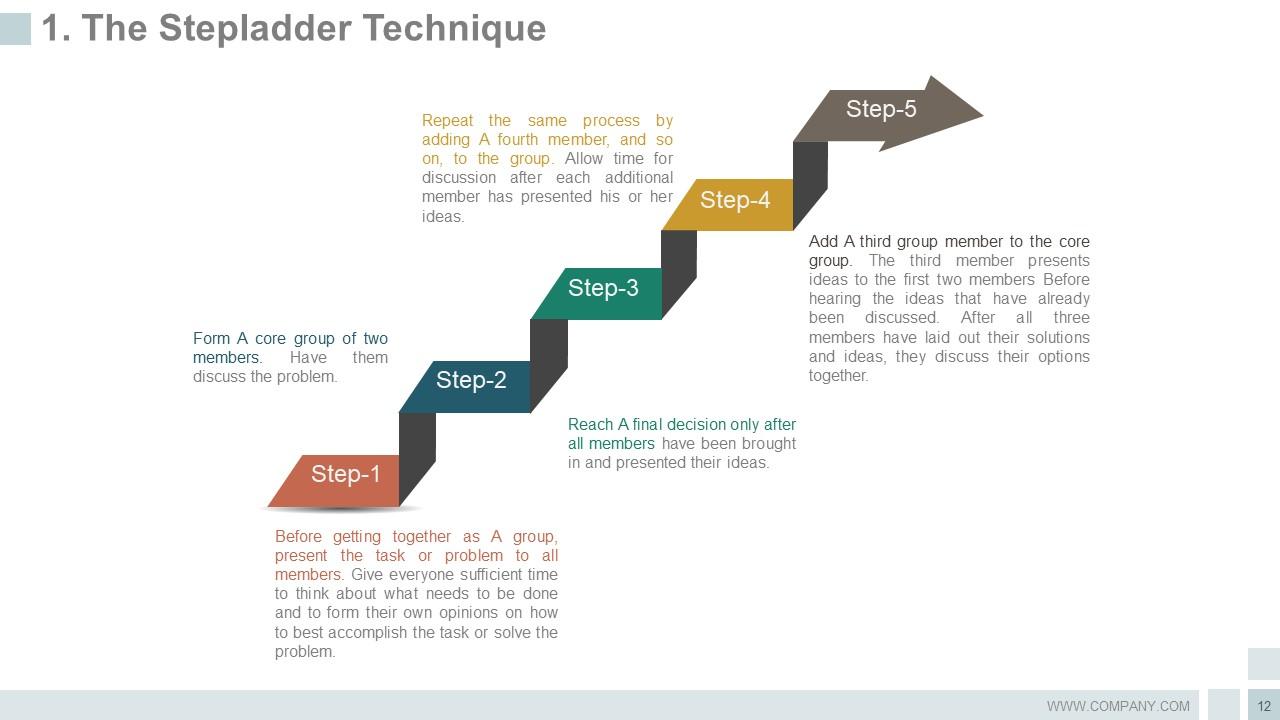
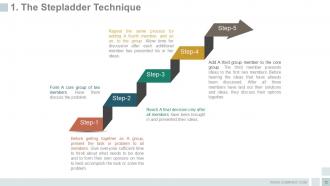
Slide 12: This slide displays The Stepladder Technique with 5 steps.
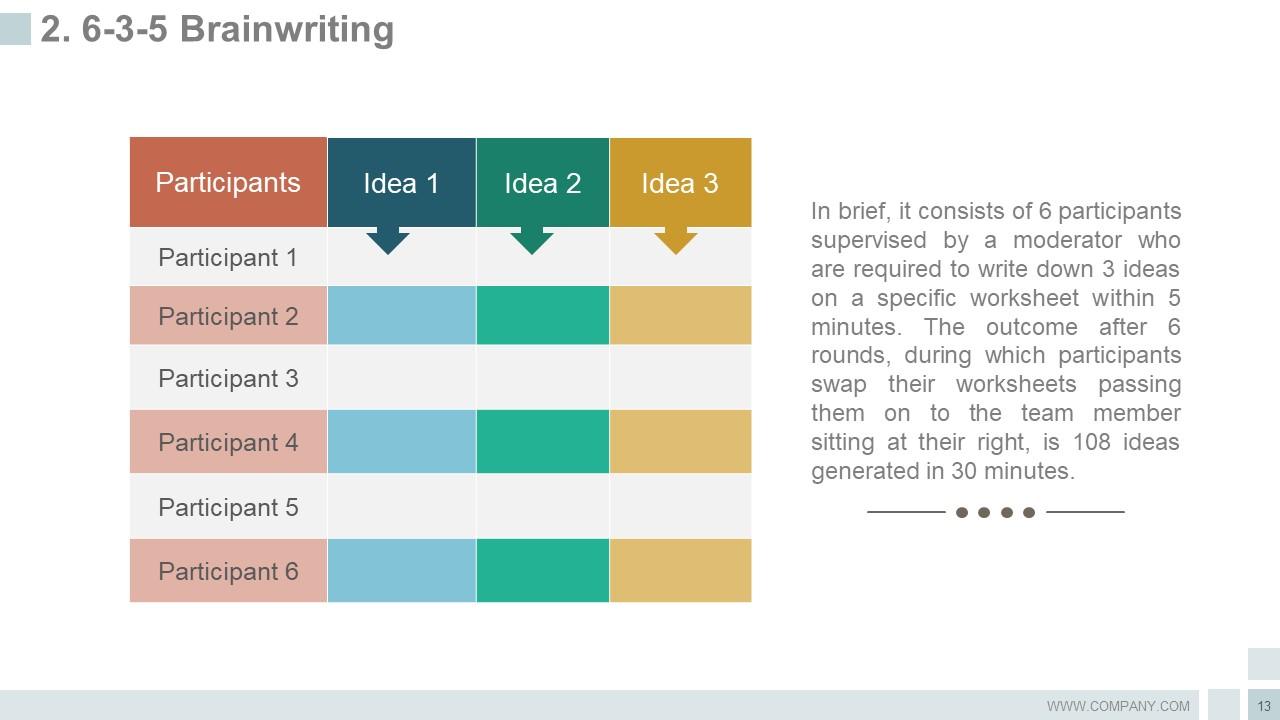
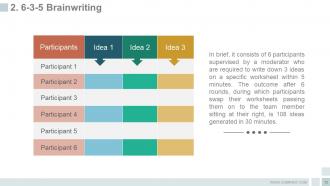
Slide 13: This slide showcases 6-3-5 Brainwriting procedure. In Brief, It Consists Of 6 Participants Supervised By A Moderator Who Are Required To Write Down 3 Ideas On A Specific Worksheet Within 5 Minutes. The Outcome After 6 Rounds, During Which Participants Swap Their Worksheets Passing Them On To The Team Member Sitting At Their Right, Is 108 Ideas Generated In 30 Minutes.
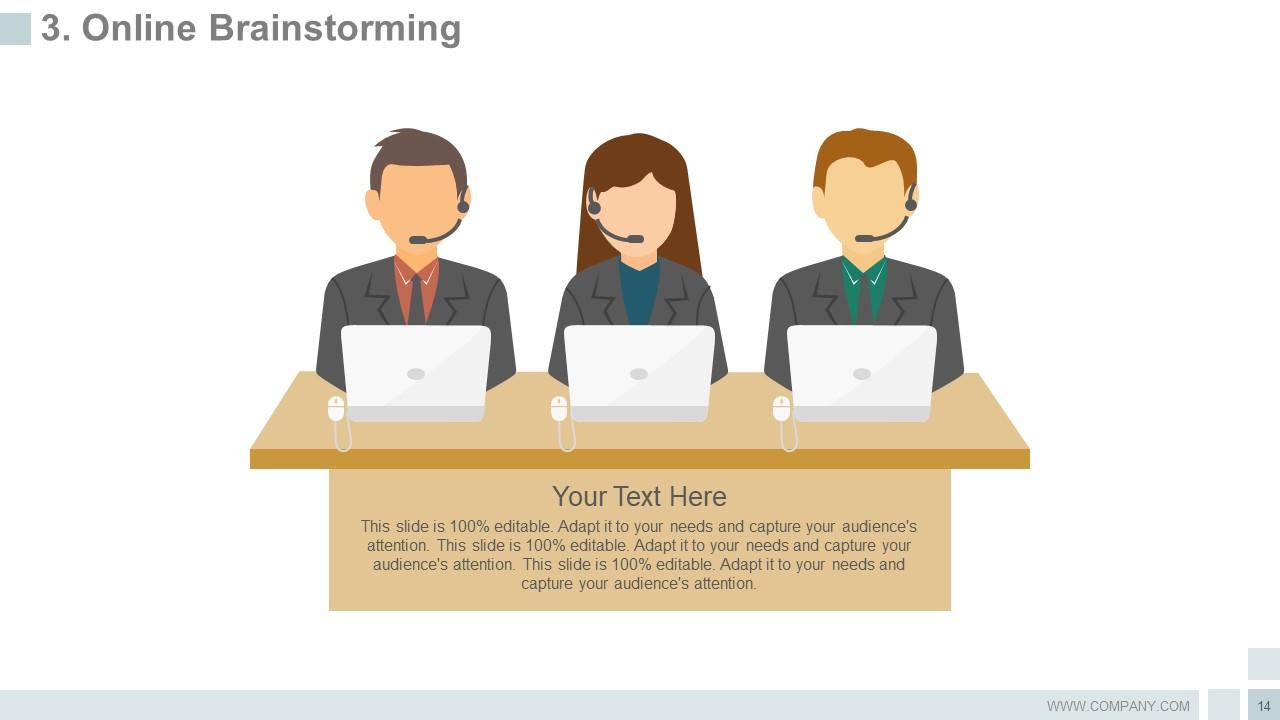
Slide 14: This slide displays Online Brainstorming method with imagery.
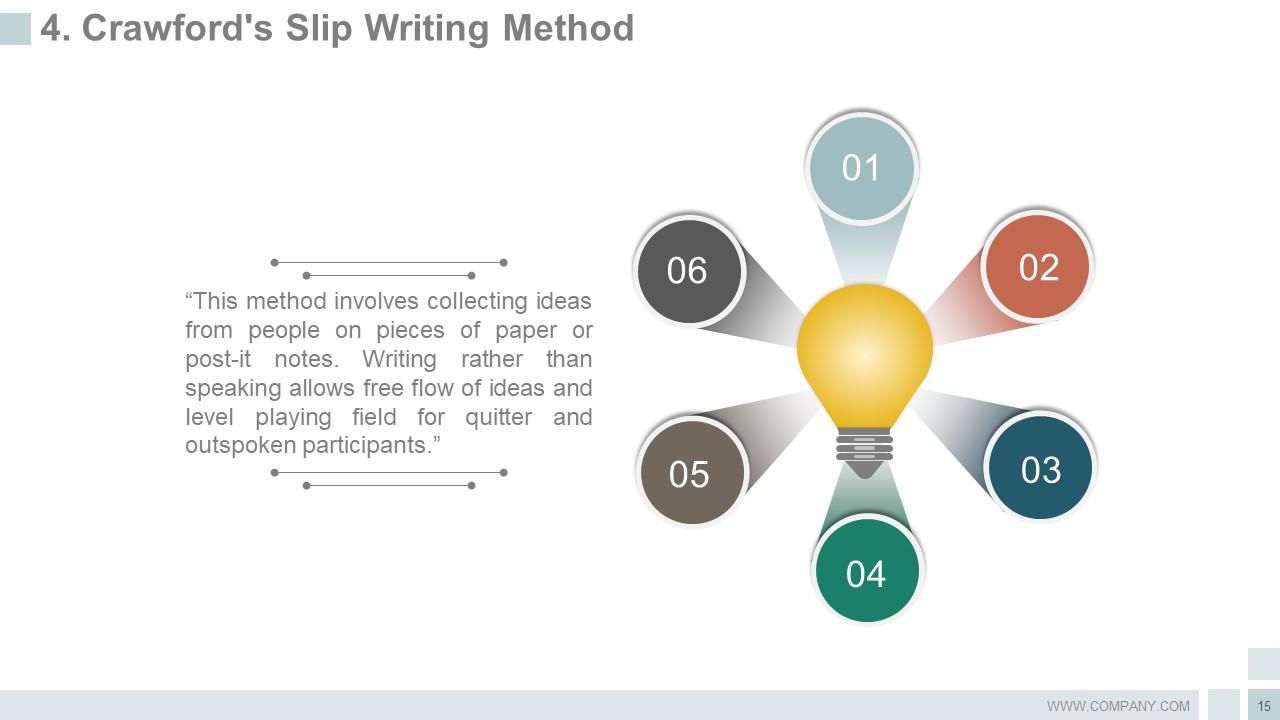
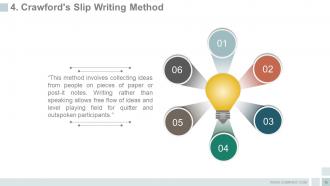
Slide 15: This slide presents Crawford's Slip Writing Method. “This Method Involves Collecting Ideas From People On Pieces Of Paper Or Post-it Notes. Writing Rather Than Speaking Allows Free Flow Of Ideas And Level Playing Field For Quitter And Outspoken Participants.”
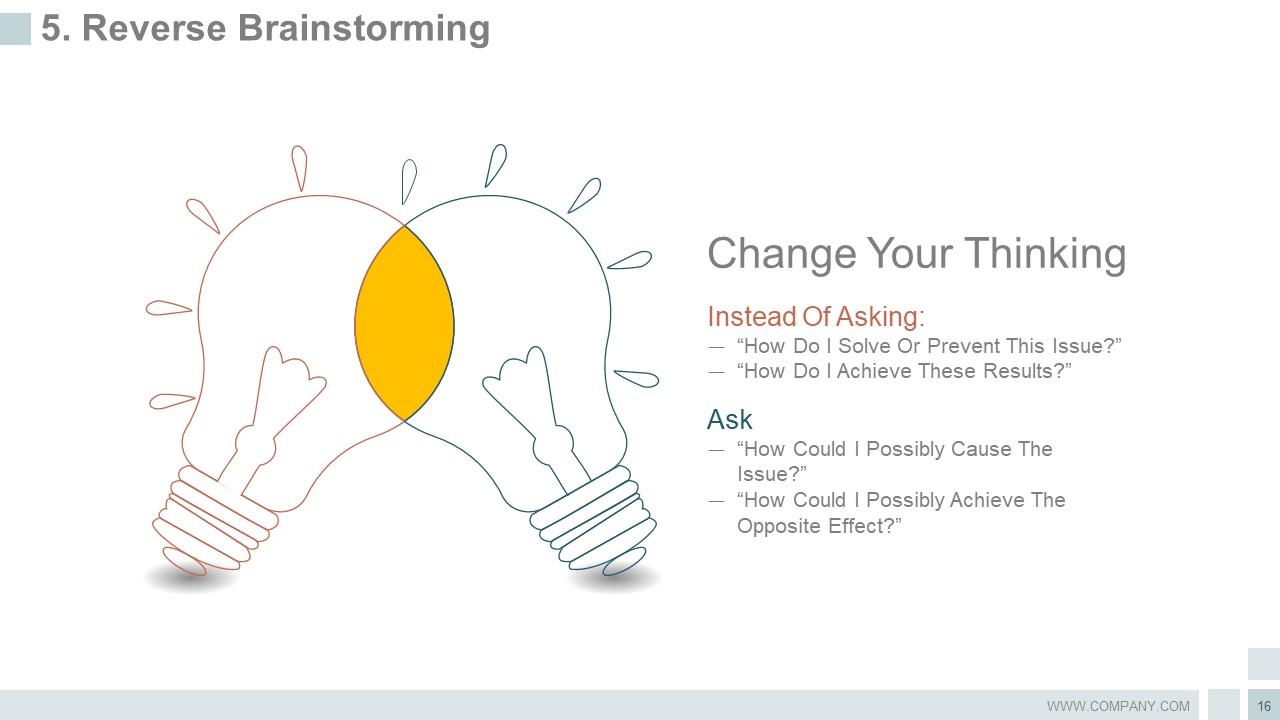
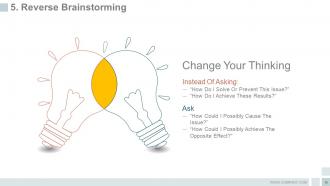
Slide 16: This slide showcases Reverse Brainstorming with the following content- Change Your Thinking: 1: Instead Of Asking: “How Do I Solve Or Prevent This Issue?” “How Do I Achieve These Results?” 2: Ask “How Could I Possibly Cause The Issue?” “How Could I Possibly Achieve The Opposite Effect?”
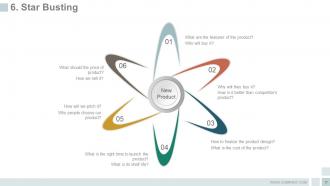
Slide 17: This slide presents Star Busting. The content includes New Product in the center with the following points- Why Will They Buy It? How Is It Better Than Competitor's Product? How To Finalize The Product Design? What Is The Cost Of The Product? What Is The Right Time To Launch The Product? What Is Its Shelf Life? How Will We Pitch It? Why People Choose Our Product? How We Sell It? What Should The Price Of Product? What Are The Features Of The Product? Who Will Buy It?
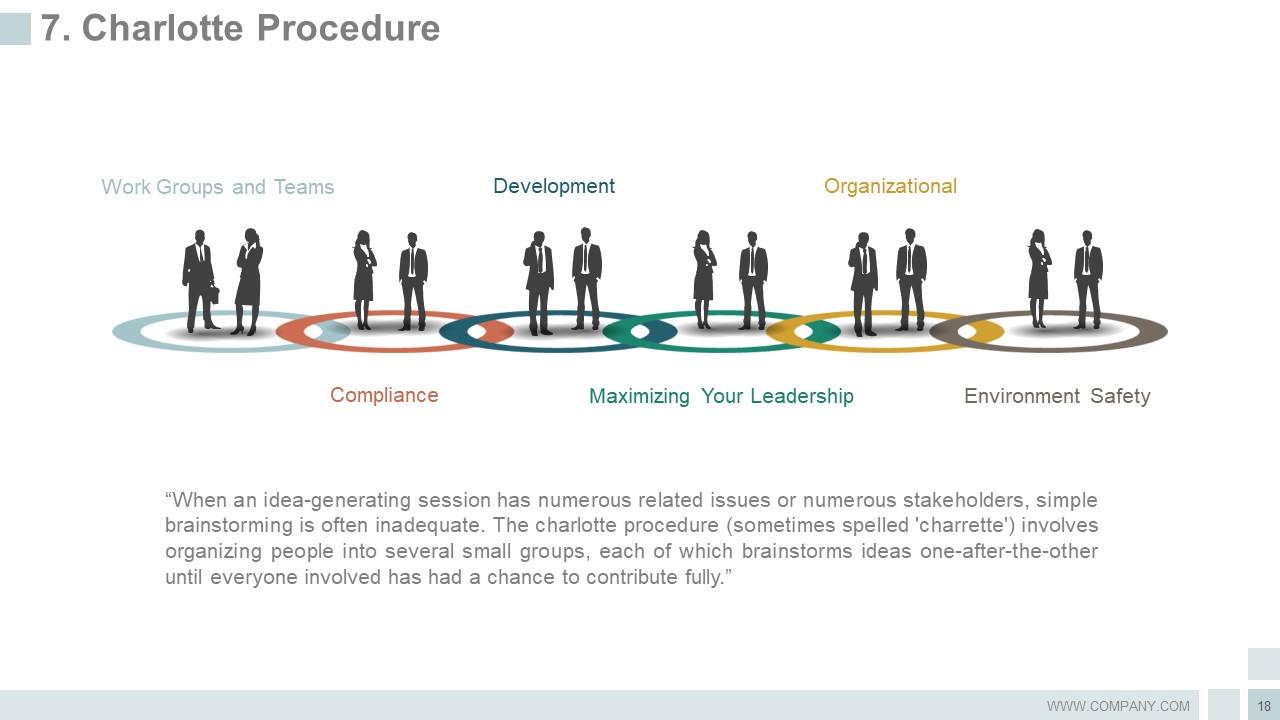
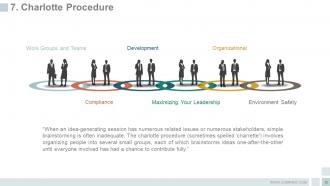
Slide 18: This slide presents the Charlotte Procedure. The context points include- Work Groups and Teams, Development, Organizational, Environment Safety, Compliance, Maximizing Your Leadership.
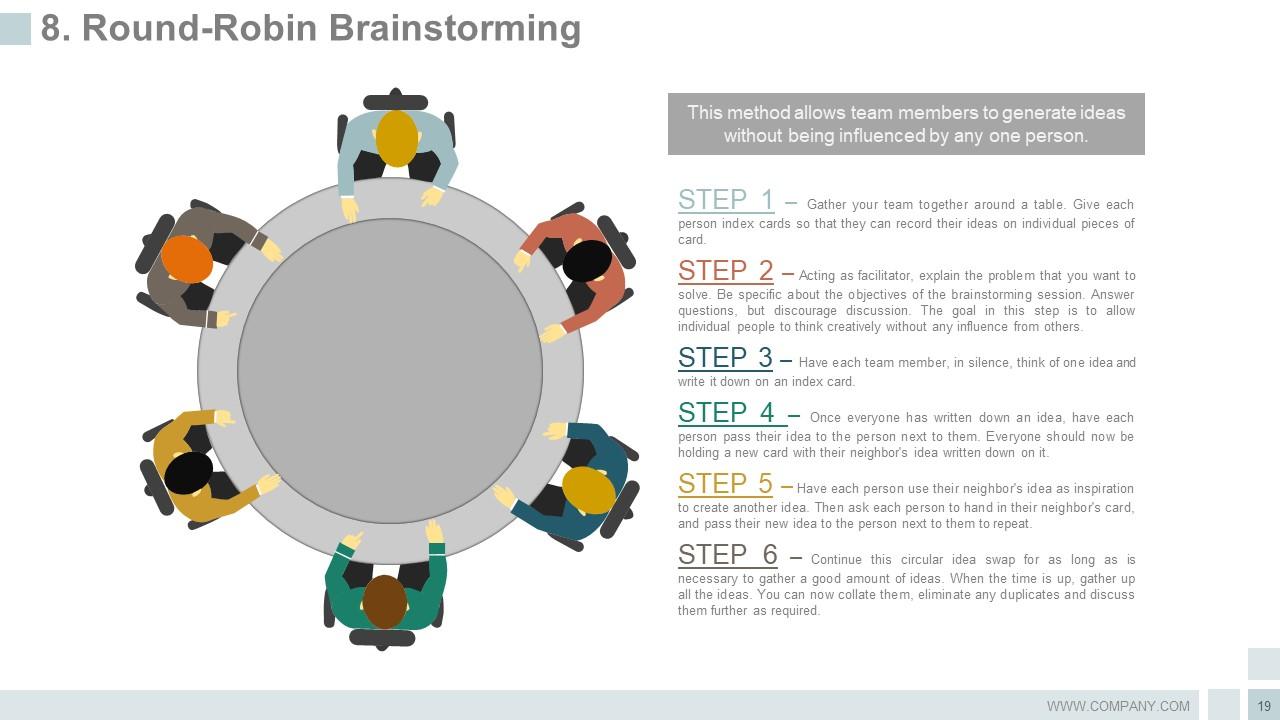
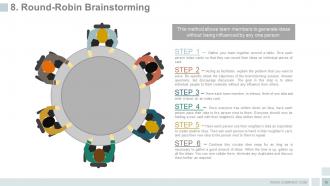
Slide 19: This slide presents Round-Robin Brainstorming with 6 steps. This Method Allows Team Members To Generate Ideas Without Being Influenced By Any One Person.
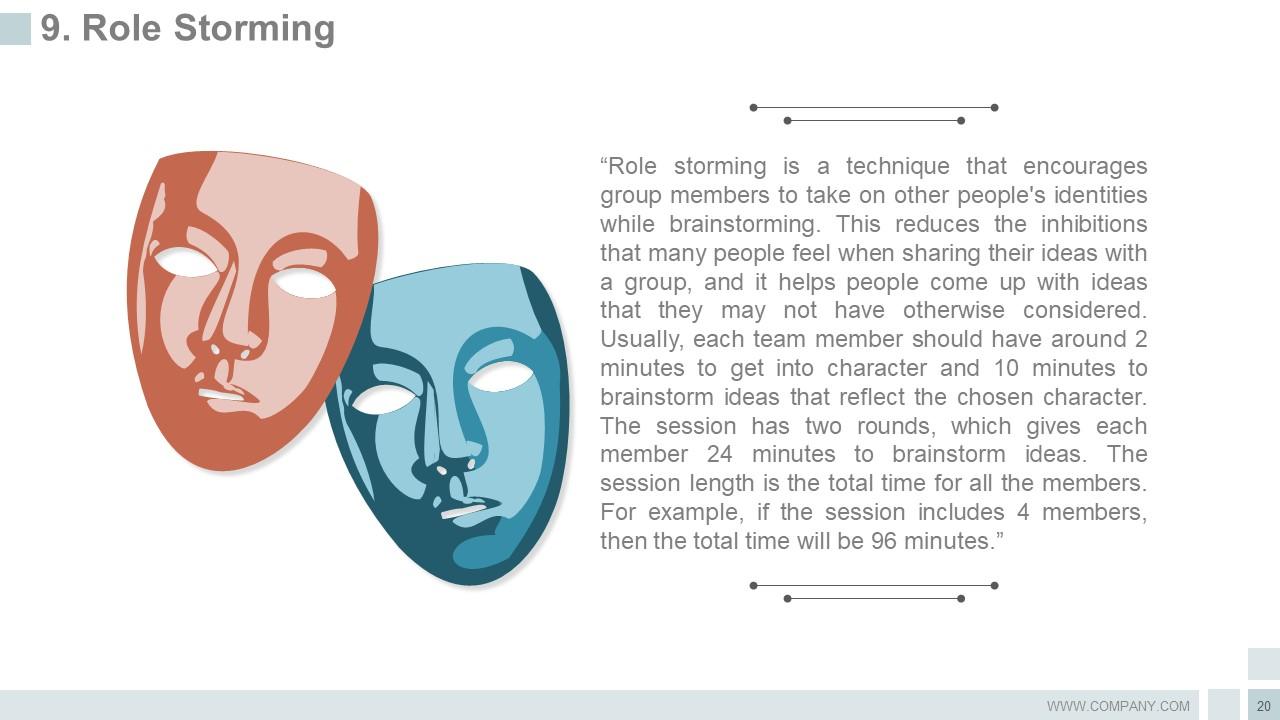
Slide 20: This slide presents Role Storming technique. “Role Storming Is A Technique That Encourages Group Members To Take On Other People's Identities While Brainstorming. People Come Up With Ideas That They May Not Have Otherwise Considered.
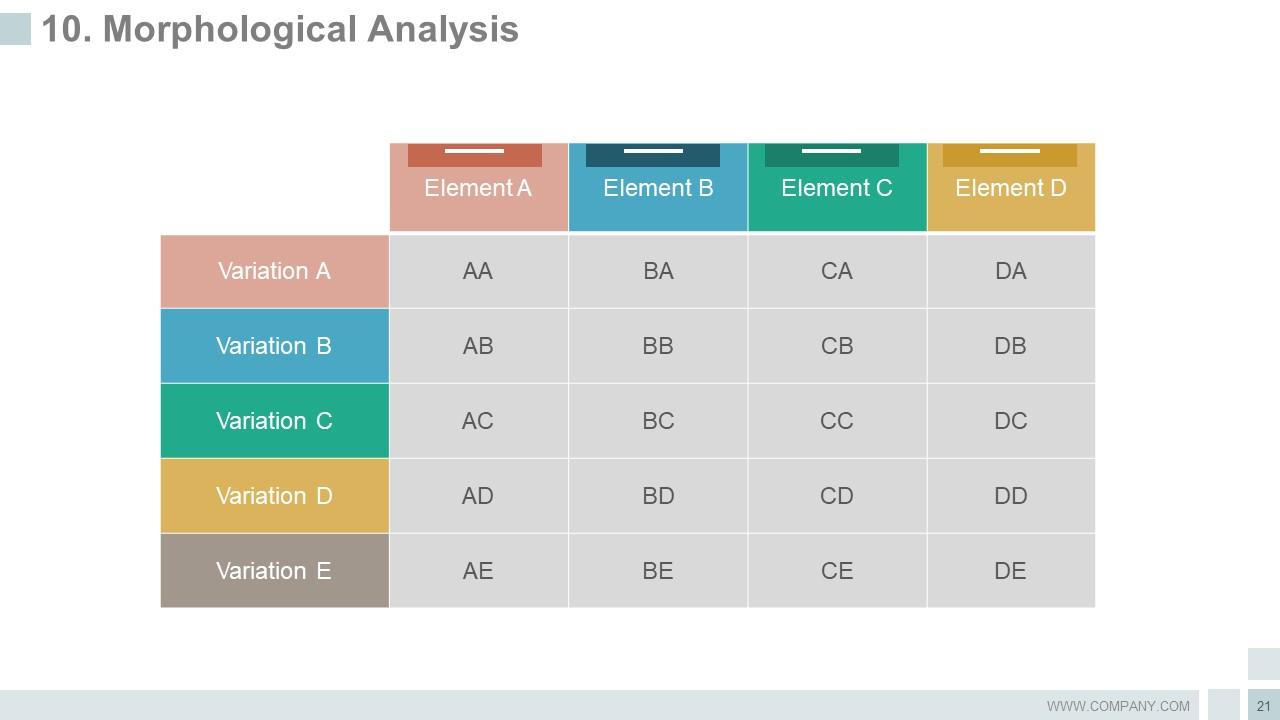
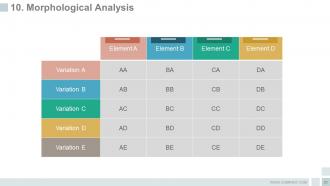
Slide 21: This slide presents Morphological Analysis matrix with variables and elements.
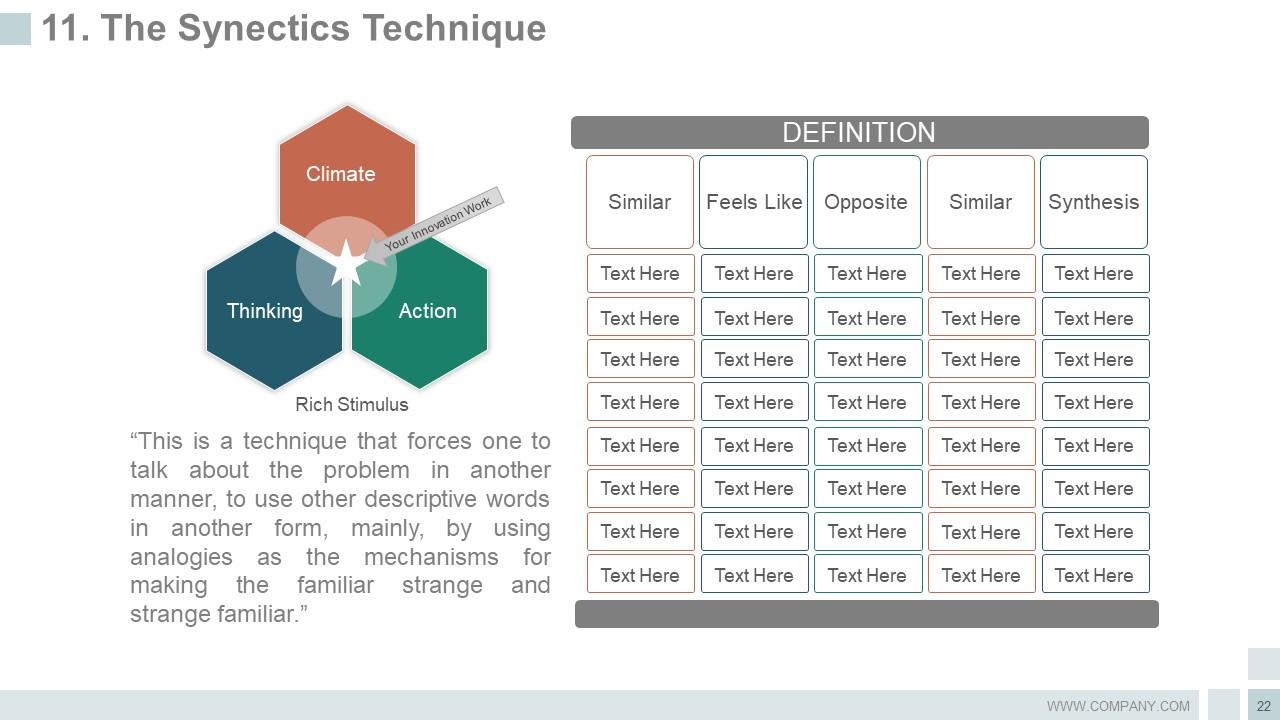
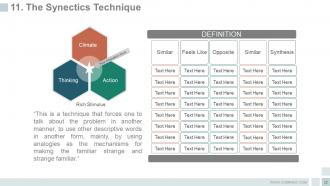
Slide 22: This slide presents The Synectics Technique. This Is A Technique That Forces One To Talk About The Problem In Another Manner. To Use Other Descriptive Words In Another Form, Mainly, By Using Analogies. The main crux includes the Rich Stimulus with the- Climate, Action, Thinking, Opposite, Similar, Synthesis.
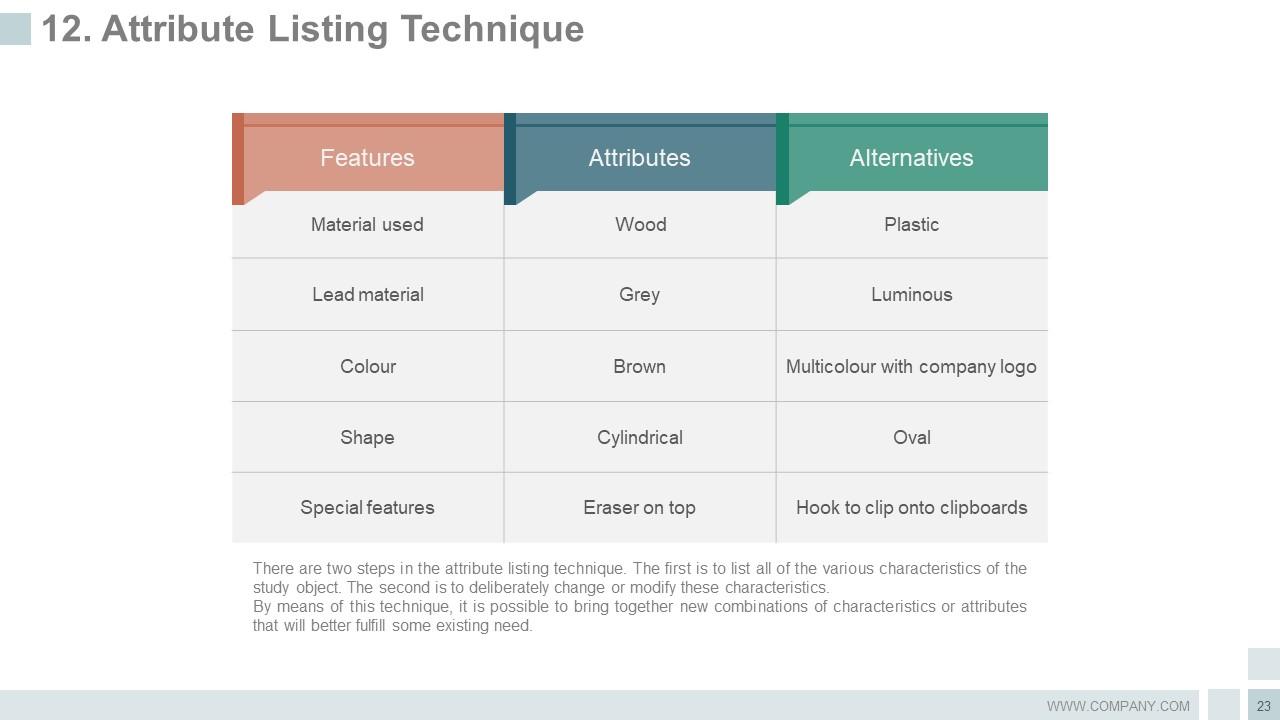
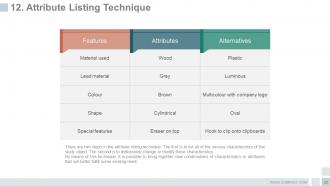
Slide 23: This slide presents Attribute Listing Technique. There Are Two Steps In The Attribute Listing Technique. The First Is To List All Of The Various Characteristics Of The Study Object. The Second Is To Deliberately Change Or Modify These Characteristics. By Means Of This Technique, It Is Possible To Bring Together New Combinations Of Characteristics Or Attributes That Will Better Fulfill Some Existing Need. that will better fulfill some existing need.
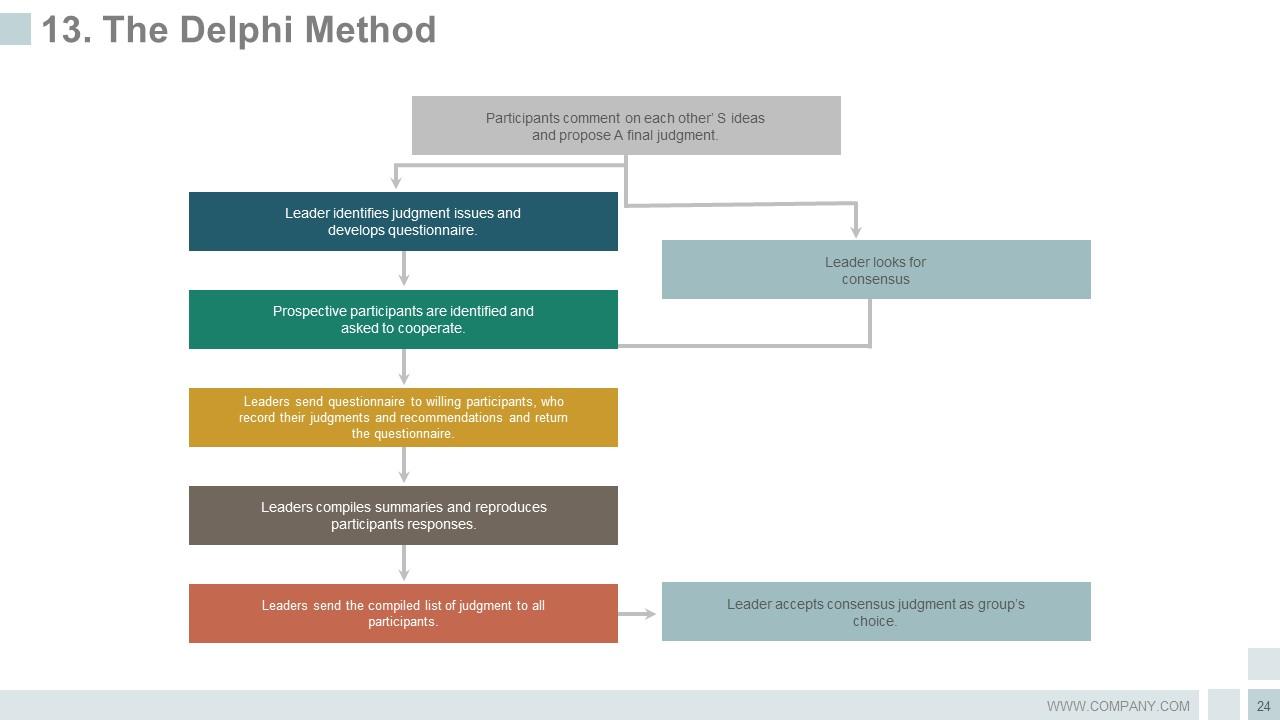
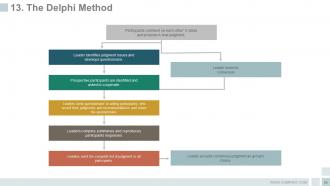
Slide 24: This slide showcases The Delphi Method with the following points- Leader accepts consensus judgment as group’s choice. Leader looks for consensus Participants comment on each other’ S ideas and propose A final judgment. Leader identifies judgment issues and develops questionnaire. Prospective participants are identified and asked to cooperate. Leaders send questionnaire to willing participants, who record their judgments and recommendations and return the questionnaire. Leaders compiles summaries and reproduces participants responses. Leaders send the compiled list of judgment to all participants.
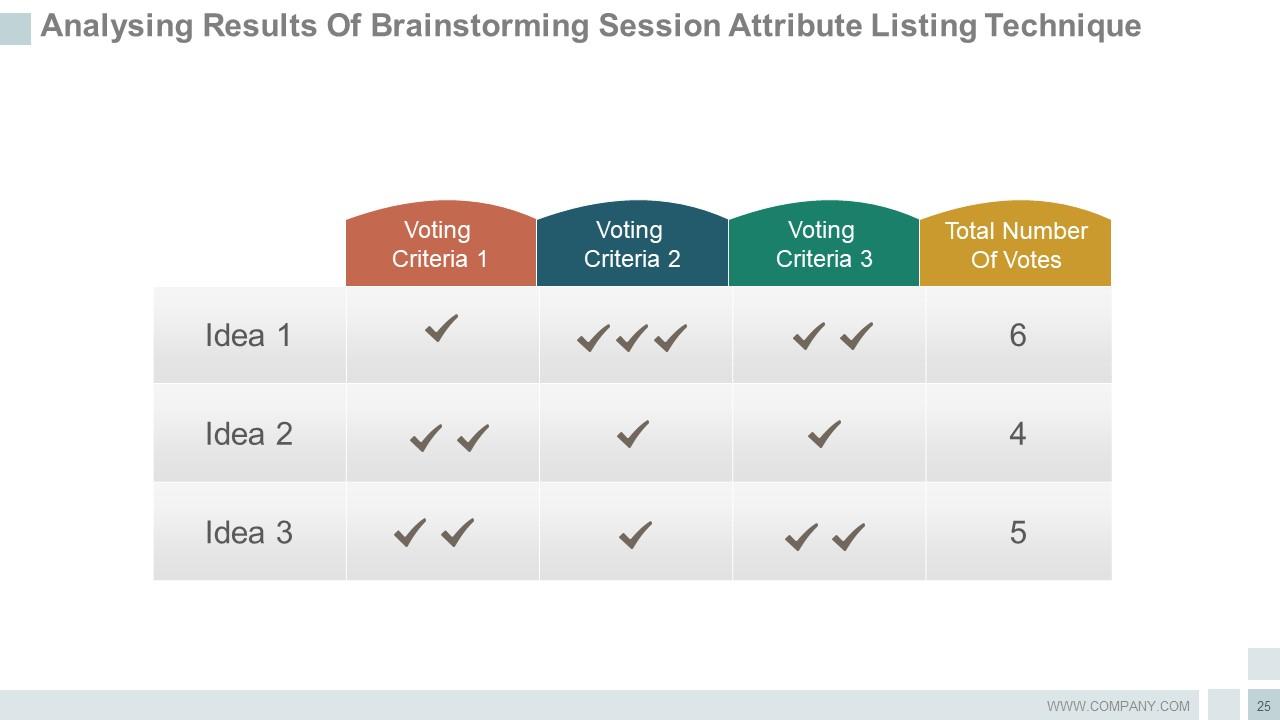
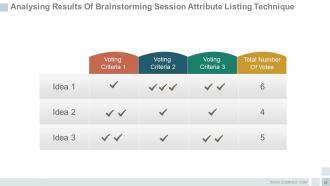
Slide 25: This slide displays Analysing Results Of Brainstorming Attribute Listing Technique showing- Voting, Criteria, Total Number Of Votes.
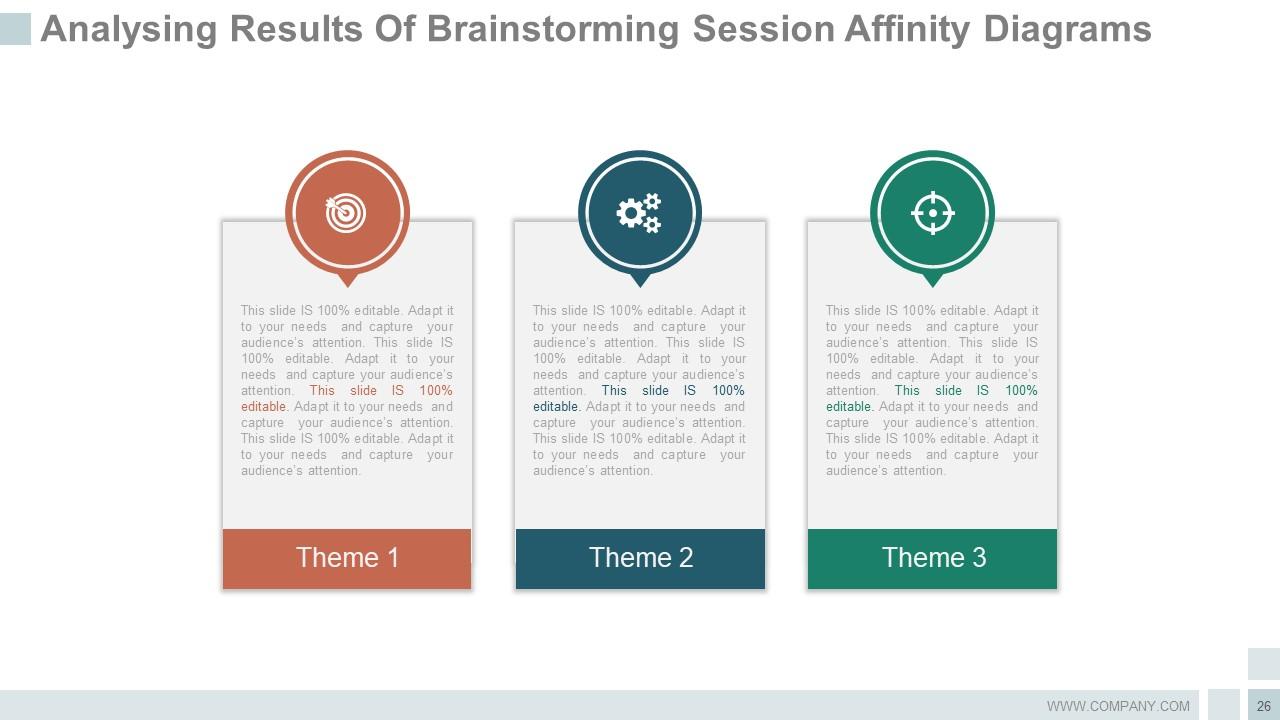
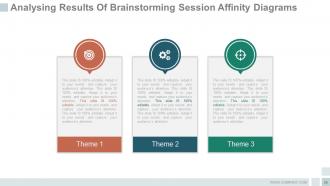
Slide 26: This slide displays Analysing Results Of Brainstorming Session Affinity Diagrams.
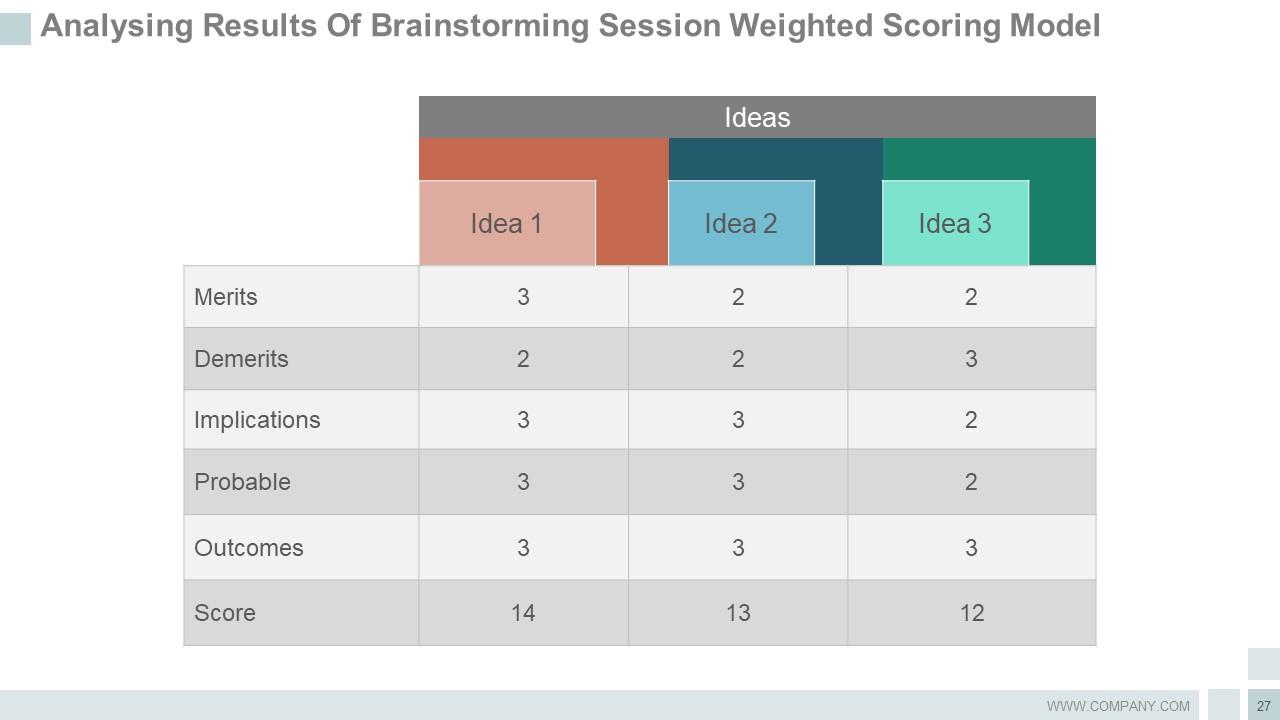
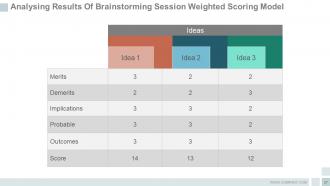
Slide 27: This slide presents a Analysing Results Of Brainstorming Session Weighted Scoring Model.
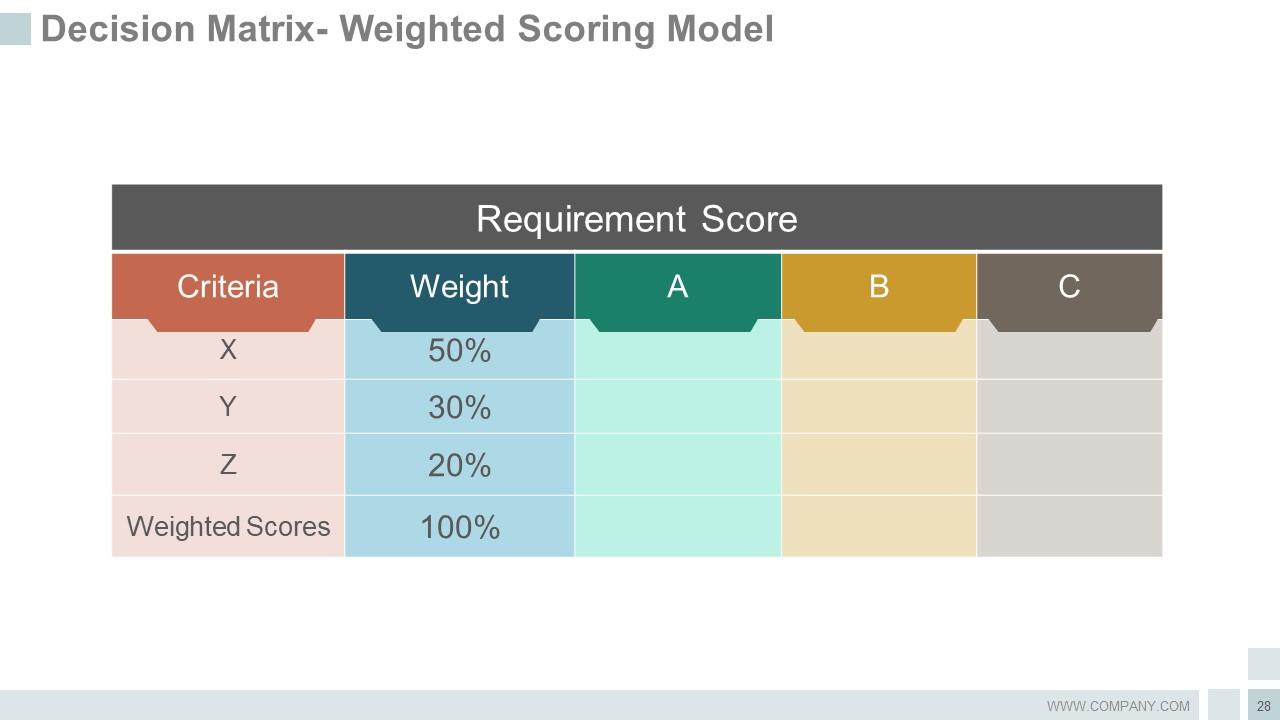
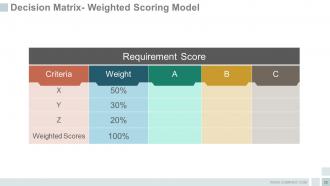
Slide 28: This slide presents a Decision Matrix- Weighted Scoring Model.
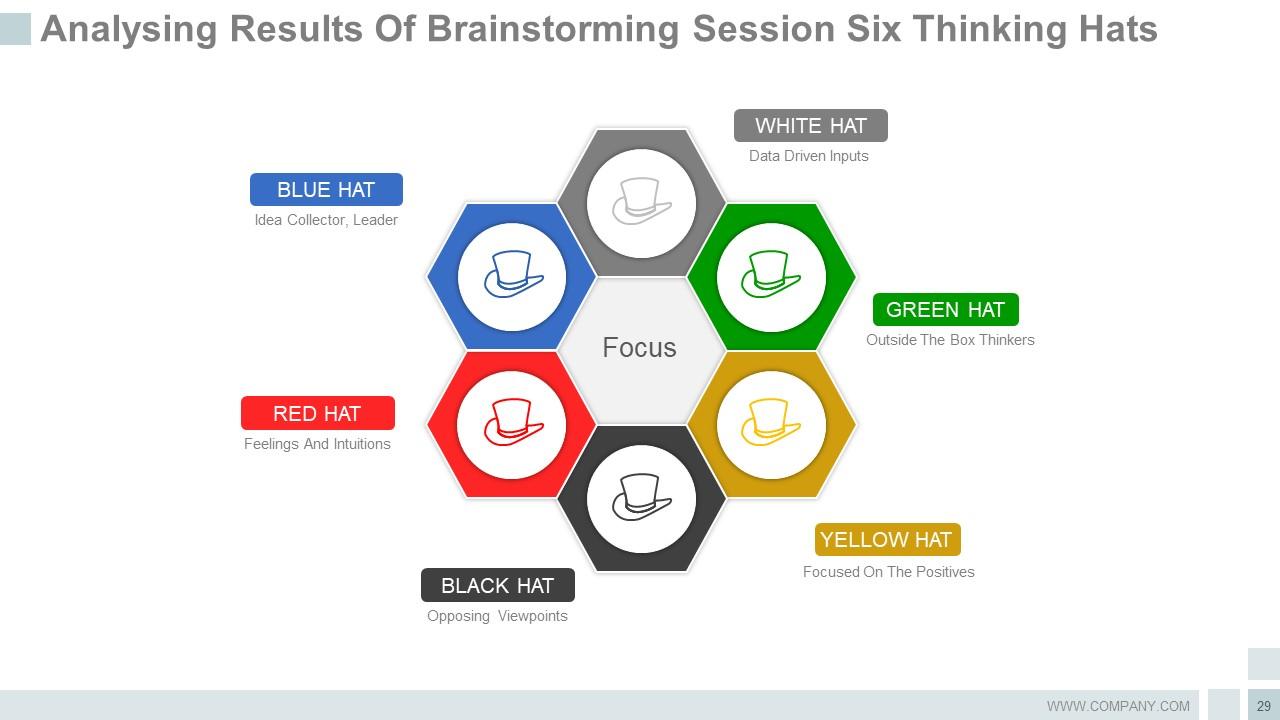
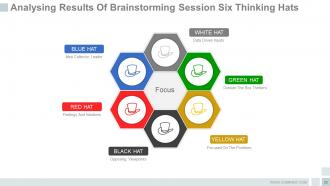
Slide 29: This slide displays Analysing Results Of Brainstorming Session Six Thinking Hats- The sub points are listed as-Data Driven Inputs, Outside The Box Thinkers, Focused On The Positives, Opposing Viewpoints, Feelings And Intuitions, Idea Collector, Leader. The six hats are- (Why it may work)- YELLOW HAT, (Why it may not work)- BLACK HAT, (Feelings and Intuition)- RED HAT, (Managing the Thinking)- BLUE HAT, (Information & Data)- WHITE HAT, (Creative Thinking)- GREEN HAT.
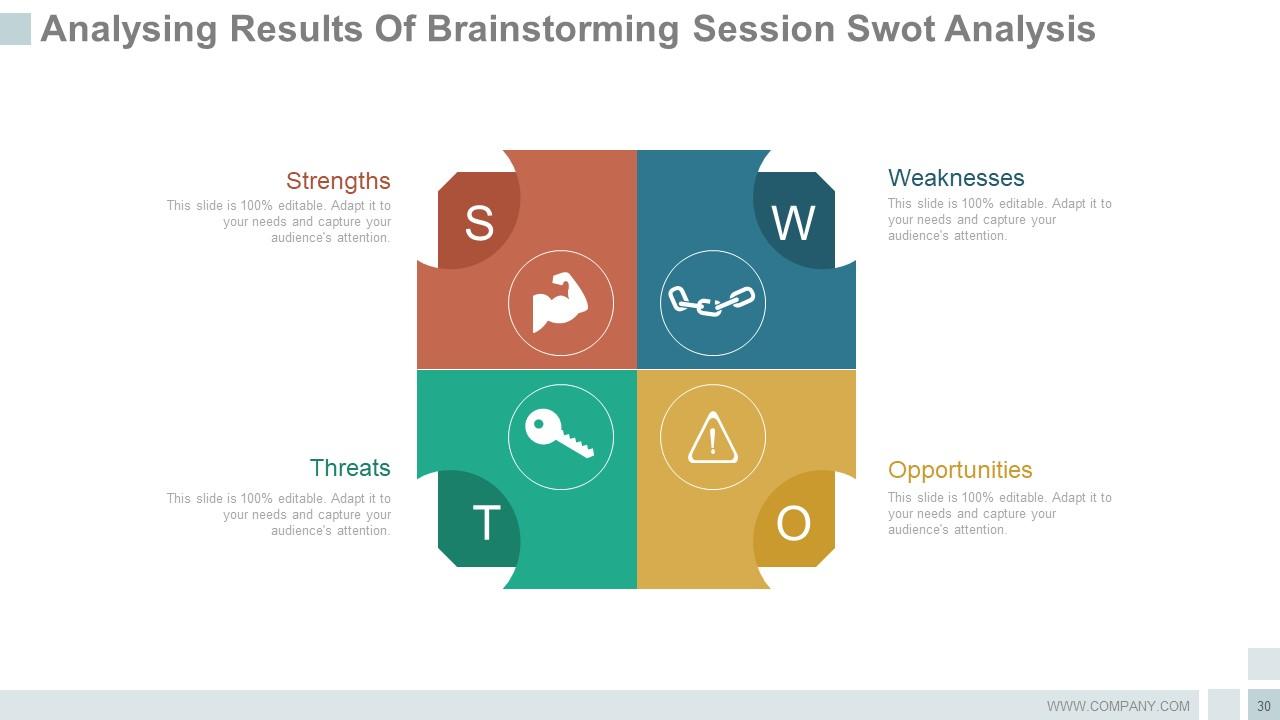
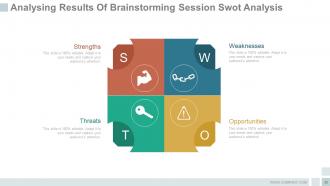
Slide 30: This slide presents Analysing Results Of Brainstorming Session Swot Analysis.
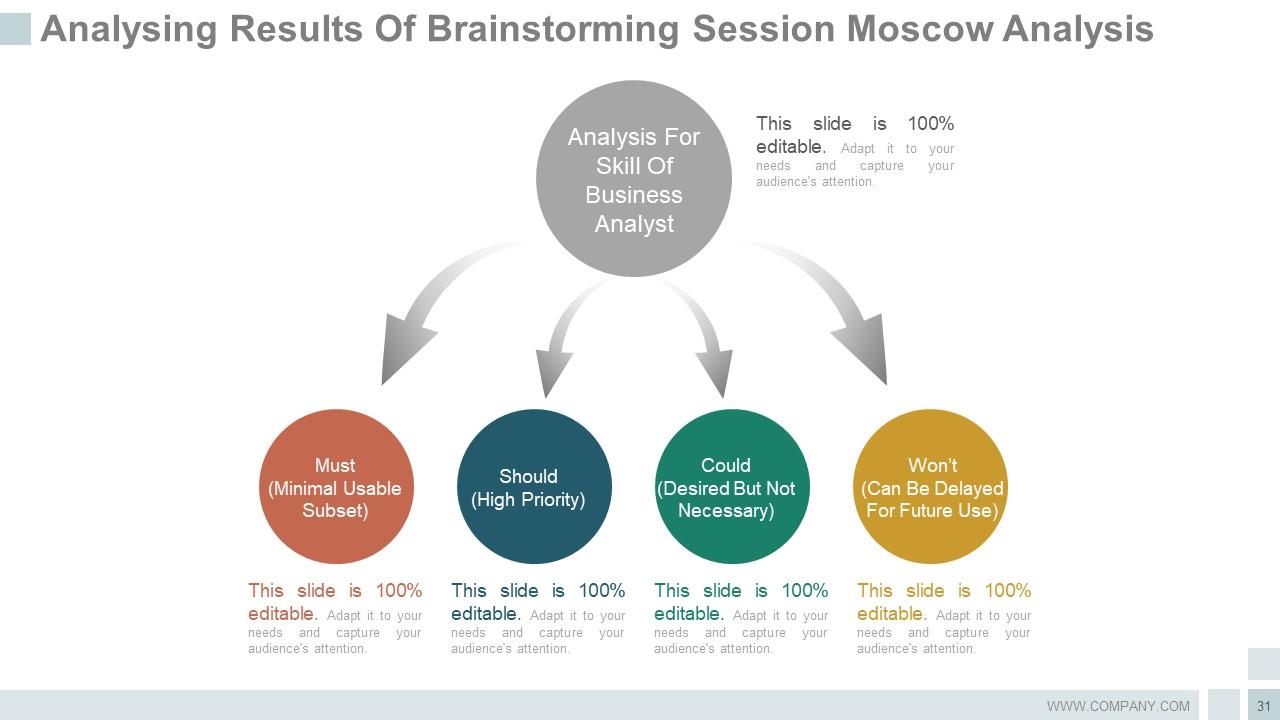
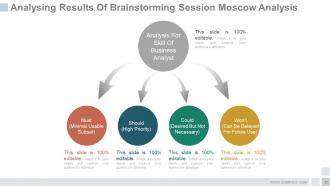
Slide 31: This slide presents Analysing Results Of Brainstorming Session MoSCoW Analysis. The sub headings inlcude- Must (Minimal Usable Subset), Should (High Priority), Could (Desired But Not Necessary), Won’t (Can Be Delayed For Future Use).
Slide 32: This slide is titled Additional Slides to move forward. You can change the slide content as per need.
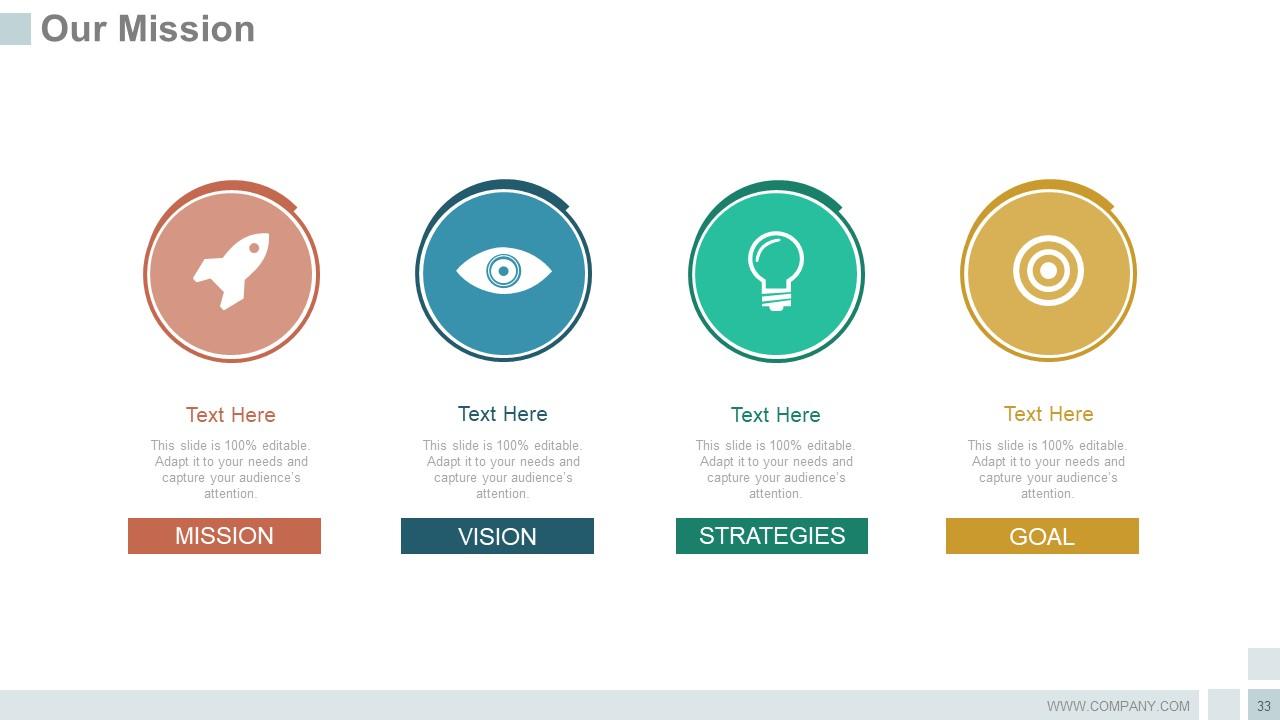
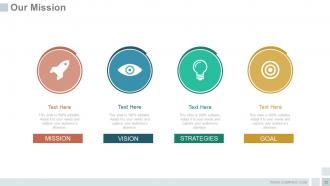
Slide 33: This is Our Mission with Vision, Goals and Strategies slide. State them here.
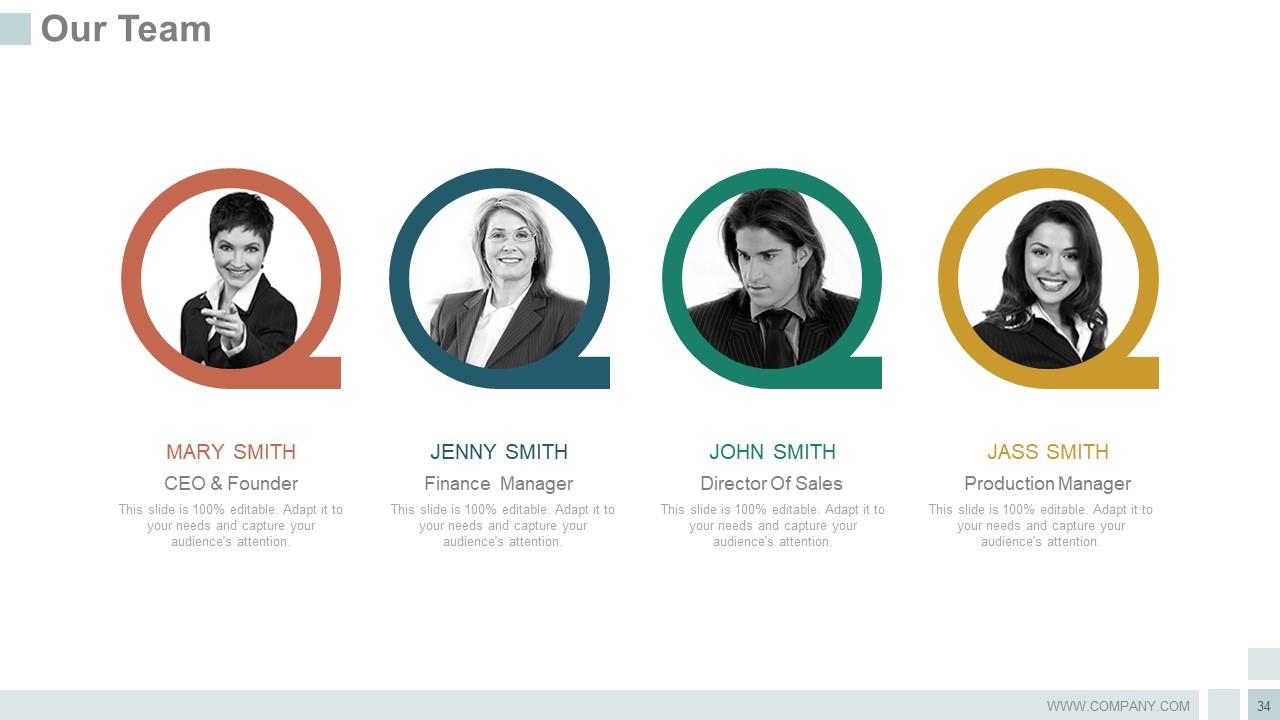
Slide 34: This is Our Team slide with names, designation and text boxes to fill information.
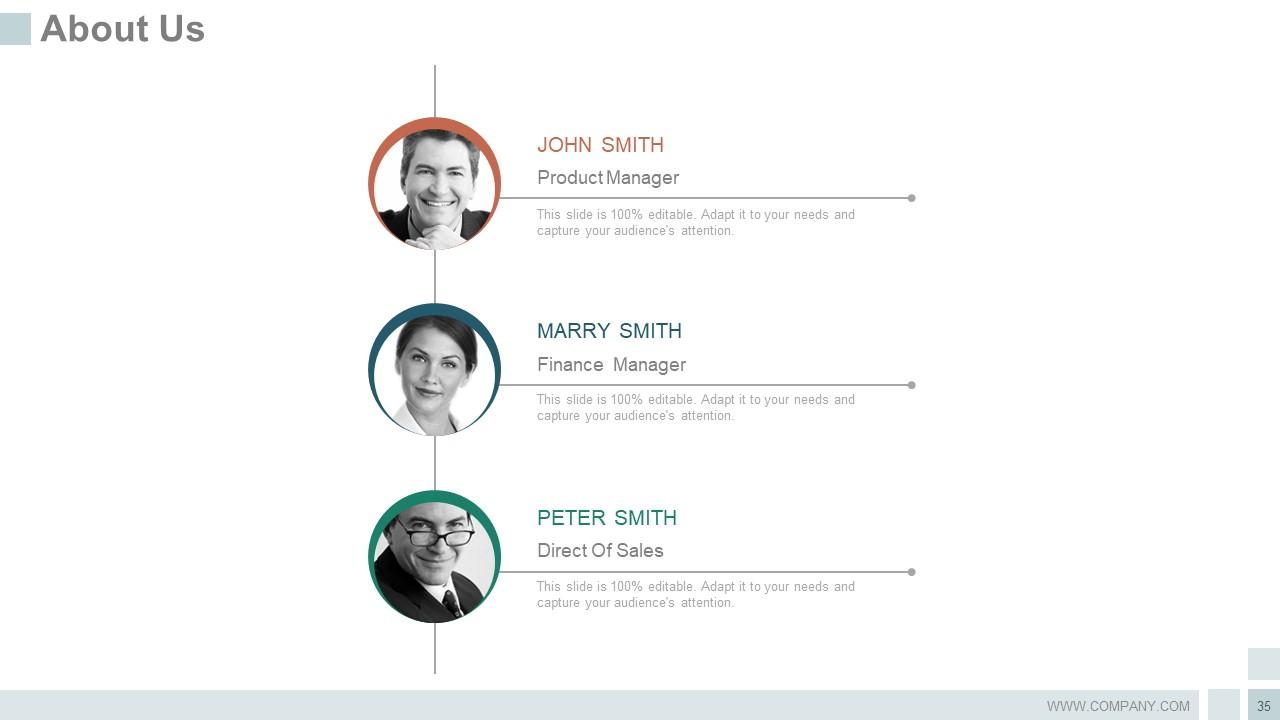
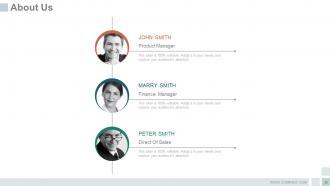
Slide 35: This is an About Us slide. State company/team specifications, positioning etc. here.
Slide 36: This is Our Goal slide. State your goals here.
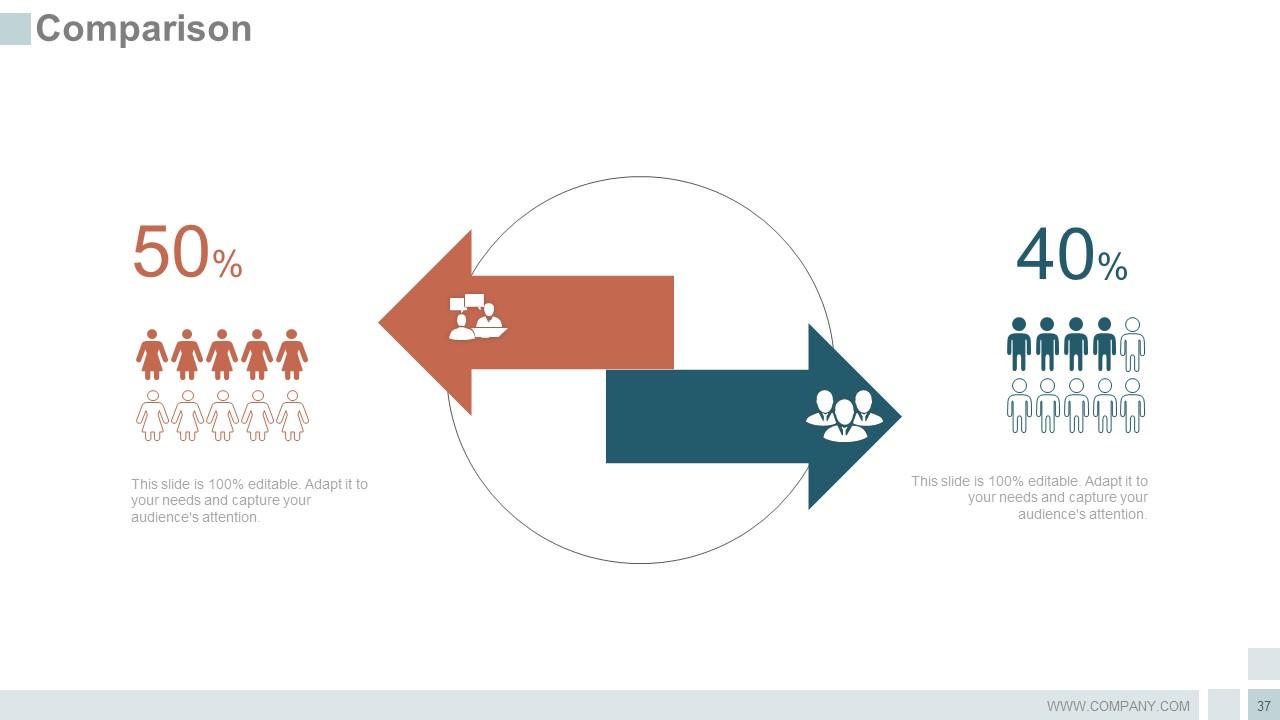
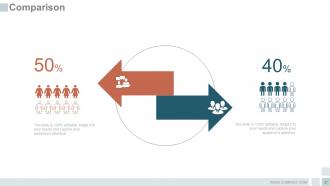
Slide 37: This is a Comparison slide in creative form. State comparison, specifications etc. here.
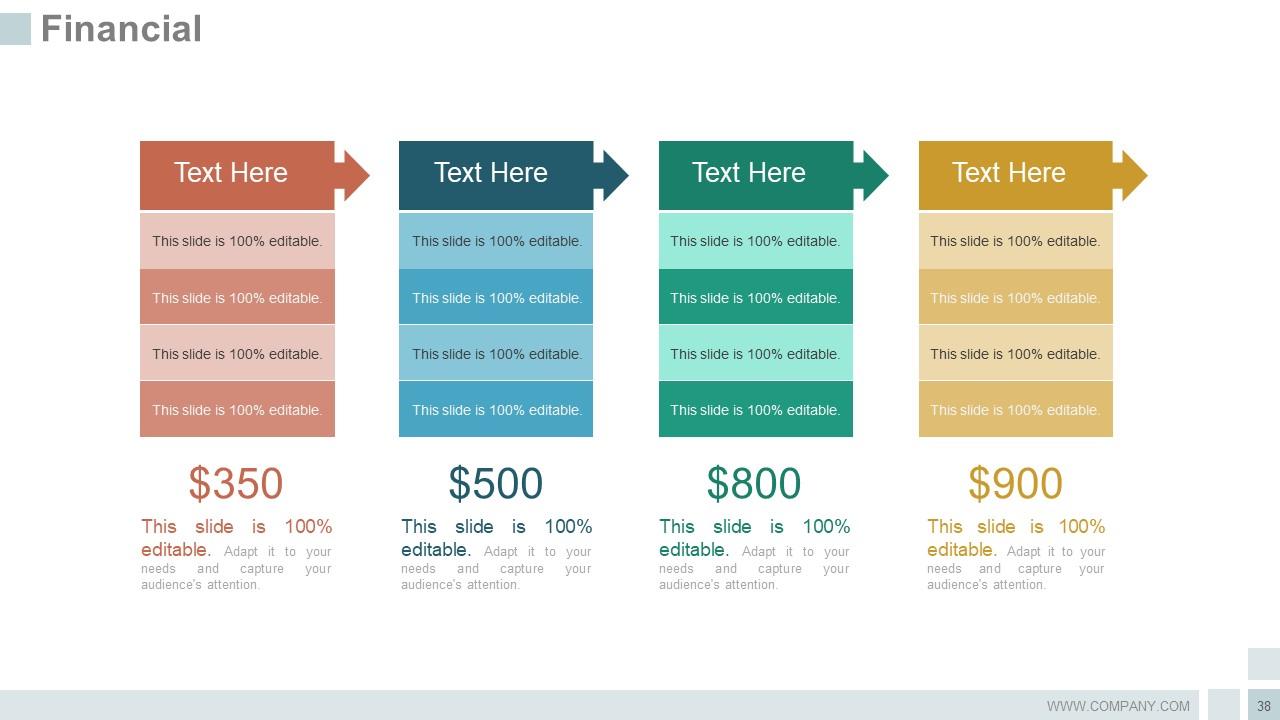
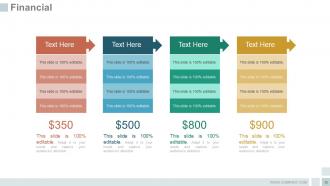
Slide 38: This is a Financial score slide to state financial aspects etc.
Slide 39: This is a Quotes slide to show something you want to convey. You may change the slide content as required.
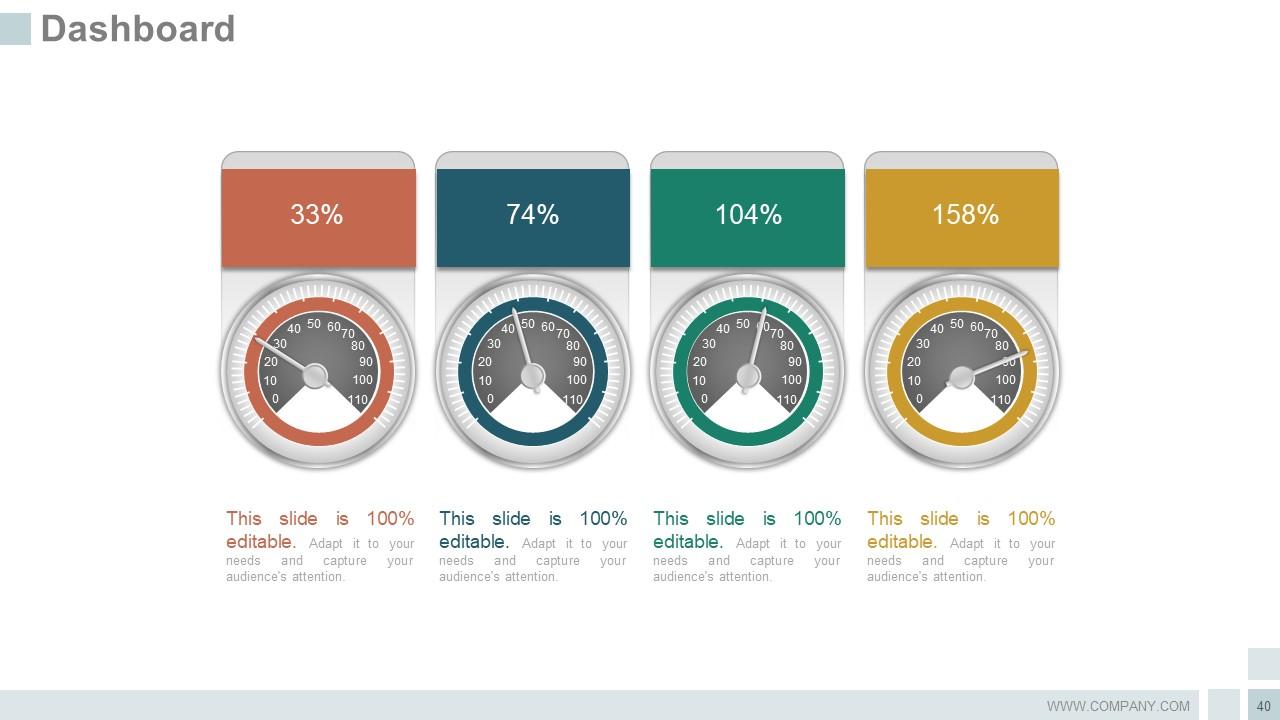
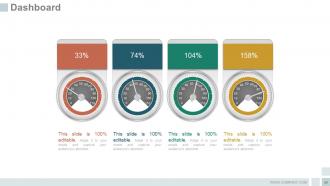
Slide 40: This is a Dashboard slide to state Low, medium and High aspects, kpis, metrics etc.
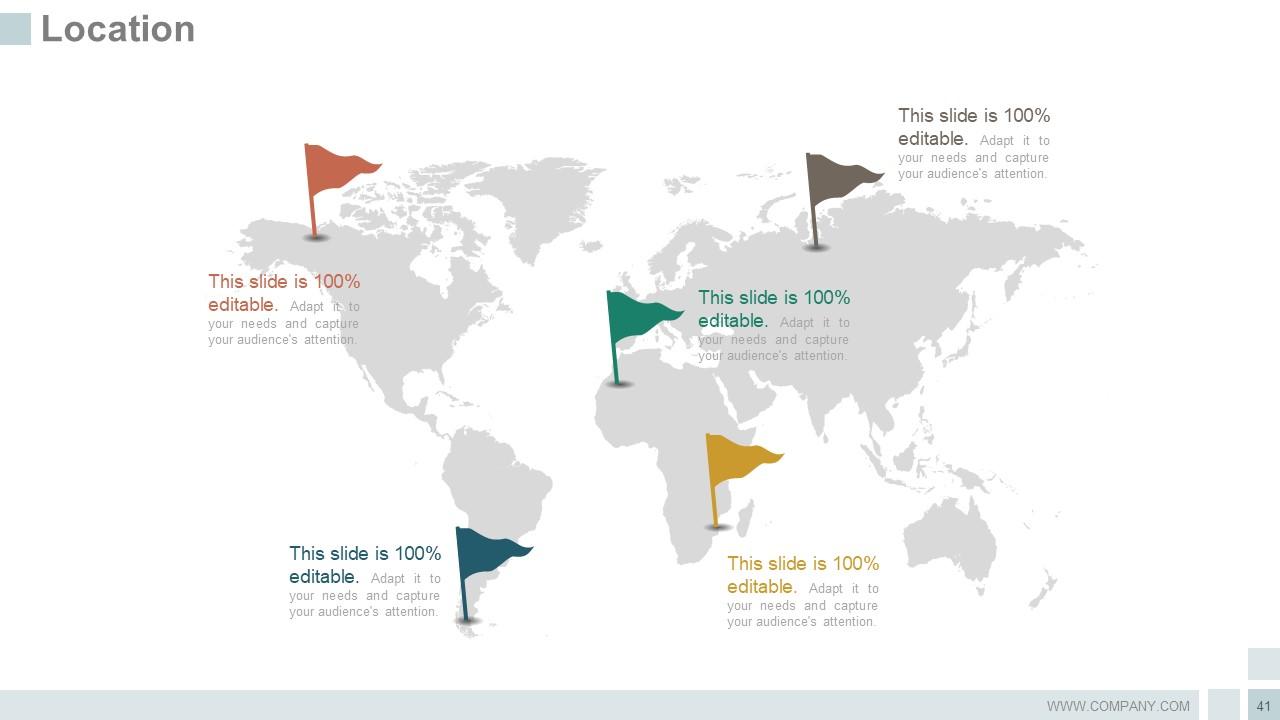
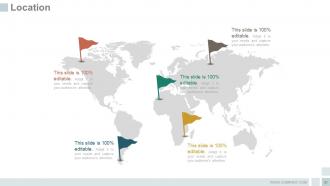
Slide 41: This is a Location slide of world map image. Mark specific locations for company growth, market etc. here.
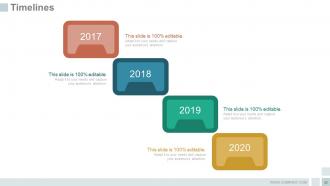
Slide 42: This slide showcases Timelines to show milestones, important highlights etc.
Slide 43: This is a Post It slide to show important information, events etc. Pin your information here.
Slide 44: This is a Newspaper image slide to show important information, events etc. State your information here.
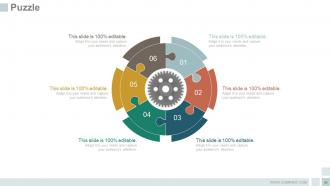
Slide 45: This is a Puzzle image slide. State information, specifications etc. here.
Slide 46: This is a Target slide. State targets here.
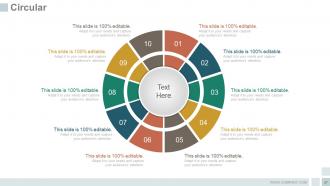
Slide 47: This is a Circular image slide to show information, specifications etc.
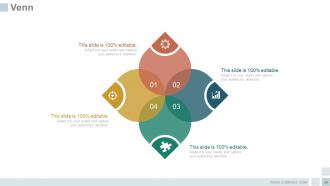
Slide 48: This is a Venn diagram slide to show information, specifications etc.
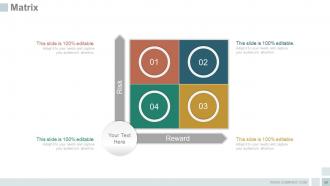
Slide 49: This is a Matrix slide to show segmentation, information, specifications etc.
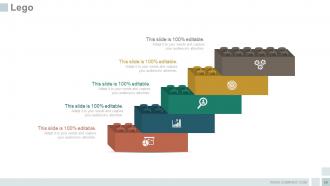
Slide 50: This is a Lego image slide. State information, specifications etc. here.
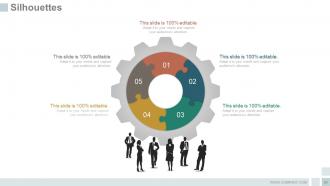
Slide 51: This slide shows Silhouettes with text boxes. Present people related information, specifications etc. here.
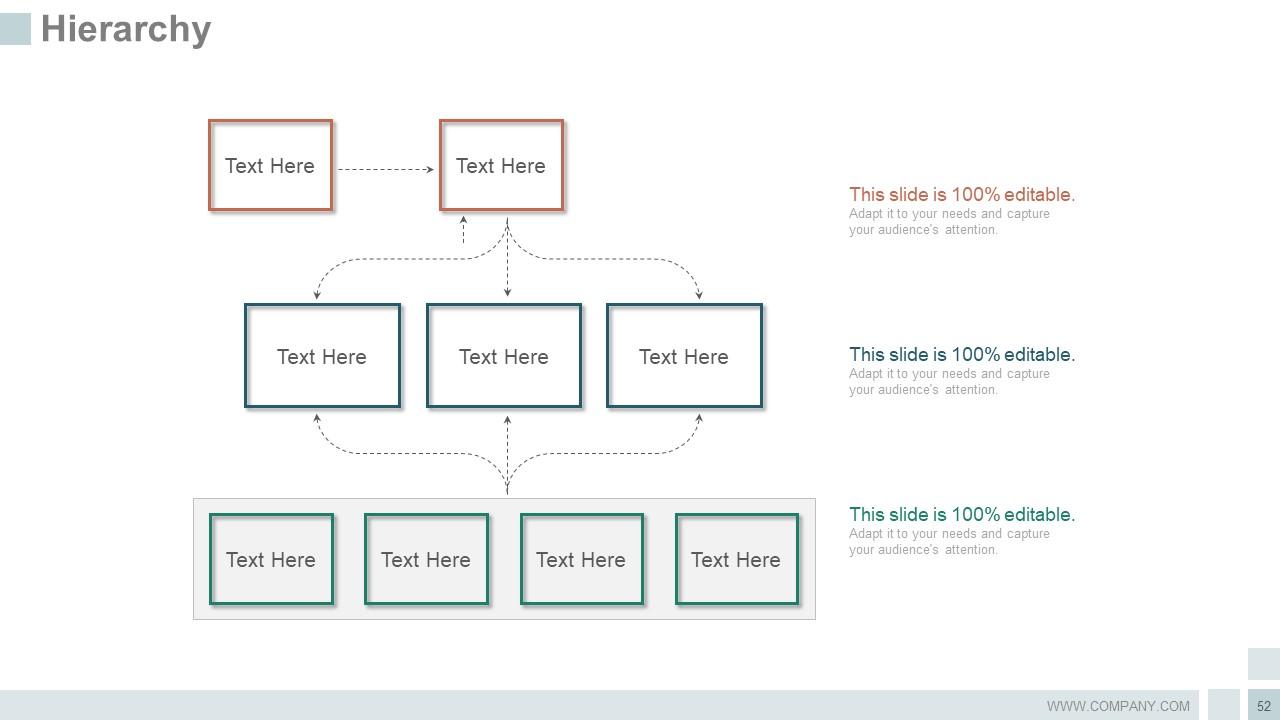
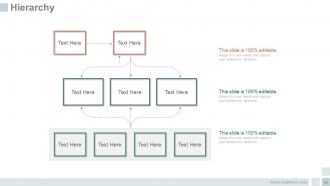
Slide 52: This is a Hierarchy slide. State team/department, organization information, specifications etc. here.
Slide 53: This is a Bulb or Idea image slide to show ideas, innovative information etc.
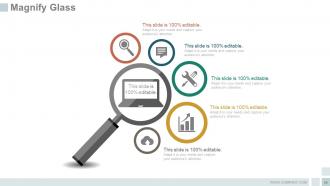
Slide 54: This is a Magnifying Glass image slide to show information, specifications etc.
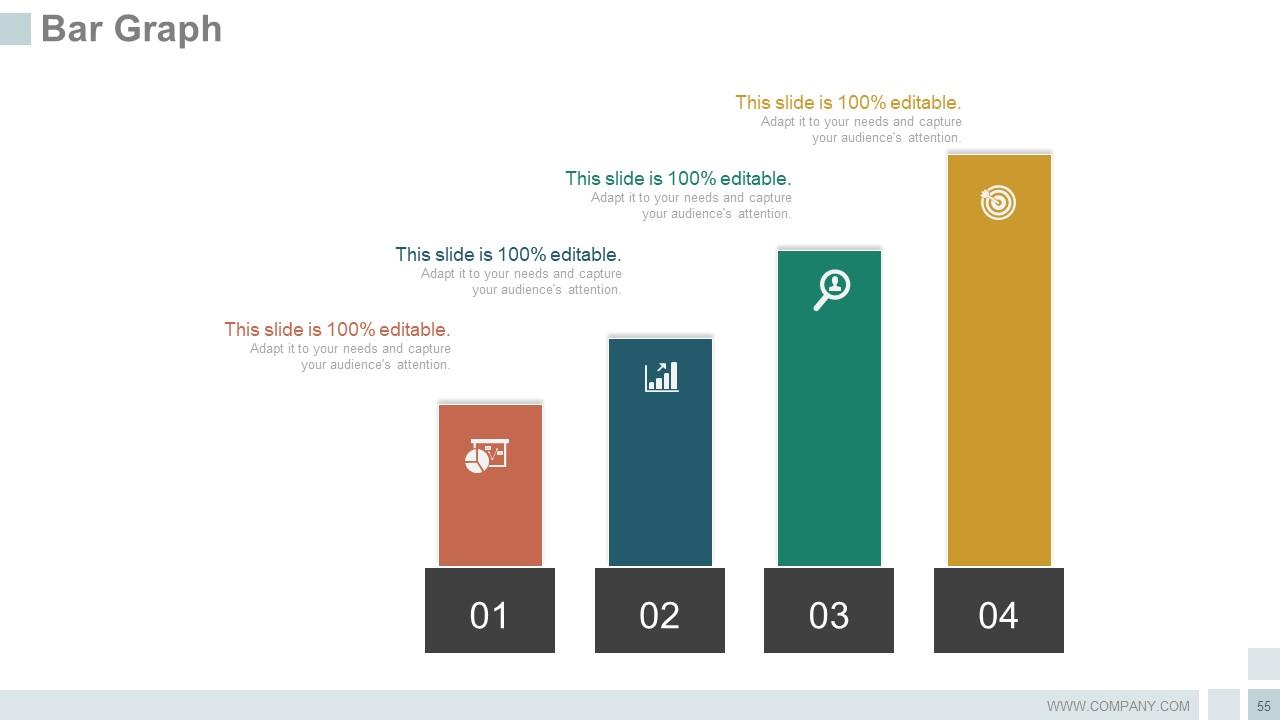
Slide 55: This is a Bar Graph slide to show information, specifications etc.
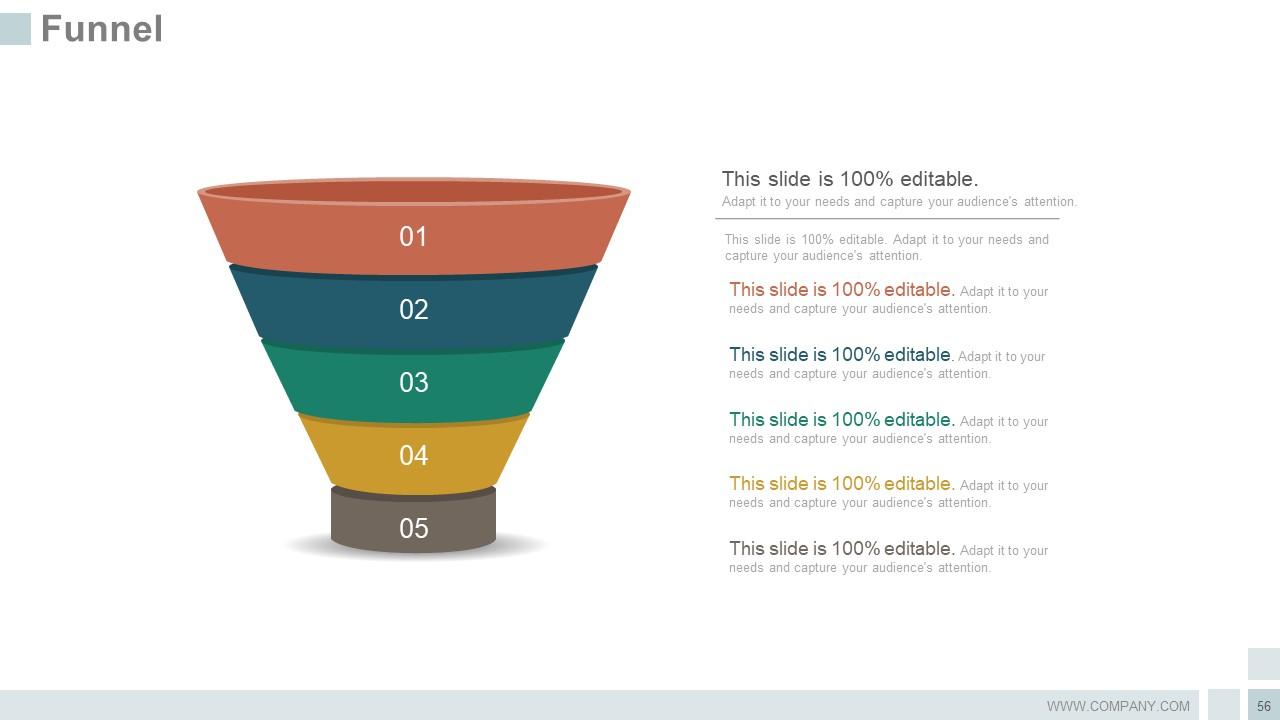
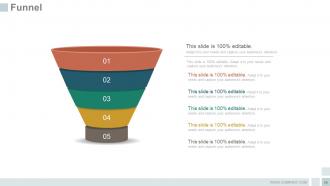
Slide 56: This is a Funnel image slide to show information, specifications etc. in funneling form.
Slide 57: This is a Thank You slide with Address# street number, city, state, Contact Numbers, Email Address.
Idea development process strategies and architecture powerpoint presentation slides with all 57 slides:
Invent a fresh approach with our Idea Development Process Strategies And Architecture Complete Powerpoint Deck With Slides. Bring an end to jaded concepts.
-
Awesome presentation, really professional and easy to edit.
-
Perfect template with attractive color combination.
