


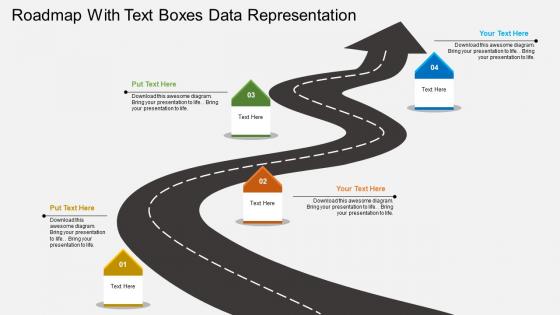
Im roadmap with text boxes data representation flat powerpoint design





Try Before you Buy Download Free Sample Product
 Impress Your
 Audience
 100%
100% Editable
 Save Hours
 of Time


Download our roadmap with text boxes data representation flat PowerPoint Design Template to highlight your business concepts in a creative way. Our presentation designs are created by our team of professional and efficient designers. This Power Point template diagram has been crafted with graphic of roadmap and text boxes diagram. This PPT diagram contains the concept of business data and future representation. Use this roadmap PPT diagram for business and marketing related presentations. The slide showcases a beautiful road with milestones which is going upwards and representing the various points which help in the successful operation of a business organization. With the help of our roadmap PowerPoint template slide graphic, you can also plan and execute your product strategy in a visually appealing way. Most product managers would opt to create a high-level, visual product roadmap that engages an audience in a meeting. The meeting in which you present it to your stakeholders and other constituents, represents your best chance to communicate your product strategy quickly and clearly. So, download and use now. Our im Roadmap with Text Boxes Data Representation Flat PowerPoint Design will appeal to the connoisseur in you. They can be charming.
People who downloaded this PowerPoint presentation also viewed the following :
Im roadmap with text boxes data representation flat powerpoint design with all 4 slides:
Address the biggest challenges with our im Roadmap With Text Boxes Data Representation Flat Powerpoint Design. They facilitate you in gaining control.

FAQs for Im roadmap with text boxes data representation
Honestly, start simple with a quarterly view - you can always add more detail later. Your template needs a clear timeline with realistic delivery dates, plus all the resource requirements and project dependencies mapped out. I'd definitely include sections for stakeholder alignment because those will save you from endless follow-up meetings (learned that the hard way). Make space for risk callouts and success metrics so everyone's crystal clear on what success looks like. Keep it visual instead of cramming everything into walls of text. Oh, and prioritize your initiatives - that's huge. People need to see what matters most at a glance.
Honestly, visuals are a game-changer for roadmaps. Dense text just makes people's eyes glaze over - I've been in those painful meetings. Color-coding priorities and using swimlanes for different teams instantly shows everyone where they fit. Progress bars and timeline charts help people spot their deliverables and any bottlenecks super fast. Dependencies become obvious too. Start with a basic timeline template, then layer on visual elements as you go. Icons work great for milestones. Your stakeholders will actually pay attention instead of checking their phones halfway through.
So basically, strategic roadmaps are the big picture stuff - where you're going as a company, revenue goals, that whole vision thing. Product roadmaps are way more granular. They're all about specific features, timelines, what you're actually building. Strategic answers "why are we doing this?" Product answers "what exactly are we shipping and when?" They totally connect though - your product work should support those bigger company goals. Honestly, I'd start with strategy first since it's hard to plan features when you don't know where you're headed. Makes the product decisions way easier once you've got that foundation down.
Honestly, I just score everything against three things: business impact, what users actually need, and whether my dev team can build it without losing their minds. Look for patterns in user feedback - the squeaky wheels aren't always right, but when you see the same complaint everywhere, that's gold. Revenue goals matter too obviously. I throw together a quick scoring matrix and rank stuff from there. Sometimes I get sidetracked by shiny features that seem cool but don't move metrics. The real wins are features that help the business AND fix genuine user problems without creating technical debt nightmares.
Honestly, you can't build a decent roadmap without getting stakeholder input first. Finance will catch budget stuff you totally missed. Customer success knows exactly which features are driving users crazy. I'd say gather feedback early, but be smart about timing - don't overwhelm people or ask the wrong person about technical constraints. The key thing most people mess up? They collect all this input then never circle back to show how it actually influenced the roadmap. People want to see their feedback mattered, you know?
Honestly, just grab any roadmap template and swap out the stuff inside. Tech companies throw in features and product releases. Manufacturing? Production deadlines and supply chain stuff. Healthcare focuses more on compliance and patient outcomes - makes sense, right? The actual timeline format doesn't change much. Even boring regulatory stuff becomes super important when you're dealing with finance or pharma. Pick a basic template first. Then replace all their sample content with whatever matters in your industry. Different stakeholders, different goals, but same basic structure. Way easier than starting from scratch.
Honestly? Roadmunk and ProductPlan are solid for this - stakeholders can actually click around and filter stuff themselves. Aha! is another good one. Miro's pretty flexible if you don't mind setting things up manually, same with Figma. But here's the thing - I've wasted way too much time on fancy tools that nobody ends up using. Sometimes a clean PowerPoint with decent animations works just as well, especially for simpler roadmaps. Really depends on how tech-savvy your audience is and whether they'll actually interact with it or just sit there nodding. Start simple, see what sticks.
Honestly? I'd say quarterly minimum, but it really depends on your space. Crypto or AI moves so damn fast you're probably looking at monthly updates - those industries are kinda wild right now. More stable stuff can get away with quarterly. The real trigger should be when priorities actually shift or you get feedback that changes your direction. Don't just update because it's been three months, you know? Only do it when there's actual strategic changes happening. Oh, and set those calendar reminders now or you'll totally forget.
Oh man, the classic mistakes? Setting completely unrealistic timelines is huge - like thinking you can build Rome in a week. I've watched teams crash and burn because they didn't pad their estimates or think about how different groups need to work together. Also, whatever you do, don't lock yourself in a room and create the whole thing solo. Get your key stakeholders involved from day one or they'll torpedo it later. And here's the thing - your roadmap isn't gospel. It should change as you learn stuff. Build in regular check-ins so you can adjust when reality hits.
Just tell them straight up what changed and why. Don't dance around it - people hate vague BS way more than bad news. Shoot them a quick message with the main points, then actually talk it through in person or on a call. Honestly, I've watched so many PMs try to soften the blow and it backfires every time. Give them the real business context, let them be annoyed if they need to be, and lay out the new timeline clearly. Then - and this is key - ask what they think about adjusting the plan. Your team probably has way better ideas than you do anyway.
So you'll need two main types: outcome metrics (what you're actually trying to hit) and progress ones (how you're getting there). Completion percentages are obvious. Hit rates on key milestones, user adoption if it's product-related, staying on timeline. Revenue impact is huge when you can tie it in - honestly, executives eat that stuff up. Resource utilization and risk flags help catch problems before they blow up. Pick maybe 3-5 that actually matter for your specific situation. I'd start by defining what success looks like first, then figure out how to measure it.
Think of roadmaps like GPS for projects - suddenly nobody's asking "are we there yet?" in meetings anymore. You get everyone looking at the same timeline instead of five people chasing five different versions of success. The visual part is honestly game-changing because abstract goals actually start feeling doable. Here's the thing though: don't just hand people a finished roadmap. Get your team involved in building it together. That buy-in you'll get from collaborative planning? It's what makes the whole thing work. Otherwise you're just another pretty chart on the wall that everyone ignores.
Dude, you gotta lead with business impact - revenue, cost savings, whatever keeps the C-suite up at night. Skip the technical weeds entirely. I made that mistake once and watched three VPs check their phones while I droned on about API specs. Timeline charts are your friend here. Show major milestones and call out any dependencies that could blow up the schedule. Honestly, being upfront about risks actually makes you look more credible, not less. Come armed with data to justify your priorities because someone will definitely ask why X didn't make the list. Oh, and practice this beforehand - nothing kills credibility like stumbling through your own roadmap.
Think of your roadmap like a staircase - each short-term win should build toward your bigger vision. Figure out where you want to be in 2-3 years first. Then work backwards to map out quarterly goals that actually get you there. Here's the thing though - make sure your immediate tasks aren't just random busy work. I've watched so many teams get stuck chasing urgent stuff that doesn't even connect to their strategy. It's honestly painful to see. Review monthly and ask yourself: "Does this quarter's work still serve our long-term goals?" If the answer's no, change course.
Make it interactive instead of just presenting at people. Ask questions, run polls, get them talking about what matters most. Nobody wants to sit through another boring feature list - tell stories about actual users who need this stuff. Visuals work way better than bullet points for showing timelines. Break things up with small group chats or voting on what gets them excited. Honestly, the whole point is making them feel like they're helping shape it, not just listening to you drone on. Oh, and try opening with "What would you build first?" instead of jumping straight into slides. Works every time.
-
Informative design.
-
Great product with highly impressive and engaging designs.