

Implementando Slides de Apresentação em Powerpoint de Design Thinking






Try Before you Buy Download Free Sample Product
 Impress Your
Audience
 100%
Editable
 Save Hours
of Time


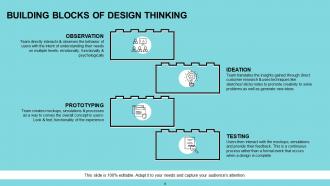
Concentre-se em vários aspectos da criatividade com este conteúdo pronto Implementando Slides de Apresentação em Powerpoint de Design Thinking. O deck completo do Design thinking PowerPoint tem 14 slides PPT personalizados, mostrando por que precisamos de inovação em processos e operações de negócios, onde o design thinking agrega valor, como o design thinking funciona em processos e operações de negócios, roteiro de processos, recomendações, etc. Todos os modelos são 100% editáveis em PowerPoint para que os usuários possam inserir texto nos espaços reservados, mudar de cor se desejarem e apresentar no menor tempo possível. Apresente os blocos de construção do pensamento de design, como observação, prototipagem, ideação e teste usando o deck de apresentação do pensamento sistêmico. Utilize os visuais PPT de nossa estrutura de design thinking para criar uma compreensão do fluxo de trabalho geral. Além disso, você também pode apresentar a abordagem sistemática do design thinking com a ajuda deste modelo de inovação em PowerPoint visualmente atraente. Baixe o deck de apresentação de design estratégico pré-fabricado para transmitir sua mensagem de maneira impressionante. Agarre a chance, pois ela vem com nossos slides de apresentação em Powerpoint Implementing Design Thinking. Eles permitem que você siga a bola.
People who downloaded this PowerPoint presentation also viewed the following :
Conteúdo desta apresentação em PowerPoint
Slide 1 : Este slide apresenta a IMPLEMENTAÇÃO DO PENSAMENTO DE DESIGN. Indique o nome da sua empresa e comece.
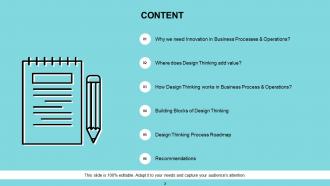
Slide 2 : Este slide mostra o CONTEÚDO da apresentação.
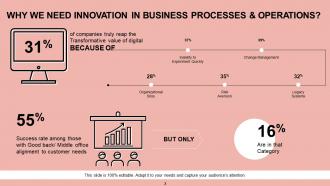
Slide 3 : Este slide descreve por que precisamos de inovação em processos e operações de negócios?
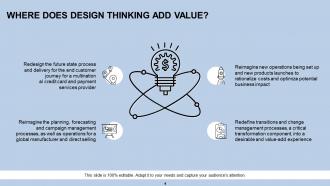
Slide 4 : Este slide explica onde o design thinking agrega valor?
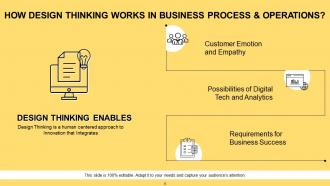
Slide 5 : Este slide descreve como o design thinking funciona nos processos e nas operações de negócios?
Slide 6 : Este slide mostra os elementos básicos do design thinking.
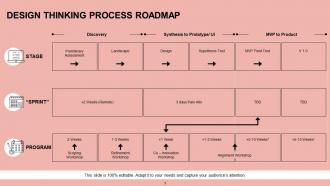
Slide 7 : Este slide mostra o roteiro do processo de Design thinking.
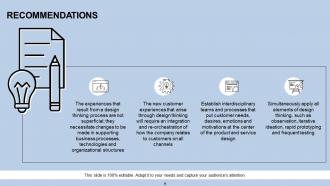
Slide 8 : Este slide mostra recomendações com ícones relacionados.
Slide 9 : Este slide é intitulado como Slides adicionais para avançar.
Slide 10 : Este é um slide da linha do tempo para mostrar informações relacionadas ao período de tempo.
Slide 11 : Este é um slide de Venn com caixas de texto.
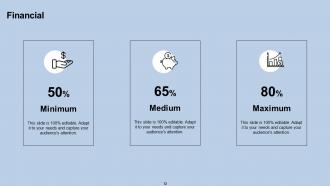
Slide 12 : Este é um slide financeiro. Mostre seu material relacionado a finanças aqui.
Slide 13 : Este é um slide de quebra-cabeça com caixas de texto para mostrar informações.
Slide 14 : Este é um slide de agradecimento com endereço, números de contato e endereço de e-mail.
Implementação de slides de apresentação do PowerPoint de pensamento de implementação com todos os 14 slides:
Extraia o brilho de seus genes. Nossos slides de apresentação do Powerpoint de pensamento de implementação são excelentes escavadeiras.


FAQs for Implementing design thinking
So Design Thinking has five stages: Empathize, Define, Ideate, Prototype, and Test. First you research users and figure out their actual needs. Then define what problem you're really solving. Brainstorming comes next - honestly the most fun part because you just throw out crazy ideas without judging them. Build rough prototypes after that to make things real, then test with actual people. The whole thing loops back on itself though, which threw me off at first. Maybe pick one stage and try it on your next project? Way easier to learn by doing than reading about it.
Honestly, Design Thinking basically forces you to get out of your own head and figure out what users actually want - not what you assume they want. You end up doing tons of quick prototypes and tests, which means you fail early instead of wasting months building something nobody needs. My team has dodged so many bullets this way! The empathy stuff is huge too. Like, you'll discover problems you never would've thought of otherwise. Those are usually where the best ideas come from. Oh, and definitely do user interviews before you start brainstorming anything - I always find weird insights that completely change our direction. It's wild how wrong your initial assumptions can be.
Honestly, empathy is everything in design thinking. You can't just guess what users want - you'll be wrong like 90% of the time. That first empathy stage where you actually watch people and talk to them? Game changer. I remember being shocked at how users interacted with stuff compared to what I thought they'd do. Once you really get their pain points, defining problems becomes way clearer. Same with brainstorming solutions and testing prototypes. My biggest tip? Go watch real people struggle with whatever exists now before you try fixing it. Sounds obvious but most people skip this step.
Oh this is actually easier than it sounds! During sprint planning, just bake in some quick user research or persona check-ins upfront. Then while you're developing, keep prototyping and testing small stuff constantly. Don't make it this whole separate thing - that's where teams mess up. I'd say spend maybe 20% of each sprint on user validation. Short bursts work better than those marathon workshop days nobody wants to sit through. You'll spot problems way faster and actually build things people give a damn about instead of just cranking through tickets.
Tech and healthcare are the obvious ones, but design thinking really works everywhere. Financial services, education, retail, manufacturing - you name it. Pretty much any industry dealing with complex problems or messy human needs benefits from it. And let's be real, that's most industries these days. Companies facing rapid change or customer experience headaches especially see results. If you're considering it for your field, I'd start small. Pick one project where you can really dig into what's frustrating your users first. That's honestly the best way to prove it works before going bigger.
Honestly, just start with paper sketches or wireframes - don't overthink it. Role-playing scenarios work too if you're testing something more complex. Figma's decent for digital stuff, but I've learned more from cardboard mockups than fancy app demos sometimes. Make something users can actually poke at, not just stare at. Your first attempt should feel kinda cringey to share - that's normal. Give yourself like 1-2 days max, then immediately test with real people. The whole point is testing assumptions fast without getting stuck on polish. Feedback early beats perfection every time.
Honestly, most companies think Design Thinking is some miracle cure and rush through it. The empathy part gets skipped because it seems "soft" - but that's literally where all the good stuff is hiding. Leadership wants everything neat and linear when it's supposed to be chaotic and messy. Plus people hate prototyping so they just build the whole thing right away. Which is... the opposite of what you're trying to do? My take: pick one team that's actually into it, don't rush them, and expect some failures. That's the whole point.
Design Thinking basically forces you to think like your actual customers. You do empathy interviews and shadow real users - seriously, it's eye-opening how much you miss with regular surveys. The whole point is catching pain points people can't even explain themselves. Quick prototyping is where it gets good though. You test stuff super early instead of building something massive that flops. Honestly beats guessing what works every time. The iterative approach means you're constantly refining based on real feedback, not assumptions. Start with those user interviews - you'll probably discover your biggest assumptions are wrong.
Oh man, brainstorming can be such a mess if you don't structure it right! Try "How Might We" questions first - they flip problems into opportunities. Then do rapid ideation where everyone silently writes ideas on sticky notes for like 10-15 minutes. There's this thing called Crazy 8s too - fold paper into sections and sketch 8 ideas in 8 minutes. Sounds brutal but honestly it works. Always use "Yes, and..." instead of shooting down ideas immediately. Mix solo thinking with group sharing so you don't just hear from the loudest people. Oh, and designate someone to keep things moving - otherwise you'll spend forever on one topic.
You know how most people just dive into fixing problems? Design Thinking does the opposite - you actually start by watching real users and figuring out what they really need. Super weird at first, honestly. Instead of stakeholders telling you "here's the problem," you go observe people in their natural habitat (sounds dramatic but it works). The whole thing's way more messy too - constant prototyping and testing instead of that neat linear process we're used to. I swear by this approach now though. Next time you're stuck on something, just spend a day talking to whoever will actually use your thing.
Honestly, measuring Design Thinking is kinda tricky because the soft stuff matters just as much as the hard numbers. Yeah, track your usual suspects - user satisfaction, adoption rates, time-to-market improvements, revenue from new solutions. But don't sleep on team collaboration levels and how many ideas people are actually generating. Are you solving real problems for users? Employee engagement usually goes up too when people feel creative and empowered - which is pretty cool to see happen. I'd start with maybe 2-3 metrics that match your project goals, then build from there.
Honestly? Most companies totally sabotage themselves here - they claim they want innovation but freak out over every mistake. Make failure feel safe first. Celebrate the "beautiful failures" that actually teach you something valuable. Give people dedicated time for crazy creative projects. Mix up your teams regularly so different perspectives collide. Train your leaders to ask "How might we..." instead of immediately jumping to solutions. Oh, and set up those rapid prototyping sessions where people can test wild ideas fast. The best innovations come from unexpected places, so don't limit who gets to contribute.
Yeah, remote design thinking workshops can definitely work! You just gotta be way more organized than usual. Get everyone on Miro or Figma - honestly those digital boards are sometimes cleaner than real sticky notes anyway. Good audio/video is crucial, and break people into small groups so it's not total chaos. Send stuff ahead of time and assign roles upfront. Your facilitator really needs to stay on top of calling people out since everyone's muted half the time. Oh, and build in extra time for when someone inevitably can't share their screen. Been there!
Oh totally - there's actual proof this stuff works! Airbnb literally lived with their users when they were failing, which is kinda extreme but it saved them. IBM went all-in and hired thousands of designers, saw real ROI improvements. PepsiCo redesigned their packaging, GE shadowed doctors for medical equipment insights. What's crazy is they all did the same thing first - figured out what users actually needed before building anything. Next time you're stuck, just map out what your users go through. Works way better than guessing.
Don't do separate workshops - that's where most companies mess up. Instead, weave Design Thinking into what your teams already do. Train a few people as internal coaches who can teach others. Build some templates so people aren't starting from scratch each time (seriously saves everyone's sanity). Get leadership on board first though, because without exec support you're basically screwed. Mix up your project teams with people from different departments and give them real problems to solve. The whole point is making it feel natural, not like some forced corporate thing that'll disappear in six months.
No Reviews