

Insolvency and bankruptcy powerpoint presentation slides




Try Before you Buy Download Free Sample Product
 Impress Your
 Audience
 100%
100% Editable
 Save Hours
 of Time


Understand and implement strategies to avoid bankruptcy by employing Insolvency And Bankruptcy PowerPoint Presentation Slides. This insolvency PPT presentation template depicts the firm’s current situation analysis, including the pain areas such as inability to pay installments and poor cash flow statement with the help of insolvency PPT presentation. Present a detailed analysis of the current financial situation of the organization by using this PowerPoint slide design. Give an overview of the major financial highlights such as revenue, gross profit, net profit, and earnings per share. Showcase the organization’s impact after implementing strategies to avoid bankruptcy using a debt consolidation PPT slide deck. Take advantage of our professionally designed debt reconstructing PowerPoint infographics to present the company’s dent analysis, key financial ratios, the key performance indicators for profit and loss statements, and balance sheet. Download our visually appealing bankruptcy declaration PPT slides without any further delay to create a stunning presentation.
People who downloaded this PowerPoint presentation also viewed the following :
Content of this Powerpoint Presentation
Slide 1: This slide displays Insolvency and bankruptcy. State your Company name and begin.
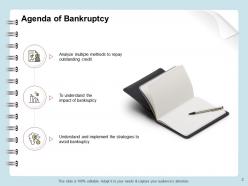
Slide 2: This slide displays Agenda of Bankruptcy
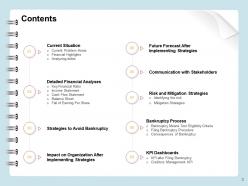
Slide 3: This slide shows Contents.
Slide 4: This slide showcases Contents.
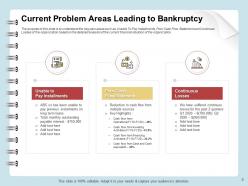
Slide 5: This slide presents Current Problem Areas Leading to Bankruptcy
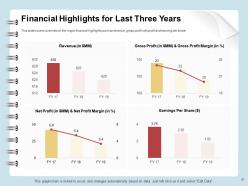
Slide 6: This slide covers overview of the major financial highlights such as revenue, gross profit net profit and earning per share
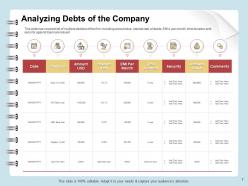
Slide 7: This slide has covered list of multiple debtors of the firm including amount due, interest rate of debts, EMI’s per month, time duration and security against loans are issued
Slide 8: This slide displays Contents
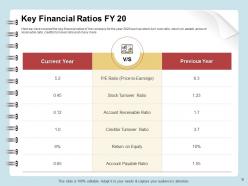
Slide 9: This slide showcases Key Financial Ratios FY 20
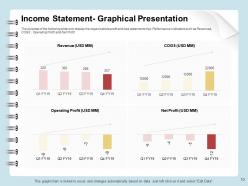
Slide 10: This slide displays Income Statement- Graphical Presentation
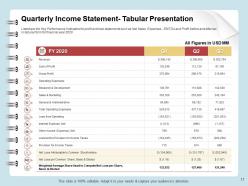
Slide 11: This slide depicts Quarterly Income Statement- Tabular Presentation
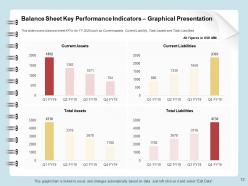
Slide 12: This slide covers balance sheet KPI’s for FY 2020 such as Current assets, Current Liability , Total Assets and Total Liabilities
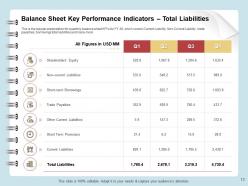
Slide 13: This slide presents Balance Sheet Key Performance Indicators – Total Liabilities
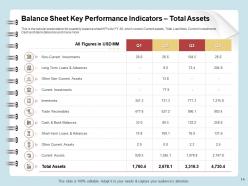
Slide 14: This slide shows Balance Sheet Key Performance Indicators – Total Assets
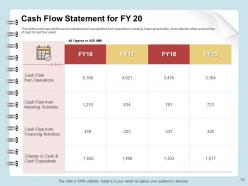
Slide 15: This slide covers key performance indicators such as cashflow from operations investing, financial activities which depicts inflow and out flow of cash for last four years.
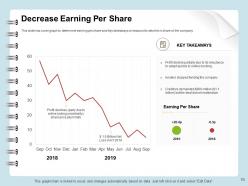
Slide 16: This slide has cover graph to determine earning per share and key takeaways or reasons for decline in share of the company
Slide 17: This slide shows Contents
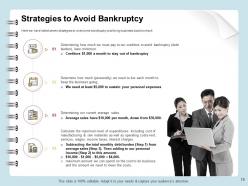
Slide 18: This slide displays Strategies to Avoid Bankruptcy
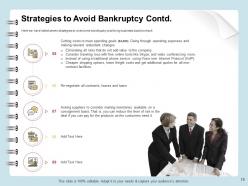
Slide 19: This slide is continued with Strategies to Avoid Bankruptcy.
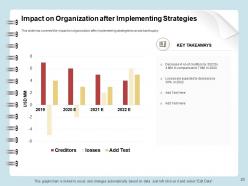
Slide 20: This slide has covered the impact on organization after implementing strategies to avoid bankruptcy
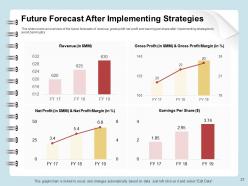
Slide 21: This slide covers an overview of the future forecasts of revenue, gross profit net profit and earning per share after implementing strategies to avoid bankruptcy
Slide 22: This slide showcases Contents
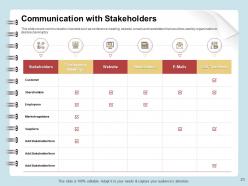
Slide 23: This slide covers communication channels such as conference meeting, website, emails and newsletters that would be used by organization to declare bankruptcy
Slide 24: This slide displays Contents
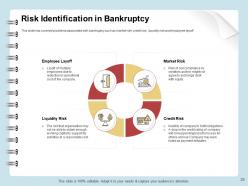
Slide 25: This slide has covered problems associated with bankruptcy such as market risk, credit risk, liquidity risk and employee layoff
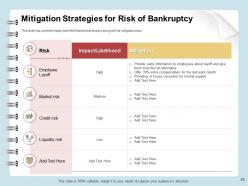
Slide 26: This slide has covered impact and likelihood of bankruptcy along with its mitigation plan
Slide 27: This slide displays Contents
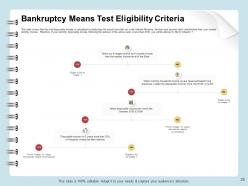
Slide 28: This slide covers that the total disposable income is calculated by deducting the actual costs laid out in the Internal Revenue Services and secured debt contributions from your current monthly income. Therefore, if your monthly disposable income following the removal of the above sums is less than $100, you will be allowed to file for Chapter 7.
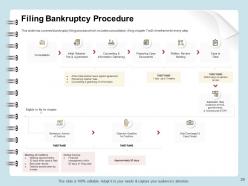
Slide 29: This slide has covered bankruptcy filing process which includes consultation, filing chapter 7 with timeframe for every step
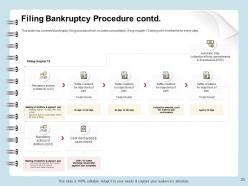
Slide 30: This slide has covered bankruptcy filing process which includes consultation, filing chapter 13 along with timeframe for every step
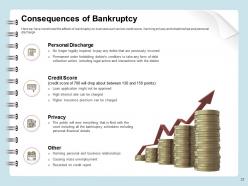
Slide 31: This slide explains effects of bankruptcy on business such as low credit score, harming privacy and relationships and personal discharge
Slide 32: This slide showcases Contents
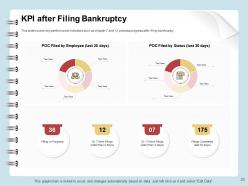
Slide 33: This slide covers key performance indicators such as chapter 7 and 13 process progress after filing bankruptcy
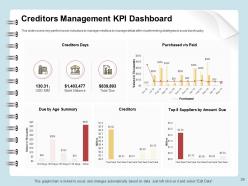
Slide 34: This slide covers key performance indicators to manage creditors to manage debts after implementing strategies to avoid bankruptcy
Slide 35: This is Icons Slide for Insolvency and Bankruptcy.
Slide 36: This slide is titled as Additional Slides for moving forward.
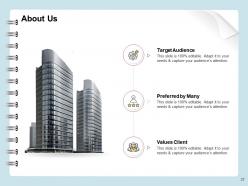
Slide 37: This is About Us slide to showcase Company specifications.
Slide 38: This slide displays Mission, Vision and Goals.
Slide 39: This slide displays Goal.
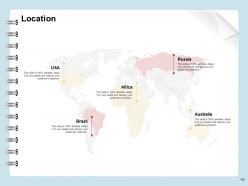
Slide 40: This slide depicts Location
Slide 41: This slide shows Timeline process.
Slide 42: This slide is titled as Post It Notes.
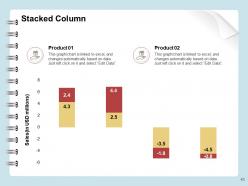
Slide 43: This slide depicts Stacked Column for comparison of products.
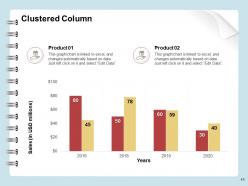
Slide 44: This slide displays Clustered Column for comparison of products.
Slide 45: This is Thank you slide with Contact details.
Insolvency and bankruptcy powerpoint presentation slides with all 45 slides:
Use our Insolvency And Bankruptcy Powerpoint Presentation Slides to effectively help you save your valuable time. They are readymade to fit into any presentation structure.






FAQs for Insolvency and bankruptcy
So basically, insolvency just means you can't pay your bills when they're due - that's the financial mess itself. Bankruptcy? That's actually going to court to deal with it legally. Pretty different things. You could be broke but never file for bankruptcy if you figure something else out with creditors. The bankruptcy route involves all the formal court stuff - trustees, paperwork, the whole nine yards. It can either wipe your debts clean or help you reorganize them. Honestly, if you're even thinking about this, call a bankruptcy lawyer sooner than later. They'll know what makes sense for your situation.
Honestly, insolvency rules are all over the place depending on where you are. Chapter 11 in the US is super debtor-friendly - companies get tons of breathing room to reorganize. The UK? Way more focused on getting creditors paid back through administration. Germany's got this really systematic approach (no surprise there), but developing countries often don't have solid frameworks yet. What really matters is timing, who's calling the shots, claim priorities, and whether you're trying to save the business or just sell everything off. If you're dealing with multiple countries, definitely research each one's rules first - trust me on that.
Cash flow issues are usually the biggest culprit - when you can't pay bills or service debt anymore. Legal action from creditors is another big one. Losing a major client can absolutely wreck you too, especially if they made up like 30% of your revenue or something. Market shifts sometimes kill entire business models overnight. Regulatory problems, supplier issues... honestly, it's often multiple things hitting at once rather than just one disaster. My old boss always said watch your cash flow religiously because everything else stems from that. Point is, if you spot these early you've got options like restructuring instead of going straight to formal insolvency.
So insolvency practitioners - they're licensed pros who jump in when companies can't pay their bills anymore. Think financial crisis referees, basically. They'll either try restructuring your business or shut it down properly. Assets get assessed, creditors dealt with, legal stuff handled. You can't just pick anyone random though, they need proper qualifications and approval. Honestly pretty stressful work if you ask me. If you're headed that direction, call one ASAP - sometimes they can actually save businesses that look totally screwed. Don't wait until you're completely underwater.
So basically, consumer bankruptcy is for regular people buried in personal debt - you can either wipe everything clean (Chapter 7) or set up a payment plan (Chapter 13). Corporate bankruptcy? That's a whole different beast. Way messier because companies have shareholders, employees, creditors all fighting over what's left. Plus they're either liquidating everything or trying to reorganize - which honestly sounds like a nightmare to deal with. If you're the one struggling financially, consumer bankruptcy is definitely the clearer route. They'll actually protect your house and stuff you need.
Honestly, insolvency is brutal for everyone. Secured creditors get paid first, but unsecured ones? They're lucky to see 10 cents on the dollar. Shareholders get completely wiped out since they're dead last in line. Workers lose their jobs and sometimes never see their final paychecks, though there's some legal protection there. Suppliers basically kiss their invoices goodbye and lose a customer too - it's like watching dominoes fall. My advice? Don't wait around hoping things improve if you spot red flags. Start protecting yourself early because once that snowball starts rolling, it's pretty much game over for everyone except the lawyers.
Look for cash flow tanking first - that's usually where trouble starts. Debt-to-equity ratios climbing is bad news too. Current ratio under 1.0? They can't pay their bills. Working capital in the red is another huge problem. Revenue keeps dropping but they're still spending like crazy - I've seen this kill so many companies. Oh, and missing debt payments obviously. It's rarely just one thing going wrong though. Grab their last few cash flow statements and see if multiple red flags are popping up together.
So basically when companies go bankrupt, there's this whole pecking order thing. Secured creditors get paid first, then unsecured ones, and shareholders usually get nothing (which honestly makes sense). The court puts an automatic freeze on everything so the company can't secretly move money around or pay their buddies first. You'll have access to all their financial records since disclosure is mandatory. An independent trustee runs the show to keep things legit. Bottom line - make sure you've got your security interests filed properly way before any trouble starts, because once insolvency hits, where you sit in line determines what you get back.
Don't ignore this stuff - it'll bite you later. Courts actually look favorably on companies that deal with problems early instead of burying their heads in the sand. Wait too long and you're looking at wrongful trading claims where directors get personally stuck with company debts. Not fun. Creditors will start getting nasty with collection actions or just wind you up entirely. Your restructuring options basically disappear the longer you drag your feet. My cousin learned this the hard way last year - waited until it was way too late. Get advice when cash flow starts looking sketchy, not after everything's already fallen apart.
Honestly, watch your cash flow like a hawk - check it weekly, not monthly. Track how fast you're burning through money so you'll catch issues before they get ugly. I learned this the hard way lol. Try to get multiple income streams going instead of relying on one big client. Also negotiate longer payment terms with suppliers when you can. During the good months, stash away cash reserves. Keep fixed costs low. Have backup funding lined up before you need it. The biggest mistake? Waiting too long to act when you see red flags.
So first figure out if you need Chapter 7 or 13 - that matters for everything else. You'll have to do credit counseling before filing, which is annoying but required. Gather every financial document you can think of: income, debts, what you own, monthly expenses. The paperwork's honestly a nightmare. File with the bankruptcy court, then show up to this "meeting of creditors" thing where they ask about your money situation. Oh, and there's a debtor education course you gotta finish before they discharge everything. Seriously though, get a lawyer if you can afford it - bankruptcy rules are ridiculously specific.
Look, insolvency basically means your job's on shaky ground - layoffs and cuts are coming. But here's the thing: you still have rights to unpaid wages, vacation days, all that stuff. Problem is, you'll probably wait forever to see the money since other creditors get paid first. Honestly, the whole system's kind of backwards if you ask me. Right now, start collecting every document you can find - pay stubs, contracts, whatever proves what they owe you. You'll need all of it when filing claims with the bankruptcy court later.
Look, insolvency procedures like administration actually give you a shot at saving the business - you can restructure debts, work with creditors, maybe trade out of the mess. Liquidation? That's just shutting everything down and selling whatever's left. Honestly, I'd try insolvency first if your business model isn't completely broken. You'll lose control either way, but at least with insolvency there's still hope instead of just calling it quits immediately. Worth exploring before you go nuclear, you know?
So basically you work out the reorganization deal with creditors *before* filing Chapter 11. Get everyone on board first, then file the paperwork. Way smarter than going in blind and fighting it out in court for over a year. The whole thing wraps up in like 3-4 months instead of 12-18. Honestly, if you see trouble coming, start talking to creditors early - nobody wants a drawn-out mess. You still do the formal bankruptcy stuff, just with way less drama since the terms are already settled.
Check out Coursera or edX first - they've got solid free courses on bankruptcy basics. The American Bankruptcy Institute is honestly where it's at though, their webinars are incredible. YouTube has some decent channels too (who knew?). Your firm probably has Westlaw or LexisNexis access which is clutch for comprehensive guides. Local bar association seminars are worth hitting up if you're more of a hands-on learner. I'd definitely start with the free stuff first. See what works for your brain, then maybe invest in the paid resources later.
-
Designs have enough space to add content.
-
I discovered this website through a google search, the services matched my needs perfectly and the pricing was very reasonable. I was thrilled with the product and the customer service. I will definitely use their slides again for my presentations and recommend them to other colleagues.
-
Easily Understandable slides.
-
Best way of representation of the topic.
-
Appreciate the research and its presentable format.