


Insurance Business Strategic Planning Powerpoint Presentation Slides





Try Before you Buy Download Free Sample Product
 Impress Your
 Audience
 100%
100% Editable
 Save Hours
 of Time


A strategic business plan enables a roadmap for developing a successful insurance firm. It captures the firms objectives, product offerings, target market, financial projections. Here is a competently designed template on Insurance Business Strategic Planning that will develop startup business plans for insurance agencies with fundamental essentials associated with the business plan. The deck will help build financial, marketing, and workforce plans for setting up an insurance agency. The development of a business plan will aid in making realistic objectives, allocating resources, streamlining workflows, improving communication and business expansion. The deck covers slides about the firms overview, growth potential analysis in terms of SWOT analysis, PESTLE analysis, Porters five forces analysis, go to market strategy, market assessment, target client groups for the insurance business, segmentation, firm positioning, etc. It portrays slides regarding the marketing plan in terms of the product marketing mix, brand building, and advertising strategies. The deck covers slides regarding personnel planning in terms of personnel management in insurance agencies, workforce training, and development roadmap. It showcases slides about financial planning in terms of projected financial statements, namely, income statements, balance sheets, etc. It caters to various risks associated with the insurance business tracking dashboard. Get access to it now.
People who downloaded this PowerPoint presentation also viewed the following :
Content of this Powerpoint Presentation
Slide 1: This slide introduces Insurance Business Strategic Planning. State Your Company Name and begin.
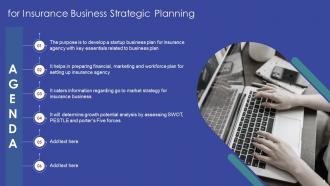
Slide 2: This slide states Agenda of the presentation.
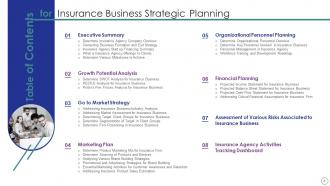
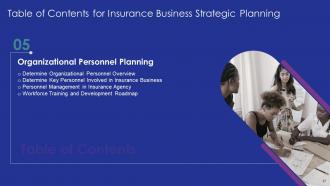
Slide 3: This slide presents Table of Content for the presentation.
Slide 4: This slide highlights title for topics that are to be covered next in the template.
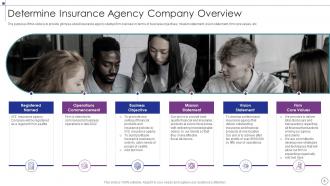
Slide 5: This slide displays Determine Insurance Agency Company Overview.
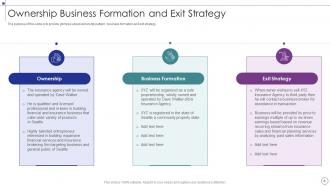
Slide 6: This slide represents Ownership Business Formation and Exit Strategy.
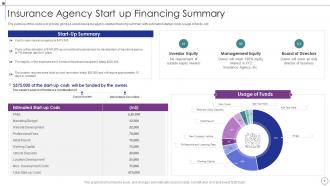
Slide 7: This slide shows Insurance Agency Start Up Financing Summary.
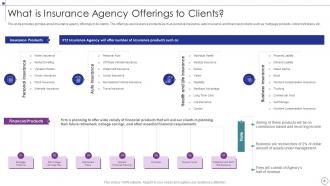
Slide 8: This slide presents insurance agency offerings to its clients.
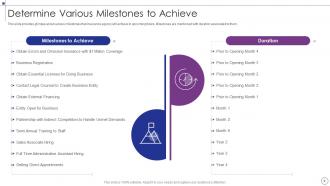
Slide 9: This slide shows various milestones that insurance agency will achieve in upcoming future.
Slide 10: This slide highlights title for topics that are to be covered next in the template.
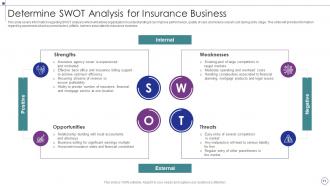
Slide 11: This slide represents Determine SWOT Analysis for Insurance Business.
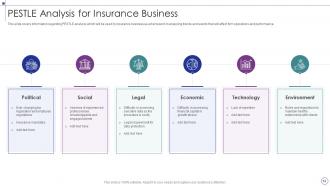
Slide 12: This slide shows PESTLE analysis which will be used by insurance business as a framework.
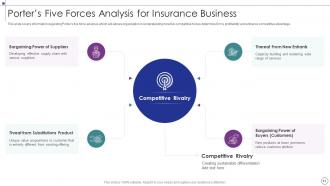
Slide 13: This slide presents Porter’s Five Forces Analysis for Insurance Business.
Slide 14: This slide highlights title for topics that are to be covered next in the template.
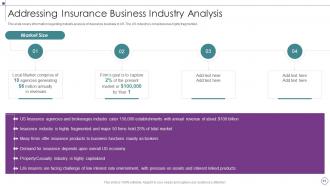
Slide 15: This slide displays industry analysis of insurance business in US.
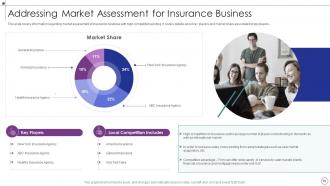
Slide 16: This slide represents Addressing Market Assessment for Insurance Business.
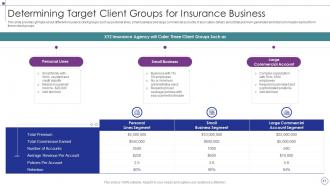
Slide 17: This slide shows Determining Target Client Groups for Insurance Business.
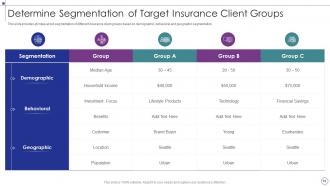
Slide 18: This slide presents Determine Segmentation of Target Insurance Client Groups.
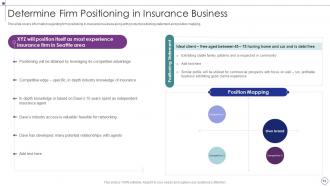
Slide 19: This slide shows Determine Firm Positioning in Insurance Business.
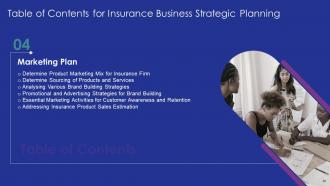
Slide 20: This slide highlights title for topics that are to be covered next in the template.
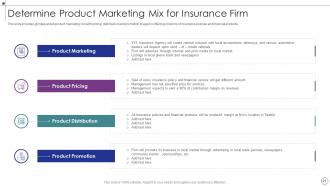
Slide 21: This slide represents Determine Product Marketing Mix for Insurance Firm.
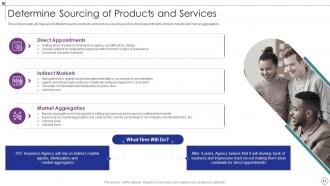
Slide 22: This slide shows Determine Sourcing of Products and Services.
Slide 23: This slide presents Analysing Various Brand Building Strategies.
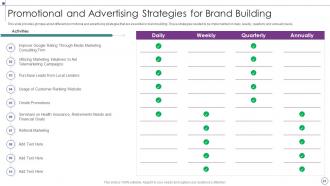
Slide 24: This slide shows Promotional and Advertising Strategies for Brand Building.
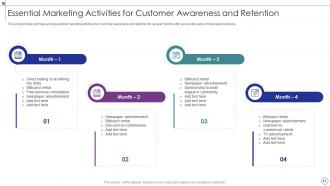
Slide 25: This slide displays Essential Marketing Activities for Customer Awareness and Retention.
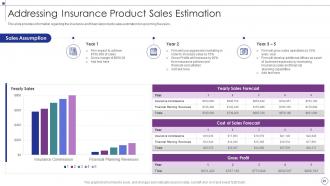
Slide 26: This slide represents Addressing Insurance Product Sales Estimation.
Slide 27: This slide highlights title for topics that are to be covered next in the template.
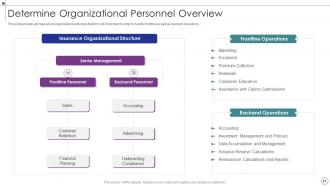
Slide 28: This slide presents organizational structure that firm will implement in order to handle frontline.
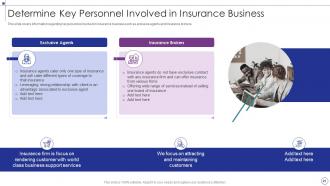
Slide 29: This slide shows Determine Key Personnel Involved in Insurance Business.
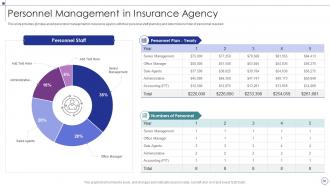
Slide 30: This slide displays personnel management in insurance agency with their personal staff planning.
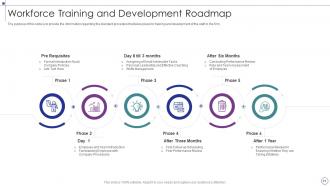
Slide 31: This slide represents information regarding the standard procedure that takes place for training and development.
Slide 32: This slide highlights title for topics that are to be covered next in the template.
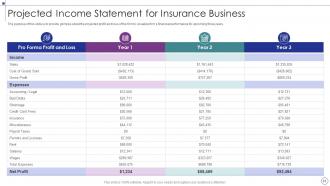
Slide 33: This slide shows Projected Income Statement for Insurance Business.
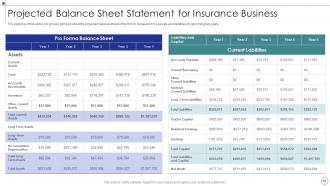
Slide 34: This slide shows Projected Balance Sheet Statement for Insurance Business.
Slide 35: This slide displays Projected Cash Flow Statement for Insurance Business.
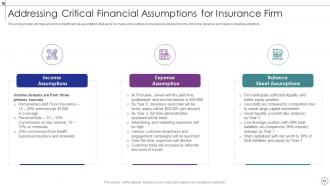
Slide 36: This slide represents Addressing Critical Financial Assumptions for Insurance Firm.
Slide 37: This slide highlights title for topics that are to be covered next in the template.
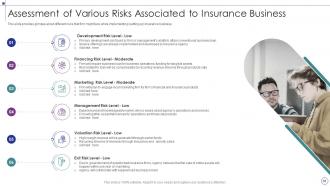
Slide 38: This slide presents Assessment of Various Risks Associated to Insurance Business.
Slide 39: This slide highlights title for topics that are to be covered next in the template.
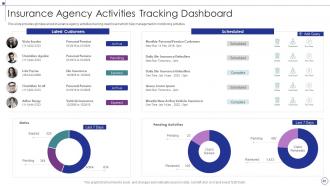
Slide 40: This slide displays Insurance Agency Activities Tracking Dashboard.
Slide 41: This slide showcases Icons for Insurance Business Strategic Planning.
Slide 42: This slide is titled as Additional Slides for moving forward.
Slide 43: This is About Us slide to show company specifications etc.
Slide 44: This is Our Mission slide with related imagery and text.
Slide 45: This is Our Team slide with names and designation.
Slide 46: This slide provides 30 60 90 Days Plan with text boxes.
Slide 47: This slide contains Puzzle with related icons and text.
Slide 48: This slide depicts Venn diagram with text boxes.
Slide 49: This is a Timeline slide. Show data related to time intervals here.
Slide 50: This slide presents Roadmap with additional textboxes.
Slide 51: This is a Financial slide. Show your finance related stuff here.
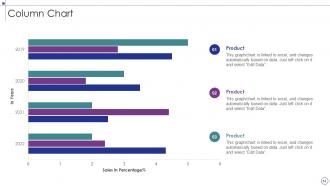
Slide 52: This slide displays Column chart with two products comparison.
Slide 53: This is an Idea Generation slide to state a new idea or highlight information, specifications etc.
Slide 54: This is a Thank You slide with address, contact numbers and email address.
Insurance Business Strategic Planning Powerpoint Presentation Slides with all 59 slides:
Use our Insurance Business Strategic Planning Powerpoint Presentation Slides to effectively help you save your valuable time. They are readymade to fit into any presentation structure.












FAQs for Insurance Business Strategic Planning
So you'll need market analysis and risk assessment - that's your foundation. Financial projections are obviously huge, plus competitive positioning. Set clear objectives with actual measurable KPIs, not just vague goals. Distribution strategy matters more than people think - direct sales, brokers, whatever works for your market. Don't skip the regulatory stuff because that'll come back to haunt you. Build in review cycles since insurance moves pretty fast these days. Honestly, I'd start with market analysis first. Everything else flows from understanding your market. Oh, and make sure your implementation timeline is realistic - we've all seen those overly ambitious plans crash and burn.
Start with solid market analysis - check your premium volumes, market share by product, and how you compare on pricing and claims ratios. Customer satisfaction and retention rates? Super telling about where you actually stand vs where you think you do. Geographic stuff matters too, especially if certain regions look wonky. Distribution channels are key - figure out which ones make money vs just pump volume. Oh, and pull this into a dashboard so you can actually see patterns. Once you've got that baseline, the gaps and opportunities will jump out at you pretty quickly.
Dude, tech isn't just nice to have anymore - it's literally running the show in insurance now. AI and predictive stuff are changing how companies assess risk, plus all the customer-facing digital tools are huge. The data insights you can get will flip your whole strategy upside down. Companies ignoring this are getting left in the dust, no joke. When you're planning strategy, you've got to factor in automation, customer experience platforms, all that data capability stuff. Oh and definitely start by looking at your current tech situation - like what's actually helping you hit goals vs. what's holding you back.
Don't just tack customer feedback onto your planning - build it right in from the start. Quarterly surveys and focus groups are your best friends here. Digital tools make collecting this stuff so much easier now (thank god). Look for the gap between what people actually want versus what you're giving them. If everyone's bitching about slow claims processing, boom - digital transformation jumps to the top of your list. The key is closing the loop afterward. Track whether your changes actually fixed what customers were complaining about in the first place.
Aging populations are totally changing demand patterns - that's probably where I'd start. Tech disruption is massive right now with AI and IoT flipping everything upside down. Regulatory changes can literally kill your plans overnight, so watch those closely. Climate change isn't going away and it's messing with risk models big time. Interest rates and inflation will hit your investment returns hard. Oh, and cyber threats are everywhere now - pandemic coverage gaps too. Honestly, the regulatory stuff scares me most because it's so unpredictable. Rank these based on your specific market though.
Look, most companies totally screw this up by treating risk like some separate thing they deal with later. You've gotta weave it into every part of your planning from day one. Map out your main exposures first - operational stuff, market risks, credit, regulatory headaches. Then tie your mitigation strategies directly to what you're actually trying to achieve business-wise. Your capital decisions, product development, expansion plans? They should all reflect how much risk you can stomach. Oh, and update those assessments every quarter - things change fast. Risk appetite should drive strategic priorities, not the other way around.
Honestly, you gotta track both the money stuff and how things are actually running. Combined ratio is your best friend here - it shows if you're actually profitable on underwriting. Then watch premium growth, ROE, and loss ratios for the financial picture. Operationally, keep an eye on customer retention, market share, claims processing speed, and satisfaction scores. Monthly dashboards are clutch for catching problems early. I mean, nobody wants to realize six months later that retention is tanking, right? Set it up so you can spot trends and pivot before minor issues snowball into disasters.
You know what really changed our planning process? Getting different teams in the room together. Underwriters spot risk patterns, claims people know where costs blow up, and IT - honestly, getting them involved early saves you from building impossible dreams. Marketing brings the customer angle while ops keeps everyone realistic. The cool thing is when people actually help build the strategy, they don't just phone it in during execution. I'd grab maybe 5-6 folks from different areas for your next planning session. The conversations get so much deeper when you've got all those viewpoints mixing together.
Ugh, regulators are such a pain - they're constantly changing rules and it throws off everything. New capital requirements? Suddenly you're scrambling to hit different growth numbers or switch up your product lineup. Consumer protection updates mean your whole customer strategy needs a makeover. Budget planning becomes this nightmare when you're trying to guess compliance costs (and they're never cheap). But here's the thing - sometimes these changes actually create new opportunities while shutting down others. Stay connected with industry groups so you can see what's coming instead of getting blindsided. Build some wiggle room into your plans because trust me, more changes are definitely coming.
Look, your mission statement has to actually mean something - not just marketing fluff. I'd map each goal back to specific parts of your mission. Can't draw that connection? Red flag right there. Here's what kills me: companies say they're "customer-focused" but then track zero customer metrics, only revenue stuff. Makes no sense. Do quarterly gut-checks where you ask "does this project actually serve our mission?" Sounds basic but you'd be surprised how many skip this step. Your leadership should explain the mission-goal link in like one sentence for any big initiative. If they can't, that's your answer.
So competitive analysis is basically your secret weapon for figuring out where you fit in the market. Pick like 3-5 direct competitors and dig into their products, pricing, how they sell stuff, customer experience - the whole deal. You'll spot gaps where they're dropping the ball (crappy websites, overpriced services, whatever) plus see what's actually working that you could do better. I honestly think it's pretty satisfying catching all their mistakes! Then you just map their strong/weak points against what you're good at. Boom - that's how you find your sweet spot and position yourself smartly.
Look, if your team doesn't care about the plan, it's just expensive paper. Getting people involved from the start makes all the difference - they'll actually execute instead of pretending to care. Your frontline folks see stuff executives totally miss anyway. I've noticed the companies that do this right treat planning like a team sport, not some boardroom power trip. Honestly, just pull key people into your planning sessions and keep everyone updated on how things are going. Makes everything way smoother.
Watch for early warning signs - customer habits changing, new regulations brewing, weird market shifts. Honestly, most companies wait way too long to react. Build stuff that's flexible from the start. Modular products, agile processes, all that. Get different teams together quarterly to brainstorm what could go sideways. I'd rather look paranoid than get blindsided, you know? Test your assumptions constantly - like, what if this market disappeared tomorrow? Have backup plans sitting in a drawer ready to go. The companies that survive are the ones already moving when everyone else is still figuring out what hit them.
Look, digital transformation isn't just swapping out old computers - it completely flips your strategic playbook. Those 5-year plans you've been using? Way too slow now. Customer expectations change monthly, not yearly. You need way more agility in planning and honestly, prepare for your legacy systems to become major headaches (and budget drains). The competition's getting weird too - startups and tech giants are all jumping into insurance now. I'd start by figuring out which parts of your strategy still assume customers behave like it's 2015. Data analytics capabilities are non-negotiable. Focus on those gaps first.
Honestly, I'd focus on three main things: underwriting, investments, and operations. Climate risk assessments need to get baked right into your pricing models - not just some side project nobody cares about. Your investment portfolio should align with ESG stuff too. Pick one area first though, don't spread yourself thin trying to fix everything. I'd probably start with underwriting since that hits your bottom line immediately. Also set some actual carbon reduction targets for your own operations - regulators are breathing down everyone's necks on this stuff anyway, so you might as well get ahead of it.
-
Crisp and neat slides. Makes it fun and easier to curate presentations.
-
Kudos to SlideTeam for achieving the high success rate in delivering the top-notch slides.