


Semantic Search Powerpoint Presentation Slides




Try Before you Buy Download Free Sample Product
 Impress Your
 Audience
 100%
100% Editable
 Save Hours
 of Time


Grab our professionally curated Semantic Search template. It discusses the semantic webs foundation, entities and ontologies, effects, and benefits. Our Semantic Web Ontology deck covers the semantic web design, how it functions, semantic web standards, knowledge graphs, and semantic metadata. Additionally, it showcases the Markups and measures that aid in developing semantic meta statements, bars, and norms. Further, our Semantic Web Principles PPT includes the principles and layers, resources, related links and their various kinds, partial information, and other things that URIs can recognize. It also discusses the business advantages of the semantic web and how it integrates with other technologies like machine learning and artificial intelligence. Furthermore, our Semantic Search module provides an overview of the semantic search mechanism and importance, the growth of semantic search, steps to obtain semantic searchs benefits, and its benefits to digital marketers. Lastly, it includes a roadmap and a timeline for semantic web development. Get access right away.
People who downloaded this PowerPoint presentation also viewed the following :
Content of this Powerpoint Presentation
Slide 1: This slide introduces Semantic Search. Commence by stating Your Company Name.
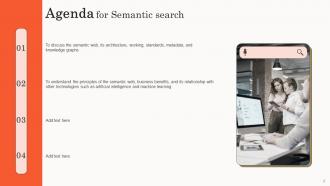
Slide 2: This slide depicts the Agenda of the presentation.
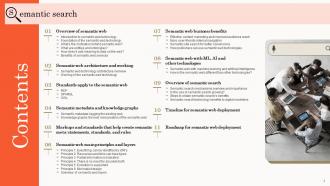
Slide 3: This slide incorporates the Table Of Contents.
Slide 4: This slide states the Title for the Topics to be discussed next.
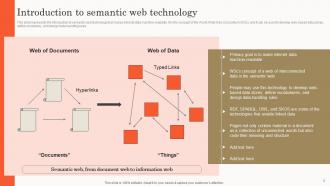
Slide 5: This slide represents the introduction to semantic web technology that makes internet data machine-readable.
Slide 6: This slide talks about the basis of semantic web technology, and it includes Web 1.0 and Web 2.0.
Slide 7: This slide shows the motivation behind the semantic web.
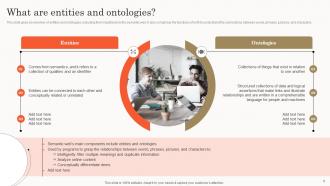
Slide 8: This slide gives an overview of entities and ontologies.
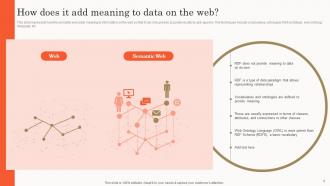
Slide 9: This slide presents how the semantic web adds meaning to information on the web.
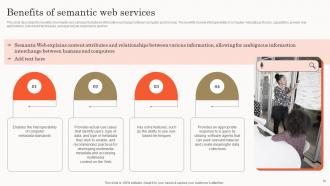
Slide 10: This slide describes the benefits of semantic web services that allows information exchange between computer and humans.
Slide 11: This slide portrays the Heading for the Components to be further covered.
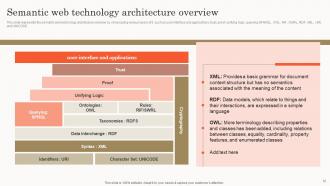
Slide 12: This slide represents the semantic web technology architecture overview.
Slide 13: This slide elucidates the working of semantic web technology on the internet.
Slide 14: This slide mentions the Title for the Contents to be discussed next.
Slide 15: This slide represents the resource description framework overview.
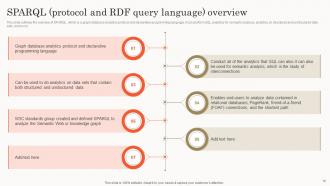
Slide 16: This slide outlines the overview of SPARQL.
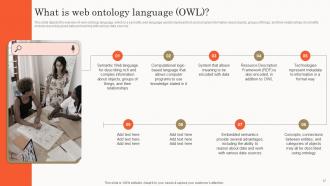
Slide 17: This slide depicts the overview of web ontology language.
Slide 18: This slide incorporates the Heading for the Topics to be covered in the following template.
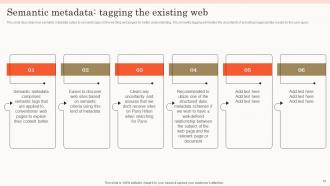
Slide 19: This slide describes how semantic metadata caters to semantic tags on the existing web pages for better understanding.
Slide 20: This slide depicts the overview of knowledge graphs which are the next level of the semantic web.
Slide 21: This slide mentions the Title for the Topics to be discussed further.
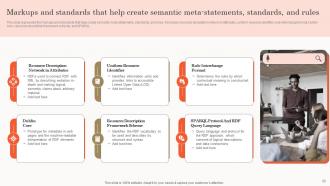
Slide 22: This slide represents the markups and standards that help create semantic meta-statements, standards, and rules.
Slide 23: This slide reveals the Heading for the Components to be covered next.
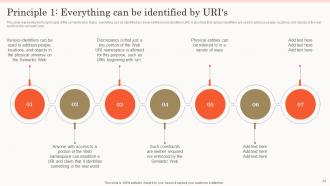
Slide 24: This slide represents the first principle of the semantic web, that is, everything can be identified by Universal Resource Identifier (URI).
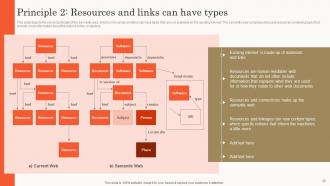
Slide 25: This slide depicts the second principle of the semantic web, which is resources and links can have types.
Slide 26: This slide displays the partial information is tolerated principle of the semantic web.
Slide 27: This slide explains there is no need for the absolute truth principle of the semantic web.
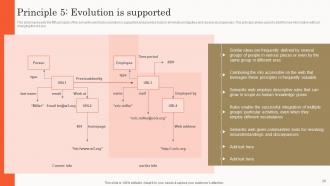
Slide 28: This slide represents the fifth principle of the semantic web that is evolution is supported.
Slide 29: This slide talks about the sixth principle of the semantic web, which is a minimalist design that makes complex tasks easy.
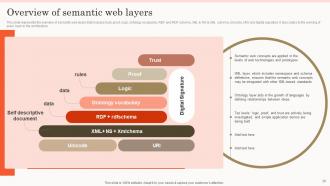
Slide 30: This slide showcases the overview of semantic web layers.
Slide 31: This slide indicates the Title for the Contents to be further covered.
Slide 32: This slide outlines the benefits of the semantic web to businesses.
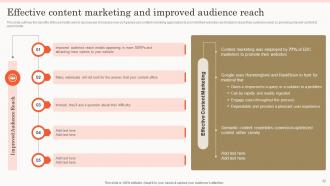
Slide 33: This slide represents the business benefits of semantic web to enhance their revenue.
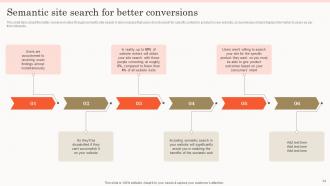
Slide 34: This slide talks about the better conversion rates through semantic site search.
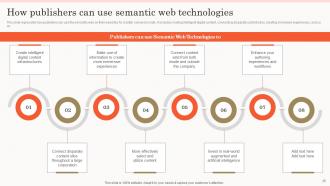
Slide 35: This slide reveals how publishers can use the semantic web on their websites for a better conversion rate.
Slide 36: This slide elucidates the Heading for the Topics to be discussed next.
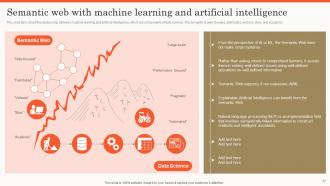
Slide 37: This slide talks about the relationship between machine learning and artificial intelligence.
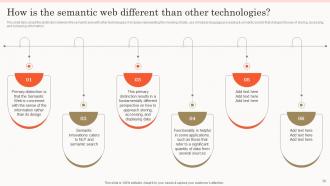
Slide 38: This slide deals with the distinction between the semantic web with other technologies.
Slide 39: This slide mentions the Title for the Ideas to be further covered.
Slide 40: This slide represents the overview and importance of semantic search mechanisms that understand the intent of the user’s query.
Slide 41: This slide talks about the growing applications of semantic search in recent years.
Slide 42: This slide describes the six steps to obtain the semantic search’s benefits.
Slide 43: This slide displays the benefits of semantic search technology to digital marketers.
Slide 44: This slide indicates the Heading for the Ideas to be dicussed in the upcoming template.
Slide 45: This slide presents the timeline for semantic web deployment and development.
Slide 46: This slide showcases the Title for the Topics to be covered further.
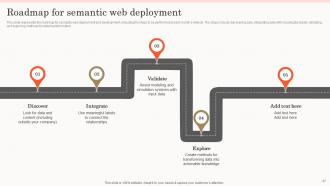
Slide 47: This slide represents the roadmap for semantic web deployment and development.
Slide 48: This is the Icons slide containing all the Icons used in the plan.
Slide 49: This slide is used for showcasing some Additional information.
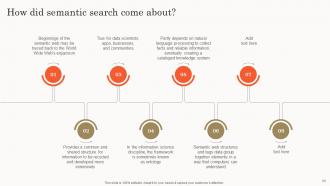
Slide 50: This slide illustrates how semantic search came about.
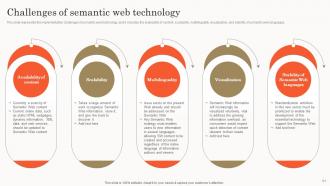
Slide 51: This slide presents the implementation challenges of semantic web technology.
Slide 52: This is the Idea generation slide for encouraging new ideas.
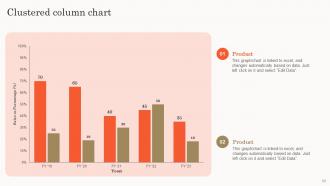
Slide 53: This slide reveals the Clustered column chart.
Slide 54: This is the Puzzle slide with related imagery.
Slide 55: This slide highlights the SWOT analysis.
Slide 56: This is the 30,60,90 days plan slide for effective planning.
Slide 57: This is the Thank You slide for acknowledgement.
Semantic Search Powerpoint Presentation Slides with all 62 slides:
Use our Semantic Search Powerpoint Presentation Slides to effectively help you save your valuable time. They are readymade to fit into any presentation structure.























FAQs for Semantic Search
So basically, semantic search actually gets what you mean instead of just finding matching words. Like if you search "apple pie recipe," it won't give you random stuff about iPhones or farming - it knows you want baking instructions. Traditional search is pretty dumb honestly, just looks for exact word matches. This one uses AI to understand context and what you're actually trying to find. You can type longer, more natural questions instead of weird keyword phrases. I've been using it way more lately - the results are so much better when you just ask normally.
Okay so basically these search algorithms actually get what you're trying to find, not just the exact words you type. They're trained on tons of data to understand context and relationships between stuff. Like if you search "apple problems" - it figures out from other clues whether you mean the fruit or your phone acting up again. Pretty neat how that works. The cool part? You can search more like you'd actually talk to someone instead of typing weird robot keywords. Makes finding stuff way easier honestly.
So NLP is what makes semantic search actually smart - it doesn't just match your keywords like some basic search engine from 2005. When you type "apple problems," it figures out if you mean the fruit or your busted iPhone. Pretty neat, honestly. It breaks down context and intent, plus does all this entity recognition stuff. That's how it connects "car" with "vehicle" or knows "best pizza nearby" means you want local spots. The whole sentiment analysis thing helps too. Bottom line? Use it when you need search results that get what you actually meant.
Dude, semantic search is a game changer - it actually gets what people mean instead of just hunting for exact keywords. Like if someone types "affordable running shoes," it knows they want budget athletic gear, not random pages that happen to have those words scattered around. The whole thing works by reading context and intent, which honestly should've been standard years ago. Users find stuff way faster even when they're being super vague about what they want. First step? Check your search logs to see where people are bouncing. That's where you'll get the biggest conversion wins.
Oh, entity recognition! It's how search systems figure out what "things" you're actually talking about - people, places, companies, whatever. Like when you search "Apple earnings," it knows you mean the tech giant, not fruit sales (though that'd be weird data to track lol). Way smarter than old-school keyword matching. The system can connect related stuff too - Steve Jobs links to Apple links to iPhone. Pretty neat how it all works together. Bottom line? You get way more relevant results because it actually understands context instead of just matching random words.
Okay so here's the thing - semantic search is actually way better than old-school keyword matching. It gets that "car," "vehicle," and "automobile" all mean basically the same thing, which makes your results so much more complete. You don't have to stress about using exact words anymore since it'll connect "customer satisfaction" with stuff like "client happiness." Honestly, I think this is one of the cooler tech developments lately. Just write naturally instead of cramming in keywords - the system rewards actual relevance now, not keyword stuffing.
Stop obsessing over keywords - just write naturally about stuff people actually care about. Think about why someone's searching, not just what they typed. Google's gotten pretty good at understanding context anyway. I'd start by brainstorming all the questions your audience might have about a topic, then write something comprehensive that covers the whole conversation. Use clear headings, add structured data if you can. Honestly? Just explain things like you're talking to a friend who doesn't know the topic. That usually works better than trying to game the algorithm.
Hey! So with semantic search, Google's basically reading minds now - it gets what people actually want, not just the exact words they type. Instead of obsessing over "best pizza NYC," you'd create content covering the whole experience. Talk about neighborhoods, prices, what the vibe is like, you know? I actually think it's way more fun than the old keyword stuffing days because you're solving real problems. Map out all the questions someone might have around your topic, then build content that walks them through everything. Way more natural than before.
Honestly, data quality is gonna bite you first. Your search is only as good as your training data, so messy content = messy results. Vector similarity gets weird too - it'll return conceptually related stuff that isn't what people actually wanted. I've seen it happen a lot. You'll probably need hybrid approaches since pure semantic search misses exact keyword matches users expect. Oh, and don't go too broad initially. Pick a focused domain with clean data or you'll just frustrate yourself trying to fix everything at once.
Oh man, semantic search is such a game changer! It actually gets what you're trying to find instead of just matching your exact words. Like if you search "apple problems" in a tech database, it's smart enough to know you want iPhone stuff, not fruit diseases or whatever. The whole context thing is honestly pretty brilliant. With huge databases, people describe the same thing in like 20 different ways, right? So you end up with way fewer dead-end searches and actually find relevant stuff even when someone uses completely different words than what's stored in there.
So for storing embeddings, you'll want something like Pinecone, Weaviate, or Chroma. OpenAI, Sentence Transformers, and Cohere are solid choices for the actual embedding models. Honestly, Elasticsearch and Solr both have semantic search baked in now which is kinda cool. You can build the search logic with LangChain or LlamaIndex - though FAISS works great too if you're going the Python route. Most folks mix in regular keyword search alongside the vector stuff for better results. I'd say start basic with OpenAI embeddings and pick one vector database. You can always get fancy later once you see what people are actually searching for.
So basically, user clicks and behavior become your training data - that's what makes these algorithms actually work. When people click certain results or spend time reading, you're learning what "relevant" really means to actual humans. Short clicks? Your algorithm probably missed something. Honestly, the explicit feedback is gold - those "helpful/not helpful" buttons give you direct corrections. Query refinements show you where the language understanding breaks down. The trick is building those feedback loops so your system learns from real interactions. Otherwise you're just guessing what people want.
So semantic search totally changes the game for voice stuff. Your assistant actually gets what you mean instead of just matching keywords. Like if you say "How do I fix my leaky kitchen faucet," it knows you need plumbing help, not just those exact words. People talk so differently than they type anyway - we're all over the place with "um, what's that thing called" and half-finished thoughts. The smart part figures it out regardless. For your projects, I'd focus on how people actually speak instead of trying to hit specific keywords. Way more natural results that way.
Look at e-commerce first - they're drowning in product searches where people type "comfy walking shoes" but mean sneakers, not heels. Healthcare's another goldmine since they've got tons of patient records that regular search can't handle well. Legal firms waste crazy hours digging through case law (honestly, lawyers bill enough already lol). Financial services deals with complex queries daily too. Customer support's also solid - think about how many weird ways people describe the same problem. I'd say start wherever your current search pisses users off most. That's where you'll see the biggest wins with semantic search.
Definitely start with schema.org markup - it's like giving Google a roadmap of your content. Mark up your articles, products, whatever you've got so search engines actually know what they're reading. Your heading structure matters too. Keep it logical with H1, H2, H3 and don't forget alt text for images. Basic stuff but people skip it all the time. JSON-LD is where the magic happens though. Think of it as translator notes for search bots - tells them exactly what your content means. I'd focus on your main page types first since that's where you'll see results fastest. Way easier than I thought it'd be once you get started.
-
I want to express my gratitude to SlideTeam’s presentation design services team for helping me create the best presentation of my life!
-
I really liked their customized design services. I got my desired template made by their expert team. Thank You!