


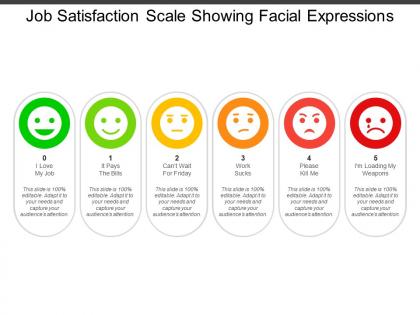
Job satisfaction scale showing facial expressions




Try Before you Buy Download Free Sample Product
 Impress Your
 Audience
 100%
100% Editable
 Save Hours
 of Time


Expose irrational behavior wit our Job Satisfaction Scale Showing Facial Expressions. Highlight the dubious intentions behind the deed.
People who downloaded this PowerPoint presentation also viewed the following :
Job satisfaction scale showing facial expressions with all 5 slides:
Give folks the chance to flourish with our Job Satisfaction Scale Showing Facial Expressions. They create a good growth environment.

FAQs for Job satisfaction scale
So basically there are five main things these job satisfaction surveys look at. Your boss relationship is huge - probably the biggest factor honestly. Then there's pay/benefits, how you get along with coworkers, whether you actually like the work you're doing, and if there's room to move up. Some surveys add stuff like job security too, but those core five are what most focus on. I mean, makes sense right? Those are exactly the things that make you either love or hate going to work. If you're putting together employee surveys, definitely hit those areas since they'll tell you if people want to stay or bail.
So you've got your job satisfaction data - now what? Don't just stick it in a folder somewhere (I've seen companies do this way too often). Look for patterns first. Which departments are struggling? What roles are unhappy? Share the results with your teams - they'll appreciate the honesty. Get them involved in brainstorming fixes too. Start with your lowest scores since those people are probably already updating their resumes. The real test? Survey again in 6-12 months to see if anything actually improved.
Oh this is such a good question! So satisfaction surveys only tell you if people are "okay" with work, but engagement shows if they actually *care*. You need both together to get the real story. Like, I've seen tons of people who mark "satisfied" on surveys but are totally mentally checked out - that's the engagement piece missing. Short sentences hit different than long ones, you know? When satisfaction is high but engagement tanks? Red flag for quiet quitting. It's honestly the combo that matters most.
Oh totally, cultural differences mess with those scores big time. People from different regions just value completely different stuff at work. Like, team-oriented cultures will rate collaboration questions super high, but individualistic places care way more about having autonomy. The rating patterns are wild too - some cultures hand out extreme scores like candy while others play it safe in the middle. It's honestly like Yelp reviews by country. Best bet? Compare trends within each region instead of raw numbers, and maybe throw in some culture-specific questions that actually matter to local workers.
Yeah, there's definitely a strong link there. People who score higher on satisfaction surveys stick around way longer - like, they're much less likely to bail in the next 6-12 months. Obviously it's not foolproof since life gets messy, but honestly it's one of the best predictors you can actually track. The real danger zone is when scores drop below certain levels - that's where you see people just start hemorrhaging out the door. I'd run those surveys every quarter and have actual conversations with anyone scoring low before they're already mentally checked out.
Honestly, once a year is usually enough for job satisfaction surveys. Though if you're going through big changes or people keep quitting, maybe bump it to twice yearly. I've watched companies survey everyone constantly and then... nothing happens. So annoying. You need time between surveys to actually fix stuff based on what people tell you. Quarterly pulse surveys work if there's specific drama or you just changed policies. The real trick? Don't survey people to death. Your team has to see their feedback leads to actual changes, or they'll stop caring. Consistency beats frequency every time.
Oh man, there's so many ways these surveys get messed up! Social desirability bias is huge - people just tell you what sounds good instead of the truth. Then you've got recency bias where whatever happened last week totally skews everything. Acquiescence bias is weird too, people automatically agree with positive statements. The halo effect drives me crazy though - one awesome manager makes them rate terrible cafeteria food as amazing. Timing's everything - survey after layoffs vs. after bonuses? Completely different planet. Mix up your questions, keep it anonymous, and don't survey during drama.
Okay so basically qualitative feedback tells you WHY your numbers look the way they do. Like maybe your satisfaction scores tanked in Q3, but without employee comments you'd have no clue it's because of that awful new scheduling system everyone hates. The numbers just point you toward problems - the actual comments reveal what's really going wrong. I think of it like being a detective or whatever. You definitely want to collect both types at the same time so you can compare them. Otherwise you're just tracking problems without actually understanding how to fix them.
So for job satisfaction surveys, I'd probably start with something like SurveyMonkey or Typeform - they're pretty solid for collecting responses and basic analysis. Google Forms works too if you're just doing a quick pulse check (plus it's free, which is nice). For bigger datasets, you'll want SPSS or R to dig deeper into the stats. Excel actually isn't terrible for smaller teams either, though it gets messy fast. I learned that the hard way last year! Pick whatever fits your sample size and how detailed you want to get. You can always start basic and upgrade later if you need fancier reporting.
Yeah, company size totally matters for this stuff. Smaller places let you ask really specific questions since everyone kinda wears different hats anyway. But once you hit bigger orgs? You need questions that actually work across departments - like, accounting vs marketing have completely different day-to-day experiences. Large companies also deal with bureaucracy nightmares and formal promotion tracks that startups don't even have yet. Honestly, I'd map out your different employee types first before writing anything. Otherwise you'll end up with survey data that's all over the place and doesn't tell you much.
So definitely hit the remote-specific stuff first - like how well people separate work from home life, tech issues driving them crazy, feeling isolated from the team. Communication with managers is huge too. Obviously workload and career growth still matter, but remote adds weird layers like whether their home setup actually works or if they're drowning in video calls. Honestly? I'd just browse existing remote surveys and borrow their best questions - why start from scratch. Test it on maybe 5-10 people first to see what lands. The flexibility perks are real, but so is that soul-crushing Zoom fatigue everyone pretends isn't happening.
Check with your HR team first - they might already pay for salary surveys from Gallup, SHRM, or PayScale that include job satisfaction breakdowns by industry. Industry associations are honestly your best bet though since they're so focused on your specific field. Just make sure you're comparing similar stuff - same job levels, company sizes, regions, all that. Oh, and don't just grab random data online. Pick 2-3 solid sources and check your numbers against theirs every quarter. The trick is finding reports that actually match your situation instead of some generic nationwide average.
Ugh, low job satisfaction is seriously a productivity killer. People start calling in sick more, quit faster, and honestly just half-ass everything. What really sucks is how it spreads - one miserable person can make the whole team feel blah. You'll get more screw-ups, zero teamwork, and everyone doing just enough to not get fired. Then it snowballs because crappy performance makes people even more miserable. If your satisfaction scores keep tanking, I'd sit down with people individually. Find out what's actually bothering them instead of guessing.
Survey your team regularly with job satisfaction scales - they'll show you exactly what's bugging people. Could be crazy workloads, terrible communication, or zero growth opportunities. Here's the thing though: actually DO something with the responses. I've seen too many managers collect feedback then let it die in some Excel file. Have real conversations about what you found. Make changes where you can. Always circle back and tell people what you're fixing based on their input. People get pretty cynical when their feedback disappears into the void, so showing them it matters is huge.
Get those results out within 2-3 weeks, don't let them sit around gathering dust. Share everything honestly - the good stuff AND the messy parts. Trust me, people can smell BS from a mile away when you only highlight the positives. Focus on the big picture themes instead of getting bogged down in every tiny detail. Here's the key part though: always come with actual next steps and realistic timelines for fixing things. Even if you can't solve everything right away, just showing you listened and have a real plan makes all the difference. Don't forget to circle back later and update everyone on progress.
-
Top Quality presentations that are easily editable.
-
Great designs, Easily Editable.