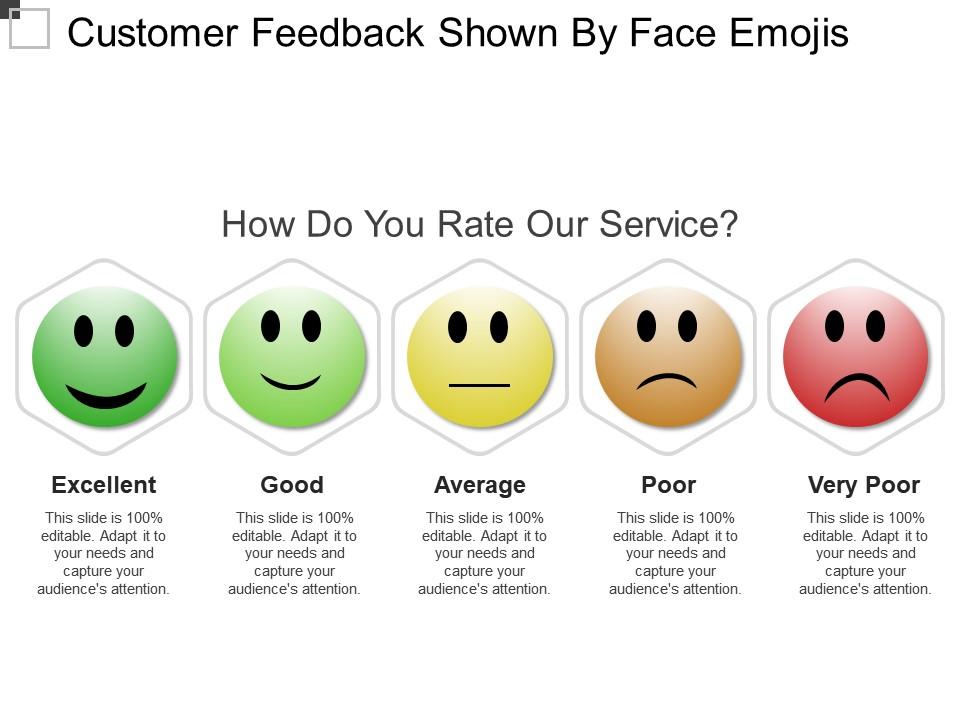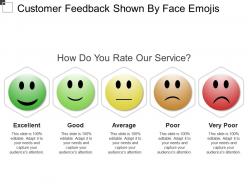
Customer feedback shown by face emojis

Rating:
87%
Customer feedback shown by face emojis
Slide 1 of 5

You must be logged in to download this presentation.

Favourites Favourites

Try Before you Buy Download Free Sample Product

Audience Impress Your
Audience
Editable 100%
Editable
Time Save Hours
of Time
The Biggest Sale is ending soon in
0
0
:
0
0
:
0
0
Rating:
87%
Presenting this set of slides with name - Customer Feedback Shown By Face Emojis. This is a five stage process. The stages in this process are Business Feedback, Customer Feedback, Customer Testimonial.

People who downloaded this PowerPoint presentation also viewed the following :

FAQs for Customer feedback shown

Start with the basics - positive/negative sentiment ratios and NPS scores. Those are pretty straightforward. Track how sentiment changes over time too, that's where you'll spot real patterns. Customer satisfaction surveys help, and emotion detection is cool but honestly kinda hit-or-miss with current AI. Different platforms matter - people vent way more on Twitter than they do in formal reviews, so break it down by channel. Social, reviews, support tickets, whatever you use. Don't try measuring everything right away though. Get your baseline sentiment tracking down first, then add the fancy stuff later. Way less overwhelming that way.

So NLP is way better than just searching for "good" and "bad" keywords - it actually gets the context. Like when someone writes "This product is *so* amazing" it'll catch that they're being sarcastic. Pretty cool, right? It also handles those tricky reviews where people list both pros and cons in the same sentence. The best part? You don't have to manually read through hundreds of comments anymore (thank god). I'd test it on your weirdest customer feedback first - that's where you'll really see it shine compared to basic keyword matching.

Dude, social media is wild for this stuff. One person complains and suddenly algorithms are pushing it everywhere - Twitter's the worst for drama spreading like crazy. Your brand can literally go from fine to disaster mode in hours. Positive stuff spreads too but honestly? People love sharing complaints more than praise. You've got to watch these platforms constantly because sentiment shifts so fast. Individual opinions turn into these massive viral things that can totally wreck you overnight. Instagram's a bit better than Twitter but still. Monitor everything or you'll get blindsided when something blows up.

Yeah, so it totally depends on your industry. Retail companies are all over product reviews and social media - makes sense since that's where people actually shop now. Healthcare's different though, they're obsessed with patient surveys and making sure they don't get in trouble with regulations. Finance is honestly kind of paranoid (but for good reason) - they watch every single mention because bad PR can destroy stock prices overnight. Hotels and restaurants? They're glued to booking sites and Instagram comments 24/7. Bottom line: figure out where your customers actually talk about you and focus there first.

So for sentiment analysis, I'd probably start with TextBlob if you're doing Python stuff - it's free and pretty decent for testing things out. VADER's actually amazing for social media data, like weirdly good at picking up on sarcasm and internet speak. Google Cloud and AWS Comprehend are solid paid options when you need something more heavy-duty. Oh, and if you're working with huge datasets, Lexalytics might be worth checking out but it's pricey. Honestly though? Just mess around with TextBlob first to see if it fits what you're doing before spending money.

Honestly, sentiment analysis is like having a crystal ball for product decisions. Your customers are already telling you what sucks and what's amazing - you just need to listen systematically. Focus on the negative stuff first because that's where you'll find the biggest wins. Maybe your checkout flow is trash or some feature keeps pissing people off. But don't ignore the positive feedback either - that shows you what to keep doing more of. I'd organize it by feature or user journey stage so you can actually see patterns. It's way better than guessing what to build next.

Honestly, just be upfront about what data you're collecting - people hate feeling like they're being watched without knowing it. Get real consent first, not that sneaky fine-print stuff. Anonymize everything and watch out for biased analysis tools that might unfairly target certain groups. GDPR and other privacy laws are obviously a must. Here's the thing though - don't use emotional insights to manipulate people into buying stuff they don't need. That's just gross. Use it to actually make their experience better. Oh, and set up data retention policies so you're not hoarding info forever.

So basically you'd hook it up to your support tickets, surveys, social media - wherever customers are talking. Most CRMs have APIs that'll pull sentiment data from tools like Lexalytics, or you could build something custom if you're feeling ambitious. Automate the whole thing so sentiment scores just show up in customer profiles automatically. Nobody's got time to manually update that mess. Set alerts for when sentiment tanks - that's when you really need to jump in. Honestly, I'd start with just one data source first, nail that down, then add more later.

Yeah, sentiment analysis gets totally thrown off by sarcasm - algorithms just can't read between the lines. Like "Oh great, another system outage" reads as positive because of "great." Slang's even worse since it changes so fast. Your model probably has no clue what half the new terms mean, honestly. I've watched this completely wreck customer feedback reports before. My advice? Don't rely on automation alone for anything important. You gotta have humans double-check the tricky stuff, and keep retraining those models or they'll fall behind.

Dude, sentiment analysis is like having a warning system for when your brand's about to get roasted online. Catches those angry customer vibes before they blow up into actual disasters. You can literally watch the mood shift in real-time as you're trying to fix whatever went wrong - super helpful to know if you're making it better or just digging yourself deeper, honestly. The internet moves crazy fast these days, so set up alerts when your sentiment scores tank. That way you won't be scrolling Twitter at 2am wondering why everyone suddenly hates you lol.

Don't just look at the overall score - dig into what's actually causing good vs bad feedback. Start with the biggest complaint themes since fixing those gives you the most bang for your buck. Sentiment analysis tools are honestly pretty terrible with sarcasm, so manually check some results to make sure they're not completely off. Compare different customer groups, time periods, and touchpoints to see where you're crushing it vs failing. Here's the key part though: connect any sentiment changes back to specific things you actually did. That's how you prove what works and get more money to fix stuff.

So sentiment analysis is basically like reading your customers' minds through their feedback. You'll catch unhappy people before they bail, plus see which campaigns actually hit vs the ones that flop hard. Honestly, the segmentation part is where it gets really useful - you can't message angry customers the same way you do happy ones, right? If everyone's complaining about a specific feature, either fix it or spin how you talk about it. I'd start small though - just track sentiment on your last few campaigns to see what patterns pop up.

So here's the thing - happy customers stick around 3-5x longer and actually tell their friends about you. Makes total sense, right? When people feel heard, they'll forgive your screwups and keep coming back. But angry customers? They're gone fast, plus they love telling everyone about how much you suck (way more than happy ones talk you up, which is annoying but whatever). Don't just track individual complaints though. Watch sentiment patterns over time - you can literally predict who's about to bail before they even complain. Start pairing sentiment tracking with your retention numbers.

Honestly, tracking competitor sentiment is way easier than it sounds. Grab their Amazon reviews, Twitter mentions, support forums - anywhere customers complain or rave. The juicy stuff comes when you compare what people love vs. hate about specific features. I'd start with just 2-3 competitors so you don't overwhelm yourself. Set up monthly reports to catch sentiment shifts over time. You'll spot if their latest update bombed or if they're gaining ground. It's wild how much you can learn just from reading between the lines of customer frustration.

Honestly, sentiment analysis is about to get insane. We're moving way past basic positive/negative stuff - now it's catching sarcasm, cultural nuances, even reading emotions from video. Voice analysis is blowing up too, which is pretty crazy if you ask me. The coolest part? You'll spot problems before customers even complain through predictive sentiment. Everything's gonna integrate smoothly with your current tools - no more platform hopping. Oh, and multimodal sentiment is where it's headed, so maybe start testing that now. Short sentences, longer flowing ones. It's all changing fast.

Ratings and Reviews

87% of 100
Write a review
Most Relevant Reviews
  1. 80%

    by Singo E

    good
  2. 80%

    by Davies Rivera

    Great designs, really helpful.
  3. 100%

    by Devon Ferguson

    Easy to edit slides with easy to understand instructions.

3 Item(s)

per page: