


Kaizen continuous improvement model process ppt powerpoint presentation ideas summary




Try Before you Buy Download Free Sample Product
 Impress Your
 Audience
 100%
100% Editable
 Save Hours
 of Time


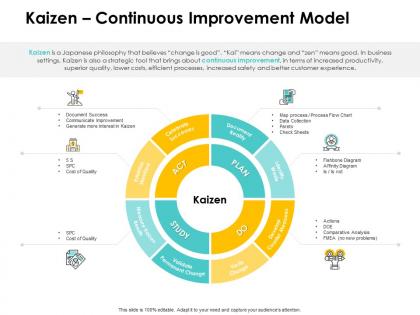
Kaizen is a Japanese philosophy that believes change is good. Kai means change and zen means good. In business settings, Kaizen is also a strategic tool that brings about continuous improvement, in terms of increased productivity, superior quality, lower costs, efficient processes, increased safety and better customer experience.
People who downloaded this PowerPoint presentation also viewed the following :
Kaizen continuous improvement model process ppt powerpoint presentation ideas summary with all 2 slides:
Give your audience a fulfilling experience. They will find our Kaizen Continuous Improvement Model Process Ppt Powerpoint Presentation Ideas Summary elevating.
FAQs for Kaizen continuous improvement model process ppt powerpoint
So Kaizen is basically about cutting waste, making tiny changes instead of huge ones, and getting your whole team involved. That last part? Good luck - it's way harder than it sounds. You'll also want to standardize stuff, keep customers in mind, and actually use data instead of just winging it. My advice? Pick something small that annoys everyone daily and get them brainstorming little fixes together. Those quick wins build momentum. Oh, and don't try to boil the ocean right away - I've seen that backfire so many times.
Honestly, measuring Kaizen is pretty straightforward but you need both sides of the coin. Track the obvious stuff - waste reduction, faster processes, cost cuts, quality bumps. Those numbers are great for showing progress. But here's what most people miss: you've gotta check if your team is actually buying in. Send out quick surveys to see if people feel comfortable suggesting changes. I'd start with maybe 3-4 metrics that actually matter to your situation - don't go overboard. Create some simple before/after comparisons so you can see what's working. The culture shift is honestly just as important as hitting your targets.
Dude, engagement is everything with Kaizen - like, it literally makes or breaks the whole thing. Your frontline people are the ones who actually see what's broken, so if they don't care, you're just wasting everyone's time. I've seen companies where it becomes this weird compliance dance where everyone pretends to participate. That's not gonna fix anything. The magic happens when workers feel safe throwing out ideas without worrying they'll get shut down or blamed. Start there - build that psychological safety first. Once people know their voice matters, they'll surprise you with solutions you never would've thought of.
Honestly, it's wild how those tiny daily changes snowball when your whole team jumps on board. Like if everyone shaves 2 minutes off email responses or cuts out one unnecessary step - that stuff multiplies fast. The magic happens because Kaizen gets everyone constantly tweaking things instead of just a few people making big changes once in a while. I mean, 1% better sounds like nothing, right? But when your entire crew does it for months straight, you're talking serious productivity boosts. Pick one annoying inefficiency you hit every day and just... fix it this week.
Honestly, the hardest part is people just hate change. Everyone's used to doing things the same way forever, so when you suddenly want them improving stuff constantly, they freak out. Your bosses need to actually care too - employees can smell fake enthusiasm from a mile away lol. Most places also crash and burn after the first few months when the novelty wears off. Don't try doing everything at once though, that's where companies really mess up. Start with one team, get some wins, then move on. Way less overwhelming that way.
Oh totally, Kaizen works great outside manufacturing! Healthcare places use it for stuff like cutting down patient wait times or making shift handoffs less chaotic. Service companies apply it to response times, email workflows - honestly, you'd be shocked how much time gets wasted on dumb email routing. The trick is getting your front-line people involved because they're the ones dealing with all the annoying bottlenecks managers never see. Just pick one process that drives everyone crazy and fix the obvious stuff first.
For Kaizen events, you'll definitely want 5S - it's like organizing your workspace but way more systematic. Value stream mapping helps spot waste, and root cause stuff like "5 Whys" keeps you digging deeper. A3 problem-solving sheets are clutch because they stop teams from wandering off topic (trust me, it happens constantly). Process flow diagrams and Pareto charts come in handy too. Honestly, most facilitators go crazy with sticky notes and flip charts since people actually pay attention to visual stuff. Start with 5S first though - it's an easy win that gets everyone pumped for the bigger changes.
Get everyone talking about the annoying little stuff they notice every day - you know, those tiny inefficiencies that people usually just put up with. Create a judgment-free zone where suggestions actually get implemented fast, otherwise people stop bothering. Weekly improvement chats work better than formal meetings honestly. Retrospectives are kinda boring at first but they're amazing for catching patterns you'd miss otherwise. Celebrate the wins when things get smoother. Don't make it just a management thing - everyone should feel ownership. Small tweaks add up way faster than you'd think.
Toyota basically created the whole Kaizen thing - that's why their cars run forever. But honestly, it works everywhere now. Boeing's employees suggest tiny tweaks to assembly lines and boom, millions saved. Hospitals cut wait times the same way. The genius part? You don't need some huge company transformation. Just pick one annoying process your team deals with daily and start there. Small fixes compound like crazy over time. Even places like hospitals use it to reduce medication screwups - pretty wild how versatile it is.
So Kaizen is basically just tiny daily tweaks - like "what small thing can we fix right now?" Six Sigma gets heavy into data and statistics to tackle specific problems. Lean does bigger process overhauls to cut waste. Honestly, I'd start with Kaizen because anyone can jump in without special training or tools. The other two? You'll need black belts for Six Sigma and process mapping skills for Lean. Way more complex. If you want your team doing something useful tomorrow, Kaizen's your best bet.
Start with root cause analysis and basic process mapping - that's your foundation. PDCA cycle is essential since it drives everything in Kaizen. The mindset piece? Way harder than the technical stuff, honestly. Communication training matters too because people get weird about suggesting changes to their coworkers' processes. Throw in some visual management tools and simple stats. Half-day workshop works well, then immediately get them practicing on small real projects. Oh, and data collection methods - can't believe I almost forgot that one! People need to actually measure their improvements or it's just wishful thinking.
Technology's honestly a game-changer for Kaizen stuff. Digital suggestion boxes beat those old physical ones nobody ever touched - people actually use apps to submit ideas. Analytics tools spot bottlenecks you'd totally miss otherwise. You can map workflows digitally too, which makes tracking changes way easier over time. Collaboration platforms keep your team on the same page for improvement projects. My advice? Pick one tool that fixes your biggest headache first - maybe idea collection if that's where you're struggling. Don't try to do everything at once, it gets overwhelming fast.
Honestly, the trick is weaving Kaizen into your everyday stuff instead of treating it like some separate initiative. Build it right into team meetings and reviews. Celebrate the small wins publicly - people love that recognition. Here's the thing though: leadership always gets distracted by shiny new projects, which kills momentum fast. You've gotta stay committed yourself and actually participate in the improvements. Give your team real time and resources to make changes happen. Oh, and make suggesting improvements part of the job description, not just a nice-to-have. That's how you keep it rolling long-term.
Think of feedback loops as your reality check system. Make a small change, then actually measure what happened - don't just assume it worked. I learned this the hard way when I kept "improving" things that were getting worse lol. Set up regular check-ins where you're brutally honest about results. Pick one simple metric to track consistently. Time saved works great, or how many errors you're catching. Short bursts of measurement beat elaborate tracking systems that you'll abandon after a week. The whole point is using real data to guide your next move instead of just winging it.
Honestly, kaizen works because you're catching those annoying little issues before customers even notice them. Your team spots waste, delays, quality problems - whatever - and fixes them right away. Customers end up with better products and faster service without realizing all the work happening behind the scenes. The cool part? When employees can actually solve problems they see, they start caring more about customer outcomes. I'd say start small though - ask your team what tiny customer frustrations they notice every day, then just pick one to fix each week. Those small wins really do add up over time.
No Reviews