

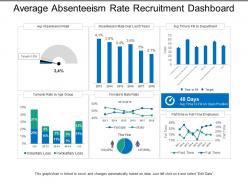
Average absenteeism rate recruitment dashboard





Try Before you Buy Download Free Sample Product
 Impress Your
Audience
 100%
Editable
 Save Hours
of Time


Guide them to enlightenment with our Average Absenteeism Rate Recruitment Dashboard. They will accept you as a guru.
People who downloaded this PowerPoint presentation also viewed the following :
Average absenteeism rate recruitment dashboard with all 6 slides:
Give yourself the exact hint you desire with our Average Absenteeism Rate Recruitment Dashboard. You are bound to find the best cues.


FAQs for Average absenteeism
Yeah, it's usually health stuff, family drama, or work stress. Burnout's huge too - I've been there. Poor work-life balance makes people just... check out mentally. Toxic bosses don't help either. Mental health issues are becoming way more common - anxiety and depression make it super hard to show up consistently. Then you've got the practical stuff like childcare falling through or car troubles. Oh, and feeling undervalued at work is a killer for motivation. If you're managing people with attendance problems, definitely have real conversations with them first. Most aren't just being lazy.
Ugh, absenteeism is the worst because it just snowballs on everyone else. Your remaining team members end up scrambling to cover the extra work, which tanks productivity. Nobody wants to be that person always picking up someone else's slack – it gets old really fast. When people feel stretched thin all the time, morale goes down the drain. Plus frequent or random absences mess with your team's flow and honestly? It breeds resentment among the people who actually show up consistently. I'd talk to chronic absentees early to figure out what's really going on – could be burnout, personal stuff, or they just hate the job.
Dude, workplace culture is seriously everything when it comes to attendance. Toxic environment? People will call in sick for a hangnail. But create something actually supportive - not just the BS motivational posters - and employees genuinely want to be there. They'll drag themselves in with a cold because they don't want to let the team down. It's wild how much recognition and work-life balance matter. Like, way more than most managers think. Start simple: just ask your people what'd make them excited to show up Monday morning. Their answers might surprise you.
So grab your last quarter's absence data and throw it in a spreadsheet - or use whatever reporting tools your HRIS has. Look for the obvious stuff: who's calling out Mondays/Fridays, around holidays, or if certain people are always "sick" together (suspicious much?). Track how often and how long people are out, plus any seasonal trends. Honestly took me like 3 months of data before I started seeing real patterns. Department-wise breakdowns help too. Sometimes the simple approach works better than fancy analytics - I've caught more attendance issues with basic tracking than any automated system ever did.
Honestly, you've gotta attack this from a few different directions. Start with a survey - figure out what's actually making people call out sick. Maybe your workplace culture sucks and people dread coming in? Flexible schedules can be a game changer here. Remote work days, different hours, whatever works. Mental health support is huge too, and train your managers to catch burnout early. Oh, and recognition programs - sounds cheesy but people really do show up more when they feel appreciated. Better to get ahead of it than just count empty desks.
So manufacturing and healthcare get hit the hardest with absenteeism - we're talking 3-4%. Makes total sense though, right? Healthcare workers are literally exposed to sick people all day, plus the job's physically brutal. Manufacturing has all that shift work and physical strain wearing people down. Professional services stay way lower, usually under 2% - probably because you can work from your couch half the time now. Retail and hospitality sit in the middle around 2.5-3%. Just don't compare your company to random overall averages - that's useless. You gotta look at what other companies in your actual industry are doing.
Dude, you could get hit with wrongful termination lawsuits if you don't follow your own attendance policies when firing people. Discrimination claims are another big one - especially if it looks like you're treating certain groups unfairly. Workers' comp stuff gets messy too when employees claim their absences were medical. Document literally everything, I can't stress this enough. Apply your policy the same way for everyone or you're asking for trouble. The legal fees alone will kill your budget if someone decides to sue. Oh, and make sure you're not missing any accommodation requirements - that's bit me before.
Honestly, automated attendance systems are a lifesaver for tracking this stuff. You can set up mobile apps so people request time off digitally, plus the dashboard analytics catch patterns you'd totally miss doing it by hand. HR software will flag people calling out constantly and handle FMLA paperwork automatically - which is annoying to do manually, trust me. Most systems connect to payroll too so that's one less headache. But the reporting is where it gets really useful. You'll spot trends by department or season that help you fix problems before they get worse. Just pick whatever plays nice with your current HR setup.
Ugh, high absenteeism is seriously the worst - it snowballs so fast. When people don't show up, everyone else gets slammed with extra work. Then they burn out and start calling in sick too. Your customers notice when you're always short-staffed or using temps who don't know what they're doing. Good employees will bail for companies that have their act together, so now you're spending a fortune on recruiting. I've seen workplaces where calling out becomes totally normal and acceptable. Track the patterns before it gets out of hand - small problems turn into expensive nightmares real quick.
Look, wellness programs work because they fix the actual problems making people call out sick - stress, burnout, all that stuff. Mental health support and flexible schedules? Game changers. People literally want to show up when they don't feel like garbage. Health screenings catch issues before they become "can't get out of bed for a week" situations. Honestly, even something basic like stress workshops helps. I mean, my old company started walking meetings and our sick days dropped noticeably. Don't overthink it - start small and see what sticks with your team.
Honestly, talking to your team makes a huge difference with attendance issues. People show up more when they feel heard, you know? I'd start having regular check-ins - not just when someone's already missing work all the time. That's way too late. Get people comfortable bringing up problems early, whether it's personal stuff or they're drowning in workload. Set clear expectations upfront about attendance and remote work options so there's no confusion later. The key is catching patterns before they spiral. Most managers I know just ignore the red flags until it becomes this whole dramatic thing.
Forget tracking hours online - that's pointless. Set clear deliverables with deadlines instead. Daily or weekly check-ins work way better than micromanaging. Project management tools help everyone see what's actually getting done. Honestly? Digital tracking shows patterns faster than the old office days ever did. Build a culture where people can tell you when they're swamped or dealing with personal stuff. Communication before small issues become big ones - that's the whole game. Oh, and maybe look at your current system this week to see what's not working.
So track your absenteeism rate first - just days absent divided by total scheduled days. Also look at average days per employee and how often people actually call out (not just total days). Honestly, the patterns are where it gets interesting though. Break it down by department, day of week, season... Monday absences always go crazy after long weekends, it's ridiculous. Keep voluntary and involuntary separate since they mean totally different things about your culture. Just set up a monthly dashboard so you can catch trends early before they blow up.
Yeah, so mental health stuff and personal drama are massive reasons people call out sick. When someone's dealing with anxiety, depression, or like family chaos, they're either genuinely too burnt out to come in or they show up but might as well be zombies. Makes total sense honestly. The problem is most people won't talk about this stuff at work - too awkward. But if you're the manager? Creating a space where people feel safe opening up about mental health really cuts down on those mystery sick days. Way better than just wondering why Sarah's been "sick" every Monday for three weeks straight.
Honestly, flexibility is huge here. Let your people work from home when they can, and actually check in about stress levels - not just those fake "how's everyone doing?" meetings. Make sure they feel safe talking about personal stuff that might affect showing up. I've watched managers think being hardass about attendance works, but it totally backfires. Better to call out good attendance when you see it, get some mental health resources in place, and fix whatever workplace drama is making people want to bolt. Really though, you want them excited to come in, not counting down til they can leave.
No Reviews