


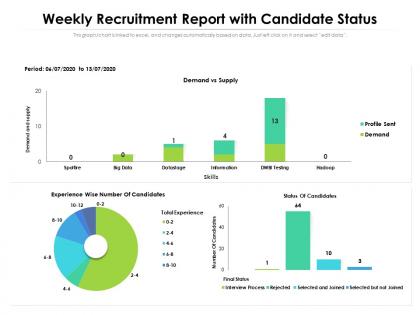
Weekly recruitment report with candidate status




Try Before you Buy Download Free Sample Product
 Impress Your
 Audience
 100%
100% Editable
 Save Hours
 of Time


Our Weekly Recruitment Report With Candidate Status are explicit and effective. They combine clarity and concise expression.
People who downloaded this PowerPoint presentation also viewed the following :
Weekly recruitment report with candidate status with all 2 slides:
Give your audience a fulfilling experience. They will find our Weekly Recruitment Report With Candidate Status elevating.
FAQs for Weekly recruitment report
Track time-to-fill and cost-per-hire first - those are your bread and butter. Quality of hire matters way more than people think though. Look at 90-day retention and performance ratings for new hires. Source effectiveness shows you where your best candidates come from. Candidate experience scores are clutch because people talk, especially in smaller industries. Offer acceptance rates tell you if you're competitive. Oh, and interview-to-hire ratios help catch where things get stuck. Start with maybe 3 metrics so you don't go crazy with data. Pull them monthly, compare quarterly. You can always pile on more later.
Time-to-hire shows you exactly where candidates are getting stuck in your process. Week three dropoffs? That's a dead giveaway your timeline's too slow - good people don't wait around forever. Track it across different roles and you'll start seeing patterns. Maybe your approval process is a nightmare, or interview scheduling takes forever. Either way, you can fix the bottlenecks before they mess up your next round. Oh, and it helps when you need to give hiring managers realistic expectations about how long things actually take. Way better than just guessing.
Dude, candidate experience is huge for your recruitment reports. Good experience = faster responses, better assessment completion, higher offer acceptance. Your metrics will thank you. Bad experience? People drop off everywhere and mess up your data. Plus their feedback directly hits your employer brand scores - which honestly can make or break how leadership sees your work. Short sentences work here. You definitely want a whole section on candidate experience in your quarterly analysis, trust me on this one.
Track demographics at each hiring stage, plus time-to-hire by different candidate groups. Waterfall charts are honestly a game-changer for spotting where you're losing diverse candidates - way clearer than regular bar charts. Don't forget source effectiveness too, like which job boards actually bring in diverse talent. Monthly check-ins with hiring managers help you pivot your sourcing when needed. Oh, and throw in some qualitative stuff like interview feedback patterns by demographics. The goal isn't just dumping spreadsheets on people - you want the data to actually tell a coherent story about what's happening in your pipeline.
Most ATS systems already grab the data you need - application numbers, hiring timelines, where candidates come from. Start there before getting fancy. Zapier and Power Automate can connect everything automatically, though the initial setup is honestly kind of annoying. I'd map out your data sources first, then build automated pulls so you're not stuck exporting spreadsheets every damn week. Greenhouse and Workday are solid options. Power BI works too if you want custom dashboards. Pick one metric to start with and add more later - don't try to automate everything at once.
Honestly, recruitment reports are way more useful than most people think. They'll show you exactly where hiring gets stuck - like which roles sit open forever or why candidates keep bailing. Look for patterns too, maybe your sales team always needs more people in Q4 or (classic) nobody wants to work in accounting. The data helps you plan budgets and timelines better, plus you can see which job boards actually work vs the ones that are just burning money. I'd start with last quarter's numbers and focus on your biggest headaches first. You might be surprised what you find.
Oh man, data inconsistency is gonna be your worst nightmare. Your ATS and job boards never seem to talk to each other properly, so getting clean funnel metrics? Good luck with that. Candidates ghost you constantly too, which totally messes up conversion rates. Plus hiring managers are terrible at updating statuses on time - makes calculating time-to-hire super frustrating. Honestly, I'd set up standardized fields from day one and throw in some automated reminders. Trust me, beats spending your weekends cleaning up messy data.
Definitely track metrics by channel because they perform so differently. Job boards dump tons of applicants on you but quality's usually meh. LinkedIn's the opposite - fewer people apply but they're often better fits. I'd separate out time-to-hire, cost-per-hire, and quality scores for each source. Trust me, I've watched teams make awful decisions because they weren't breaking this stuff down properly. Tag every candidate with where you found them from day one. Otherwise you'll never figure out which channels actually work and which ones are just burning your budget.
New hire feedback is seriously underrated for fixing your recruitment process. These people just went through everything fresh, so they'll tell you which job boards actually work and where your interviews are falling flat. I'd honestly trust their take over exit interviews any day - they're not bitter yet, you know? Plus you can finally track if you're hiring quality people instead of just filling seats. Send surveys at 30, 60, and 90 days to catch patterns. Their input helps you spot those job descriptions that sound great but don't match reality.
So basically break down your hiring data by location first. Compare stuff like how long it takes to fill roles, what people expect salary-wise, how many candidates you're seeing. Then dig into each area's unemployment rates and what competitors are doing - honestly the differences between regions will probably surprise you. Tight markets? You'll need better offers. Some places have weird talent clusters so you might need totally different sourcing. The real trick is watching these patterns over months so you can actually predict when things get crazy and plan around it.
Exit interviews are like truth serum for your company. People finally spill what's really going on versus all that polished stuff in your job postings. Look for the patterns - bad managers, terrible work-life balance, zero career growth. That's where you'll find the real reasons people bail. Honestly, departing employees don't sugarcoat anything since they're already halfway out the door. Use what they tell you to fix your job descriptions and actually highlight what keeps people around. Way better than just throwing buzzwords at candidates and hoping something sticks.
Do monthly reports, then sit down quarterly to actually dig into what they mean. Weekly is way too much unless you're like Google or something - total waste of time honestly. Monthly gives you solid data without making it feel like a part-time job. The quarterly thing is where you'll actually make changes happen. Look at your time-to-hire, which sources work best, how candidates felt about the process. Most important part though? Just be consistent about it. Set that calendar reminder right now or you'll forget and then wonder six months later why nothing's improving.
Honestly, you're shooting in the dark without industry benchmarks. Your 30-day hiring process might seem reasonable until you find out everyone else is doing it in 20 days. Benchmarks show you where you're actually falling short vs. competitors – super helpful when you need to ask for more budget too. Leadership loves hard data. Track stuff like time-to-fill, cost-per-hire, and how many people accept your offers. Oh, and candidates definitely have expectations based on what they've heard elsewhere, so you don't want to be the slow one. I'd compare your numbers quarterly to stay on top of things.
Honestly, AI is a game-changer for recruitment reports because it can crunch way more data than we ever could. You'll get insights on sourcing patterns, hiring timelines, what actually predicts success - stuff that's impossible to track manually. The bias elimination alone is huge. Instead of those awful quarter-end report marathons (ugh), you get real-time metrics that actually tell you something useful. What I love is how it connects random dots - like which job boards work best or patterns in interview feedback you'd never notice. My advice? Pick one AI tracking tool first, see what clicks, then expand from there.
Your rejected candidates are basically a treasure trove of info you're probably ignoring. Check where people keep dropping out - could be your interview process drags on forever or the job posting is confusing. Multiple candidates saying the same thing? That's a red flag you need to address. The reasons you reject people also show whether you're being realistic about requirements (spoiler: you might not be). I actually think the failures teach you way more than the wins do. Use all this to fix your sourcing and make the whole experience less painful next time.
No Reviews