

Key risks and risk mitigation strategies technology industry ppt powerpoint styles




Try Before you Buy Download Free Sample Product
 Impress Your
 Audience
 100%
100% Editable
 Save Hours
 of Time


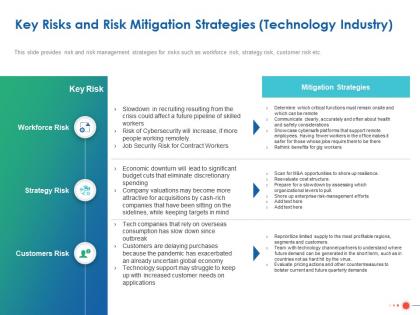
This slide provides risk and risk management strategies for risks such as workforce risk, strategy risk, customer risk etc.
People who downloaded this PowerPoint presentation also viewed the following :
Key risks and risk mitigation strategies technology industry ppt powerpoint styles with all 2 slides:
Use our Key Risks And Risk Mitigation Strategies Technology Industry Ppt Powerpoint Styles to effectively help you save your valuable time. They are readymade to fit into any presentation structure.

FAQs for Key risks and risk mitigation strategies technology industry
Okay so you'll need four main things: first, figure out what could go wrong - cyber attacks, data breaches, system crashes, that stuff. Then assess how likely each is and how badly it'd hurt you. Third is mitigation - backups, security measures, all that jazz. Most people totally ignore the fourth part though, which is ongoing monitoring. Like they set it up once and never touch it again, which is nuts because threats change constantly. Oh and don't forget incident response plans. I'd start by listing your biggest vulnerabilities first since you can't fix everything at once.
Honestly, traditional risk frameworks are pretty useless for this stuff - they weren't designed for AI bias or quantum threats. There's zero historical data to work with, which is kinda scary but also exciting. Your risk teams need to get way more agile and focus on scenario planning instead of looking backward. The big shift? Going predictive rather than reactive. Oh, and definitely get your tech people actually sitting in those risk meetings, not just filling out forms later. Cross-functional teams are clutch here. You can't assess what you don't understand, and most risk folks don't really get the tech side yet.
Look, cybersecurity isn't just some IT department headache anymore - it's literally make-or-break for your whole business. Data breaches destroy reputations instantly. Plus you've got operational shutdowns, hefty regulatory fines, stolen IP... the works. Companies keep thinking someone else will handle it, which is honestly pretty naive at this point. These cyber risks mess with everything now - your customers, your operations, your bottom line. My old boss learned this the hard way, trust me. You need to get this stuff into your board meetings and treat it like the core business risk it actually is.
Start small - run pilot projects first before going all in. I've watched too many companies blow up trying to rush some "game-changing" tech. Set your risk limits upfront and build in quick feedback loops so you can bail if things go sideways. Always have your rollback plan ready, trust me on that one. Get your innovation and risk teams talking from the beginning instead of treating each other like enemies. Oh, and throw risk assessment right into your sprint planning - saves headaches later.
You'll want both leading and lagging indicators - don't just pick one type. Leading stuff is like vulnerability fix times, how many people actually finished security training, response drill frequency. Lagging indicators? Your real incidents, downtime, audit results. Here's the weird thing though - good risk management can make your reports look boring since nothing's breaking! Look at trends over time instead of just monthly snapshots. Business impact matters way more than technical stats. Honestly, start small with maybe 3-5 metrics tied to your biggest worries and stick with tracking those consistently.
So compliance basically makes you stop just hoping for the best and actually document your risk stuff. Figure out which regulations hit your company first - GDPR, SOX, whatever applies. Then build your risk framework around those. You'll need written policies, regular audits, incident response plans... the whole nine yards. Honestly though? It's kind of a good thing. These frameworks catch vulnerabilities you'd probably miss on your own. Your risk assessments get way more organized, plus you're forced to have backup plans for breaches and system crashes. Bit of a pain but worth it.
Honestly, the worst thing you can do is put off risk planning until "later" - build it in from the start. Most founders obsess over tech risks but completely miss market shifts, regulatory stuff, or key people leaving. That's where startups really get blindsided. Get real data instead of going with your gut all the time. Also, don't make this just a founder thing - your whole team should know what could go wrong. I know it feels weird when you're tiny, but start tracking risks now and check them monthly. Trust me on this one.
Honestly, AI is a game-changer for risk management. It'll catch patterns and threats you'd miss completely - we're talking real-time analysis of massive datasets to predict failures and security breaches before they happen. Feed it good data from your monitoring logs, user behavior, system performance stuff. Start with something simple like anomaly detection (that's what I'd do anyway), then expand once you see it working. The predictive maintenance alone is worth it - knowing your infrastructure might crash before it actually does? That's gold. Plus automated threat detection and compliance warnings are pretty sweet bonuses.
Start with auditing your suppliers and mapping out risks - document everyone and score them on financial health, location risks, that kind of thing. Don't just look at your direct suppliers either, go 2-3 levels deep because their suppliers can screw you over too. Supply chain software helps automate the monitoring (honestly wish more companies used it). Run stress tests regularly to catch problems early. Oh, and set up alerts for geopolitical stuff or natural disasters that might hit your key suppliers. I've seen too many businesses get blindsided by things they could've planned for.
Ugh, global operations are such a headache. Each country has its own rules - what's totally fine in the US could land you a massive GDPR fine in Europe. Currency swings mess with your budgets constantly, and don't even get me started on trying to coordinate crisis calls when half your team is asleep. Cultural differences make things worse since teams interpret risks differently. Honestly, I've learned you need separate risk plans for each region and hire people who actually understand the local landscape. Time zones alone will drive you crazy.
Risk culture is how your whole team approaches potential problems - and honestly, it can make or break you. Good risk culture means everyone naturally thinks "what could go wrong?" before pushing code or launching features. Not in a paranoid way, just smart planning. Your developers, execs, everyone should feel comfortable flagging concerns without getting shut down. I've seen teams completely avoid disasters just by having these conversations regularly. Try bringing up "what are we missing?" in your next few meetings - even small changes in how you talk about risk will boost your resilience way more than you'd expect.
Don't let your incident response plan just sit there collecting dust - it should actually connect to your risk strategy. Map out incident scenarios against risks you've already identified in your register. Include risk management people on your response team so they can spot bigger impacts when stuff goes wrong. Honestly, most companies skip this part and wonder why they're always behind the curve. Run tabletop exercises regularly to test both your response and how it ties into risk mitigation. That's where you'll catch the holes before they become real problems.
Most tech companies just multiply probability by potential impact - basic Expected Monetary Value stuff. You'll want to track revenue loss, recovery costs, regulatory fines, that kind of thing. Some teams go overboard with Monte Carlo simulations and fancy models, but honestly? Start with simple probability x impact matrices. They work great for figuring out what to tackle first. Mature companies update their risk registers quarterly with dollar estimates. I've seen teams waste weeks on complex scenario planning when they could've gotten solid numbers way faster with the basics.
So for tech risk management - ServiceNow's solid for GRC stuff, Splunk handles security monitoring really well, and Jira's great for tracking vulnerabilities. The real trick is getting everything centralized where your team will actually use it. LogicGate and MetricStream work if you're at a bigger company, but honestly? Smaller teams can get by just fine mixing monitoring tools with spreadsheets for risk registers. I've seen too many fancy platforms turn into expensive paperweights because nobody maintains them. Pick whatever your people will stick with long-term.
Look, good stakeholder communication is basically your insurance policy against disasters. You'll spot problems early when everyone's talking openly instead of hiding issues until they explode. Different people catch different blind spots - your finance guy might see risks your devs totally miss. Regular check-ins work way better than only meeting during crises. People need to feel comfortable bringing up concerns without getting their heads bitten off. Map out who needs detailed updates versus high-level stuff, then actually stick to those touchpoints. Trust me, stakeholders who understand the risks upfront won't freak out when you need extra budget or resources later.
-
Colors used are bright and distinctive.